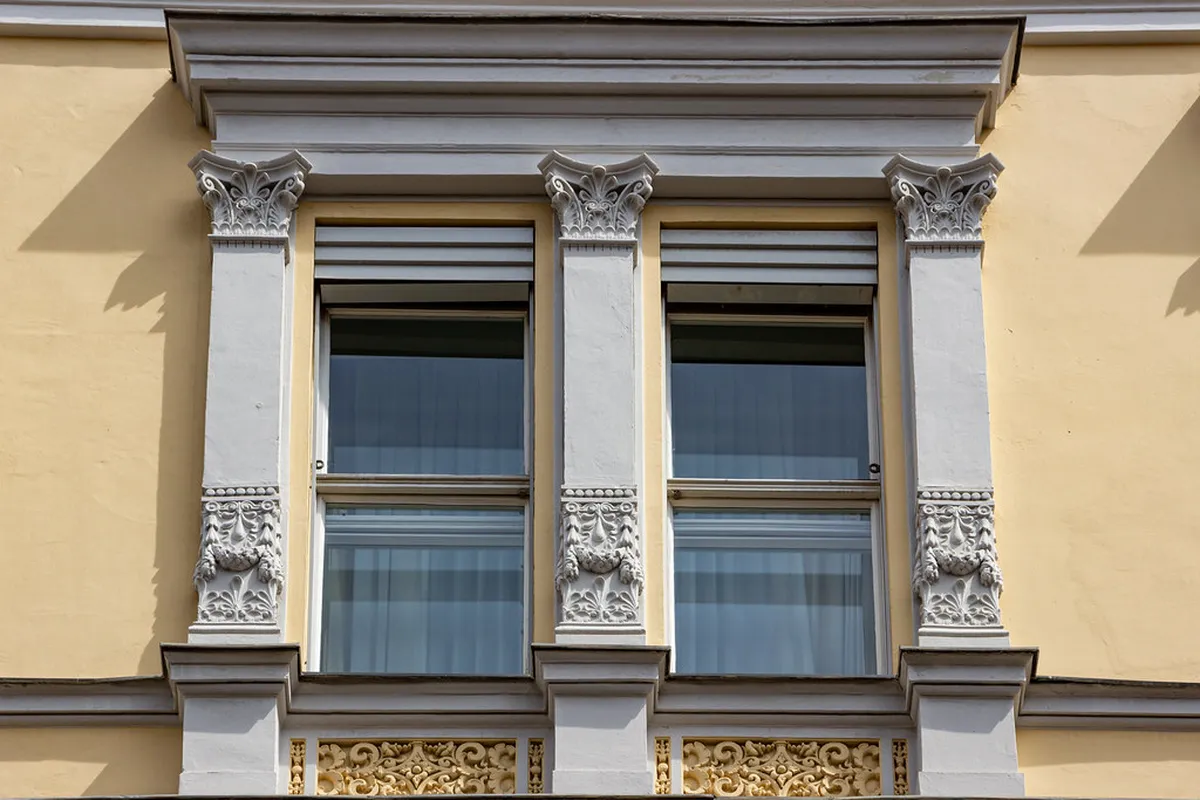
Bratislava's Old Town (Staré Mesto) is one of Central Europe's most walkable and rewarding historic districts. Cobblestone lanes wind past Baroque palaces, Gothic spires, and medieval gates — all within a compact area you can cross on foot in under 20 minutes. This 2026 guide covers every essential landmark, with verified entry fees in euros, current opening hours, and practical tips so you can plan confidently before you go.
For a full day-by-day plan around these landmarks, see our Bratislava itinerary. To navigate the district on foot, our Old Town Bratislava walking map marks every highlight below with turn-by-turn routing.
Michael's Gate (Michalská Brána) — Medieval Tower & Museum
Turn this guide into a personal route with our free Bratislava itinerary planner.
Michael's Gate is the only surviving medieval city gate in Bratislava and the unmistakable landmark that signals the start of the Old Town. The 51-metre tower was first built in the 14th century and enlarged in the 18th century into its current Baroque form, crowned by a copper dome and a gilded statue of St. Michael slaying a dragon.
Climbing the tower rewards you with some of the best panoramic views over the Old Town rooftops, Bratislava Castle hill, and the Danube. The museum inside traces the history of the city's fortifications with an impressive collection of historical weapons and armour displayed across several floors.
- Entry fee (2026): Adults €6 · Students & seniors €4 · Family (2 adults + up to 2 children) €14 · Free with Bratislava Card
- Tickets: Purchased at the Red Crayfish Pharmacy ticket desk at Michalska 28, a few steps from the gate entrance
- Hours: Tuesday–Sunday 10:00–17:00; closed Monday
- Significance: Last remaining medieval gate from the city's 14th-century fortification ring
Beyond the gate, Michalská Street stretches south through the heart of the pedestrian zone. This historic lane is lined with café terraces, artisan boutiques, and small galleries. Many narrow alleyways branch off into quieter courtyards — the kind of slow exploration that makes Old Town so rewarding. Wear comfortable shoes; the cobblestones are charming but uneven.
Main Square (Hlavné Námestie) — The Living Heart of Old Town
Hlavné námestie is the central gathering point of Bratislava Old Town and arguably its most photogenic space. Café tables spill across the square year-round, and the surrounding Baroque and Renaissance facades form one of the prettiest urban backdrops in Slovakia.
At the centre of the square stands the Roland Fountain (also called Maximilian's Fountain), built in 1572 on the orders of King Maximilian II to supply the city with drinking water. The fountain is topped by a knight in full armour — officially a likeness of Maximilian, though generations of locals have called him Roland after the legendary Carolingian hero whose statues traditionally symbolised civic justice and self-governance. Entry is free; it is simply a beautiful place to pause.
Flanking the square, the quirky Cumil statue (Man at Work / Čumil) peers up from a manhole cover at the corner of Laurinská and Panská streets — one of the most photographed spots in the city. Created by sculptor Viktor Hulík and installed in 1997, the statue has become an international symbol of Bratislava. A second beloved figure, the Napoleonic Soldier leaning against a bench on the square's edge, is another favourite for photos. Both are free to see and within steps of each other.
Old Town Hall (Stará Radnica) — Museum & Tower Views
The Old Town Hall complex dominates the northeastern side of Main Square. Built from several medieval structures merged over centuries, its colourful Baroque facade and asymmetric Gothic tower have defined the square's skyline since the 15th century. Today the complex houses the Bratislava City History Museum (Múzeum mesta Bratislavy), which traces the city's development from its earliest settlements through to the 20th century.
- Entry fee (2026): Tower only €4 · Old Town Hall + Apponyi Palace combined museum ticket €8 · Children under 6 free
- Hours: Tuesday–Sunday 10:00–17:00; closed Monday
- Highlights: Gothic courtyard, medieval torture chamber display, and the tower balcony offering a direct rooftop view over the Main Square
The tower climb is short and worth the €4 fee purely for the overhead perspective on the Roland Fountain and the surrounding square — a vantage point that photographs very differently from street level.
Franciscan Square (Františkánske Námestie) — Hidden Baroque Gem
Step through the archway east of the Old Town Hall and you reach Františkánske námestie, a quieter square that most visitors pass through without stopping. This is a mistake. The square is flanked by the Franciscan Church, the oldest surviving church in Bratislava (consecrated 1297), and the Mirbach Palace, a late-Baroque townhouse that now functions as a municipal gallery with regularly changing fine-art exhibitions.
- Franciscan Church: Free to enter; open daily with some restrictions during services
- Mirbach Palace Gallery: Entry approximately €3–€5 depending on the exhibition; Tuesday–Sunday 11:00–18:00
The square's pace is slower than Main Square; locals read newspapers on the benches while pigeons crowd the old fountain. It is one of the most atmospheric corners of the Old Town and a natural stopping point on the walking map route.
Primate's Palace (Primaciálny Palác) — Napoleon's Treaty Hall
A short walk from Main Square, the Primate's Palace is the finest Neoclassical building in the city. Built between 1778 and 1781 for the Archbishop of Esztergom, it is most famous for hosting the signing of the Peace of Pressburg in December 1805 — the treaty Napoleon Bonaparte imposed on Austria after his victory at Austerlitz. A plaque in the Hall of Mirrors marks the precise spot.
The palace now serves as the seat of the Bratislava mayor, but several state rooms are open to the public. The centrepiece is the Hall of Mirrors, a gilded reception room with crystal chandeliers and rare 17th-century English tapestries depicting the legend of Hero and Leander — six panels that were walled up and only rediscovered during reconstruction in 1903.
- Entry fee (2026): €3 per person
- Hours: Tuesday–Sunday 10:00–17:00; closed Monday
- Inner courtyard: Free to enter at any time; features the St. George and Dragon fountain
At just €3, the Primate's Palace is one of the best-value indoor attractions in the Old Town. The tapestries alone justify the ticket price — they are among the few 17th-century Mortlake tapestries outside the United Kingdom. See our rundown of the best Bratislava attractions for first-timers for how to combine this with nearby sites efficiently.
St. Martin's Cathedral (Dóm sv. Martina) — Royal Coronation Church
St. Martin's Cathedral stands at the southern edge of the Old Town, its 85-metre Gothic spire topped with a gilded replica of the Hungarian royal crown — a deliberate symbol of the cathedral's extraordinary history. Between 1563 and 1830, this was the coronation church of the Kingdom of Hungary: 11 kings and 8 royal consorts were crowned here, including Maria Theresa in 1741. The main nave dates to the 13th century; construction continued in phases through the 15th and 16th centuries.
- Entry fee (2026): Free (donations appreciated)
- Hours: Monday–Friday 9:00–11:30 and 13:00–18:00; Saturday 9:00–11:30; Sunday 13:45–16:30
- Note: Tourist access is restricted during Masses; check the schedule at the door before entering
- Significance: Principal coronation church of the Kingdom of Hungary; the Coronation Route through the Old Town begins here
Inside, look for the equestrian statue of St. Martin sharing his cloak — the original was lost and the current bronze version dates to the 19th century — and the tomb monuments of Hungarian nobles in the side chapels. The cathedral is most atmospheric in the early morning before tour groups arrive. For the full context on Bratislava's royal sites, our Bratislava Castle ticket and tips guide covers the fortress that overlooks the cathedral from the hill above.
Bratislava Old Town: Practical Tips for 2026
The Old Town is entirely pedestrianised and compact — the main loop from Michael's Gate to St. Martin's Cathedral is under 1.5 km. Allow 2–3 hours for a brisk walk hitting the highlights, or a full half-day if you go inside the Old Town Hall, Michael's Gate tower, and Primate's Palace. A full day lets you add the Blue Church (Church of St. Elisabeth) a short walk east and explore Franciscan Square and side alleys at a relaxed pace.
- Best time to visit: Early morning (before 10:00) for photos without crowds; spring (April–May) and early autumn (September–October) for mild weather and thinner tourist numbers
- Footwear: Wear flat, comfortable shoes — cobblestones are beautiful but hard on heels and wheeled luggage
- Bratislava Card: Covers free entry to Michael's Gate tower and discounts at other attractions; available for 24h, 48h, or 72h
- Dining: Look for the daily lunch menu (denné menu) boards outside restaurants — a two-course meal typically costs €8–€12; tourist-facing menus on the square run €15–€25 per main
- Public transport: The Old Town is walkable from the main train station (Hlavná stanica) in about 15 minutes; a single tram/bus ticket costs approximately €0.90 for 15 minutes in 2026
Frequently Asked Questions
What are the must-see highlights in Bratislava Old Town?
The eight essential Bratislava Old Town highlights are: Michael's Gate (the last medieval city gate, €6 tower entry), Main Square / Hlavné námestie (free, home to the Roland Fountain and Cumil statue), the Old Town Hall (€4–€8, rooftop tower views), Franciscan Square (free, oldest church in Bratislava), the Primate's Palace (€3, Napoleon's treaty hall and 17th-century tapestries), St. Martin's Cathedral (free, 11 kings crowned here), the Blue Church / Church of St. Elisabeth (free exterior, Art Nouveau masterpiece), and the Coronation Route connecting them all. Our Bratislava itinerary shows the most efficient order to visit each one.
How much does it cost to visit Bratislava Old Town attractions in 2026?
Most of the outdoor highlights — Main Square, Roland Fountain, Cumil statue, St. Martin's Cathedral, and Franciscan Square — are free. Paid indoor attractions in 2026: Michael's Gate tower €6 (adults), Old Town Hall tower €4 or museum combo €8, Primate's Palace €3. A Bratislava Card gives free entry to Michael's Gate and discounts elsewhere. Budget roughly €15–€20 in entry fees for a comprehensive half-day indoor-outdoor visit.
How long does it take to explore Bratislava Old Town?
A brisk walk covering the main outdoor landmarks takes 2–3 hours. Add another 1–2 hours if you climb Michael's Gate tower, enter the Old Town Hall, and visit the Primate's Palace. A half-day (4–5 hours) is comfortable for a thorough visit without rushing. A full day allows you to include the Blue Church, Franciscan Square gallery, and a proper lunch break. Our first-timer's Bratislava attractions guide suggests a prioritised order based on crowd patterns and opening times.
Is Bratislava Old Town walkable and safe?
Yes. The entire Old Town is a pedestrianised zone and one of the safest and most walkable historic districts in Central Europe. The main loop from Michael's Gate to St. Martin's Cathedral covers under 1.5 km. Streets are cobblestone — flat shoes are strongly recommended. As with any tourist area, keep an eye on your belongings in crowded squares; petty pickpocketing can occur at peak times, though serious crime is rare. No car traffic means children and elderly visitors can move freely through the core.
What is the best time of year to visit Bratislava Old Town?
Spring (April–May) and early autumn (September–October) offer the best combination of mild weather, good light for photography, and manageable crowds. Summer (June–August) is the busiest period but brings outdoor concerts and festivals, including Bratislava City Days (typically late April–May), which opens cultural institutions with free or reduced entry. Winter (November–February) is cold but the Christmas markets on Main Square transform it into a fairy-tale setting, and indoor attractions are uncrowded. Avoid August peak weekends if you want shorter queues at Michael's Gate.
What is the Cumil statue in Bratislava Old Town?
The Cumil statue — officially titled "Man at Work" — is a bronze figure of a worker peering up from an open manhole, located at the corner of Laurinská and Panská streets near Main Square. Created by sculptor Viktor Hulík and installed in 1997, it has become one of Bratislava's most photographed landmarks. A small plaque on a nearby wall warns "Watch your step!" A second whimsical figure, the Napoleonic Soldier leaning against a bench at the edge of Main Square, is a few metres away and equally popular for photos. Both are free to see.
Bratislava Old Town distils centuries of Central European history into a compact, pedestrian-friendly circuit. From the medieval grandeur of Michael's Gate to the Napoleon-era elegance of the Primate's Palace, every block adds a new layer to Slovakia's capital. Updated 2026 entry fees stay modest — you can see every major indoor attraction for under €20 per person — making Old Town exceptional value compared with other European capitals.
Use our Old Town Bratislava walking map to route efficiently between all the landmarks above, and extend your trip with a visit to Bratislava Castle on the hill directly above the cathedral for sweeping panoramas over the Danube.
Key Takeaways
- Michael's Gate: last medieval city gate, tower entry €6, museum of historical weapons — best views from the top.
- Main Square / Hlavné námestie: Roland Fountain (1572), Cumil statue, Napoleonic Soldier — all free.
- Old Town Hall: tower entry €4, full museum combo €8; direct rooftop view over the square.
- Franciscan Square: oldest church in Bratislava (1297) and Mirbach Palace gallery — quieter and often overlooked.
- Primate's Palace: Napoleon's 1805 treaty signed here; 17th-century English tapestries; entry just €3.
- St. Martin's Cathedral: 11 Hungarian kings crowned here; free entry; open Mon–Sat mornings and afternoon.
- Wear flat shoes, arrive early, and carry a Bratislava Card for free tower entry and discounts across Old Town.