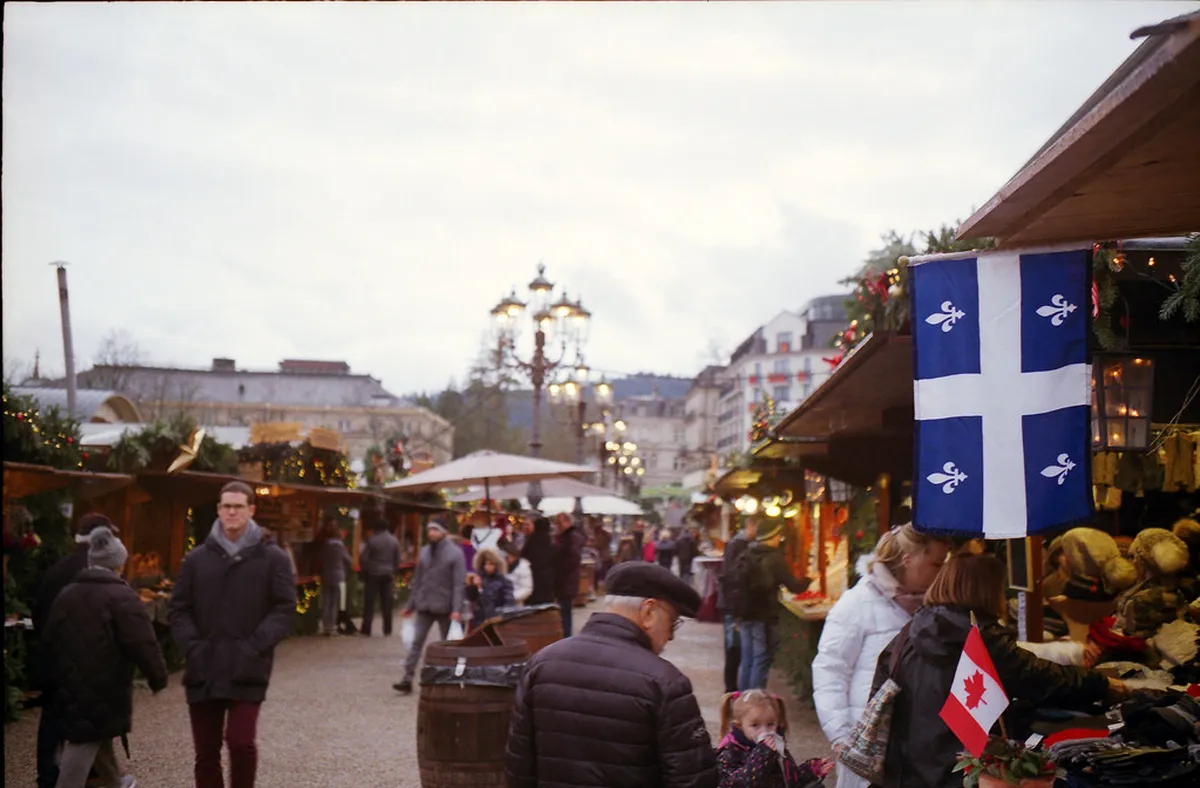
The Baden-Baden Christmas Market runs from 26 November 2026 to 6 January 2027, making it one of the longest-running markets in Germany. It occupies the Kurgarten directly in front of the Kurhaus — a UNESCO World Heritage backdrop that no other major German market can match. This guide covers everything you need to plan a smooth visit: exact dates, igloo bookings, parking options, and what makes this market worth prioritising over the better-known Alsace alternatives.
For a broader look at how to structure your winter stay, see our Baden-Baden itinerary for first-timers, which pairs the Christmas market with the thermal baths and Lichtentaler Allee. If you are still deciding when to arrive, the best time to visit Baden-Baden guide breaks down the seasonal trade-offs in full.
2026–2027 Dates and Opening Hours
Turn this guide into a personal route with our free baden-baden itinerary planner.
The market opens on 26 November 2026 and runs through 6 January 2027 — a full 42 days. Standard opening hours are daily 11:00–21:00. Several days carry different times that you should note before booking transport.
On 24 December 2026 (Christmas Eve) and 31 December 2026 (New Year's Eve) the market closes at 15:00. New Year's Day (1 January 2027) opens later at 13:00 and runs until 21:00. The final day, 6 January 2027 (Epiphany), closes at 18:00.
Weekday visits in early December — roughly 1–12 December — offer the widest choice of stalls without the weekend crush. The four Advent Saturdays see the heaviest footfall. If you want the grand-opening atmosphere plus manageable crowds, aim for the first Thursday or Friday after 26 November. Check the official Baden-Baden tourism event page for any last-minute schedule changes before you travel.
The Historic Setting: Kurhaus and Kurgarten
The market stretches from the Fieser-Brücke bridge to the Trinkhalle pump room, with the majority of stalls concentrated in the Kurgarten lawn in front of the Kurhaus. The Kurhaus colonnade — a neoclassical arcade declared part of the UNESCO World Heritage "Great Spa Towns of Europe" — is lit with thousands of small lights after dark. No other Christmas market in Germany places its wooden huts directly against a monument of this calibre.
The Trinkhalle sits at the eastern end of the market and hosts a dedicated nativity scene exhibition. Local artists display hand-carved cribs inside the 19th-century porticoed hall. This area is notably less crowded than the central stalls around the main stage, making it the better choice for families who want to move at their own pace. Entry to the exhibition is free; note that the Trinkhalle has a few steps at the entrance and is not fully wheelchair-accessible.
The Lichtentaler Allee — the 2.3 km park promenade along the Oos river — begins just south of the Kurgarten and makes a pleasant 30-minute walk after the market closes for the evening. City-centre shopping on Lange Straße is a five-minute walk north, so combining stalls, a museum visit, and dinner in the same afternoon is straightforward.
Top Things to Do at the Market
Over 100 stalls line the Kurgarten, split between artisan crafts and food. Black Forest producers bring hand-painted glass baubles, carved wooden figures, and high-quality leather goods — categories the organisers cap at 75% of total stalls to prevent the market from becoming purely a food court. Arrive in the first two weeks if you want the widest craft selection before popular items sell out.
Families with children should head to the Fairytale Street, a dedicated row of animated scenes from classic stories at the edge of the market. The Christmas bakery lets children bake their own cookies at scheduled sessions — arrive 20 minutes early to secure a spot. A carousel and a mini Ferris wheel round out the programme for younger visitors.
The Sky Stage hosts a rotating live programme throughout each evening: brass bands, choirs, and occasional solo performers. The stage schedule is published weekly on the official site. Evening performances typically start at 17:30 and run until the market closes at 21:00, peaking on weekends with more elaborate productions. A guided city tour called "Baden-Baden at Christmas" departs from the Kurhaus and covers the illuminated old town in roughly 90 minutes — bookable directly through the tourism office.
Special Experiences: Gourmet Igloos and Award-Winning Mulled Wine
The transparent heated igloos are positioned near the Kurhaus and seat a small private group for lunch or dinner. The menu centres on cheese fondue and raclette. Sessions run in two slots: 12:00–15:00 and 18:00–22:00. The per-person price is €69. Reservations open in summer — typically June or July — and weekend evening slots sell out within days of release. The operator confirmed that by August 2025 all Friday and Saturday evening slots for that season were fully booked. If an igloo dinner is central to your trip, check availability at the gourmet igloos booking site as soon as the 2026 season opens.
Baden-Baden also runs an annual award for the best mulled wine at the market, judged each year by Germany's sommelier Natalie Lumpp. All mulled wines used in the competition must come exclusively from vintner producers — no commercial blends. The 2025 winners came from Breisach (Laubs Winery, mild acidity, laurel-spice aroma), a Merlot base from Langenau, and a Huber winery blend from Altschweier finished with fresh orange. Lumpp's note on all three: less sweet than typical market glühwein, meaning you can drink more across an evening without palate fatigue. Look for the award plaques on the stall boards when you arrive; winning stalls often display them prominently.
Christmas Market Vouchers are a practical gift option that many visitors overlook. Sold in €5 and €10 denominations at the Tourist Information Office in the Kurhaus Colonnaden, they are accepted at every stall except the municipal utility hut. The vouchers remain valid for three years, covering the Christmas Market 2027 season as well — useful if you want to give them as gifts to friends planning a future visit.
Practical Information: Arrival and Parking
The easiest approach without a car is the train to Baden-Baden Bahnhof, followed by bus lines 201 or 205 to Leopoldsplatz or Sophienstraße — both stops are within 100 metres of the market entrance. Trains connect regularly from Karlsruhe (20 minutes), Strasbourg (35 minutes via Kehl), and Stuttgart (60 minutes). Weekend regional rail is typically crowded; booking a reserved seat on ICE or IC services from Stuttgart avoids standing in the corridor.
Drivers should use the Park and Ride at Cineplex on the edge of town. Each parking ticket there grants up to five people free travel on bus line 205 into the city centre. Two additional free parking garages operate on specific hours: weekdays from 16:00–21:00 and weekends 11:00–21:00. These are the SWR garage (Lower TV underground car park, best for arrivals from Rebland or Bühl) and the Riverty garage near the fire station on the B500. Both connect to bus line 205 from the Dreieichenkapelle stop. The Kurhaus underground garage is convenient but fills before noon on Advent Saturdays — avoid it if arriving after 11:00 at the weekend.
Accessibility: all market entrances and paths are fully barrier-free. Designated accessible parking is available in the Kurhaus underground garage. The only exception is the Trinkhalle nativity exhibition, which has a few steps at the entrance due to the historic building structure.
Where to Stay: Best Hotels for Market Access
Hotel Laterne is the most-cited option among visitors who want to be inside the festive atmosphere from the moment they step outside. The hotel is dressed in extensive teddy bear decorations throughout the advent season and sits directly opposite the Löwenbräu beer garden and restaurant — a small street that forms one of the most photographed corners in winter Baden-Baden. Rooms for three with breakfast buffet were running around €160 per night in the 2025 season. Book early: the hotel holds a small number of rooms and fills up across all four Advent weekends.
The Löwenbräu area itself is slightly tucked away from the main tourist flow and easy to miss on a first visit. Both the beer garden and the surrounding buildings are decorated with winter greenery and lights, creating a pocket of local atmosphere distinct from the more polished Kurhaus end of the market. It is worth walking through even if you are not staying nearby.
For a quieter and more upscale base, Brenners Park-Hotel sits on the Lichtentaler Allee about 10 minutes' walk from the market. It is substantially more expensive but provides a calm retreat after an evening at the stalls. Budget travellers can find solid guesthouses in the Oos valley neighbourhood, roughly a 15-minute walk or one bus stop from the market. For the full range of options and current pricing, see our where to stay in Baden-Baden guide.
Baden-Baden vs. Colmar: Why Choose This Market?
Colmar runs four separate markets across different squares in December and draws visitors from across Europe specifically for its Alsatian half-timbered backdrop. The trade-off is density: peak weekends in Colmar see extreme crowding on the narrow rue du Marché aux Fruits and around the old customs house. Moving between market zones means pushing through packed pedestrian areas. Baden-Baden's market is contained in one open park space, which makes navigation far more comfortable even on busy Saturdays.
On price, the two markets are broadly similar for food and drink. A standard 0.2 l mulled wine in Baden-Baden runs €4–5; Colmar's larger market tends toward €4–6 depending on the stall. Hotel rates in Colmar spike sharply in December due to the market's international profile — comparable rooms in Baden-Baden typically cost 15–25% less during the same period. Baden-Baden also gives you the thermal baths as a same-day complement, which Colmar cannot match.
The main argument for Colmar is visual variety: four distinct market settings rather than one central space. The main argument for Baden-Baden is quality of experience per hour — a UNESCO colonnade backdrop, award-winning mulled wine, heated igloos, and a market that runs six weeks rather than the standard four. For travellers combining both, the cross-border train via Strasbourg takes roughly 90 minutes and makes a two-day circuit feasible.
Traveling with little ones? See our Baden-Baden with kids guide for stroller-friendly routes and family activities around the markets.
Frequently Asked Questions
When does the Baden-Baden Christmas market open in 2026?
The market opens on November 26, 2026, and runs until January 6, 2027. It operates daily from 11:00 AM to 9:00 PM. Note that it closes early on Christmas Eve and New Year's Eve.
Is the Baden-Baden Christmas market better than Colmar?
Baden-Baden offers a more relaxed and luxury-focused experience compared to Colmar. While Colmar is larger, Baden-Baden has fewer crowds and a beautiful UNESCO backdrop. It is perfect for a stress-free visit.
How do I book the gourmet igloos in Baden-Baden?
You should book the gourmet igloos online through their official website by late summer. They sell out very quickly due to high demand. These heated domes offer a unique fondue dining experience.
The Baden-Baden Christmas Market combines one of Germany's most elegant architectural settings with a six-week season that outlasts almost every competitor in the region. Book the gourmet igloos in summer, arrive on a weekday in early December for the best crowd-to-stall ratio, and use the P&R at Cineplex to avoid parking headaches. The UNESCO Kurhaus backdrop, the Trinkhalle nativity exhibition, and the award-winning mulled wines make this one of the most distinctive Christmas market experiences in southern Germany.