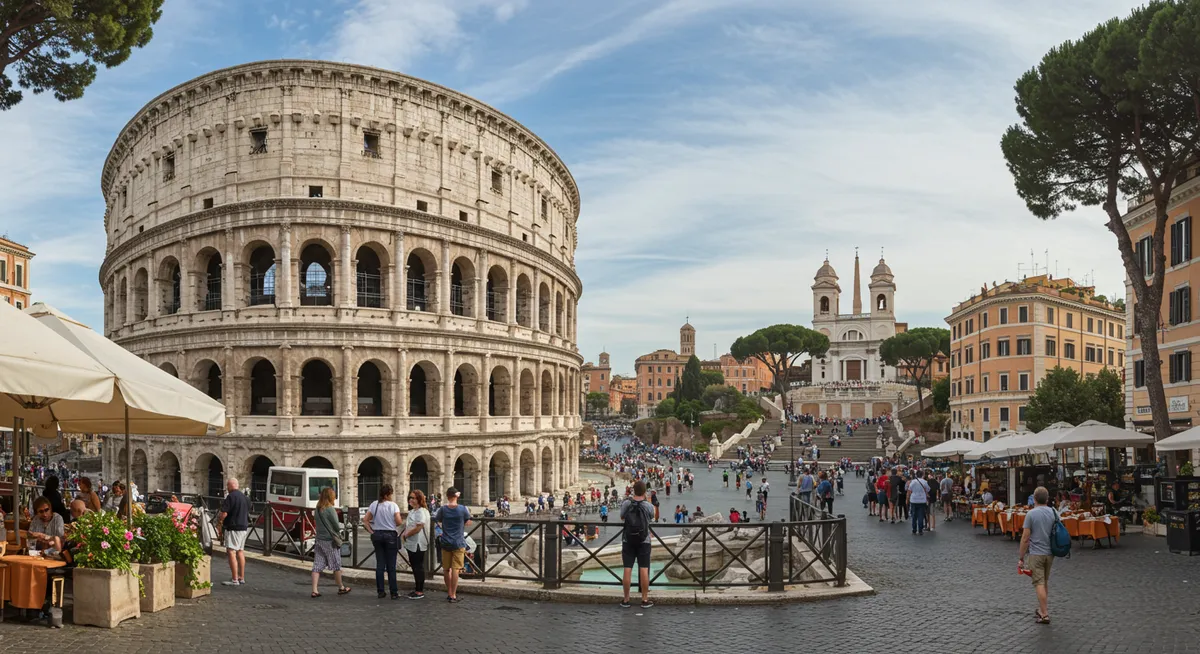
TL;DR: Three days in Rome gives you enough time to explore the Colosseum and Roman Forum, tour the Vatican Museums and Sistine Chapel, toss a coin at the Trevi Fountain (new 2026 entry fee of 2 euros applies), and discover charming neighborhoods like Trastevere and Monti. Book major attraction tickets well in advance, wear comfortable shoes, and plan your days geographically to maximize sightseeing without exhaustion.
Rome is a city where nearly 3,000 years of history unfold across every cobblestoned street, crumbling ruin, and ornate piazza. Whether you are standing inside the Colosseum imagining gladiatorial combat or gazing up at Michelangelo's frescoes in the Sistine Chapel, the Eternal City delivers experiences that no other destination can match. This detailed guide covers exactly what to see in Rome Italy in 3 days, organized into a practical day-by-day itinerary that balances iconic landmarks, world-class art, authentic food, and local neighborhood exploration. With smart planning and the right tickets, you can see Rome's absolute best without feeling rushed. For help building a personalized version of this itinerary, try our free trip planner.
Day 1: Ancient Rome and the Colosseum Quarter
Turn this guide into a personal route with our free Rome itinerary planner.
Start your first morning at the heart of ancient civilization. The Colosseum, Roman Forum, and Palatine Hill form a triangle of archaeological wonders that collectively tell the story of imperial Rome. A combined ticket covers all three sites, and you should absolutely book online in advance since walk-up lines routinely stretch beyond two hours during peak season. Allow at least three to four hours to explore this area properly.
Begin at the Colosseum, the largest amphitheater ever built. Commissioned by Emperor Vespasian in 72 AD and completed under Titus in 80 AD, this arena once held 50,000 spectators watching gladiatorial contests and public spectacles. In 2026, the ongoing restoration of the arena floor continues, with the reconstructed wooden platform offering visitors a ground-level perspective that previous generations never experienced. Consider a guided tour that includes underground access to the hypogeum, where gladiators and animals waited before entering the arena above.
Walk directly into the Roman Forum, the political and commercial center of ancient Rome. Key structures to look for include the Temple of Saturn, the Arch of Septimius Severus, and the House of the Vestal Virgins. Continue uphill to Palatine Hill, where emperors built their palaces and where you will find some of the best panoramic views over the Forum below.
After this intensive morning, head to the nearby Monti neighborhood for lunch. This former working-class district has transformed into one of Rome's trendiest areas, filled with independent boutiques, vintage shops, and excellent trattorias. Try a classic Roman lunch of cacio e pepe or amatriciana at a neighborhood restaurant before continuing your afternoon.
Spend the late afternoon at the Capitoline Museums on Piazza del Campidoglio, designed by Michelangelo. These museums house an extraordinary collection of ancient Roman statues, including the original bronze of Marcus Aurelius on horseback and the iconic Capitoline Wolf. End your first day by walking to Piazza Venezia to see the imposing Vittoriano monument illuminated at sunset. If you want more ideas on planning this day, our 3-day Rome itinerary breaks it down hour by hour.
Day 2: Vatican City and Baroque Masterpieces
Dedicate your second day to Vatican City and the baroque treasures scattered across central Rome. Start early at the Vatican Museums, arriving before 8:00 AM if possible. The museums contain over 70,000 works of art across 54 galleries, culminating in the breathtaking Sistine Chapel. Michelangelo's ceiling frescoes, painted between 1508 and 1512, and his Last Judgment on the altar wall remain among the most important artworks in human history. Pre-booked timed-entry tickets are essential since the Vatican welcomes approximately 25,000 visitors daily.
After the museums, visit St. Peter's Basilica, the largest church in the world. Highlights include Michelangelo's Pieta, Bernini's bronze baldachin over the papal altar, and the opportunity to climb the dome for panoramic views of Rome. Dress code is enforced: shoulders and knees must be covered for entry. If you are planning a longer stay, check out our 5-day Rome itinerary for additional Vatican area recommendations.
Cross the Tiber River after lunch and head to Piazza Navona, one of Rome's most beautiful squares. Built on the site of the ancient Stadium of Domitian, it features three magnificent fountains, including Bernini's Fountain of the Four Rivers. From here, walk to the Pantheon, the best-preserved ancient Roman building in the city. Its unreinforced concrete dome, completed around 125 AD, remains the largest of its kind in the world. Entry is free but requires a timed reservation in 2026.
Continue to the Trevi Fountain for the traditional coin toss. Important 2026 update: as of February 2026, Rome charges a 2-euro entry fee for close-up access to the fountain area. Tickets are required from 9:00 AM to 10:00 PM most days (11:00 AM on Mondays and Fridays). After 10:00 PM, access is free. Children under five and Rome residents are exempt. You can purchase tickets in advance online or via QR codes displayed at the site. The view from the piazza above remains free at all times. End your evening with dinner near the Spanish Steps, then climb them for a beautiful nighttime view of the city.
Day 3: Art, Trastevere, and Hidden Gems
Your final day combines world-class art with the authentic charm of Rome's most beloved neighborhood. Start at the Borghese Gallery in the sprawling Villa Borghese park. This intimate museum houses an extraordinary collection of Bernini sculptures, including Apollo and Daphne and The Rape of Proserpina, alongside masterpieces by Caravaggio, Raphael, and Titian. Timed entry is mandatory, and reservations often sell out weeks in advance, so book as early as possible. Each visit is limited to two hours, which is enough time to appreciate the collection without feeling rushed.
After the gallery, take a leisurely stroll through Villa Borghese gardens, Rome's equivalent of Central Park. Rent a rowboat on the small lake, visit the Pincio Terrace for sweeping views over Piazza del Popolo, or simply relax under the umbrella pines that define Rome's skyline.
Spend your afternoon in Trastevere, the neighborhood across the Tiber that feels like a small Italian village within the city. Wander the narrow cobblestone streets lined with ivy-covered buildings, discover the golden mosaics inside the Basilica of Santa Maria in Trastevere (one of Rome's oldest churches), and browse the artisan workshops and vintage stores. Trastevere is also one of the best areas in Rome for food. Stop for supplì (fried rice balls), pizza al taglio (Roman-style pizza by the slice), or a long lunch at a traditional trattoria. For broader exploration ideas, see our guide on Rome's hidden gems.
If time permits, walk along the river to Castel Sant'Angelo, originally built as Emperor Hadrian's mausoleum in 139 AD and later converted into a papal fortress. The rooftop terrace offers one of the most spectacular sunset views in all of Rome, looking directly toward St. Peter's dome. This is the perfect way to close out three incredible days in the Eternal City.
Practical Tips for Visiting Rome in 2026
Getting around Rome efficiently is key to maximizing your three days. Here are the most important practical considerations for your 2026 trip:
Transportation: Rome's historic center is best explored on foot since many top sights sit within a 20-minute walk of each other. For longer distances, the Metro has two main lines (A and B) that connect Termini Station to the Vatican (Ottaviano stop), Colosseum, and Spanish Steps. Purchase a 72-hour transit pass for unlimited rides on buses, trams, and metro. Ride-hailing apps also work well in Rome.
Best time to visit: Spring (April to June) and fall (September to October) offer the best weather with fewer crowds than summer. July and August bring intense heat above 35 degrees Celsius and peak tourist numbers. Winter (November to March) is quieter and more affordable, though some outdoor sites have reduced hours. For detailed seasonal advice, read our best time to visit Rome guide.
Budget planning: Expect to spend approximately 150 to 250 euros per person per day including mid-range accommodation, meals, and attraction tickets. Major site entries add up: the Colosseum combined ticket costs around 18 euros, Vatican Museums around 17 euros, and the Borghese Gallery around 15 euros. Our Rome budget travel tips can help you reduce costs without sacrificing experiences.
Safety and scams: Rome is generally safe for tourists, but remain aware of pickpockets near major attractions and on crowded buses. Avoid anyone who approaches you to tie a bracelet on your wrist or hand you a flower. Only dine at restaurants that display a printed menu with prices.
Day trips: If your schedule allows extra time beyond three days, Rome serves as an excellent base for easy day trips to places like Pompeii, Florence, Tivoli, and the Amalfi Coast via high-speed train.
Where to Stay in Rome for 3 Days
Choosing the right neighborhood for your hotel makes a significant difference in your Rome experience. The Centro Storico (historic center near Piazza Navona and the Pantheon) puts you within walking distance of most Day 2 attractions but comes at premium prices. Monti, near the Colosseum, offers a local feel with excellent restaurants and easy metro access. Trastevere delivers the most atmospheric evening experience, with lively piazzas and trattorias on every corner. For families, our kid-friendly hotels in Rome guide covers properties with the space and amenities families need. The area around Termini Station is the most budget-friendly and convenient for train connections, though it lacks the charm of the other neighborhoods. Check our complete Rome accommodation guide for detailed neighborhood comparisons.
Frequently Asked Questions
Is 3 days enough to see Rome in 2026?
How much does it cost to visit the Trevi Fountain in 2026?
What is the best way to get around Rome in 3 days?
What food should I try during 3 days in Rome?
Do I need to book tickets in advance for Rome attractions?
What is the best time of year to visit Rome?
Rome rewards the prepared traveler. With this 2026 guide to what to see in Rome Italy in 3 days, you have a clear roadmap through the city's greatest treasures, from the ancient grandeur of the Colosseum to the artistic wonders of the Vatican and the authentic street life of Trastevere. Book your tickets early, pack comfortable walking shoes, and prepare to fall in love with the Eternal City. For a fully customized version of this itinerary tailored to your dates and preferences, visit ITIMAKER.com.