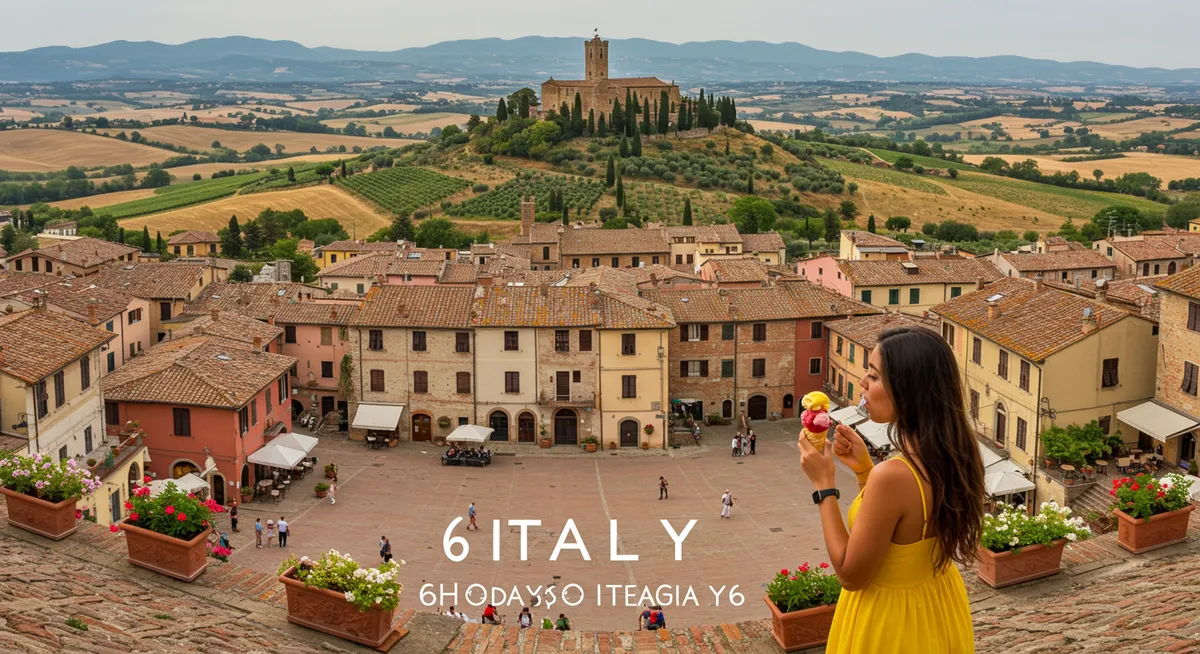
TL;DR: In 6 days you can experience the best of Italy by splitting your time between Rome (2 days), Florence and the Tuscan countryside (2 days), and Venice (2 days). Travel between cities on high-speed trains, pre-book skip-the-line tickets, and budget around €120–180 per day. This 2026 itinerary prioritizes must-see landmarks while leaving room for spontaneous gelato stops and hidden-gem discoveries.
Why 6 Days in Italy Works in 2026
Turn this guide into a personal route with our free Multi-City itinerary planner.
Six days is the sweet spot for a first trip to Italy. It gives you enough time to explore three iconic cities — Rome, Florence, and Venice — without the burnout of a whirlwind tour. With Italy's high-speed rail network connecting these destinations in under two hours each, you spend less time in transit and more time standing in front of Michelangelo's masterpieces or tossing a coin into the Trevi Fountain.
The key to making 6 days work is strategic planning. Rather than cramming in every attraction, this itinerary focuses on the highlights that deliver the greatest emotional and cultural impact. Whether you are a first-time visitor or returning to dig deeper, the route below has been refined with 2026 ticket prices, updated train schedules, and practical logistics in mind. If you are still wondering how many days you need in Italy, six is a strong starting point that covers the essentials.
Day 1–2: Rome — Ancient Wonders and Vatican Treasures
Your Italian adventure begins in Rome, the Eternal City. Two full days allow you to absorb both its ancient and Renaissance sides without feeling rushed.
Day 1: The Colosseum, Roman Forum, and Centro Storico
Start your morning at the Colosseum with a pre-booked timed-entry ticket (€18 in 2026, including the Roman Forum and Palatine Hill). Arriving at opening time — 9:00 AM — means smaller crowds and better photos. Spend about two hours exploring the arena floor and underground chambers, then walk directly into the Roman Forum to trace the political heart of an empire that shaped Western civilization.
After lunch at a trattoria near Campo de' Fiori, head to the Pantheon (free entry), which remains one of the most perfectly preserved ancient buildings in the world. From there, stroll to the Trevi Fountain and the Spanish Steps — both within easy walking distance. End your evening in the Trastevere neighborhood, where narrow cobblestone streets lead to some of Rome's best restaurants. For a more complete breakdown, see our 2-day Rome itinerary.
Day 2: Vatican City and Hidden Gems
Dedicate your second morning to Vatican City. Book a skip-the-line entry for the Vatican Museums (€22 in 2026) to avoid queues that regularly exceed two hours in peak season. The route through the Raphael Rooms to the Sistine Chapel takes roughly 90 minutes if you move at a steady pace. Afterward, climb the dome of St. Peter's Basilica for panoramic views over Rome — it is 551 steps, but the reward is extraordinary.
In the afternoon, explore Castel Sant'Angelo or cross the river to the Aventine Hill for the famous keyhole view of St. Peter's dome framed by a manicured garden hedge. If you want deeper coverage of Rome's offerings, our complete Rome itinerary covers every major highlight.
Day 3–4: Florence and the Tuscan Countryside
On the morning of Day 3, take the Frecciarossa high-speed train from Roma Termini to Firenze Santa Maria Novella. The journey takes just 1 hour 30 minutes and tickets cost €25–50 when booked in advance on Trenitalia or Italo. This is one of the most efficient intercity connections in all of Europe.
Day 3: Renaissance Art and the Duomo
Florence is compact enough to explore on foot. Start at the Cathedral of Santa Maria del Fiore — better known as the Duomo — and climb Brunelleschi's dome for sweeping views of the terracotta rooftops and surrounding Tuscan hills. Next, visit the Accademia Gallery to see Michelangelo's David (book tickets online to skip the line). In the afternoon, lose yourself in the Uffizi Gallery, home to Botticelli's Birth of Venus and works by Leonardo da Vinci and Caravaggio.
As evening approaches, walk across the Ponte Vecchio and head up to Piazzale Michelangelo for what many consider the best sunset viewpoint in all of Italy. Reward yourself with a hearty Bistecca alla Fiorentina at a local osteria. Our Florence itinerary covers the city in greater depth.
Day 4: Tuscan Day Trip — Siena, Pisa, or Chianti Wine Country
Use your fourth day for a Tuscan excursion. You have several excellent options depending on your interests:
- Siena: A medieval gem with the fan-shaped Piazza del Campo, the towering Torre del Mangia, and the stunning Siena Cathedral. Reachable by bus in about 75 minutes from Florence.
- Pisa: See the Leaning Tower (and actually climb it — pre-booking required) in a half-day trip, leaving time for Lucca's charming walled old town on the way back.
- Chianti wine region: Join a small-group tour or rent a car to drive through rolling vineyards, sampling Chianti Classico at family-run estates. Many tours include olive oil tastings and a rustic Tuscan lunch.
Whichever you choose, return to Florence by evening. If you are curious about extending your Tuscan stay, check our guide on how many days you need in Tuscany.
Day 5–6: Venice — Canals, Culture, and Island Escapes
On Day 5, catch the morning high-speed train from Florence to Venice Santa Lucia station (about 2 hours, €30–55). The moment you step off the train and see the Grand Canal stretching out before you, you will understand why Venice has captivated travelers for centuries.
Day 5: St. Mark's Square, Doge's Palace, and the Grand Canal
Begin at Piazza San Marco, one of the most famous squares in the world. Visit St. Mark's Basilica (free entry; skip-the-line reservations recommended) and then explore the ornate Doge's Palace (€30 in 2026), which includes the haunting Bridge of Sighs. After lunch, take a vaporetto (water bus) along the Grand Canal — it functions as both public transport and a scenic cruise past centuries of Venetian architecture.
In the late afternoon, wander through the quieter sestieri of Dorsoduro and Cannaregio, where you will find fewer tourists, authentic bacari (wine bars) serving cicchetti for €2–4 per plate, and breathtaking views of smaller canals. For a complete city plan, see our Venice itinerary.
Day 6: Murano, Burano, and Farewell
Spend your final morning on a vaporetto trip to the islands of Murano and Burano. Murano is famous for its centuries-old glassblowing tradition — watch a live demonstration at one of the furnaces. Burano, about 40 minutes from the main island, is a photographer's dream with its rainbow-painted fishermen's houses and handmade lace shops.
Return to Venice by early afternoon for a final passeggiata (evening stroll), a farewell Aperol Spritz on a canal-side terrace, and one last plate of fresh seafood risotto before heading to the airport or train station. If you have time for a gondola ride, negotiate the price beforehand — the official rate is €80 for a 30-minute ride during the day, rising to €100 after 7 PM.
Budget and Practical Tips for 2026
Knowing what to see in Italy in 6 days is only half the equation — managing costs and logistics makes or breaks the experience. Here are the essentials for 2026:
- Daily budget: Plan for €120–180 per person per day for mid-range travel (accommodation, food, transport, and attractions). Venice is the most expensive city, so budget slightly higher there.
- Trains: Book Trenitalia or Italo tickets 2–4 weeks in advance for the best fares. A Rome–Florence–Venice rail route costs roughly €55–100 total when booked early.
- Accommodation: Shoulder-season rates (April–May and September–October) are 30–50% cheaper than July–August. Boutique hotels in Florence and B&Bs in Venice's Dorsoduro offer excellent value.
- Skip-the-line tickets: Pre-book the Colosseum, Vatican Museums, Uffizi, Accademia, and Doge's Palace. In peak 2026 summer, walk-up queues can exceed 2–3 hours at each site.
- Best time to visit: April through mid-June and September through October offer the ideal balance of pleasant weather, manageable crowds, and reasonable prices.
- Packing: Comfortable walking shoes are non-negotiable — you will cover 12–18 km per day on cobblestones. Bring layers for variable weather and a compact daypack for essentials.
For a broader perspective on trip length, our guides to what to see in Italy in 5 days and what to see in Italy in 10 days can help you decide the right pace for your travel style.
Frequently Asked Questions
Is 6 days enough to see Italy?
What is the best way to travel between cities in Italy?
How much does a 6-day trip to Italy cost in 2026?
When is the best time to visit Italy for 6 days?
Should I add Venice or the Amalfi Coast to a 6-day Italy itinerary?
Can I visit Italy in 6 days with kids?
Do I need to speak Italian to travel in Italy for 6 days?
Italy has a way of exceeding every expectation, even on a 6-day visit. From the ancient grandeur of Rome's Colosseum to the Renaissance brilliance of Florence's galleries and the dreamlike canals of Venice, this itinerary ensures you experience the very best the country has to offer in 2026. The memories you make — a perfect espresso in a Roman piazza, a sunset over the Arno, a quiet moment on a Venetian bridge — will stay with you long after you return home. Start building your personalized Italian itinerary with ItiMaker today.