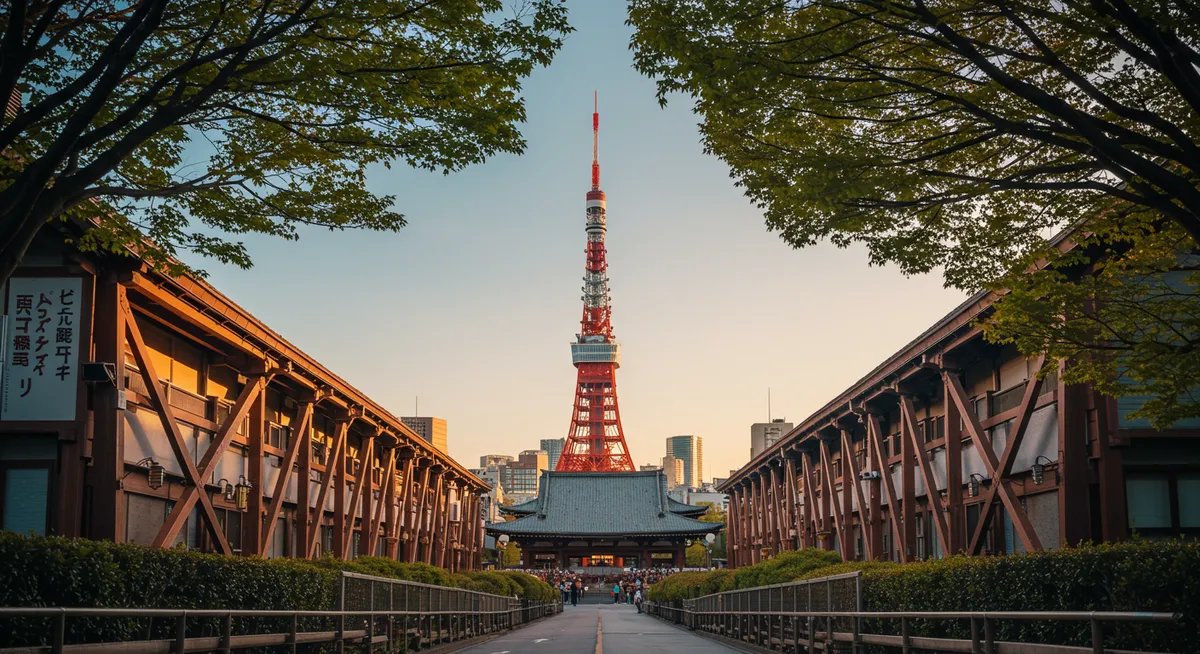
TL;DR: This 7-day Tokyo itinerary takes you through the city's best neighborhoods day by day — from the traditional temples of Asakusa to the neon-lit streets of Shinjuku and Shibuya. You will also find budget breakdowns, transport tips for 2026, and a day trip to Hakone or Kamakura. Whether you are a first-time visitor or returning to discover new corners of Tokyo, this guide has everything you need to plan an unforgettable week in Japan's capital.
Day 1: Asakusa and Ueno — Traditional Tokyo
Turn this guide into a personal route with our free Tokyo itinerary planner.
Start your Tokyo itinerary for 7 days in one of the city's most historic districts. Head to Asakusa early in the morning and walk through the iconic Kaminari Gate (Thunder Gate) toward Senso-ji, Tokyo's oldest Buddhist temple founded in 645 AD. The Nakamise-dori shopping street leading to the temple is lined with stalls selling traditional snacks like ningyo-yaki and crispy senbei rice crackers — perfect for your first taste of Japanese street food.
After exploring Senso-ji, stroll along the Sumida River for views of Tokyo Skytree, the tallest tower in Japan at 634 meters. In the afternoon, take the subway to Ueno and spend time at Ueno Park, home to the Tokyo National Museum, the National Museum of Nature and Science, and several art galleries. The park itself is free to enter and especially beautiful during cherry blossom season in late March and early April. For a quieter experience, wander into Yanaka, one of Tokyo's last remaining old-town neighborhoods where narrow lanes, independent cafes, and small temples offer a glimpse of pre-war Tokyo. If you are interested in finding unique souvenirs during your trip, check out our Tokyo shopping guide for expert recommendations.
Day 2: Shibuya and Harajuku — Modern Culture and Fashion
Day two dives into Tokyo's contemporary heartbeat. Begin at Shibuya Crossing, the world's busiest pedestrian intersection where up to 3,000 people cross simultaneously during peak hours. Watch the spectacle from the Shibuya Sky observation deck on the rooftop of Shibuya Scramble Square for panoramic views stretching to Mount Fuji on clear days. Pay your respects at the Hachiko statue outside Shibuya Station, honoring Japan's most loyal dog.
Walk north toward Harajuku and explore Takeshita Street for its wild fashion boutiques, crepe stands, and youth culture energy. Just off the main drag, visit Meiji Jingu Shrine set within 170 acres of forested parkland — a serene contrast to the surrounding urban buzz. The shrine is free to enter and remains one of Tokyo's most visited spiritual sites. Continue along Omotesando, often called Tokyo's Champs-Elysees, where high-end architecture meets flagship stores from global brands. End the day with dinner in nearby Ebisu or Daikanyama, two of Tokyo's most charming dining neighborhoods. For those planning a shorter stay, our 6-day Tokyo itinerary offers a condensed version of this route.
Day 3: Shinjuku and the Imperial Palace
Shinjuku is Tokyo's busiest station area, serving over 3.5 million passengers daily, and it deserves a full day of exploration. Start your morning at Shinjuku Gyoen National Garden, a 144-acre park combining Japanese, English, and French garden styles. Entry costs just 500 yen and provides a peaceful retreat before the day's adventures. Next, head to the Tokyo Metropolitan Government Building where you can ride elevators to the 45th-floor observation deck completely free of charge — the views rival any paid observation deck in the city.
In the afternoon, travel to the Imperial Palace East Gardens, the former site of Edo Castle. These beautifully maintained gardens are free to enter and offer a fascinating look at the remains of Japan's most powerful feudal fortress. The surrounding moats and stone walls are particularly photogenic. As evening falls, return to Shinjuku for dinner in Omoide Yokocho (Memory Lane), a narrow alley of tiny yakitori restaurants dating back to the post-war era. For nightlife, explore the Golden Gai district with its 200-plus micro-bars, or head to Kabukicho for a taste of Tokyo's entertainment district. Check out our Tokyo neighborhoods guide for more detailed coverage of each area.
Day 4: Akihabara, Ginza, and Toyosu
This day covers three distinct faces of Tokyo. Start in Akihabara, the Electric Town, where multi-story electronics shops, anime merchandise stores, and manga cafes create a sensory overload that is uniquely Tokyo. Visit themed cafes, browse retro gaming shops, or explore the enormous Yodobashi Camera complex for the latest Japanese tech gadgets.
After lunch, take the subway to Ginza, Tokyo's upscale shopping and dining district. Even if luxury shopping is not your thing, the architecture along Chuo-dori is worth seeing, and the area has excellent department store basement floors (depachika) where you can sample premium Japanese sweets and prepared foods. Continue to Toyosu Market, which replaced the legendary Tsukiji Fish Market in 2018. Visitors can watch tuna auctions through glass windows (arrive by 5:30 AM if you want to see this) and eat at the market's sushi restaurants, widely considered some of the freshest in the world. The outer market area at the original Tsukiji location still operates and is worth a morning visit for street food. For more culinary exploration, our Tokyo food guide covers the best eats across the city.
Day 5: Odaiba, TeamLab, and Roppongi
Cross Rainbow Bridge to Odaiba, Tokyo's futuristic waterfront entertainment island built on reclaimed land in Tokyo Bay. Visit the life-sized Unicorn Gundam statue outside DiverCity Tokyo Plaza, explore the digital art museum teamLab Borderless (book tickets online in advance as they sell out quickly in 2026), and enjoy views of the Tokyo skyline from Odaiba Seaside Park. The area also has the National Museum of Emerging Science and Innovation (Miraikan), which is excellent for understanding Japan's role in robotics and space technology.
In the evening, head to Roppongi for dinner and nightlife. Visit the Mori Art Museum on the 53rd floor of Roppongi Hills for contemporary art exhibitions combined with an observation deck offering stunning night views. Tokyo Tower, illuminated in orange after dark, is a short walk away and provides a more intimate viewing experience than Tokyo Skytree. For community-sourced tips on what to see, read our Tokyo 7-day itinerary Reddit roundup featuring real traveler recommendations.
Day 6: Day Trip — Hakone, Kamakura, or Nikko
Use your sixth day for a day trip outside Tokyo to experience a completely different side of Japan. Three excellent options are available depending on your interests:
Hakone (about 90 minutes from Shinjuku by Odakyu Romance Car) offers hot spring resorts, the Hakone Open-Air Museum, a pirate ship cruise on Lake Ashi, and on clear days, iconic views of Mount Fuji. The Hakone Free Pass covers all local transport for two days and costs around 6,100 yen from Shinjuku.
Kamakura (about 60 minutes from Tokyo Station) is a coastal town famous for the Great Buddha (Kotoku-in), Tsurugaoka Hachimangu Shrine, and bamboo groves at Hokoku-ji Temple. The Enoden train ride along the coast to Enoshima Island is a highlight.
Nikko (about 2 hours from Asakusa by Tobu Railway) features the lavishly decorated Toshogu Shrine, a UNESCO World Heritage Site, surrounded by ancient cedar forests and waterfalls. It is the most nature-focused option of the three.
For more day trip options, browse our complete Tokyo day trips guide or our specialized bullet train day trips from Tokyo article.
Day 7: Free Exploration and Departure
Your final day in Tokyo is best kept flexible. If your flight departs in the evening, you have a full day to revisit favorite spots or explore new neighborhoods. Consider visiting Shimokitazawa for vintage shopping and indie cafes, Koenji for its bohemian atmosphere and secondhand clothing stores, or Nakano Broadway for collectibles and otaku culture beyond Akihabara. For last-minute souvenir shopping, Tokyo Station's underground shopping complex (Gransta and Tokyo Character Street) has an enormous selection of Japanese sweets, snacks, and character goods — perfect for picking up gifts right before heading to the airport.
If departing from Narita Airport, allow at least 90 minutes for the Narita Express or Skyliner train. From Haneda Airport, the trip is shorter at roughly 30 to 45 minutes via the Tokyo Monorail or Keikyu Line. Arriving at the airport at least two hours before international flights is recommended in 2026 due to increased tourism demand.
Budget Tips for 7 Days in Tokyo (2026)
Tokyo is more affordable than most visitors expect, especially with the favorable exchange rate in 2026. Here is a rough daily budget breakdown per person:
- Budget traveler: 7,000 to 10,000 yen per day (around $45 to $65 USD) — eat at convenience stores and ramen shops, use subway day passes, visit free attractions
- Mid-range traveler: 12,000 to 20,000 yen per day (around $80 to $130 USD) — mix of restaurants and street food, some paid attractions, occasional taxi
- Comfort traveler: 20,000 to 35,000+ yen per day (around $130 to $230+ USD) — upscale dining, premium experiences, observation deck tickets
These figures exclude accommodation, which ranges from 3,000 yen per night in hostels to 15,000+ yen for mid-range hotels. Booking 3 to 4 months ahead is advisable for 2026 travel, especially during cherry blossom season (late March to mid-April) and autumn foliage (November), when prices can increase 30 to 60 percent. For more money-saving strategies, read our Tokyo budget travel guide.
Getting Around Tokyo: Transportation Tips
Tokyo's public transit system is among the best in the world and the most efficient way to navigate your 7-day itinerary. Get a Suica or PASMO IC card (or add one to your smartphone via Apple Wallet or Google Pay) upon arrival. These rechargeable cards work on all trains, subways, and buses, and even at convenience stores and vending machines.
Consider purchasing a Tokyo Subway 72-Hour Ticket (1,500 yen) for unlimited rides on Tokyo Metro and Toei Subway lines. Buying two of these covers six of your seven days. For JR lines including the Yamanote Loop, a Suica card with pay-per-ride is typically more cost-effective than a JR Pass for Tokyo-only travel. For a deeper dive into navigating the rail system, see our Tokyo transportation guide.
Frequently Asked Questions
What is the best time to visit Tokyo for 7 days in 2026?
How much does a 7-day trip to Tokyo cost in 2026?
Is 7 days enough to see Tokyo?
Where should I stay in Tokyo for a 7-day trip?
Do I need a Japan Rail Pass for 7 days in Tokyo only?
Is Tokyo safe for solo travelers?
A Tokyo itinerary for 7 days in 2026 gives you the perfect amount of time to experience this extraordinary city. From the ancient temples of Asakusa to the futuristic waterfront of Odaiba, from the quiet lanes of Yanaka to the electric energy of Akihabara, a week in Tokyo reveals the countless layers that make Japan's capital one of the most fascinating destinations on earth. Use this guide as your framework, but leave room for the unexpected — some of the best Tokyo experiences come from wandering down a side street you did not plan to explore. For more detailed planning resources, visit our main travel planning hub or browse our full collection of Tokyo itinerary guides.