Rome Travel Guide 3 Days: The Ultimate 2026 Itinerary for First-Timers
Plan 3 perfect days in Rome with this 2026 travel guide. Day-by-day itinerary covering the Colosseum, Vatican, Trastevere, new Trevi Fountain rules, booking tips, and budget advice.
ItiMaker Team12 min read
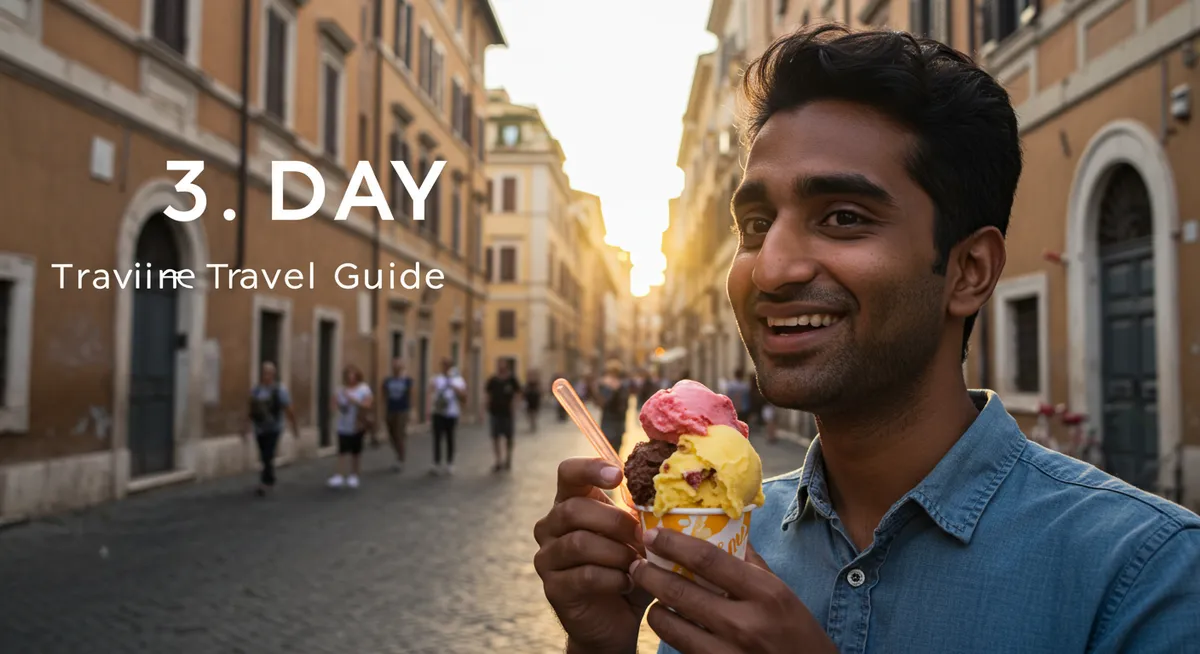
<p><strong>TL;DR:</strong> Three days in Rome is enough to hit every must-see landmark if you plan smartly. Day 1 covers Ancient Rome (Colosseum, Roman Forum, Palatine Hill). Day 2 is devoted to Vatican City (Museums, Sistine Chapel, St. Peter's Basilica). Day 3 explores the historic center — Trevi Fountain, Pantheon, Piazza Navona, Spanish Steps — and ends with dinner in Trastevere. Book timed-entry tickets at least two weeks ahead, budget roughly €100–€150 per day, and arrive at major sites before 9 AM to beat the crowds.</p>
<h1>Rome Travel Guide: 3 Days in the Eternal City (2026 Edition)</h1>
<aside class="affiliate-slot" data-nosnippet
data-affiliate-unit="experience_finder"
data-affiliate-provider="getyourguide"
data-affiliate-widget="getyourguide_city"
data-affiliate-format="widget"
data-affiliate-placement="primary"
data-affiliate-campaign="itimaker-com-unit-gcity-rome-travel-guide-3-days"
data-affiliate-city="Rome"
data-affiliate-location-id="33"
style="min-height:400px">
<span class="affiliate-badge">Sponsored</span>
<div class="affiliate-skeleton" aria-hidden="true"></div>
<p class="affiliate-unit__loading" role="status">Loading live activities…</p>
<div class="affiliate-inner"><div
data-gyg-href="https://widget.getyourguide.com/default/city.frame"
data-gyg-location-id="33"
data-gyg-locale-code="en-US"
data-gyg-widget="city"
data-gyg-partner-id="26CH4CT"
data-gyg-campaign="itimaker-com-unit-gcity-rome-travel-guide-3-days"
data-gyg-cmp="itimaker-com-unit-gcity-rome-travel-guide-3-days"
loading="lazy"></div></div>
</aside>
<p>Rome rewards the well-prepared traveler. With 2,800 years of layered history packed into a walkable city center, a focused <strong>Rome travel guide 3 days</strong> itinerary lets you experience gladiatorial arenas, Renaissance masterpieces, Baroque fountains, and some of the best food in the world — without feeling rushed. This 2026 edition includes updated booking rules, the new Trevi Fountain access fee, and the recently opened Corridor of Commodus at the Colosseum. Whether you are a <a href="https://www.itimaker.com/blog/rome-itinerary-for-first-timers">first-time visitor</a> or returning after years away, this guide gives you a clear, day-by-day plan to make the most of 72 hours in Italy's capital.</p>
<h2>Day 1: Ancient Rome — Colosseum, Roman Forum, and Palatine Hill</h2>
<p>Start your Roman adventure at the heart of the ancient empire. Arrive at the <strong>Colosseum</strong> by 8:30 AM — before the 2,000-person crowds that form by mid-morning — and enter with a pre-booked timed-entry ticket. In 2026, the newly opened <strong>Corridor of Commodus</strong> offers a rare look at the passage connecting the Imperial box, accessible only with the Full Experience ticket. After roughly 90 minutes inside, walk directly into the <strong>Roman Forum</strong>, the civic nerve center where senators debated and triumphal processions passed. Your combined ticket also includes <strong>Palatine Hill</strong>, which provides panoramic views over both the Forum and the Circus Maximus — it is the best photo spot on this entire itinerary.</p>
<aside class="affiliate-slot" data-nosnippet
data-affiliate-unit="experience_finder"
data-affiliate-provider="viator"
data-affiliate-widget="viator_widget"
data-affiliate-format="widget"
data-affiliate-placement="secondary"
data-affiliate-campaign="itimaker-com-unit-vauto-rome-travel-guide-3-days"
data-affiliate-city="Rome"
data-affiliate-location-id=""
style="min-height:600px">
<span class="affiliate-badge">Sponsored</span>
<div class="affiliate-skeleton" aria-hidden="true"></div>
<p class="affiliate-unit__loading" role="status">Loading live activities…</p>
<div class="affiliate-inner"><div
data-vi-partner-id="P00271059"
data-vi-widget-ref="W-d5dc59c4-3a04-417e-8a46-7be440461eba"
data-vi-search-term="Rome"
data-vi-campaign="itimaker-com-unit-vauto-rome-travel-guide-3-days"
data-campaign="itimaker-com-unit-vauto-rome-travel-guide-3-days"></div></div>
</aside>
<p>By early afternoon, stroll south to the <strong>Circus Maximus</strong> for a sense of scale, then loop back through the charming streets around the <a href="https://www.itimaker.com/blog/rome-hidden-gems-guide">lesser-known neighborhoods</a> of Celio or Monti. Monti is Rome's trendiest rione, filled with vintage shops, craft cocktail bars, and authentic trattorias where a <em>cacio e pepe</em> costs under €12. End the day with an <em>aperitivo</em> on a rooftop terrace overlooking the Forum ruins — several bars along Via dei Fori Imperiali offer exactly this experience.</p>
<p><strong>Pro tip:</strong> Wear broken-in walking shoes with good grip. The Forum's ancient paving stones are uneven, and you will log 15,000–20,000 steps on Day 1 alone. For a deeper look at how long you actually need, see our guide on <a href="https://www.itimaker.com/blog/how-many-days-do-you-need-to-see-rome">how many days you need in Rome</a>.</p>
<h2>Day 2: Vatican City — Museums, Sistine Chapel, and St. Peter's Basilica</h2>
<p>Dedicate your second day entirely to <strong>Vatican City</strong>, the world's smallest independent state and home to some of humanity's greatest artistic achievements. Book a timed entry for the <strong>Vatican Museums</strong> at 8 AM or 7:30 AM if an early-access option is available. The museums contain over 70,000 works across 54 galleries, but the essential route takes about two to three hours and culminates in the <strong>Sistine Chapel</strong>. Michelangelo's ceiling frescoes and <em>The Last Judgment</em> are genuinely overwhelming in person — no photograph does justice to the scale and color.</p>
<aside class="affiliate-slot" data-nosnippet
data-affiliate-unit="experience_finder"
data-affiliate-provider="getyourguide"
data-affiliate-widget="getyourguide_activities"
data-affiliate-format="widget"
data-affiliate-placement="tertiary"
data-affiliate-campaign="itimaker-com-unit-gact-rome-travel-guide-3-days"
data-affiliate-city="Rome"
data-affiliate-location-id="33"
style="min-height:420px">
<span class="affiliate-badge">Sponsored</span>
<div class="affiliate-skeleton" aria-hidden="true"></div>
<p class="affiliate-unit__loading" role="status">Loading live activities…</p>
<div class="affiliate-inner"><div
data-gyg-href="https://widget.getyourguide.com/default/activities.frame"
data-gyg-location-id="33"
data-gyg-locale-code="en-US"
data-gyg-widget="activities"
data-gyg-partner-id="26CH4CT"
data-gyg-campaign="itimaker-com-unit-gact-rome-travel-guide-3-days"
data-gyg-cmp="itimaker-com-unit-gact-rome-travel-guide-3-days" data-gyg-number-of-items="4"
loading="lazy"></div></div>
</aside>
<p>Exit the museums and circle around to <strong>St. Peter's Square</strong>. Enter <strong>St. Peter's Basilica</strong> (free admission, but expect a 20–30 minute security line). Inside, seek out Michelangelo's <em>Pietà</em>, Bernini's baldachin, and the papal tombs in the grottoes below. For the best view in all of Rome, climb the 551 steps to the top of <strong>St. Peter's Dome</strong> (€10 with elevator to the first level, or €8 for the full stair climb). The 360-degree panorama of the city is unforgettable.</p>
<p>After the Vatican, cross the Tiber via Ponte Sant'Angelo and visit <strong>Castel Sant'Angelo</strong>, the cylindrical fortress originally built as Emperor Hadrian's mausoleum. The rooftop terrace offers another stunning viewpoint. For lunch, the Prati neighborhood immediately north of the Vatican has excellent restaurants without the tourist markup. Remember: the Vatican enforces a strict dress code — shoulders and knees must be covered, and this is checked at the entrance.</p>
<p><strong>Important 2026 note:</strong> The Vatican Museums are closed on Sundays except the last Sunday of each month, when entry is free but extremely crowded. Plan your <a href="https://www.itimaker.com/blog/rome-itinerary-3-days">3-day Rome itinerary</a> around this schedule.</p>
<h2>Day 3: Baroque Rome — Fountains, Piazzas, and Trastevere</h2>
<p>Your final day explores Rome's theatrical Baroque heart and its most charming neighborhood. Start at the <strong>Trevi Fountain</strong> early — ideally before 8 AM, when you can admire it without crowds. As of February 2026, Rome charges a <strong>€2 access fee</strong> for tourists who want to enter the inner perimeter for a close-up view and coin toss. The fountain remains free to view from the surrounding piazza above, and the fee can be paid in advance online. Toss your coin (right hand, over the left shoulder) and move on to the <strong>Pantheon</strong>, a five-minute walk away.</p>
<p>The <strong>Pantheon</strong> is Rome's best-preserved ancient structure, with its 2,000-year-old unreinforced concrete dome still the largest of its kind. Entry costs €5 with a timed ticket (book on the official site). From here, walk to <strong>Piazza Navona</strong>, the elongated square built on the footprint of Domitian's stadium. Bernini's <em>Fountain of the Four Rivers</em> anchors the center, and the surrounding cafés are perfect for a mid-morning espresso — though you will pay a premium for the view.</p>
<p>After lunch, climb the <strong>Spanish Steps</strong> (sitting is no longer allowed, but the view from the top remains excellent), then browse the high-end shops along Via Condotti or head to the green oasis of <strong>Villa Borghese</strong> park. In the late afternoon, cross the Tiber to <strong>Trastevere</strong>, Rome's most atmospheric neighborhood. Wander its narrow cobblestone streets, pop into the golden-mosaic church of <strong>Santa Maria in Trastevere</strong>, and settle into a traditional trattoria for your final Roman dinner. Order the <em>supplì</em> (fried rice balls) as a starter, <em>cacio e pepe</em> or <em>amatriciana</em> as your main, and finish with a <em>tartufo</em> gelato from a nearby gelateria.</p>
<p>If you want to explore beyond Rome, check our guides on <a href="https://www.itimaker.com/blog/day-trips-from-rome-easy">easy day trips from Rome</a> and whether <a href="https://www.itimaker.com/blog/can-you-do-a-day-trip-to-florence-from-rome">a day trip to Florence</a> is worth it.</p>
<h2>Rome 2026 Booking and Budget Tips</h2>
<p>Rome in 2026 requires more advance planning than ever. Here is what you need to know before you go:</p>
<ul>
<li><strong>Colosseum tickets:</strong> Book the Full Experience ticket (€22) on the official Parco Colosseo website at least 2–3 weeks ahead. Timed-entry slots sell out fast, especially morning ones. The ticket includes the Roman Forum and Palatine Hill and is valid for two consecutive days.</li>
<li><strong>Vatican Museums:</strong> Official tickets cost €17 (€8 reduced). Skip-the-line guided tours cost €35–€60 but are worth it to avoid the 90-minute peak-season queue. Book at the official Vatican website.</li>
<li><strong>Trevi Fountain:</strong> The new €2 inner-perimeter fee applies during daytime hours. Visit before 8 AM or after 9 PM for free close-up access with fewer people.</li>
<li><strong>Pantheon:</strong> €5 timed entry, bookable online. Free on the first Sunday of each month.</li>
<li><strong>Daily budget:</strong> Expect roughly €100–€150 per person per day for a mid-range trip (accommodation excluded). This covers meals (€30–€50), transport (€7 for a 24-hour metro/bus pass), attractions (€30–€45), and incidentals.</li>
<li><strong>Payment:</strong> Cards are widely accepted, but carry €20–€30 in cash for small cafés, gelaterias, and market stalls.</li>
</ul>
<p>For a detailed cost breakdown, read our guide on <a href="https://www.itimaker.com/blog/5-days-in-rome-budget">budgeting for Rome</a> and <a href="https://www.itimaker.com/blog/rome-budget-travel-tips">Rome budget travel tips</a>.</p>
<h2>Getting Around Rome in 3 Days</h2>
<p>Rome's historic center is remarkably walkable — most major sights sit within a 30-minute walk of each other. However, the metro is useful for covering longer distances quickly:</p>
<ul>
<li><strong>Metro Line A</strong> connects Ottaviano (Vatican) to Spagna (Spanish Steps) and Termini (main train station).</li>
<li><strong>Metro Line B</strong> stops at Colosseo (Colosseum) and connects to Termini.</li>
<li>A single ride costs €1.50, valid for 100 minutes on buses and trams (but only one metro ride). A <strong>24-hour pass</strong> costs €7 and is the best value for a full sightseeing day.</li>
<li>Taxis use meters; expect €10–€15 for cross-center rides. A flat rate of €50 applies from Fiumicino Airport to the city center.</li>
</ul>
<p>For a complete transportation breakdown, see our guide on <a href="https://www.itimaker.com/blog/how-to-get-around-rome">how to get around Rome</a>.</p>
<h2>Best Time to Visit Rome</h2>
<p>The ideal months are <strong>April–June</strong> and <strong>September–October</strong>, when temperatures hover between 18°C and 28°C, rainfall is low, and crowds are more manageable than in July–August. Summer brings 35°C+ heat and peak tourist numbers. Winter (November–February) is the cheapest season, with mild temperatures (8°C–14°C) and shorter queues, though some outdoor attractions have reduced hours. For detailed seasonal guidance, see our <a href="https://www.itimaker.com/blog/best-time-to-visit-rome">best time to visit Rome</a> guide and <a href="https://www.itimaker.com/blog/rome-weather-by-month">Rome weather by month</a> analysis.</p>
<h2>Where to Stay in Rome for 3 Days</h2>
<p>Your base determines how much time you spend on transport versus sightseeing. The best neighborhoods for a 3-day trip are:</p>
<ul>
<li><strong>Centro Storico</strong> (historic center): Walk to the Pantheon, Trevi Fountain, and Piazza Navona. Premium pricing but unbeatable convenience.</li>
<li><strong>Monti:</strong> Rome's hippest neighborhood, steps from the Colosseum and Termini station. Great value mid-range hotels and B&Bs.</li>
<li><strong>Trastevere:</strong> Charming, atmospheric, excellent food scene. Slightly farther from the Vatican but well-connected by tram and bus.</li>
<li><strong>Prati:</strong> Quiet, residential, walking distance to the Vatican. Good restaurants without tourist markups.</li>
<li><strong>Near Termini:</strong> Budget-friendly with direct metro access to all itinerary stops. Choose carefully — quality varies block by block.</li>
</ul>
<p>Browse our <a href="https://www.itimaker.com/blog/where-to-stay-in-rome">where to stay in Rome</a> guide for specific hotel recommendations, or check <a href="https://www.itimaker.com/blog/kid-friendly-hotels-rome">kid-friendly hotels</a> if you are traveling with children.</p>
<h2>Frequently Asked Questions</h2>
<div itemscope="" itemtype="https://schema.org/FAQPage">
<div class="faq-item" itemprop="mainEntity" itemscope="" itemtype="https://schema.org/Question">
<h3 itemprop="name">Is 3 days enough to see Rome in 2026?</h3>
<div itemprop="acceptedAnswer" itemscope="" itemtype="https://schema.org/Answer">
<div itemprop="text">Yes, three days is enough to cover Rome's top highlights — the Colosseum, Roman Forum, Vatican Museums, Sistine Chapel, St. Peter's Basilica, Trevi Fountain, Pantheon, and Trastevere. You will not see everything, but you will experience the essential landmarks and get a genuine feel for the city. If you have flexibility, four to five days allows a more relaxed pace and time for day trips.</div>
</div>
</div>
<div class="faq-item" itemprop="mainEntity" itemscope="" itemtype="https://schema.org/Question">
<h3 itemprop="name">Do I need to book Rome attractions in advance for 2026?</h3>
<div itemprop="acceptedAnswer" itemscope="" itemtype="https://schema.org/Answer">
<div itemprop="text">Absolutely. The Colosseum, Vatican Museums, Borghese Gallery, and Pantheon all require timed-entry tickets that frequently sell out 2–3 weeks ahead, especially during spring and summer. Book through official websites to avoid inflated third-party prices. The Trevi Fountain inner-perimeter access (€2) can also be booked online to skip the on-site queue.</div>
</div>
</div>
<div class="faq-item" itemprop="mainEntity" itemscope="" itemtype="https://schema.org/Question">
<h3 itemprop="name">What is the new Trevi Fountain fee in 2026?</h3>
<div itemprop="acceptedAnswer" itemscope="" itemtype="https://schema.org/Answer">
<div itemprop="text">Since February 2026, Rome charges a €2 fee for tourists who want to step into the inner perimeter of the Trevi Fountain during daytime hours. The fountain remains free to view from the piazza above. The fee helps manage crowding and can be paid in advance online or at the entrance. Visiting before 8 AM or after 9 PM lets you access the inner area for free.</div>
</div>
</div>
<div class="faq-item" itemprop="mainEntity" itemscope="" itemtype="https://schema.org/Question">
<h3 itemprop="name">What is the best way to get around Rome for 3 days?</h3>
<div itemprop="acceptedAnswer" itemscope="" itemtype="https://schema.org/Answer">
<div itemprop="text">Walking is the best way to explore Rome's historic center, where most major sights are within 30 minutes of each other on foot. The metro (Lines A and B) is useful for longer distances — Line A connects the Vatican to the Spanish Steps and Termini, while Line B stops at the Colosseum. A 24-hour transit pass costs €7 and covers metro, buses, and trams. Taxis are metered and cost €10–€15 for cross-center rides.</div>
</div>
</div>
<div class="faq-item" itemprop="mainEntity" itemscope="" itemtype="https://schema.org/Question">
<h3 itemprop="name">How much does 3 days in Rome cost in 2026?</h3>
<div itemprop="acceptedAnswer" itemscope="" itemtype="https://schema.org/Answer">
<div itemprop="text">For a mid-range trip, budget approximately €100–€150 per person per day excluding accommodation. This covers meals (€30–€50), public transport (€7 for a day pass), attraction entries (€30–€45 including Colosseum, Vatican, Pantheon, and Trevi access), and incidentals. Hotels range from €80–€120 per night for a mid-range double room near the center to €200+ for boutique properties. Total for 3 days: roughly €500–€700 per person including accommodation.</div>
</div>
</div>
<div class="faq-item" itemprop="mainEntity" itemscope="" itemtype="https://schema.org/Question">
<h3 itemprop="name">What should I eat in Rome?</h3>
<div itemprop="acceptedAnswer" itemscope="" itemtype="https://schema.org/Answer">
<div itemprop="text">Rome's four classic pasta dishes are cacio e pepe (pecorino and black pepper), carbonara (egg, guanciale, pecorino), amatriciana (tomato, guanciale, pecorino), and gricia (guanciale and pecorino without egg). Start meals with supplì (fried rice balls) or bruschetta. For street food, try pizza al taglio (pizza by the slice) — Bonci Pizzarium near the Vatican is legendary. End every day with artisan gelato from shops that display covered metal tins rather than colorful mounds. Trastevere and Testaccio are the best neighborhoods for authentic, non-touristy dining.</div>
</div>
</div>
<div class="faq-item" itemprop="mainEntity" itemscope="" itemtype="https://schema.org/Question">
<h3 itemprop="name">Is Rome safe for tourists in 2026?</h3>
<div itemprop="acceptedAnswer" itemscope="" itemtype="https://schema.org/Answer">
<div itemprop="text">Rome is generally very safe for tourists. The main concern is pickpocketing in crowded areas like the Colosseum, metro stations, and bus line 64 (the Vatican bus). Use a crossbody bag, keep valuables in front pockets, and stay alert on public transport. Avoid unofficial tour guides and restaurant touts near major landmarks — they often charge inflated prices. The Termini station area can feel less safe at night, but most of the historic center is well-lit and busy until late.</div>
</div>
</div>
</div>
<h2>Plan Your Rome Trip with ItiMaker</h2>
<p>This <strong>Rome travel guide 3 days</strong> itinerary gives you a proven framework, but every traveler's priorities differ. Whether you want to extend your trip to <a href="https://www.itimaker.com/blog/rome-itinerary-5-days">5 days in Rome</a>, combine it with <a href="https://www.itimaker.com/blog/rome-and-florence-in-5-days">Florence</a> or <a href="https://www.itimaker.com/blog/rome-and-naples-in-5-days">Naples</a>, or build a full <a href="https://www.itimaker.com/blog/10-day-italy-itinerary-starting-in-milan">10-day Italy itinerary</a>, our <a href="https://www.itimaker.com">ItiMaker trip planner</a> helps you organize every detail. Explore more <a href="https://www.itimaker.com/blog/rome-travel-tips-first-timers">first-timer tips for Rome</a> and start building your perfect itinerary today.</p>
Make this guide part of your trip.
Turn the ideas you like into a personal day-by-day route, then edit every detail.
Build my itinerary