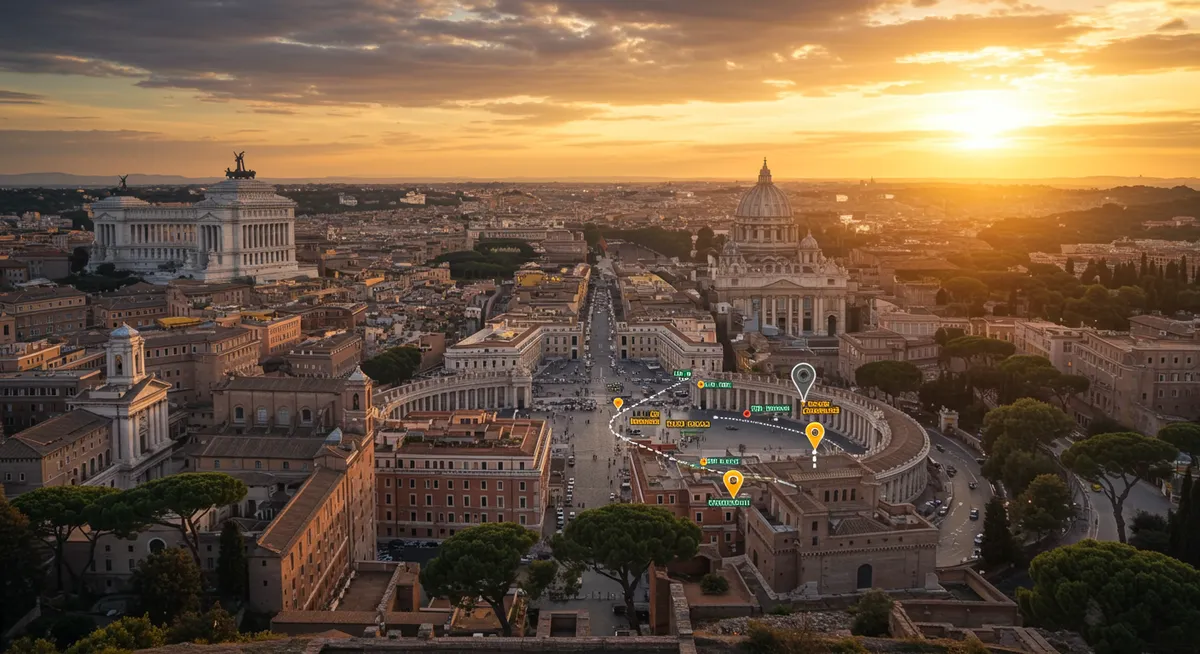
TL;DR: Day 1 covers Ancient Rome (Colosseum, Roman Forum, Palatine Hill, Pantheon, Trevi Fountain) and an evening in Trastevere. Day 2 tackles Vatican City (Museums, Sistine Chapel, St. Peter's Basilica), the Spanish Steps, and Piazza Navona. Pre-book Colosseum and Vatican tickets, wear sturdy walking shoes, and eat away from tourist traps. This Reddit-tested 2-day Rome itinerary for 2026 keeps you moving without burning out.
Two days in Rome sounds ambitious — and it is. But after compiling advice from hundreds of Reddit threads, travel forums, and personal experience, we can confirm that 48 hours is enough to hit the Eternal City's essential highlights without feeling like you sprinted through a museum. This 2026 guide gives you an hour-by-hour plan, insider booking strategies, neighborhood food picks, and the exact tips that Redditors swear by. Whether it is your first visit or a return trip, this Rome itinerary will help you make the most of every hour.
Day 1: Ancient Rome, the Historic Center, and Trastevere
Turn this guide into a personal route with our free Rome itinerary planner.
Morning: Colosseum, Roman Forum, and Palatine Hill (8:30 AM - 1:00 PM)
Start your day at the Colosseum as early as possible. The combined ticket (valid 24 hours) covers the Colosseum, Roman Forum, and Palatine Hill — purchase it online at least two weeks in advance, because same-day availability is essentially nonexistent in 2026. Reddit's top recommendation: book the first entry slot of the day (typically 8:30 AM) when crowds are thinnest and the morning light is stunning for photographs.
After roughly 90 minutes inside the amphitheater, walk directly into the Roman Forum through the connecting entrance. Allow about an hour to explore the Temple of Saturn, the Arch of Titus, and the Via Sacra. Then climb Palatine Hill for panoramic views over the Forum and Circus Maximus — a vantage point that many travelers say is the most underrated in Rome. Budget about 30 minutes here before heading out.
Afternoon: Pantheon, Trevi Fountain, and Piazza Navona (1:30 PM - 5:30 PM)
Grab lunch at a trattoria near Largo di Torre Argentina (Redditors recommend staying at least two blocks from any major monument to avoid tourist-trap pricing). Try a supplì (fried rice ball) or pizza al taglio (pizza by the slice) from a hole-in-the-wall — both cost under five euros and are quintessentially Roman.
After lunch, walk to the Pantheon. As of 2026, entry requires a timed reservation (five euros); book it the same morning via the official site. The oculus and the 2,000-year-old unreinforced concrete dome remain one of architecture's greatest achievements. Spend about 30 minutes here, then stroll five minutes to the Trevi Fountain. Reddit's unanimous advice: visit between 7:00 and 8:00 AM or after 9:00 PM if you want photos without hundreds of heads in the frame. During the afternoon, simply admire it, toss a coin, and move on.
Continue to Piazza Navona to see Bernini's Fountain of the Four Rivers and the surrounding Baroque facades. This is a great spot for a gelato break — look for shops that display gelato in covered metal tins rather than piled-high colorful mounds, a reliable sign of quality according to both locals and Reddit foodies. For a deeper look at what to see in Rome in 2 days, our companion guide covers additional options.
Evening: Trastevere Dinner and Nightlife (6:30 PM - 10:00 PM)
Cross the Tiber into Trastevere, Rome's most charming neighborhood. Cobblestone lanes, ivy-covered buildings, and a village-like atmosphere make this the perfect spot for your first Roman evening. Start with aperitivo at a bar like Freni e Frizioni, where a single drink comes with a generous spread of complimentary snacks — a budget-friendly way to fill up. For dinner, seek out a quiet side street off Piazza Santa Maria in Trastevere; classic dishes to order include cacio e pepe, carbonara, and amatriciana. Expect to spend 15 to 25 euros per person at a mid-range trattoria.
Day 2: Vatican City, Baroque Highlights, and Sunset Views
Morning: Vatican Museums, Sistine Chapel, and St. Peter's Basilica (7:30 AM - 1:00 PM)
Arrive at the Vatican Museums entrance on Viale Vaticano by 7:30 AM if you have an early-entry ticket (strongly recommended), or by 8:00 AM for standard timed entry. The museums contain over 70,000 works across 54 galleries, but with limited time, focus on the Gallery of Maps, the Raphael Rooms, and of course the Sistine Chapel. Allow two to three hours total. A popular Reddit strategy: when you exit the Sistine Chapel, take the group-tour exit door on the right — it leads directly into St. Peter's Basilica, skipping the long security line outside.
Inside St. Peter's, see Michelangelo's Pietà (immediately to the right after entering) and Bernini's baldachin over the papal altar. If you have energy, climb the 551 steps to the dome for a breathtaking 360-degree view of Rome — or take the elevator for the first 231 steps and walk the remaining 320. The dome climb costs about 10 euros and is worth every cent. Check our 4-day Rome itinerary if you want to extend your Vatican exploration.
Afternoon: Spanish Steps, Shopping District, and Borghese Views (1:30 PM - 5:00 PM)
Take the Metro Line A from Ottaviano (near the Vatican) to Spagna station. Emerge at the foot of the Spanish Steps, one of Rome's most photographed landmarks. Climb the 135 steps to the Trinità dei Monti church for views over the city's rooftops. From here, you are steps from Via dei Condotti, Rome's premier shopping street — window shopping is free and the people-watching is excellent.
Walk north through the Villa Borghese gardens for a peaceful break from the city's intensity. The Pincio Terrace offers a spectacular sunset-facing viewpoint over Piazza del Popolo and the Roman skyline. If you planned ahead and booked a slot (reservations are mandatory and often sell out weeks in advance), the Borghese Gallery houses masterpieces by Bernini, Caravaggio, and Raphael in a two-hour timed visit. If you are visiting Rome in 2 days for the first time, the Borghese Gallery is a strong contender for your afternoon.
Evening: Piazza Navona and a Final Roman Dinner (6:00 PM - 9:30 PM)
Return to the historic center for your farewell evening. Revisit Piazza Navona or explore the quieter streets around Campo de' Fiori, where you will find excellent restaurants without the Vatican-area markup. End with a scoop of gelato from a highly rated gelateria — Fatamorgana and Giolitti are two names that consistently appear in Reddit recommendation threads. For those considering a longer Italian adventure, our Rome and Florence in 5 days guide picks up where this itinerary leaves off.
Budget Breakdown: What 2 Days in Rome Actually Costs in 2026
Knowing what to expect financially helps you plan without surprises. Here is a realistic per-person budget for a mid-range 2-day Rome trip in 2026:
- Colosseum + Forum + Palatine Hill combined ticket: 18-24 euros (varies by season and underground access add-on)
- Vatican Museums + Sistine Chapel: 20 euros (standard online booking; guided tours run 40-60 euros)
- Pantheon reservation: 5 euros
- St. Peter's Dome climb: 8-10 euros
- Metro/bus tickets: 1.50 euros per single ride, or 7 euros for a 24-hour pass (the 48-hour pass at 12.50 euros is ideal for this itinerary)
- Food per day: 30-50 euros (street food lunch, sit-down dinner, gelato)
- Accommodation (budget to mid-range): 80-150 euros per night for a double room in Trastevere, Monti, or near Termini
Total estimate: 250-450 euros per person for two days, depending on accommodation and dining choices. Rome is not the cheapest European capital, but eating where locals eat and using public transport keeps costs reasonable.
Reddit's Most Repeated Tips for Rome in 2026
After reviewing dozens of Reddit threads, these are the tips that appear most frequently and consistently receive high upvotes:
- Book everything in advance. The Colosseum, Vatican Museums, Pantheon, and Borghese Gallery all require or strongly recommend advance reservations. Showing up without tickets in 2026 means either paying inflated third-party prices or missing the attraction entirely.
- Wear broken-in walking shoes. You will walk 20,000 to 30,000 steps per day on uneven cobblestones. Blisters on day one will ruin day two.
- Eat away from monuments. Walk at least two to three blocks from any major attraction before choosing a restaurant. Look for places with Italian-language menus and no staff standing outside soliciting customers.
- Carry a refillable water bottle. Rome has over 2,500 public drinking fountains (nasoni) with clean, cold water. Buying bottled water is unnecessary.
- Watch for pickpockets. Crowded metro stations (especially Termini), the Colosseum area, and buses 40 and 64 are hotspots. Use a crossbody bag and keep valuables in front pockets.
- Download offline maps. Cell service can be patchy in some areas, and having Google Maps or CityMapper downloaded offline ensures you never get lost in Rome's winding streets.
- Validate your bus/metro ticket. Inspectors do check, and fines for unvalidated tickets are steep (over 50 euros). Tap your ticket at the yellow machine when boarding.
Planning a place to stay in Rome for 2 days? Neighborhood choice matters — our accommodation guide breaks down the best areas by budget and proximity to attractions.
Getting Around Rome in 2 Days
Rome's historic center is surprisingly walkable. Most Day 1 attractions (Colosseum to Trevi Fountain) are within a 30-minute walk of each other. Day 2 requires one Metro ride to reach the Vatican from the city center. Here is what you need to know:
- Metro: Two main lines (A and B) intersect at Termini station. Line B serves the Colosseum (Colosseo stop), Line A serves the Vatican (Ottaviano stop) and Spanish Steps (Spagna stop).
- Buses: Useful for reaching Trastevere (bus H from Termini) or crossing the city when the Metro does not go where you need.
- Taxis: Metered and generally honest, but agree on a fare first for airport transfers. Uber operates in Rome but availability is inconsistent.
- Walking: The best way to experience Rome. Many of the city's most beautiful discoveries happen on the streets between major attractions.
For a single-day blitz, our 1-day Rome itinerary condenses the highlights further. If you have more time, the 5-day Rome itinerary lets you explore neighborhoods like Monti, Testaccio, and the Appian Way.
Frequently Asked Questions
Is 2 days enough for Rome?
What is the best way to get around Rome in 2 days?
How far in advance should I book Colosseum and Vatican tickets?
What should I eat in Rome on a budget?
Is the Rome Pass worth it for a 2-day visit?
What is the best neighborhood to stay in Rome for 2 days?
When is the best time to visit Rome for a 2-day trip?
A 2-day Rome itinerary demands smart planning, but the payoff is enormous. From standing inside the Colosseum where gladiators once fought to gazing up at the Sistine Chapel ceiling, Rome compresses thousands of years of history into a remarkably walkable city. Use this Reddit-tested itinerary as your framework, adapt it to your interests, and leave room for the unplanned moments — a perfect espresso at a corner bar, a sunset over the Tiber, or a conversation with a local that changes your perspective. Rome rewards those who plan well and wander freely. To build a custom itinerary tailored to your travel dates and preferences, try our free itinerary planning tool.