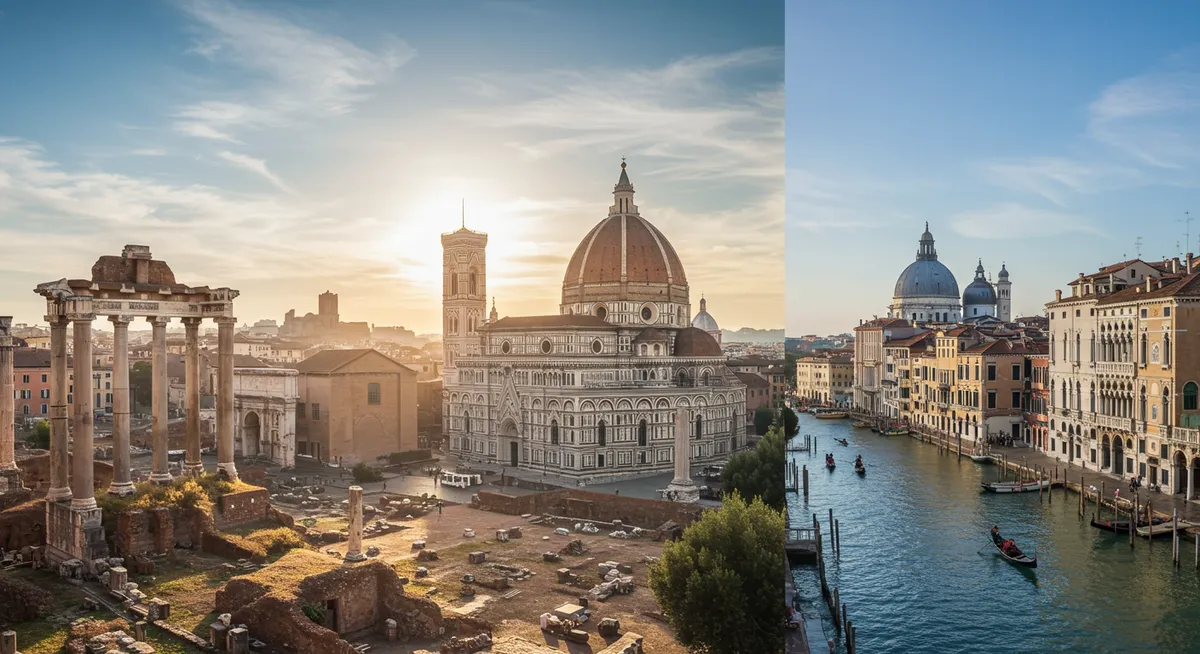
TL;DR: Spend 2 days in Rome (Colosseum, Vatican), 1.5 days in Florence (Uffizi, Duomo), and 1.5 days in Venice (St. Mark's, gondola ride). Travel between cities on high-speed trains that take under 2 hours each. Budget roughly €120–€180 per person per day for mid-range travel in 2026. Book major attractions 2–4 weeks ahead to skip the lines.
Italy packs centuries of history, world-class art, and legendary food into three cities that sit along a single high-speed rail corridor. A Rome Florence Venice 5 days trip is one of the most popular ways to experience Italy, and for good reason: no domestic flights, no complicated transfers, and each city delivers an entirely different atmosphere. This 2026 guide gives you a realistic, day-by-day plan that balances iconic landmarks with local discoveries, practical train logistics, and honest budget advice.
Why This 5-Day Route Works So Well
Turn this guide into a personal route with our free Multi-City itinerary planner.
Rome, Florence, and Venice are connected by Trenitalia's Frecciarossa and Italo's high-speed trains, making transfers effortless. Rome to Florence takes roughly 1 hour 30 minutes, and Florence to Venice about 2 hours. That means you spend your time exploring, not commuting. The route also moves chronologically through Italian history — ancient Rome, Renaissance Florence, and maritime Venice — giving your trip a natural narrative arc.
For travelers debating whether 5 days is enough, the answer is a confident yes, provided you plan efficiently. This itinerary focuses on the highest-impact experiences in each city while leaving room for spontaneous wandering. If you have more time, consider our 10-day Rome Florence Venice itinerary for a more relaxed pace.
Day 1: Arrive in Rome — Ancient History Comes Alive
Fly into Rome Fiumicino (FCO) and take the Leonardo Express train to Roma Termini station (32 minutes, around €15 in 2026). Drop your bags at your hotel and head straight to the heart of ancient Rome.
Morning & Afternoon: Colosseum, Roman Forum & Palatine Hill
Start at the Colosseum — book a timed-entry ticket at least two weeks ahead to avoid the notoriously long queues. The combined ticket includes the Roman Forum and Palatine Hill, which sit directly adjacent. Allow 3–4 hours total for all three sites. Walking through the Forum where Julius Caesar was cremated and senators once debated is genuinely humbling, even for repeat visitors.
Evening: Trastevere Neighborhood
Cross the Tiber to Trastevere for dinner. This cobblestoned neighborhood has the best ratio of authentic trattorias to tourist traps in central Rome. Try cacio e pepe or supplì (fried rice balls) at a local spot. For a deeper dive into the Eternal City, check out our comprehensive Rome itinerary guide.
Day 2: Vatican City & Rome's Baroque Highlights
Get to the Vatican Museums before they open — the doors open at 8:00 AM, and arriving by 7:30 AM dramatically reduces your wait time. Pre-booked skip-the-line tickets (around €22 in 2026) are practically mandatory during peak season.
Morning: Vatican Museums & Sistine Chapel
Follow the museum route through to the Sistine Chapel, where Michelangelo's ceiling frescoes remain one of the most jaw-dropping artistic achievements you will ever see in person. Budget 2–3 hours for the museums. Afterward, walk to St. Peter's Basilica (free entry) and climb to the dome for panoramic views across Rome.
Afternoon: Trevi Fountain, Pantheon & Spanish Steps
Head back into central Rome for an afternoon of baroque highlights. Toss a coin into the Trevi Fountain (recently restored and spectacular in 2026), admire the engineering marvel of the Pantheon (free entry, timed reservation required), and climb the Spanish Steps for golden-hour views. End with a gelato from a gelateria that makes its own flavors daily — look for "produzione propria" signs.
If you want to see more of Rome, our guides to the best time to visit Rome and Rome travel tips for first-timers cover everything you need to know.
Day 3: High-Speed Train to Florence & Renaissance Immersion
Catch a morning Frecciarossa from Roma Termini to Firenze Santa Maria Novella. Trains depart every 20–30 minutes, and the ride takes about 1.5 hours. Book on Trenitalia or Italo at least a week ahead for the best fares — expect €20–€50 one-way in 2026. For detailed transport options, see our guide on getting from Rome to Florence.
Late Morning: The Duomo Complex
Drop your luggage at your Florence accommodation and walk to the Cathedral of Santa Maria del Fiore (the Duomo). Climb Brunelleschi's Dome (463 steps, pre-booking required) for the best panoramic view in the city. The Baptistery's Gates of Paradise and Giotto's Bell Tower complete the complex.
Afternoon: Uffizi Gallery
The Uffizi Gallery houses Botticelli's Birth of Venus, Caravaggio's Medusa, and works by Leonardo da Vinci and Raphael. This is the single most important art museum on your Rome Florence Venice 5 days trip. Book timed-entry tickets well in advance — the museum sells out regularly. Allow 2–3 hours.
Evening: Ponte Vecchio & Oltrarno
Stroll across the Ponte Vecchio as the sun sets, then explore the Oltrarno district on the south bank. This artisan quarter has traditional leather workshops, wine bars, and trattorias where Florentines actually eat. Try a bistecca alla fiorentina (Florentine T-bone steak) — it is the city's signature dish. For more Florence tips, read our Florence itinerary guide and best Florence attractions for first-timers.
Day 4: Florence Morning, Then Train to Venice
Use your morning to hit the attractions you could not fit yesterday.
Morning: Accademia Gallery & San Lorenzo Market
Visit the Accademia Gallery to see Michelangelo's David in person — photos do not do justice to its 17-foot scale and marble detail. Then browse the San Lorenzo Market for leather goods, local produce, and souvenirs. Grab a panino al lampredotto (tripe sandwich) from a street vendor — it is Florence's beloved street food.
Afternoon: Train to Venice
Board an afternoon high-speed train from Firenze SMN to Venezia Santa Lucia. The journey takes about 2 hours. As the train crosses into the Veneto region, the landscape shifts from Tuscan hills to the Venetian lagoon — your first glimpse of Venice from the causeway bridge is unforgettable.
Evening: First Night in Venice
Check into your hotel and take a sunset walk along the Grand Canal. Venice at dusk, with the water reflecting the pastel-colored palazzi, is pure magic. Find a bacaro (Venetian wine bar) and try cicchetti — Venice's version of tapas. Small plates of baccalà mantecato (creamed cod) and sarde in saor (sweet-and-sour sardines) pair perfectly with a glass of prosecco.
Day 5: Venice Highlights & Departure
Your final day is devoted to the floating city. Venice rewards early risers — the narrow calli (alleyways) and campi (squares) are nearly empty before 9 AM.
Morning: St. Mark's Square Complex
Start at St. Mark's Square (Piazza San Marco), visiting St. Mark's Basilica with its stunning gold mosaics. The basilica is free to enter, but the skip-the-line reservation (€3) is worth every cent. Next door, the Doge's Palace reveals Venice's history as a powerful maritime republic — the Bridge of Sighs connecting the palace to the prison is hauntingly beautiful.
Late Morning: Gondola Ride & Hidden Venice
A gondola ride costs around €80 for 30 minutes (fixed rate in 2026), and while it is touristy, floating through the narrow canals with a singing gondolier remains an iconic Italian experience. Alternatively, take a €2 traghetto (standing gondola ferry) across the Grand Canal for a taste of the gondola experience at a fraction of the price. For more tips, see our Venice gondola ride guide.
Afternoon: Departure
Depending on your flight time, you can squeeze in a visit to the Rialto Bridge and its surrounding market, or take a vaporetto (water bus) to the colorful island of Murano (famous for glass-blowing) or Burano (famous for lace and pastel houses). Venice Marco Polo Airport (VCE) is about 30 minutes from the city center by water bus or bus. For a complete guide, read our Venice itinerary.
Budget Breakdown for 2026
Here is a realistic daily budget per person for a mid-range Rome Florence Venice 5 days trip in 2026:
- Accommodation: €60–€100/night (budget hotel or well-reviewed Airbnb, double occupancy)
- Food: €30–€50/day (mix of trattorias, street food, and one sit-down dinner)
- Attractions: €20–€35/day (pre-booked tickets to major sites)
- Transport: €10–€20/day (local transit plus high-speed trains averaged across 5 days)
- Total: €120–€180/day, or roughly €600–€900 for the full 5 days
High-speed train tickets between cities cost €20–€50 each when booked in advance. Waiting until the day of travel can double or triple the price. Both Trenitalia and Italo offer early-bird fares that drop significantly 2–4 weeks before departure.
Essential Tips for Your 2026 Italy Trip
- Book attractions early: The Colosseum, Vatican Museums, Uffizi, and Accademia all sell out during peak season. Book 2–4 weeks ahead.
- Pack light: You will be dragging luggage through train stations and over Venice's stepped bridges. A carry-on-sized bag makes life dramatically easier.
- Wear comfortable shoes: Expect 15,000–20,000 steps per day across cobblestones, uneven pavements, and museum floors.
- Carry cash: Many small trattorias, gelaterias, and market vendors in Italy still prefer cash. ATMs (bancomat) are everywhere.
- Stay hydrated: Rome has over 2,500 free drinking fountains (nasoni). Bring a refillable water bottle.
- Best time to visit: April–June and September–October offer ideal weather, shorter queues, and lower hotel rates compared to the July–August peak. Read our best time to visit Florence and best time to visit Venice guides for seasonal details.
Frequently Asked Questions
Is 5 days enough for Rome, Florence, and Venice?
What is the best way to travel between Rome, Florence, and Venice?
How much does a 5-day Rome Florence Venice trip cost in 2026?
Should I start in Rome or Venice?
What are the must-see attractions in each city?
Do I need to speak Italian for this trip?
When is the best time to visit Rome, Florence, and Venice?
A Rome Florence Venice 5 days trip remains one of the most rewarding ways to experience Italy in 2026. These three cities deliver ancient history, Renaissance masterpieces, and a one-of-a-kind canal city, all connected by fast, comfortable trains. With advance planning and the day-by-day itinerary above, you can see the highlights without feeling rushed. Ready to start planning? Build your complete itinerary with our free trip planner at ItiMaker.