 TL;DR: Naha sits right on Okinawa's west coast, giving you easy access to swimmable city beaches from April through October. Naminoue Beach is the star — free entry, lifeguards, and a five-minute walk from Kokusai Dori. Pair it with nearby Senagajima and Tomigusuku beaches for variety. Arrive before 10 a.m. on weekends, pack reef-safe sunscreen, and check typhoon forecasts from July onwards.
Why Naha Is a Surprisingly Great Beach Destination in 2026
Turn this guide into a personal route with our free Okinawa itinerary planner.
Most travellers think of Naha as a transit hub — somewhere you land, eat soki soba, and immediately head north to the Kerama Islands. That is a mistake. Naha's coastline stretches along the East China Sea with warm, turquoise water that rivals many resort areas in Southeast Asia. In 2026, recent waterfront improvements, expanded shower facilities at Naminoue, and new beachside cafes make the city beaches more visitor-friendly than ever.
What makes Naha beaches stand out is convenience. You can walk from your hotel near Kokusai Dori to the sand in under fifteen minutes, spend a morning swimming, then head to Shuri Castle in the afternoon. No car rental, no ferry, no hour-long transfer — just a genuine urban beach experience in one of Japan's most tropical cities.
Top Public Beaches in and Around Naha
Naha's beach scene is compact but rewarding. Here are the spots worth your time in 2026.
Naminoue Beach — The City's Flagship
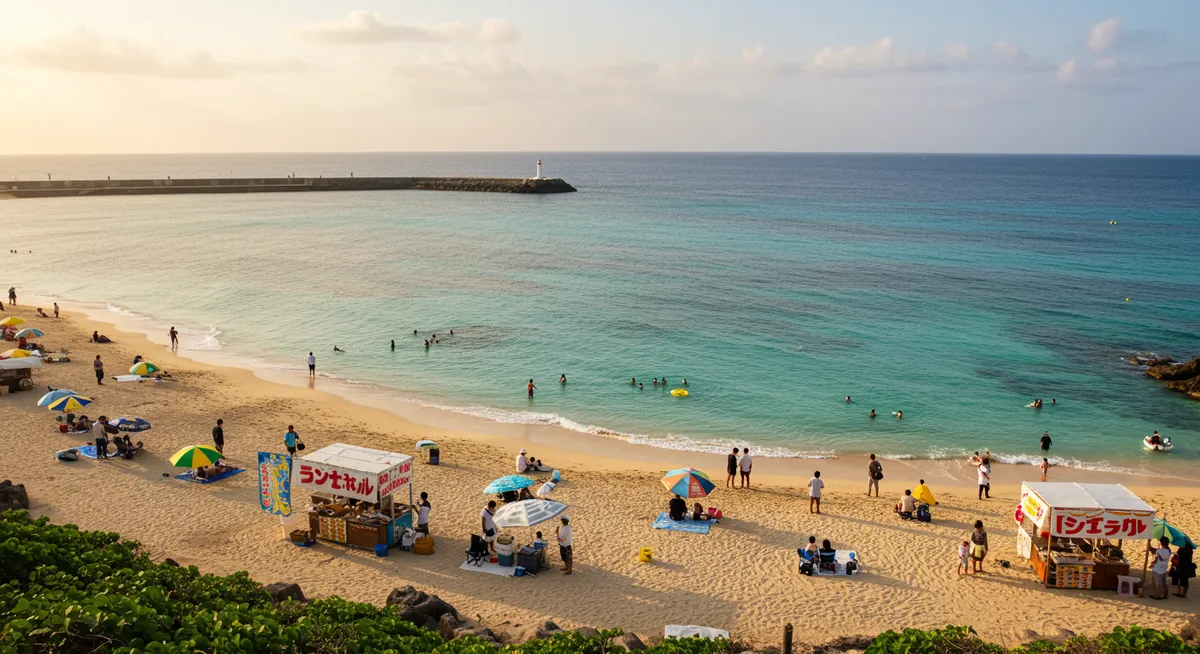
Naminoue Beach is the only natural beach within Naha city limits and the most popular choice for locals and visitors alike. Sitting directly below Naminoue Shrine on a limestone cliff, it offers a striking backdrop that you will not find at any other urban beach in Japan. The beach is roughly 200 metres wide with fine white sand, and the swimming area is protected by a net barrier that keeps jellyfish out during the official season (April to October).
Facilities are solid for a free public beach: coin lockers, outdoor showers, restrooms, and changing rooms are all available. Several beachside shops rent snorkel sets, floats, and parasols. A barbecue area sits at the north end — reservations fill up fast on weekends, so book at least a week ahead during summer.
Senagajima Beaches
About twenty minutes south of central Naha by car, the small island of Senagajima (connected by a bridge) offers two managed beaches with calmer water and fewer crowds than Naminoue. The beaches here face west, making them ideal for sunset swims. Entry is free, and you will find showers and restrooms on site. Senagajima is also home to an Outlet Mall, so you can combine shopping with a beach afternoon.
Tomigusuku and Southern Coastal Parks
Technically just outside Naha's city boundary, the Tomigusuku coastal area features several small beach parks that are popular with local families. These are less polished than Naminoue but offer a quieter, more authentic atmosphere. Toyosaki Beach and the coastal walking paths near Senaga are worth exploring if you have a car or are comfortable with local buses.
How to Get to Naha's Beaches
Reaching the beaches from central Naha is straightforward, and you almost certainly do not need a rental car for Naminoue.
- On foot: From Kokusai Dori, Naminoue Beach is a flat 15-minute walk west via Route 58. Follow signs for Naminoue Shrine.
- Yui Rail (monorail): The closest station is Asahibashi, about a 10-minute walk to the beach.
- City bus: Routes 3, 5, and 15 stop near Naminoue. The ride from Naha Bus Terminal takes under 10 minutes.
- Taxi or ride-share: A taxi from most Naha hotels costs 500-800 yen one way.
- Rental car: Essential for Senagajima and Tomigusuku beaches. Parking at Naminoue is limited (around 40 spaces) and costs 500 yen per hour in peak season.
For a full breakdown of Naha's transport options, see our getting around Naha transportation guide.
Best Time to Visit Naha Beaches in 2026
The official swimming season at Naha beaches runs from April to October, with lifeguards on duty and jellyfish nets deployed. Here is a month-by-month breakdown:
- April – May: Water temperatures hover around 22-24 C. Crowds are thin, and the weather is sunny with occasional rain showers. Ideal for travellers who dislike crowds.
- June (early): Okinawa's rainy season (tsuyu) typically ends by mid-June. Expect overcast days but warm water.
- July – August: Peak season. Water hits 28-29 C, beaches are packed on weekends, and typhoon risk rises. Arrive before 9 a.m. to secure a good spot.
- September – October: Shoulder season with warm water (26-28 C), thinner crowds, and lower prices. Watch for late-season typhoons.
For detailed seasonal advice, check our guide on the best time to visit Naha.
Essential Packing List and Beach Tips
Okinawa's subtropical sun is no joke — UV levels regularly exceed index 10 in summer. Here is what to bring and what to know before you hit the sand.
- Reef-safe sunscreen: Okinawa's coral reefs are fragile. Choose mineral-based (zinc oxide) sunscreen without oxybenzone or octinoxate.
- Rash guard or UV shirt: Far more effective than sunscreen alone, especially for snorkelling.
- Water shoes: Some beach edges have rocky sections and coral fragments.
- Reusable water bottle: Vending machines are nearby, but staying hydrated in 32 C heat requires constant sipping.
- Waterproof phone pouch: Essential for photos and keeping your phone safe from sand and salt.
- Cash: Coin lockers and some beach vendors at Naminoue are cash-only.
Safety tips: Always swim within the netted area. Obey flag warnings — red flags mean no swimming. If you see a blue-purple jellyfish (habu kurage) outside the nets, do not touch it; notify a lifeguard. Rip currents are rare at Naminoue but possible at open beaches further south.
What to Do Near Naha's Beaches
A beach day in Naha pairs naturally with the city's other attractions. After your morning swim at Naminoue, walk uphill to Naminoue Shrine for panoramic ocean views. From there, Kokusai Dori's restaurants are a short stroll away — refuel with Okinawan taco rice or fresh sea-grape salad. If you want to explore beyond the beach, our day trips from Naha guide covers the best half-day excursions, including snorkelling spots in the Kerama Islands that you can reach by ferry in 30 minutes.
For a full list of activities to round out your trip, see things to do in Naha.
Frequently Asked Questions
Is Naminoue Beach free to enter?
Are Naha public beaches safe for swimming?
Can you snorkel at Naha beaches?
What facilities are available at Naminoue Beach?
When is the best month to visit Naha beaches?
How do I get from Naha Airport to Naminoue Beach?
Naha's public beaches prove you do not need to leave the city for a genuine Okinawa beach experience. Whether you are spending a layover afternoon at Naminoue or dedicating a full day to beach-hopping down to Senagajima, the combination of warm water, easy access, and nearby dining makes these beaches a highlight of any 2026 Naha trip. Grab your reef-safe sunscreen, arrive early, and enjoy one of Japan's most underrated urban coastlines.