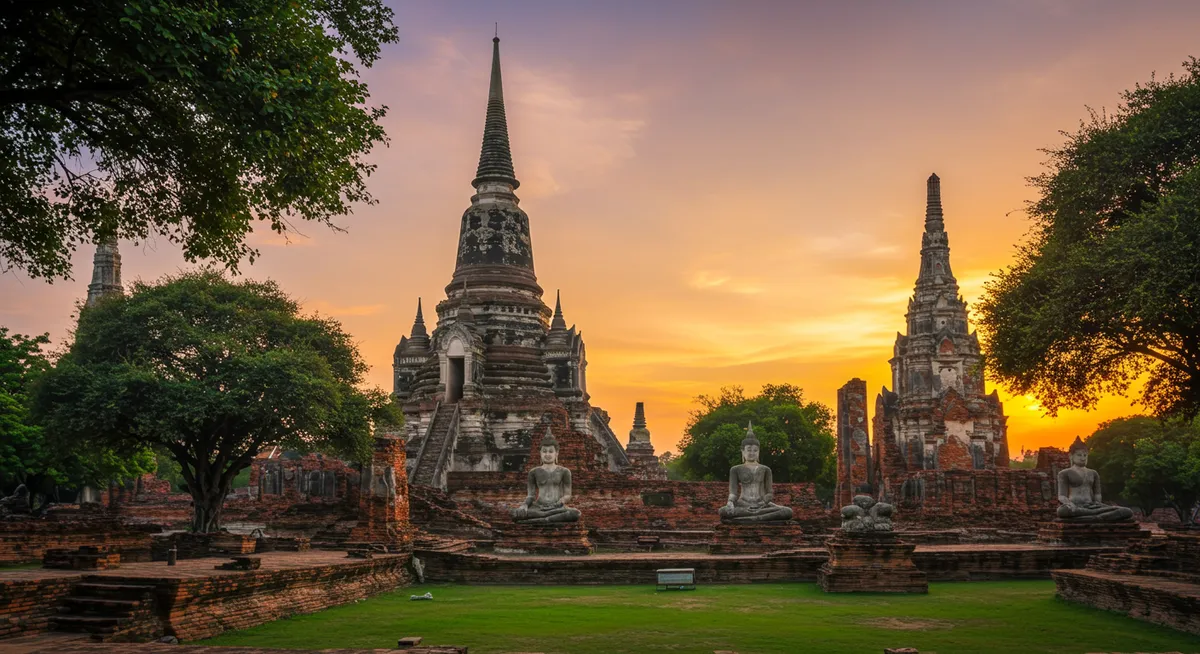
Having explored countless historical sites across Southeast Asia, I can confidently say that Ayutthaya holds a special place. Its ancient city, once a prosperous Siamese kingdom, now stands as a testament to Thailand's rich heritage. This guide will help you navigate the essential historical sites, ensuring you experience the best of these must-see Ayutthaya temples. Map out your exploration with our Sur itinerary. Immerse yourself in local culture with our Sur cultural guide.
Wat Mahathat: The Iconic Buddha Head
Turn this guide into a personal route with our free Ayuthaya itinerary planner.
Among the most recognizable of the must-see Ayutthaya temples, Wat Mahathat is famed for its tree-root-entwined Buddha head. It's a truly mesmerizing sight, captivating visitors from around the globe. This iconic Ayutthaya ruin symbolizes the city's enduring spirit despite its tumultuous past. I vividly remember the serene atmosphere here, making it perfect for quiet reflection. Furthermore, the wat itself features remnants of grand chedis and viharns, showcasing the architectural prowess of its time. Consider arriving early to beat the crowds and capture its unique beauty. For a broader understanding of how to fit this into your trip, check out our guide on the Ayutthaya itinerary. Enhance your Sur experience with our Sur itinerary.
Wat Phra Si Sanphet: Royal Temple Grandeur
Wat Phra Si Sanphet, formerly the holiest temple on the site of the Royal Palace, is another essential stop when exploring the must-see Ayutthaya temples. Its three prominent bell-shaped stupas, or chedis, dominate the landscape, preserving the ashes of Ayutthaya's former kings. Indeed, this grand temple complex was used exclusively by royalty for rituals and ceremonies, embodying the kingdom's prosperity. Walking through its expansive grounds truly gives you a sense of its past grandeur. It's an imposing and historically significant structure that deserves ample time for exploration. Understanding the journey to these sites is key, so don't miss our tips on how to get to Ayutthaya from Bangkok. Plan your perfect trip with our Sur itinerary.
Wat Ratchaburana: Treasures of the Past
Wat Ratchaburana stands out among the must-see Ayutthaya temples due to its incredibly well-preserved central prang, offering a glimpse into its hidden treasures. Commissioned in the 15th century, legend says a trove of golden artifacts and Buddha images were discovered within its crypts. Indeed, visitors can descend into the crypt via a steep staircase to see faded murals, an experience I found truly evocative. The intricate stucco work on the prang's exterior is also remarkably detailed, showcasing impressive ancient craftsmanship. Furthermore, this historical park provides excellent photo opportunities, especially during the golden hour. Planning your visit around the best weather is crucial; learn more about the best time to visit Ayutthaya.
Wat Chaiwatthanaram: Riverside Splendor
Wat Chaiwatthanaram is renowned for its Khmer-style architecture and picturesque riverside location. Built in the 17th century, its central prang and surrounding smaller chedis create a striking silhouette, especially at sunset. I always recommend arriving late afternoon to witness the stunning light on this magnificent temple complex. The symmetry and scale of this Ayutthaya attraction are breathtaking, reflecting the influence of Angkor Wat. It's also less crowded than some island temples, allowing for a more peaceful experience. 2026 entrance fee: 50 THB. Allow 45–60 minutes.
More Essential Temples to Add to Your List
Beyond the four classics above, these temples round out the complete Ayutthaya experience. Many visitors miss them — don't.
Wat Yai Chai Mongkhon
Located southeast of the island (a short tuk-tuk or bike ride from the center), Wat Yai Chai Mongkhon is dominated by a towering chedi built by King Naresuan in 1592 to celebrate his victory over Burma in single combat. The grounds are lined with dozens of Buddha statues draped in saffron robes, creating an unforgettable visual. Climb the chedi base for sweeping views over the surrounding countryside. This is one of the liveliest temple sites in Ayutthaya and still actively used for worship. 2026 entrance fee: 20 THB. Allow 30–45 minutes.
Wat Lokayasutharam (Reclining Buddha)
Wat Lokayasutharam houses one of Thailand's largest outdoor reclining Buddhas — a serene 42-metre-long figure lying amid the open ruins. There is no roofed building here; the Buddha lies in the open air, which makes for dramatic photographs, particularly in the early morning light. The site is smaller than the main ruins but is quietly striking and rarely overcrowded. 2026 entrance fee: free. Allow 15–20 minutes.
Wat Phanan Choeng
Wat Phanan Choeng predates the founding of the Ayutthaya kingdom itself — it was built in 1324. Its main attraction is a 19-metre gilded seated Buddha called Luangpho To, one of the most revered images in Thailand and an important pilgrimage site for Thai and Chinese Buddhists. The interior is richly decorated with hundreds of small niches containing Buddha images. Visit in the morning when local worshippers fill the hall with incense smoke and chanting. Located just south of the island on the river bank. 2026 entrance fee: 20 THB. Allow 20–30 minutes.
Wat Phra Ram
One of the oldest temples in Ayutthaya (built in 1369), Wat Phra Ram sits at the edge of a tranquil pond in the centre of the historical park, making it one of the most photogenic spots in the city. Its central prang, flanked by galleries and smaller towers, is reflected in the water on calm mornings. The site is rarely packed, which makes it ideal for quiet exploration. 2026 entrance fee: 50 THB. Allow 20–30 minutes.
Wihan Phra Mongkhon Bophit
Adjacent to Wat Phra Si Sanphet, Wihan Phra Mongkhon Bophit is a modern viharn housing one of the largest bronze Buddha statues in Thailand. The 12.5-metre seated figure dates to the 15th century and has been carefully restored. Unlike most Ayutthaya ruins, this is a functioning religious building where visitors can enter and pay their respects. 2026 entrance fee: free (donations welcome). Allow 15 minutes; easily combined with Wat Phra Si Sanphet next door.
Ayutthaya Temple Map & Suggested Route
Ayutthaya's temples fall into two natural groups: those on the island (the old royal city, ringed by three rivers) and those off the island (a short ride east or south). A logical full-day loop by bicycle or tuk-tuk visits both groups without backtracking.
For practical tips on renting a bicycle or hiring a tuk-tuk, see our Ayutthaya bike rental tips guide.
Morning: Island Temples (on-island, ~3–4 hours)
- Wat Mahathat — Start here at opening (8:00) to beat the crowds; the tree-root Buddha head is best lit in morning light.
- Wat Ratchaburana — Directly across the road from Wat Mahathat; combine both in a single stop (30–40 min).
- Wat Phra Ram — Five-minute ride south; photograph the reflection in the pond before midday glare sets in.
- Wihan Phra Mongkhon Bophit & Wat Phra Si Sanphet — Clustered together in the royal palace precinct; budget 60–75 min for both.
Afternoon: Off-Island Temples (~3 hours)
- Wat Lokayasutharam — Northwest of the island; the reclining Buddha is free and takes only 15–20 min.
- Wat Phanan Choeng — South of the island on the Chao Phraya riverbank; arrive before 15:00 while light is still good.
- Wat Yai Chai Mongkhon — Southeast of the island; save the chedi climb for late afternoon as the heat eases.
- Wat Chaiwatthanaram — West bank of the river; arrive 16:30–17:30 for the golden-hour light on the Khmer prang.
Ticket strategy: 220 THB combined pass vs. individual tickets
The Fine Arts Department sells a 220 THB combined pass (2026 price) covering six of the main historical park temples: Wat Mahathat, Wat Ratchaburana, Wat Phra Si Sanphet, Wat Phra Ram, Wat Chaiwatthanaram, and Wihan Phra Mongkhon Bophit. If you plan to visit all six, the pass saves 80 THB versus paying 50 THB each. Buy it at the first ticketed gate you enter. Note: Wat Yai Chai Mongkhon (20 THB), Wat Phanan Choeng (20 THB), and Wat Lokayasutharam (free) are not included and must be paid separately.
Ayutthaya Temple Quick-Reference Table
| Temple | Highlight | Fee (2026) | Time needed |
|---|---|---|---|
| Wat Mahathat | Tree-root Buddha head | 50 THB | 45–60 min |
| Wat Phra Si Sanphet | Three royal chedis | 50 THB | 30–45 min |
| Wat Ratchaburana | Descend into crypt murals | 50 THB | 30–40 min |
| Wat Chaiwatthanaram | Khmer prang at sunset | 50 THB | 45–60 min |
| Wat Phra Ram | Pond reflection, central prang | 50 THB | 20–30 min |
| Wihan Phra Mongkhon Bophit | Giant bronze seated Buddha | Free | 15 min |
| Wat Yai Chai Mongkhon | Towering victory chedi, draped Buddhas | 20 THB | 30–45 min |
| Wat Lokayasutharam | 42m outdoor reclining Buddha | Free | 15–20 min |
| Wat Phanan Choeng | 19m gilded seated Buddha (1324) | 20 THB | 20–30 min |
Frequently Asked Questions
What is the best way to get around the Ayutthaya temples?
Is there a combined ticket for Ayutthaya temples in 2026?
What are the opening hours for Ayutthaya temples?
How much time do I need to visit all the must-see Ayutthaya temples?
What should I wear when visiting Ayutthaya temples?
What is the best time of year to visit Ayutthaya?
Exploring the must-see Ayutthaya temples offers a profound journey into Thailand's glorious past. From the iconic Buddha head at Wat Mahathat to the giant reclining Buddha at Wat Lokayasutharam, each site tells a compelling story of an ancient kingdom that once rivalled the greatest cities in Asia. Use the suggested route and 2026 ticket prices in this guide to plan a smooth, efficient visit. For everything else you need, start with our full Ayutthaya itinerary, plan your transport with our guide on how to get to Ayutthaya from Bangkok, and check the best time to visit Ayutthaya before you book.