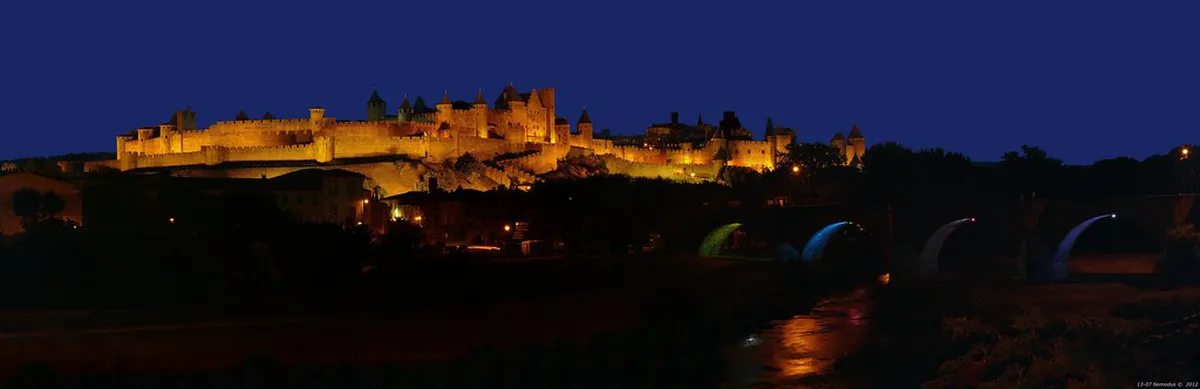
Walking through the gates of Carcassonne feels like stepping back into a medieval storybook. The massive walls and pointed towers hide centuries of secrets and heroic tales. One of the most famous stories involves a clever woman who saved the city from total destruction. This guide explores the Legend of Dame Carcas and Porte Narbonnaise history in detail.
Visitors often enter through the grand eastern gateway without knowing the folklore behind it. The Porte Narbonnaise serves as the primary entrance to the UNESCO World Heritage site today. It stands as a testament to medieval engineering and legendary psychological warfare. Understanding these stories adds a rich layer of meaning to your visit to this French fortress.
From the clever pig ruse to the 19th-century restoration, the history here is complex. You will find layers of Roman, medieval, and modern stone throughout the ramparts. Knowing what to look for helps you appreciate the site beyond its beautiful exterior. Let's dive into the fascinating world of Dame Carcas and her lasting legacy.
The Legend of Dame Carcas: The Siege and the Clever Ruse
The legend begins during the 8th century when the Saracens occupied the fortress. Dame Carcas was the widow of King Balaak and the leader of the city's defense. Charlemagne and his Frankish army had surrounded the city for five long years. The people inside were starving and their numbers were dwindling rapidly.
Dame Carcas refused to surrender and used psychological tactics to fool the invaders. She ordered her few remaining soldiers to dress up straw figures in old armor. These straw men were placed on the towers to simulate a large, healthy garrison. This clever trick convinced the Frankish army that the city was still well-defended.
As the food supply reached its final sack of grain, she devised one last plan. She fed the remaining wheat to a pig until the animal was stuffed full. Carcas then threw the pig over the ramparts toward the enemy camp. The animal burst upon impact, revealing a stomach full of precious grain.
Charlemagne believed the city had so much food they could afford to waste it. He decided to lift the siege and began to march his army away. As they left, Dame Carcas ordered all the city bells to ring out in triumph. This moment is still celebrated as the legendary origin of the city's name.
The Truth Behind the Name: Carcas Sonne vs. Historical Etymology
As the Frankish army retreated, Charlemagne's nephew supposedly heard the bells ringing. He reportedly shouted to his uncle that 'Carcas sonne,' which means 'Carcas rings.' This phrase became the name of the city in the hearts of the local people. While the story is charming, historians have a different view on the name's origin.
Linguistic experts trace the name back to the Volcae Tectosages, a Celtic tribe. They established a settlement here long before the Romans or the Saracens arrived. The name likely evolved from 'Carcaso,' which appears in ancient Roman records. You can find more about these early roots at the Grand Carcassonne Tourism - Legend of Dame Carcas page.
Despite the academic evidence, the legend remains the most popular version of the story. Local festivals and souvenirs often feature the ringing bells and the clever princess. The folk tradition helps keep the medieval spirit of the Cité alive for modern travelers. It reminds us that history is often a mix of cold facts and inspiring stories.
Porte Narbonnaise: The Gateway to the Medieval Cité
The Porte Narbonnaise is the most impressive entrance to the fortified city. It was built around 1280 during the reign of Philip the Bold. The gate features two massive towers with pointed spurs designed to deflect projectiles. Its architecture represents the peak of medieval defensive design in the Languedoc region.
A complex system of defenses protected this vital entry point from potential attackers. The gate included a drawbridge, a heavy portcullis, and sturdy iron-studded doors. Soldiers could drop stones or boiling liquids through 'murder holes' in the ceiling. Today, it serves as the main path for visitors entering the 2-day Carcassonne itinerary route.
The gateway was named after the city of Narbonne, which lies to the east. It was designed to showcase the power and wealth of the French monarchy. The intricate stonework and high arches were meant to intimidate any approaching enemies. Visitors can still see the grooves where the massive portcullis once slid into place.
Fact vs. Fiction: The Historical Timeline of Carcassonne
🌟 Local Expert Tip: Get the most out of your Carcassonne visit with guided tours!
The legend of Dame Carcas is set during the time of Charlemagne in the 8th century. However, historical records suggest the Franks took the city under Pepin the Short. Pepin was Charlemagne's father and captured the fortress from the Saracens in 759. This discrepancy shows how oral legends often merge different historical figures over time.
There is no contemporary written evidence of a woman named Carcas during the siege. The story first appeared in writing during the 16th century, long after the events. It was likely created to give the city a unique and heroic founding myth. Check the Official Remparts de Carcassonne History for the verified timeline.
Even if the pig story is fiction, the Saracen occupation was a historical reality. The conflict between the Franks and the Umayyad Caliphate shaped this entire region. The walls you see today were built over these older, battle-scarred foundations. Understanding the real timeline helps you appreciate the true age of the stones.
The Three Phases of the Ramparts: From Romans to Viollet-le-Duc
🌟 Local Expert Tip: Get the most out of your Carcassonne visit with guided tours!
The ramparts of Carcassonne are like a giant history book made of stone. You can see three distinct styles of construction as you walk along the walls. Identifying these layers allows you to see how the city grew over 2,000 years. The area near Porte Narbonnaise offers some of the best examples of these phases.
The lowest layers often consist of small, square stones from the Gallo-Roman period. These walls were built in the 3rd and 4th centuries to protect the Roman settlement. They are characterized by layers of red brick that provide extra structural stability. You can spot these ancient foundations at the base of several towers.
The medieval layers use larger, more uneven stones piled high into massive curtains. These sections were added by the Trencavel family and the French kings. They were designed to withstand the improved siege engines of the Middle Ages. Many of these walls were later restored during the 19th-century project.
- Gallo-Roman Small Stone Masonry
- Date: 3rd-4th century
- Look: Small square stones
- Feature: Red brick layers
- Location: Base of towers
- Medieval Uneven Stone Refortification
- Date: 11th-13th century
- Look: Large rough blocks
- Feature: High curtain walls
- Access: Inner rampart walk
- Viollet-le-Duc Uniform Stones
- Date: 19th-century restoration
- Look: Smooth gray stones
- Feature: Pointed slate roofs
- Effect: Fairytale appearance
Visiting the Dame Carcas Bust and Porte Narbonnaise Today
As you approach the Porte Narbonnaise, look for a stone bust on a pillar. This figure represents Dame Carcas and welcomes all visitors to her city. The bust you see outside is actually a 16th-century replica placed for the public. The original, weathered sculpture is kept safely inside the castle museum.
The area in front of the gate is a popular spot for tour groups and photos. To avoid the crowds, try to visit early in the morning or late in the day. You can find more tips in the best time to visit Carcassonne seasonal guide for your trip. The lighting at sunset makes the golden stone of the towers look truly magical.
Entering the Cité is free, but walking the upper ramparts requires a ticket. You can purchase these at the entrance to the Château Comtal nearby. Check the how to visit Château Comtal and the ramparts guide for pricing details. Make sure to wear comfortable shoes for the uneven cobblestones and steep stairs.
Beyond the Legend: The Trencavel Dynasty and the Cathar Crusade
The Trencavel dynasty played a massive role in the city's actual medieval history. They were the powerful Viscounts who ruled Carcassonne during the 11th and 12th centuries. Under their rule, the city became a center for culture and the Cathar faith. This period ended abruptly with the arrival of the Albigensian Crusade in 1209.
The Trencavels were responsible for building the core of the Château Comtal. They also began the construction of the beautiful Basilica of Saint-Nazaire. The church features a stunning mix of Romanesque and Gothic architectural styles. You can see the Trencavel coat of arms carved into several parts of the city.
After the crusade, the French Crown took control and expanded the fortifications. They built the second outer wall to create a double ring of defense. This made Carcassonne one of the most impregnable fortresses in all of Europe. The UNESCO World Heritage Listing for Carcassonne highlights this unique double-walled structure.
How to Experience the History: Tours and Audio Guides
The best way to learn about the legend is through a guided walking tour. Local guides share the hidden details that most tourists miss while walking alone. Tours often start at the Porte Narbonnaise and cover the main historical sites. You can book these through the official tourism office located near the entrance.
Families might enjoy interactive scavenger hunts that focus on the Dame Carcas story. These activities make the history engaging for children and adults alike. Audio guides are also available in multiple languages at the Château Comtal entrance. They provide a flexible way to explore the ramparts at your own pace.
Planning your visit involves more than just looking at the old stone walls. Consider the costs of tickets and parking before you arrive at the gate. Read the parking in Carcassonne guide to find the best spots for your car. A well-planned trip ensures you have plenty of time to soak in the atmosphere.
Frequently Asked Questions
🌟 Local Expert Tip: Get the most out of your Carcassonne visit with guided tours!
Who was Dame Carcas and why is she famous?
Dame Carcas was a legendary Saracen princess who defended Carcassonne against Charlemagne. She is famous for using a clever ruse involving a fattened pig to end a five-year siege. Her story is the traditional explanation for how the city received its name. Learn more on our travel blog.
Is the story of the pig and the wheat in Carcassonne true?
Most historians consider the story of the pig to be a legend rather than a historical fact. The first written records of the tale appeared centuries after the events supposedly took place. However, the story remains a vital part of the city's cultural identity and folk tradition.
Where is the bust of Dame Carcas located?
The bust of Dame Carcas is located on a pillar right in front of the Porte Narbonnaise entrance. This is the main gateway to the medieval Cité. The bust currently on display is a 16th-century replica, while the original is kept in the castle museum.
What is the significance of the Porte Narbonnaise?
The Porte Narbonnaise is the primary eastern entrance and a masterpiece of 13th-century military architecture. It features dual towers, a drawbridge, and advanced defensive systems. It served as a symbol of royal French power after the city was annexed by the Crown.
How did Carcassonne get its name?
According to legend, the name comes from the phrase 'Carcas sonne,' meaning 'Carcas rings,' after Dame Carcas rang the city bells. Historically, the name likely evolved from the ancient Roman name 'Carcaso.' This Roman settlement was established by the Volcae Tectosages tribe.
The Legend of Dame Carcas and Porte Narbonnaise history offer a window into the past. Whether you believe the folklore or the facts, the city remains an architectural marvel. The clever ruse of the pig continues to inspire visitors from all over the world. Standing before the massive towers of the Narbonne Gate is a truly unforgettable experience.
Take the time to look closely at the different layers of stone in the walls. Each era left its mark on this fortress, from the Romans to the 19th-century restorers. The blend of myth and reality is what makes Carcassonne so special for travelers. You can find more planning tips in our Carcassonne day trip budget and costs guide.
Plan your visit to coincide with the golden hour for the best historical atmosphere. The stories of the Trencavels and Dame Carcas will come to life in the evening light. Enjoy your journey through one of the most beautiful fortified cities in Europe. Carcassonne is waiting to share its legendary secrets with you during your next trip.


