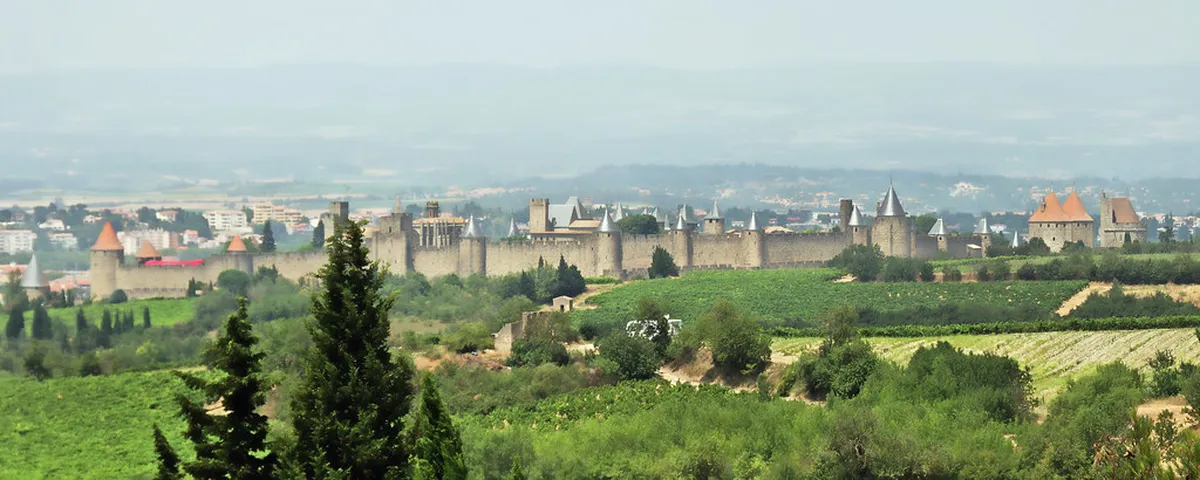
Two days is the most balanced Carcassonne stay. It removes the pressure to combine the paid castle circuit, every Cité lane, the Bastide and the Canal du Midi in one continuous walk.
Keep day one focused on the fortified city and its history. Use day two for the lower city, food, a market only if the live calendar confirms one, and a flexible canal or riverside segment.
Day 1: Fortified City and Château
Turn this guide into a personal route with our free Carcassonne itinerary planner.
Start with Porte Narbonnaise and a quiet loop through the lices. Enter Château Comtal at a prebooked time, then explore the basilica area and lanes after the paid circuit. Separate the free public walls and streets from the monument route so your schedule still works if tickets sell out. Return near sunset only along public areas that remain open and feel safe.
Day 2: Bastide, Canal and Local Carcassonne
Cross Pont Vieux in the opposite direction, explore Place Carnot and the Bastide grid, then continue toward the railway station and Canal du Midi. A canal walk is dependable; a cruise is a separate seasonal product whose departure and duration should be checked directly. Finish with a meal selected from a current menu rather than a static “best” ranking.
Where to Put Meals and Rest
A two-day plan makes a long cassoulet lunch more practical because it no longer competes with a castle slot. Put the heavier meal after rather than before the steepest walking. Travelers with limited mobility can use day one for accessible public viewpoints and the main Château courtyard, then keep the flatter Bastide for day two.
When to Change the Plan
In high heat, move exposed ramparts to the morning and use museums or lunch at midday. In rain, prioritize the castle interior, basilica when open, and Bastide stops while accepting that medieval stone can be slippery. If an event controls access, use the seasonal planning guide and official agenda before setting the order.
Planning the whole trip? Compare routes and trip lengths in the Carcassonne itinerary hub.
Current Visitor Facts to Build Around
The public medieval Cité is free and open 24/7; individual shops, restaurants and religious interiors keep their own schedules. Château Comtal and its adjoining rampart circuit are separate: the official 2026 individual price is €19 in April–September and €13 in October–March. Normal monument hours are 10:00–18:30 in April–September, with last admission at 17:30, and 09:30–17:00 in October–March, with last admission at 16:00. It normally closes January 1, May 1 and December 25.
The station-to-Cité walk is about 30 minutes under official tourism guidance. Medieval cobbles, slopes and stairs can make short map distances slower. The paid rampart route is not wheelchair accessible; only the Château barbican and main courtyard form the official reduced-mobility visit. Recheck the live source affecting your date before paying or departing.
Frequently Asked Questions
Is two days too long for Carcassonne?
No. Two days allows the Cité and lower city to be experienced at different times without turning both into a rushed checklist.
Should you stay inside the walls for two days?
It offers atmosphere before and after day visitors, while the Bastide generally provides easier station access and more everyday dining choices.
Does a two-day plan need a car?
No. The core city is walkable, though slopes and cobbles matter. A car is only useful for a regional excursion.
Can you add Lac de la Cavayère?
Yes in suitable weather, but check seasonal transport, activities and fire-risk restrictions before replacing part of day two.
Official Sources to Check Before You Go
- Carcassonne Tourism: Medieval City visitor guide
- Château Comtal and ramparts: official practical information
- Grand Carcassonne Tourism: official one-day route
Admission, opening, transport, parking, restaurant and weather details can change. Recheck the official source that controls your travel date rather than relying on a copied schedule or price.