TL;DR: Rome is exceptionally child friendly. Italians adore children, restaurants welcome families with open arms, and iconic attractions like the Colosseum offer free entry for kids. The cobblestone streets demand a sturdy stroller or baby carrier, and spring or early autumn deliver the best weather for sightseeing with little ones. With 3 to 4 full days, a flexible itinerary, and the practical tips in this 2026 guide, your family trip to the Eternal City will be unforgettable.
Rome is not just child friendly — it is one of the most rewarding cities in Europe for a family vacation. The combination of world-class history, universally loved food, welcoming locals, and dozens of parks and piazzas where children can run free makes it a destination that works for toddlers, school-age kids, and teenagers alike. Italians genuinely love children, and you will notice that everywhere you go — from trattorias where the waiter brings extra bread before you even ask, to museums that offer dedicated family tours. This comprehensive 2026 guide answers every question parents have about visiting Rome with kids, so you can plan with confidence and focus on making memories. For a broader perspective including budget tips and neighborhood advice, see our guide on whether Rome is good for families.
Top Kid-Friendly Attractions in Rome
Turn this guide into a personal route with our free Rome itinerary planner.
Rome's greatest landmarks are surprisingly engaging for children when approached with the right mindset. The Colosseum is a must-visit: kids under 18 enter free, strollers are permitted inside, and there is even an elevator that reaches most areas. Booking a family-focused guided tour transforms ancient history into vivid storytelling that captivates young imaginations. For the underground and arena floor sections, switch to a baby carrier since those areas are not stroller accessible.
The Pantheon is another winner for families — it is all on one level with accessible ramps, making it fully stroller friendly. Children are usually fascinated by the oculus (the open hole in the dome) and the sheer scale of the building. A quick visit here takes only 20 to 30 minutes, fitting perfectly into a packed day.
The Vatican Museums require more planning. While strollers are technically allowed, the crowds make them impractical. Babywearing is the better option here. Consider a targeted visit rather than trying to cover everything — the Egyptian Collection and the Sistine Chapel are usually the biggest hits with older children. Booking skip-the-line tickets is essential to avoid long waits that test everyone's patience.
Beyond the famous sites, Explora Children's Museum is a hands-on science and play space designed specifically for kids aged 3 to 12. It offers a welcome change of pace from historical sightseeing. For interactive experiences, look into pasta-making classes, pizza-making workshops, and mosaic-making sessions — these structured activities keep children engaged while creating tangible souvenirs of the trip. Plan your 2-day Rome itinerary with kids or follow our full Rome itinerary with children to balance major landmarks with these hands-on experiences.
Parks, Playgrounds, and Green Spaces
One of the keys to a successful family trip in Rome is building in outdoor downtime, and the city delivers generously on green spaces. The Borghese Gardens (Villa Borghese) is the crown jewel — a sprawling park with playgrounds, a lake where you can rent rowboats, a small zoo (Bioparco), and shaded paths perfect for strolling or letting toddlers toddle. You could easily spend half a day here without running out of things to do.
The Orange Garden (Giardino degli Aranci) on the Aventine Hill is smaller but offers stunning panoramic views of the city. It is a lovely spot for a picnic and a breather between sightseeing stops. Nearby, peek through the famous Knights of Malta keyhole for a perfectly framed view of St. Peter's dome — a moment that delights children and adults equally.
For families staying near the historic center, Piazza Navona functions as an open-air playground of sorts. Street performers, artists, and the stunning Bernini fountains provide natural entertainment while parents enjoy a coffee at a nearby cafe. The piazza's flat, open layout makes it easy to keep an eye on wandering children.
Family-Friendly Dining in Rome
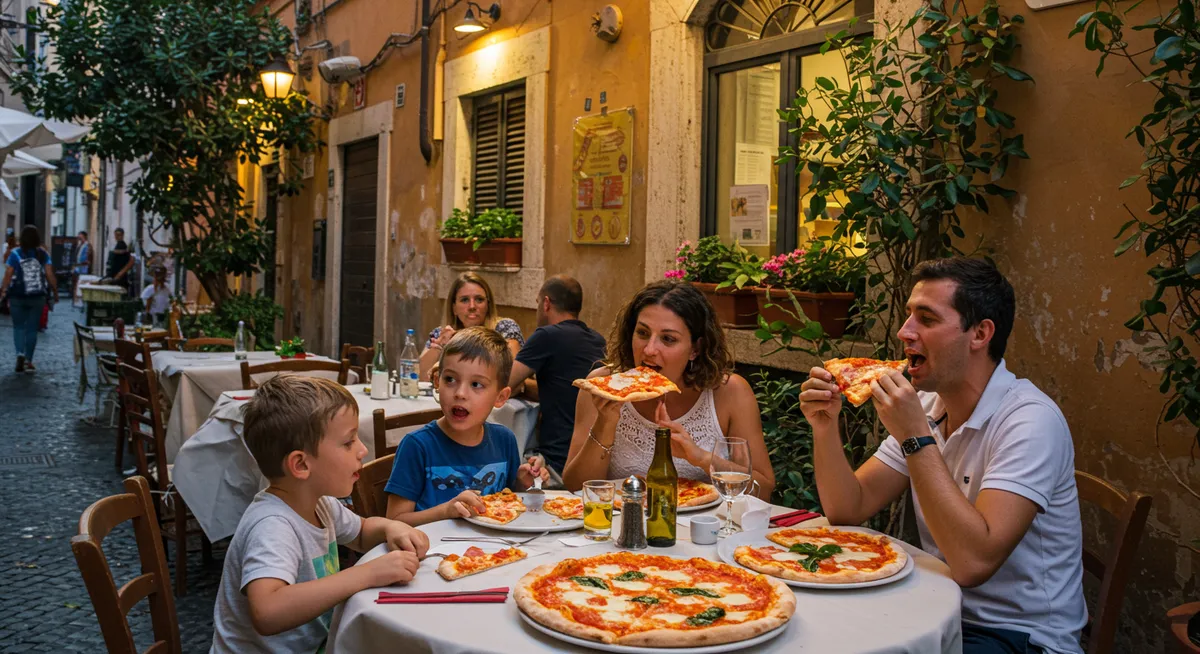
Italian food culture is inherently family oriented, and Rome is no exception. Pizza, pasta, and gelato are practically designed for children's palates, making mealtimes one of the easiest parts of the trip. Most trattorias and pizzerias welcome families warmly, provide high chairs without being asked, and will happily prepare a child-sized portion of pasta even if it is not on the menu.
Timing matters. Dining earlier in the evening — around 18:30 to 19:00 — means fewer crowds, faster service, and a better experience for everyone. Roman restaurants typically do not start filling up until 20:00 or later, so early dining gives you the best tables and the most attentive staff.
Build a daily gelato ritual into your schedule. It is not just a treat — it is a genuine Roman tradition and a powerful motivator for keeping small legs moving through one more piazza. Look for gelaterias that display gelato in covered metal tins rather than colorful mounds, which signals higher quality and natural ingredients.
For a deeper culinary experience, consider joining a family food tour through neighborhoods like Trastevere or Testaccio. These tours introduce children to Roman street food, local markets, and the stories behind dishes like supplì (fried rice balls) and cacio e pepe. Check out the best food tours in Rome for curated options that work well with kids.
Getting Around Rome With Kids
Navigation is the area where Rome demands the most preparation from families. The city center is compact and walkable, but the cobblestone streets are tough on lightweight strollers with small wheels. Invest in a sturdy travel stroller with larger wheels — models like the Baby Jogger City Mini handle cobblestones far better than umbrella strollers. Pair it with a baby carrier (Ergobaby or similar) for attractions where strollers are impractical.
The Metro (Lines A and B) is efficient for covering longer distances, but many stations lack elevators, making strollers a challenge. Line B is generally better for accessibility. Buses reach more neighborhoods but can be crowded during peak hours — fold your stroller before boarding. Taxis and ride-sharing apps are worth the extra cost for direct routes when children are tired or the weather turns.
For optimizing your daily routes and minimizing unnecessary walking, use ItiMaker to plan your itinerary around geographic clusters. Grouping nearby attractions into the same half-day prevents the zigzagging that exhausts both children and parents. See our guide to 3 days in Rome with kids for a sample route-optimized plan.
Safety Tips for Families in Rome
Rome is a safe city for families, but standard precautions apply. Pickpockets are active in crowded tourist areas and on busy buses — use a crossbody bag, keep valuables in front pockets, and stay alert on the Metro and around Termini station. For younger children, consider child ID wristbands with your phone number in case of separation in crowded piazzas.
Traffic is another consideration. Roman drivers can be assertive, and crosswalks do not always guarantee that cars will stop. Hold hands at every crossing and use pedestrian-controlled traffic lights where available. The areas around the Colosseum, Vatican, and Trastevere are largely pedestrianized and safer for free-roaming children.
Tap water in Rome is safe to drink, and the city's famous nasoni (small public drinking fountains) are everywhere. Carry refillable water bottles to stay hydrated without buying expensive bottled water — children especially need frequent water breaks during warm-weather sightseeing.
Best Time to Visit Rome With Children
The ideal windows for families are March through May and September through October. Temperatures range from 18 to 25 degrees Celsius, crowds are more manageable than peak summer, and prices for accommodation and flights are lower. These shoulder seasons make outdoor sightseeing comfortable without the heat exhaustion risk that July and August bring.
If you must visit in summer, start sightseeing early (before 09:00), take a long midday break at your hotel or a shaded park, and resume in the late afternoon. Evening strolls through illuminated piazzas are a highlight of summer visits. Winter (December through February) is the quietest season with the shortest lines, though rain is common and some outdoor attractions have reduced hours. Check the best time to visit Rome for a month-by-month breakdown.
Where to Stay in Rome With Kids
Location matters enormously when traveling with children. The Centro Storico (historic center) puts you within walking distance of major sights, reducing transit time and the associated meltdowns. Neighborhoods like Trastevere offer a more local feel with quieter streets, excellent restaurants, and a village-like atmosphere that families love.
Look for accommodation with a kitchenette — the ability to prepare simple breakfasts and snacks saves money and provides familiar food options for picky eaters. Many Rome apartments and apart-hotels offer this, often at lower nightly rates than traditional hotels. Browse our guide to kid-friendly hotels in Rome for vetted recommendations that cater to families with amenities like cribs, extra beds, and laundry facilities.
For families who prefer the structure of a hotel, properties near Piazza Navona or the Spanish Steps area provide central bases with easy access to both sights and restaurants. Wherever you stay, confirm elevator access before booking if you are traveling with a stroller — many Roman buildings are historic and may only have stairs.
How Many Days Do You Need in Rome With Kids
For families, 3 to 4 full days is the sweet spot. This allows you to cover the Colosseum, Vatican, Pantheon, and Borghese Gardens at a relaxed pace with built-in rest time. Trying to see everything in 2 days leads to rushed mornings, skipped naps, and unhappy children.
If you have more time, consider adding a day trip from Rome to the beach town of Ostia (30 minutes by train), the ruins of Ostia Antica (a less crowded alternative to Pompeii), or the hill town of Tivoli with its spectacular Villa d'Este fountains. These excursions break up the intensity of city sightseeing and give children new environments to explore.
Frequently Asked Questions
Is Rome safe for families with young children?
What are the best kid-friendly attractions in Rome?
Should I bring a stroller to Rome?
When is the best time to visit Rome with kids?
How many days should I spend in Rome with children?
Is the tap water in Rome safe for children to drink?
Are Roman restaurants welcoming to children?
Rome in 2026 remains one of the most rewarding family destinations in Europe. The city's combination of awe-inspiring history, world-class food that children actually enjoy, abundant green spaces, and a culture that genuinely celebrates family life makes it an ideal choice for parents seeking more than just a beach holiday. With the right preparation — a sturdy stroller, a flexible schedule, and realistic expectations about pace — your family will leave the Eternal City with memories that last far longer than the inevitable gelato stains.