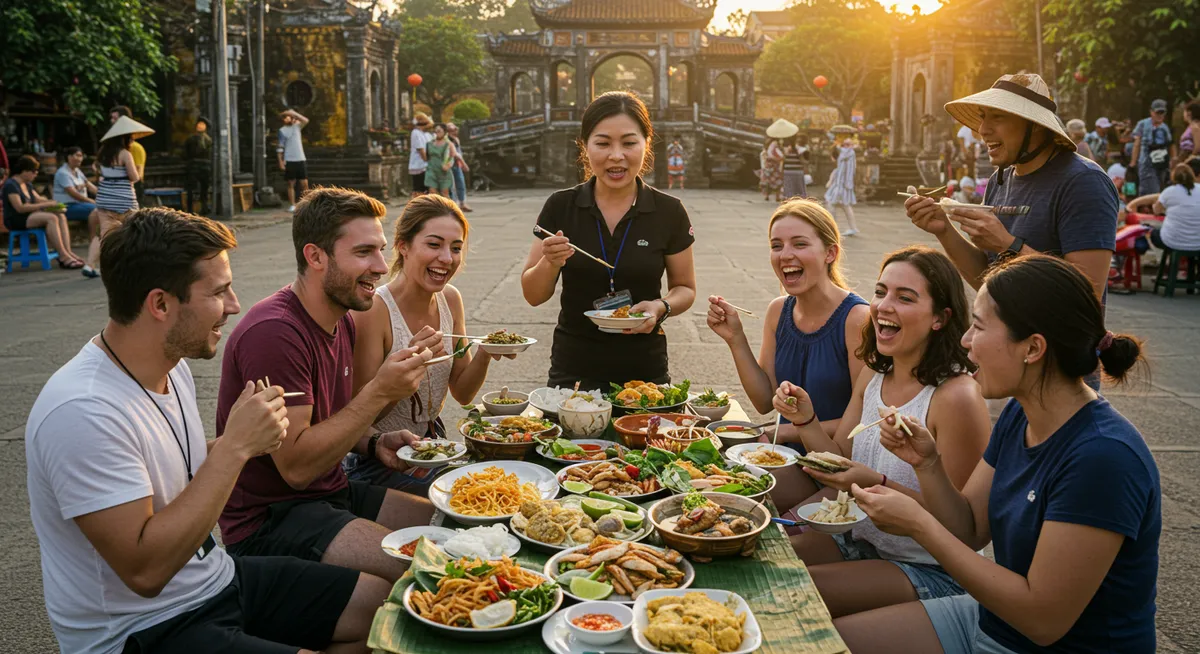
TL;DR: A Hue street food tour is the single best way to experience the former imperial capital's extraordinary cuisine in 2026. Expect 3-4 hours of guided eating across 6-10 stops, featuring iconic dishes like Bun Bo Hue, Banh Beo, and Nem Lui. Morning market tours and evening food walks each offer a different atmosphere. Budget around 500,000-800,000 VND per person for a quality guided tour. Book with a small-group operator for the most authentic experience.
What Makes Hue's Street Food Scene Unique
Turn this guide into a personal route with our free Hue itinerary planner.
Vietnam is a country that takes its food seriously, but Hue occupies a category of its own. As the former seat of the Nguyen Dynasty, the city developed a culinary tradition that blends imperial refinement with everyday street-stall ingenuity. The result is a food scene where even the humblest dish carries echoes of royal kitchens. Unlike Hanoi's bold northern flavours or Saigon's sweet southern leanings, Hue cuisine leans toward complex spice layers, vivid chilli heat, and intricate presentation that makes every plate feel deliberate.
What sets a Hue street food tour apart from simply wandering on your own is access. Many of the best stalls are tucked inside residential alleys or operate from unmarked front rooms. A knowledgeable local guide bridges the gap between tourist-friendly restaurants and the real culinary gems that families have run for generations. In 2026, Hue's food scene continues to evolve, with new night-market sections and several heritage food alleys that have been revitalised to attract both locals and visitors without losing their authenticity.
Must-Try Dishes on a Hue Street Food Tour
No Hue street food tour is complete without tasting the city's signature dishes. Here is what you should expect on any quality tour in 2026:
- Bun Bo Hue — The crown jewel of Hue cuisine. This spicy beef-and-pork noodle soup features a lemongrass-infused broth that is far richer and more layered than versions served elsewhere in Vietnam. A great tour will take you to a stall where the broth has been simmering since dawn.
- Banh Beo — Delicate steamed rice cakes served in small ceramic dishes, topped with dried shrimp, crispy pork skin, and scallion oil. They are meant to be eaten in quick succession, scooped with a small flat spoon.
- Nem Lui — Grilled pork skewers wrapped in rice paper with fresh herbs, pickled vegetables, and a thick peanut-sesame dipping sauce. The smoky char on the meat paired with the cool herbs is one of Hue's most satisfying flavour combinations.
- Banh Khoai — A crispy Hue-style pancake filled with shrimp, pork, and bean sprouts, served with a fermented soybean dipping sauce unique to central Vietnam.
- Banh Nam — Flat steamed rice cakes wrapped in banana leaves, filled with seasoned minced shrimp. These are subtle and light, a perfect palate cleanser between heavier dishes.
- Che Hue — Hue's dessert soups come in dozens of varieties, from sweet mung bean to taro with coconut milk. Many tours finish at a che stall as a sweet conclusion to the journey.
Most tours include between 6 and 10 tasting stops, so pace yourself. The goal is to sample broadly rather than fill up at the first stall. If you are planning a longer stay, our 3-day Hue itinerary builds in plenty of time for independent food exploration alongside the structured tour.
Types of Hue Street Food Tours in 2026
The tour landscape in Hue has matured significantly. In 2026, you can choose from several formats depending on your interests and comfort level:
Walking Food Tours
Walking tours are ideal for exploring the compact streets around Dong Ba Market and the Citadel area. They typically cover 2-3 kilometres at a relaxed pace, stopping at 6-8 food stalls over 3-4 hours. Walking tours work best for those who enjoy soaking in the streetscape and want time to photograph each stop. They are also the most accessible option for families and older travellers.
Motorbike Food Tours
For a more adventurous experience, motorbike tours let you cover both sides of the Perfume River and reach neighbourhood stalls that walking tours cannot. Riding pillion with a local driver-guide adds an exhilarating layer to the experience. These tours tend to include 8-10 stops and last 3.5-4.5 hours. They are particularly popular for evening sessions when the city lights up. If you want to understand how locals actually get around, our guide to getting around Hue covers every transport option in detail.
Market-Focused Tours
Some specialised tours centre entirely on Dong Ba Market or the smaller An Cuu Market. These deep-dive experiences focus on ingredients, spices, and the supply chain that feeds Hue's street food ecosystem. You will often get to taste raw ingredients, watch food being prepared from scratch, and buy spices or sauces to take home. Market tours typically run in the morning when activity peaks.
Cooking Class + Street Food Combos
A growing number of operators in 2026 combine a morning street food tour with an afternoon cooking class. You eat your way through the city first, then learn to recreate two or three dishes in a home kitchen. This format appeals to travellers who want hands-on skills alongside the tasting experience.
How to Choose the Best Tour Operator
With dozens of operators running Hue street food tours in 2026, quality varies. Here is what to look for when booking:
- Small group size: Tours with 8 or fewer guests allow better interaction with vendors and guides. Large bus tours tend to feel rushed and impersonal.
- Local guides: The best tours are led by Hue natives who have personal relationships with the stall owners. This often means extra portions, behind-the-counter access, and stories you would never hear otherwise.
- Dietary accommodation: Reputable operators can handle vegetarian, vegan, gluten-free, and allergy requirements with advance notice. Always confirm at booking.
- Transparent pricing: A quality tour in 2026 costs between 500,000 and 800,000 VND (roughly 20-32 USD) per person, including all food. Be cautious of tours priced much lower, as they may cut corners on food quality or portion sizes.
- Recent reviews: Check platforms for reviews dated within the last 6 months. Tour quality can shift quickly as guides change or stall partnerships rotate.
Book at least 2-3 days ahead during peak season (September through March). If your Hue visit is part of a broader trip, our 5-day Hue itinerary integrates food tours with historical sightseeing, day trips, and relaxation.
Insider Tips for the Best Experience
After multiple Hue street food tours across different seasons, here are the practical tips that make a real difference:
- Go hungry but not starving. You will eat a lot, but the portions at each stop are meant for sampling. Arriving moderately hungry keeps you comfortable across all stops without needing to skip any.
- Wear comfortable shoes. Even motorbike tours involve walking between closely spaced stalls. Sandals with back straps or lightweight trainers work best in Hue's warm climate.
- Carry cash in small denominations. While your tour food is typically included, you may want to buy extras or tip vendors directly. Notes of 10,000-50,000 VND are most practical.
- Morning vs evening: Morning tours focus on market energy and breakfast dishes. Evening tours deliver a more atmospheric experience with lantern-lit streets and grilled items. If you can only do one, evening tours offer the wider dish variety.
- Bring a reusable water bottle. Hue is warm and humid year-round. Staying hydrated between spicy dishes keeps your palate fresh and your energy up.
- Ask questions. Guides love sharing knowledge about ingredients, cooking techniques, and food history. The more you engage, the richer your experience becomes.
For guidance on the best season to visit, check our best time to visit Hue guide. Weather directly affects which dishes are available, as certain seasonal ingredients appear only during specific months.
Where Street Food Meets Culture
A Hue street food tour is never just about the food. The stalls you visit are woven into the fabric of the city's cultural identity. Many family-run operations have served the same recipes for three or four generations, preserving techniques that date back to the imperial court. Eating at these stalls is a form of cultural preservation, supporting livelihoods that keep Hue's culinary heritage alive.
Several tours in 2026 now include brief stops at cultural landmarks between food tastings. You might pause at a pagoda courtyard, walk through the Citadel's outer walls, or visit a traditional garden house. These interludes give your stomach a rest while adding historical context to the flavours you are experiencing. For a broader view of cultural activities, our guide on things to do in Hue covers temples, tombs, and river experiences alongside the food scene.