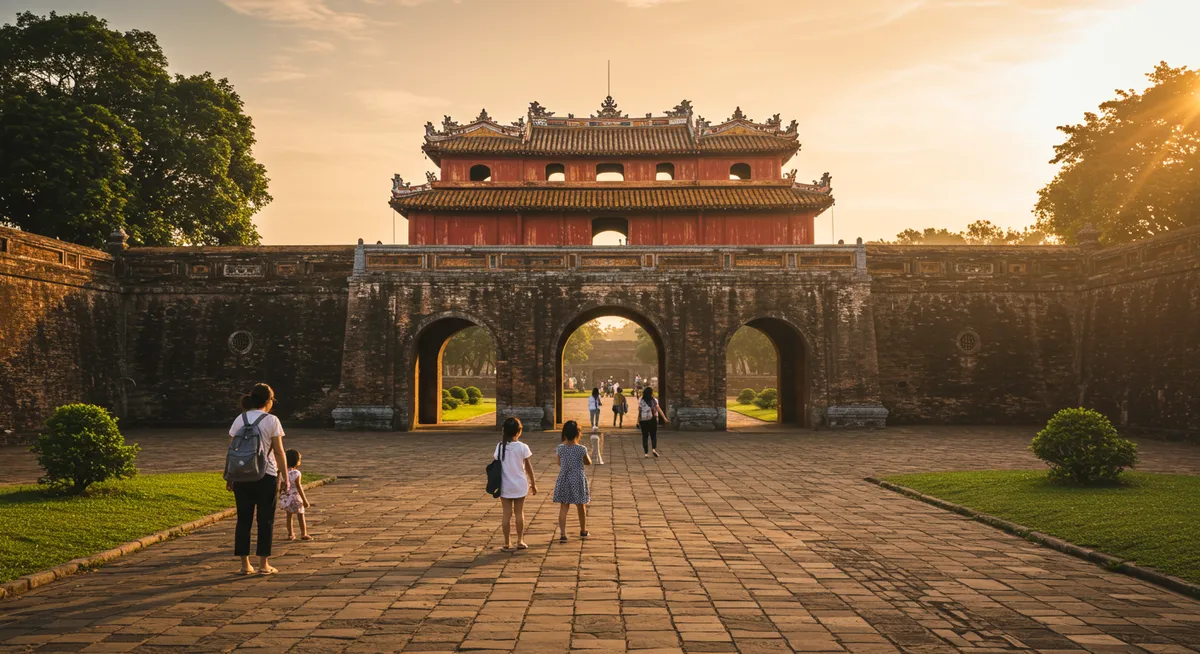
Hue Imperial City is the crown jewel of central Vietnam's heritage landscape. As the political and cultural heart of the Nguyen Dynasty for nearly 150 years, this walled fortress complex offers one of Southeast Asia's most immersive historical experiences. Whether you are a first-time visitor or returning to see the newly restored Forbidden Purple City sections, this 2026 guide covers everything from history and highlights to entrance fees and insider tips. For an overview of the city beyond the citadel, explore our full list of things to do in Hue, Vietnam.
A Brief History of Hue Imperial City
Turn this guide into a personal route with our free Hue itinerary planner.
Emperor Gia Long began construction of the Hue Imperial City in 1804, establishing it as the seat of the Nguyen Dynasty — Vietnam's last ruling monarchy. Modeled on Beijing's Forbidden City and designed according to traditional Vietnamese feng shui principles, the complex served as the nation's political capital from 1802 until Emperor Bao Dai's abdication in 1945.
The citadel encompasses three concentric enclosures: the outer Kinh Thanh (Capital City), the Hoang Thanh (Imperial City), and the innermost Tu Cam Thanh (Forbidden Purple City). At its peak, the complex housed over 100 structures including palaces, temples, pavilions, gardens, and fortified walls stretching more than 10 kilometers.
Heavy damage during the 1968 Tet Offensive destroyed much of the Forbidden Purple City, but decades of painstaking restoration — accelerated since the site received UNESCO World Heritage status in 1993 — have brought many structures back to their former grandeur. Restoration work completed in 2025 reopened previously inaccessible sections of the Forbidden Purple City, making a 2026 visit particularly rewarding.
Must-See Attractions Inside the Citadel
The Imperial City contains dozens of significant structures. Here are the highlights you should prioritize during your visit.
Ngo Mon Gate
Built in 1833 under Emperor Minh Mang, the five-arched Ngo Mon Gate is the most iconic entrance to the Imperial City. The central passage was reserved exclusively for the emperor. Above the gate sits the Ngu Phung (Five Phoenix) belvedere pavilion, where Emperor Bao Dai handed over the royal seal during his abdication ceremony. It is one of the most photographed landmarks in all of Hue.
Thai Hoa Palace (Palace of Supreme Harmony)
Directly behind Ngo Mon Gate, Thai Hoa Palace was the throne room where the emperor conducted the most important court ceremonies. The ornate interior features 80 carved and lacquered ironwood columns, each decorated with golden dragons — the symbol of imperial power. The palace's reflection in the surrounding lotus ponds makes for a stunning photograph.
The Forbidden Purple City (Tu Cam Thanh)
Once the emperor's private living quarters, the Forbidden Purple City was off-limits to everyone except the royal family and trusted eunuchs. While much was destroyed during the Tet Offensive, the newly restored sections reopened in 2025 now allow visitors to walk through reconstructed royal chambers and gardens that were sealed for decades. This is the most significant addition for visitors in 2026.
The Nine Dynastic Urns and To Mieu Temple
The nine bronze urns, each weighing between 1,900 and 2,600 kilograms, stand before To Mieu Temple — the ancestral shrine of the Nguyen emperors. Cast between 1835 and 1837, each urn is engraved with 17 decorative motifs representing Vietnam's landscapes, flora, fauna, and celestial bodies. They are recognized as a National Treasure of Vietnam.
Duyet Thi Duong Royal Theater
One of the oldest surviving court theaters in Vietnam, Duyet Thi Duong still hosts daily performances of Nha Nhac — Vietnamese court music recognized by UNESCO as an Intangible Cultural Heritage. Attending a performance here adds a living cultural dimension to your visit.
Truong Sanh and Dien Tho Residences
These elegantly restored palaces served as residences for the queen mothers and royal consorts. Their tranquil gardens and refined architecture offer a quieter contrast to the grander ceremonial structures.
Entrance Fees and Opening Hours in 2026
Here are the essential logistics for planning your visit to Hue Imperial City in 2026:
- Adult admission: 200,000 VND (~$8 USD)
- Children (7–12): 40,000 VND (~$1.80 USD)
- Children under 6: Free
- Summer hours (Apr–Sep): 06:30–17:30 daily
- Winter hours (Oct–Mar): 07:00–17:00 daily
- Audio guide rental: 150,000 VND at the ticket office
- Guided tours: Available at the entrance, typically 300,000–500,000 VND for a private English-speaking guide
A combo ticket covering the Imperial City plus the Royal Tombs of Tu Duc, Khai Dinh, and Minh Mang is also available and offers better value if you plan to visit multiple sites. Check for updated combo pricing at the ticket counter.
Best Time to Visit Hue Imperial City
Timing your visit correctly makes a significant difference in comfort and enjoyment. For detailed seasonal advice, see our best time to visit Hue guide.
- Best season: February through April offers mild temperatures (20–28°C) and the least rainfall. April 2026 coincides with the biennial Hue Festival — a major cultural event featuring royal reenactments, traditional music, and craft demonstrations.
- Hot season (May–Aug): Temperatures reach 28–38°C. Visit early morning (before 9 AM) or late afternoon (after 3 PM) to avoid peak heat. Afternoon rainstorms are common from June onward.
- Rainy season (Sep–Dec): Heaviest rainfall peaks in October and November. The citadel can experience flooding in extreme weather.
- Best time of day: Arrive at opening time (06:30 in summer, 07:00 in winter). Morning light is ideal for photography, crowds are thin, and temperatures are manageable.
Practical Tips for Visiting Hue Imperial City
These tips will help you get the most out of your visit:
- Wear comfortable walking shoes. The complex covers a vast area and you will walk 3–5 kilometers across uneven surfaces including gravel, flagstone, and grass.
- Bring water and sun protection. There is limited shade across the open courtyards. A hat, sunscreen, and a refillable water bottle are essential, especially from April to September.
- Eat before your visit. There are no full restaurants inside the citadel — only a few small drink vendors near the entrance area.
- Hire a guide or rent an audio guide. Many of the ruins lack signage, and a guide provides crucial historical context that transforms the experience from sightseeing to storytelling.
- Allow 2.5 to 4 hours. A quick walkthrough takes about 2 hours, but history enthusiasts can easily spend half a day exploring every corner.
- Dress modestly. While not strictly enforced, covering shoulders and knees shows respect when visiting temple areas within the complex.
For help getting to and around Hue, check our getting around Hue guide and Hue airport transfer guide. Traveling on a budget? Our Hue budget travel tips cover how to save on transport, food, and accommodation.
Exploring Beyond the Imperial Walls
The Imperial City is the centerpiece, but Hue's broader heritage landscape extends well beyond the citadel walls. These nearby attractions pair perfectly with your citadel visit:
- Royal Tombs of the Nguyen Emperors: The tombs of Tu Duc, Khai Dinh, and Minh Mang are each unique architectural masterpieces located 5–12 kilometers south of the city. They are easily reached by taxi, motorbike, or a scenic dragon boat ride along the Perfume River.
- Thien Mu Pagoda: This iconic seven-story pagoda overlooking the Perfume River is the unofficial symbol of Hue. A dragon boat cruise from the citadel area takes about 30 minutes.
- Hue street food: The city is one of Vietnam's top food destinations. Don't miss bun bo Hue (spicy beef noodle soup), banh khoai (crispy crepes), and com hen (baby clam rice). Explore our Hue street food tour guide for the best spots.
For a complete multi-day plan that combines the citadel, tombs, pagodas, and food experiences, see our Hue itinerary or the detailed 3-day Hue itinerary. Looking for excursions outside the city? Browse our day trips from Hue guide.
Where to Stay Near Hue Imperial City
Staying close to the citadel means you can arrive at opening time without a long commute. The south bank of the Perfume River (across from the citadel) has the highest concentration of hotels, restaurants, and cafes. Budget hostels start around $5–10 USD per night, mid-range hotels at $25–50, and boutique or luxury options from $80 and up. For neighborhood breakdowns and specific recommendations, read our where to stay in Hue guide.
Frequently Asked Questions
How long does it take to visit Hue Imperial City?
How much does it cost to enter Hue Imperial City in 2026?
What are the opening hours of Hue Imperial City?
Is a guide worth hiring at Hue Imperial City?
What is the best time of year to visit Hue Imperial City?
Can you visit Hue Imperial City independently or do you need a tour?
What should I wear to Hue Imperial City?
Hue Imperial City stands as one of Southeast Asia's most significant historical landmarks, offering a vivid window into Vietnam's imperial past that no other site in the country can match. With the newly restored Forbidden Purple City sections, updated facilities, and the 2026 Hue Festival on the horizon, there has never been a better time to visit. Start planning your trip with our complete Hue 2-day itinerary or the comprehensive 5-day Hue itinerary for a deeper exploration.