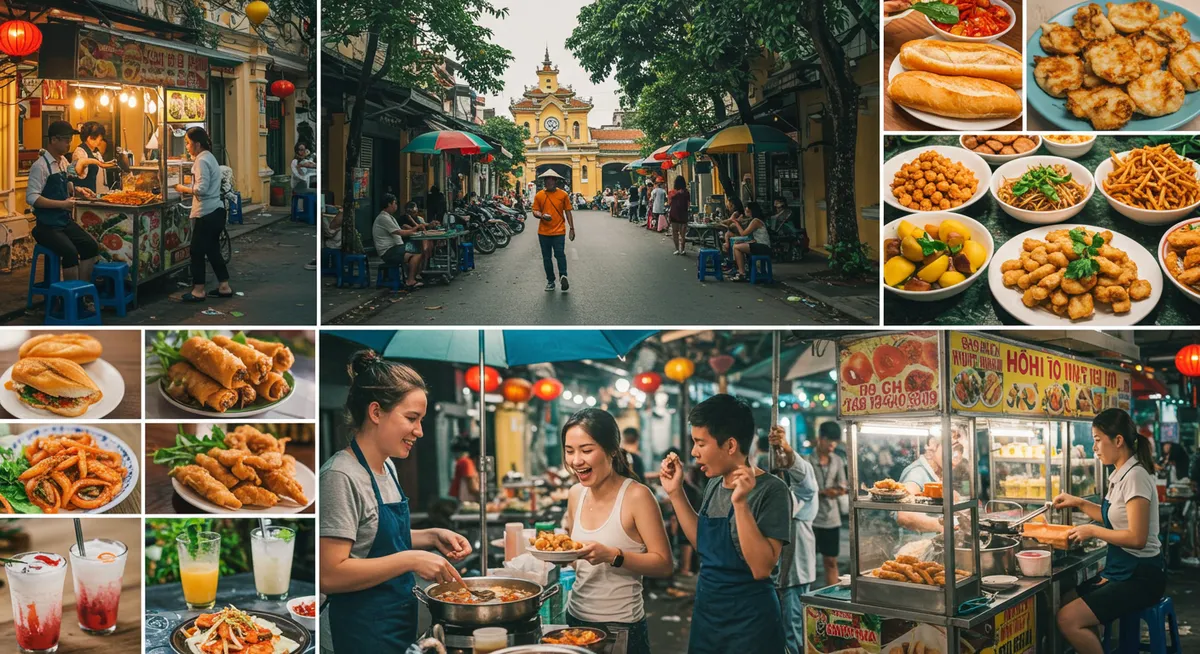
TL;DR: Ho Chi Minh City food is some of the best and cheapest in Southeast Asia — think pho, banh mi, com tam (broken rice), banh xeo and Vietnamese iced coffee, mostly eaten on a plastic stool for $1-2 a dish. This 2026 guide covers the must-try dishes, where to eat (street stalls, markets and the best food districts), practical eating tips, and a full Saigon food tour itinerary from morning coffee to late-night night markets. Budget roughly 300,000-500,000 VND ($12-20 USD) per day, and come hungry.
Ho Chi Minh City Food: A Quick Overview
Turn this guide into a personal route with our free Ho Chi Minh City itinerary planner.
Ho Chi Minh City food is the headline reason many travelers come to Vietnam's southern capital. Saigon, as locals still call it, blends centuries-old Vietnamese cooking with Chinese, French colonial and modern fusion influences into one of Asia's deepest street-food cultures. You can eat a world-class bowl of pho, a freshly griddled banh mi, or a plate of com tam beside office workers and taxi drivers for the price of a coffee back home. This guide is built in two halves: first, the food itself — the must-try Ho Chi Minh City dishes and exactly where to eat them — and then a time-of-day food tour itinerary you can follow start to finish. If you are still mapping out your trip, pair this with our Ho Chi Minh City itinerary for the full picture of where food fits around sightseeing.
Why Ho Chi Minh City Is a World-Class Food Destination in 2026
Ho Chi Minh City (still called Saigon by locals) consistently ranks among Southeast Asia's top food cities, and 2026 is no exception. The city's culinary identity is shaped by a collision of influences — centuries-old Vietnamese recipes, Chinese cooking techniques brought by Cantonese and Teochew immigrants, French colonial flavors visible in every banh mi cart, and a growing wave of modern Vietnamese fusion restaurants. What makes a Ho Chi Minh City food tour itinerary special is that you can eat world-class food for under $2 per dish, sitting on a tiny plastic stool beside office workers, taxi drivers, and fellow travelers. The street food scene here is not a tourist attraction layered on top of the city — it is the city. Every alley, market, and residential block has its own micro-economy of food vendors, many operating from the same spot for decades. Whether you have one day or five, eating your way through Saigon is the most authentic way to experience its culture. For a full overview of what else the city offers, see our guide to the best things to do in Ho Chi Minh City.
Must-Try Dishes in Ho Chi Minh City
Before you plan where to go, it helps to know what to order. These are the core Ho Chi Minh City dishes — the ones you should not leave Saigon without tasting. Most are sold both at dedicated specialist stalls and as part of any good food tour itinerary.
Pho — Vietnam's most famous export, pho (read the full history on Wikipedia) is a rice-noodle soup built on a long-simmered bone broth. Southern Saigon-style pho is sweeter and comes with a heaping side plate of bean sprouts, Thai basil, sawtooth coriander, lime and chili. Order pho bo (beef) or pho ga (chicken). Best eaten for breakfast, when the broth is freshest.
Banh Mi — The legacy of French colonialism reinvented as Vietnam's greatest sandwich. A crackly-crusted baguette (more on banh mi here) is split and stuffed with pate, cold cuts or grilled pork, pickled daikon and carrot, cucumber, cilantro and chili. The best Ho Chi Minh City banh mi comes from carts with a queue and a charcoal grill going.
Com Tam (Broken Rice) — The quintessential Saigon lunch and arguably the dish most associated with Ho Chi Minh City food. Once a humble meal made from the broken grains farmers could not sell, com tam is now an urban icon: a plate of fractured rice topped with a marinated grilled pork chop (suon), shredded pork skin (bi), a steamed egg-and-pork meatloaf (cha trung) and a fried egg, all anointed with sweet fish sauce.
Banh Xeo — A sizzling, crackly turmeric-yellow crepe (the name means "sizzling cake") folded over shrimp, pork belly and bean sprouts. The local way to eat it: tear off a piece, wrap it in lettuce and herbs, and dunk it in nuoc cham (sweet-and-sour fish sauce).
Goi Cuon (Fresh Spring Rolls) — Translucent rice-paper rolls packed with poached shrimp, pork, vermicelli, lettuce and herbs, served with a thick peanut-hoisin dip. Light, fresh and ubiquitous — the ideal counterpoint to a day of fried and grilled food.
Hu Tieu — A southern Vietnamese noodle soup with roots in the Chinese-Cambodian community, hu tieu can be served dry (kho) with a separate bowl of broth, or in soup. The clear pork-and-seafood broth and choice of chewy tapioca or rice noodles make it a Saigon favorite that many visitors miss.
Vietnamese Iced Coffee (Ca Phe Sua Da) — Strong dark-roast coffee dripped through a small metal filter (phin) over a layer of sweetened condensed milk, then poured over ice. Saigon's coffee culture is world-class; do not leave without one, and try egg coffee (ca phe trung) and coconut coffee while you are at it.
Che (Sweet Dessert Soups) — Vietnam's answer to dessert: a whole family of sweet "soups" and puddings combining beans, jellies, fruit, tapioca pearls and coconut milk over crushed ice. Che ba mau (three-color) is the photogenic classic, but every vendor has a dozen varieties worth trying.
Where to Eat: Street Food, Markets & Districts
Knowing what to order is half the battle; knowing where to find the best Ho Chi Minh City food is the other half. Saigon's street food is concentrated in a handful of districts and markets, each with its own specialties.
Ben Thanh Market food stalls: The city's most famous market is the easiest place for first-timers to graze. By day, the indoor food court serves pho, bun, com tam and fresh juices; after 6:00 PM the surrounding streets convert into a lively night food market of grilled skewers, hot pot and seafood. Prices skew a little higher than neighborhood stalls, but the variety is unbeatable — see our full guide to Ben Thanh Market for navigating the stalls and avoiding the worst tourist markups.
Bui Vien and the District 1 street-food scene: The backpacker heart of Saigon, Bui Vien Walking Street, is best known for its bars, but the side alleys hide excellent bun cha, bo ne (sizzling steak), late-night banh mi carts and snail joints. District 1 overall is the most accessible food zone for visitors, with everything from sidewalk stalls to Michelin-listed restaurants within walking distance.
District 4 seafood (Vinh Khanh Street): Just across the canal from District 1, District 4 is the city's seafood capital. Vinh Khanh Street and the Xom Chieu alleys are lined with open-air oc (snail and shellfish) restaurants where you pick live shellfish, crab and snails from trays and choose your cooking style — grilled with chili salt, steamed with lemongrass, or stir-fried with tamarind or coconut milk.
Banh mi institutions: Saigon takes its banh mi seriously, and a few legendary carts and shops draw queues all day — look for the spots where locals double-park their motorbikes and the bread is sliced fresh to order. District 1 and District 3 have the highest concentration of standout banh mi vendors.
Local districts (3, 7, 10 and Binh Thanh): To eat where Saigonese actually eat, head out of the tourist core. District 3 is the home of banh xeo and independent coffee; District 10 is prized for bun rieu and ultra-cheap com tam; and District 7 (Phu My Hung) and Binh Thanh deliver family-style dinners and Vietnamese hot pot. For ideas on combining food with sights elsewhere in the region, our best things to do in Ho Chi Minh City guide maps out the neighborhoods worth exploring.
Food Tips for Ho Chi Minh City
A few practical pointers will make eating your way through Saigon smoother, safer and cheaper.
- Hygiene and safety: Street food here is generally safe thanks to fast turnover — busy stalls cook fresh all day. Choose vendors with long queues and visible cooking, ease into raw herbs and ice over your first day or two, and skip pre-cut fruit left unrefrigerated. Drink bottled or filtered water. The official Vietnam tourism site is a good reference for regional dishes and food culture.
- Prices: Expect 30,000-65,000 VND ($1.20-2.60) per street dish and 20,000-35,000 VND for coffee in 2026. Sit-down restaurants in District 1 run 80,000-200,000 VND per plate. Carry small notes (10,000-50,000 VND) — most stalls are cash-only, though many cafes now take cards or MoMo.
- How to order: Few vendors speak English, so pointing at dishes, photos or what your neighbor is eating works perfectly. A few words help: "Bao nhieu tien?" (how much?), "Khong cay" (no chili), "Ngon qua!" (delicious!) and "Cam on" (thank you).
- Vegetarian options: Vietnam's Buddhist tradition means vegetarian (chay) food is easy to find — look for signs reading "Com Chay" or "Quan Chay." Many classics have meat-free versions (vegetarian pho, banh mi chay, fresh spring rolls), and dedicated chay restaurants cluster around pagodas. Be aware that fish sauce and shrimp paste are common, so specify "an chay" (I eat vegetarian) if you are strict.
- When to eat: Many stalls cook in batches and close when they sell out, so hit breakfast spots before 8:00 AM and lunch stalls before noon for the freshest food.
Morning Food Tour: Breakfast and Coffee Culture (7:00-10:00 AM)
Start your Ho Chi Minh City food tour itinerary early. Saigon wakes up hungry, and by 6:30 AM the best pho stalls already have queues. Head to District 1 or District 3 for a steaming bowl of Pho Bo (beef noodle soup). The southern-style pho here is sweeter and more herbaceous than its Hanoi counterpart, served with a generous plate of fresh bean sprouts, Thai basil, sawtooth coriander, and hoisin and Sriracha sauces on the side. A bowl costs between 45,000-65,000 VND ($1.80-2.60 USD) in 2026.
If you prefer something handheld, grab a Banh Mi Op La — a crusty baguette served alongside a pan of sunny-side-up eggs, pate, and pickled vegetables. For the iconic banh mi sandwich, look for carts with long queues; locals know which vendors bake the crispiest bread. Another excellent breakfast option is Xoi (sticky rice), topped with shredded chicken, fried shallots, and a drizzle of scallion oil.
After breakfast, settle into the city's legendary coffee culture. Order a Ca Phe Sua Da (Vietnamese iced coffee with condensed milk) from a sidewalk stall and watch Saigon's motorbike ballet unfold around you. For something more unusual, try Ca Phe Trung (egg coffee) — a creamy, custard-like preparation whipped with egg yolk and condensed milk that has become wildly popular across Vietnam. District 3 has several excellent independent cafes along Pham Ngoc Thach and Vo Van Tan streets. If you are planning when to schedule your food tour, our best time to visit Ho Chi Minh City guide covers weather and seasonal considerations.
Midday Food Tour: Street Food Districts and Market Lunches (11:00 AM-2:00 PM)
The midday stretch is where your Ho Chi Minh City food tour itinerary gets serious. This is when the city's street food ecosystem hits full throttle, with vendors firing up charcoal grills, frying pans sizzling, and the aroma of caramelized fish sauce hanging in the humid air.
District 3 — Banh Xeo and Bun Thit Nuong: Head to District 3 for Banh Xeo, the crispy Vietnamese turmeric pancake filled with shrimp, pork belly, and bean sprouts. The proper way to eat it: tear off a piece, wrap it in rice paper or lettuce leaves with fresh herbs, and dip in nuoc cham (sweet fish sauce). District 3 is also excellent for Bun Thit Nuong (grilled pork over vermicelli noodles), a cooling dish perfectly suited to Saigon's heat. Look for spots near Ban Co Market for the most authentic versions.
District 4 — Vinh Khanh Street Seafood: Cross the bridge into District 4 and head to Vinh Khanh Street, one of Ho Chi Minh City's most famous food streets. Here you will find open-air seafood restaurants where you choose live shellfish, snails, and crabs from buckets and trays, then pick your cooking style — grilled with salt and chili, steamed with lemongrass, or stir-fried with tamarind. The 200 Xom Chieu alleyway nearby is another hidden gem with dozens of vendors selling everything from bun rieu (crab noodle soup) to che (sweet dessert soups).
District 10 — Bun Rieu and Com Tam: For something off the typical tourist trail, venture into District 10. The stalls here serve outstanding Bun Rieu — a tangy tomato-based soup with freshwater crab paste, tofu, and rice noodles. You will also find excellent Com Tam (broken rice), the quintessential Saigon lunch plate, served with a grilled pork chop, shredded pork skin (bi), a steamed egg meatloaf (cha trung), and a generous splash of nuoc mam.
For travelers wanting to explore beyond the city, our day trips from Ho Chi Minh City guide covers excellent food-focused excursions to the Mekong Delta and Cu Chi.
Afternoon Food Tour: Hidden Gems and Sweet Treats (2:00-5:00 PM)
The afternoon lull is the perfect time for lighter bites and desserts on your Ho Chi Minh City food tour itinerary. Seek out Goi Cuon (fresh spring rolls), translucent rice paper wrapped around shrimp, pork, vermicelli, and herbs, served with a thick peanut hoisin dipping sauce. These are available at virtually every street corner, but the best versions use plump, fresh shrimp and tightly rolled wrappers.
For a uniquely Vietnamese snack, try Bo La Lot — minced beef seasoned with lemongrass, garlic, and five-spice, wrapped in wild betel leaves and grilled over charcoal. The smoky, aromatic result is something you will rarely find outside Vietnam. Pair it with a cold Saigon beer or fresh sugarcane juice.
Satisfy your sweet tooth with Che, a category of Vietnamese dessert soups and puddings. Che Ba Mau (three-color dessert) layers mung beans, red beans, and pandan jelly with coconut milk and crushed ice. Another afternoon favorite is Banh Flan (Vietnamese creme caramel), denser and more caramelized than the French original, often served with a splash of black coffee on top.
Use the cooler afternoon hours to explore on foot. The food districts are close enough to walk between, or hop on a Grab motorbike to cover more ground — our complete Ho Chi Minh City itinerary covers getting around the city, walking routes, and the metro for navigating between food districts.
Evening Food Tour: Night Markets and Dinner Streets (6:00-10:00 PM)
The evening is when Ho Chi Minh City's food scene truly electrifies. As the sun sets and the city cools slightly, streets transform into open-air dining rooms with thousands of plastic chairs and tables spilling onto sidewalks.
Ben Thanh Night Market: Start at Ben Thanh Market, which converts into a lively night food market after 6:00 PM. While slightly more tourist-oriented, it offers a convenient one-stop introduction to Vietnamese dishes — from grilled skewers and hot pot to fresh seafood and tropical fruit smoothies. Prices are modestly higher here (expect to pay 60,000-100,000 VND per dish), but the atmosphere is worth it.
Bui Vien Street (The Backpacker Area): Head to Bui Vien and its surrounding alleys for a more raucous evening. Beyond the bars, the side streets contain excellent Bun Cha stalls (grilled pork patties with noodles and dipping broth), Bo Ne (sizzling Vietnamese steak served on a hot plate with eggs, pate, and bread), and late-night banh mi carts.
Local Dinner Streets: For a more authentic experience, head to the residential streets of District 7 (Phu My Hung area) or Binh Thanh District, where local dinner spots serve family-style Vietnamese meals. Try Lau (Vietnamese hot pot), a communal dish where you cook vegetables, seafood, and thinly sliced meats in a bubbling broth at your table. The sweet-and-sour tamarind broth version is a southern specialty.
If your food tour spans multiple days, our Ho Chi Minh City itinerary helps you structure meals around sightseeing across a full trip.
Essential Food Tour Tips for 2026
These practical tips will help you get the most from your Ho Chi Minh City food tour itinerary:
- Follow the locals: The longest queue at a street stall almost always means the best food. Vietnamese diners are discerning — if a stall is empty, there is usually a reason.
- Carry small bills: Most street vendors accept cash only. Keep plenty of 10,000-50,000 VND notes. Some modern cafes and restaurants accept card payments or MoMo (Vietnam's mobile payment app) in 2026.
- Eat at peak hours: Many stalls prepare food in batches and close when they sell out. Arrive at breakfast spots before 8:00 AM and lunch stalls before noon for the freshest food.
- Stay hydrated: Saigon is hot and humid year-round. Drink bottled water between food stops and consider fresh coconut water from street vendors.
- Consider a guided tour first: If it is your first time, a morning or evening guided food tour (typically $30-60 USD per person in 2026) gives you a baseline understanding of dishes and districts before exploring independently.
- Learn key phrases: "Ngon qua!" (Delicious!), "Bao nhieu tien?" (How much?), and "Cam on" (Thank you) go a long way with vendors.
- Mind your stomach: Start with cooked dishes and work your way toward raw herbs and ice as your digestive system adjusts. Most street food is safe because of high turnover and cooking temperatures.
For more on planning the wider trip — including how food costs fit into a daily budget — see our complete Ho Chi Minh City itinerary.
Top 15 Must-Try Dishes on Your Ho Chi Minh City Food Tour
- Pho Bo — Beef noodle soup with rice noodles, herbs, and rich bone broth
- Banh Mi — Crispy baguette sandwich with pork, pate, pickled vegetables, and chili
- Banh Xeo — Turmeric crepe filled with shrimp, pork, and bean sprouts
- Com Tam — Broken rice with grilled pork chop and accompaniments
- Bun Thit Nuong — Grilled pork over cold vermicelli with herbs and pickled carrots
- Goi Cuon — Fresh spring rolls with shrimp, pork, and peanut dipping sauce
- Bun Rieu — Crab and tomato noodle soup
- Bo La Lot — Betel leaf-wrapped grilled beef
- Hu Tieu — Southern-style pork and seafood noodle soup (dry or with broth)
- Banh Cuon — Steamed rice rolls filled with pork and mushrooms
- Ca Phe Sua Da — Vietnamese iced coffee with condensed milk
- Che Ba Mau — Three-color layered dessert with coconut milk
- Bo Ne — Sizzling steak with eggs and bread on a hot plate
- Banh Trang Tron — Mixed rice paper salad with dried shrimp and quail eggs
- Oc — Snails cooked in dozens of styles (grilled, steamed, stir-fried with coconut milk)
Frequently Asked Questions
What is the best way to do a food tour in Ho Chi Minh City?
How much should I budget for street food per day in Ho Chi Minh City?
Which districts have the best street food in Ho Chi Minh City?
Is street food safe to eat in Ho Chi Minh City?
What are the best food tour times in Ho Chi Minh City?
Can I do a self-guided food tour in Ho Chi Minh City?
A Ho Chi Minh City food tour itinerary is ultimately about more than individual dishes — it is a way to experience the rhythm, warmth, and creativity of Vietnamese culture from the inside. Every neighborhood has its own signature flavors, every vendor has a recipe passed through generations, and every meal is an invitation to slow down and connect. Whether you are following this guide for a single morning or building it into a week-long Saigon adventure, come with an open mind and an empty stomach. The city will handle the rest. For more Vietnam travel planning, explore our best things to do in Ho Chi Minh City guide and our complete Hanoi food guide for comparing northern and southern Vietnamese cuisines.