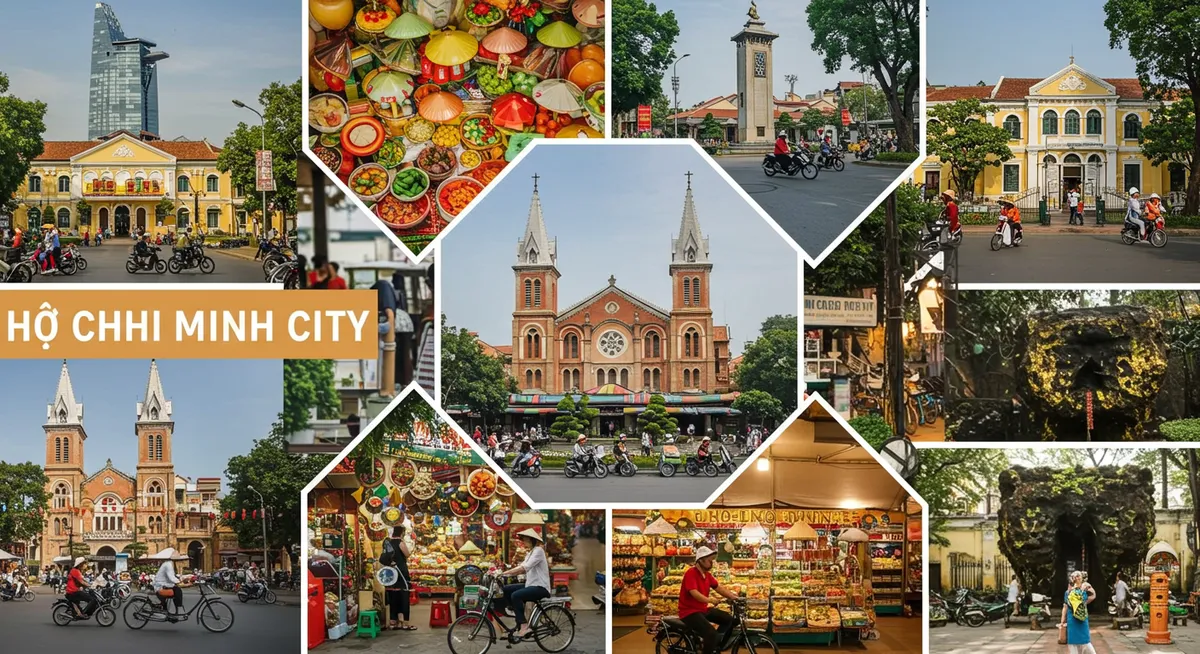
Having explored Vietnam extensively over the years, I can confidently say that Ho Chi Minh City, formerly Saigon, offers an unparalleled energy and a captivating blend of history, culture, and modernity. It’s a city that truly awakens your senses, from the constant hum of motorbikes to the intoxicating aroma of street food. Deciding on the best things to do in Ho Chi Minh City can feel overwhelming given its sheer scale, but this guide will help you navigate the most iconic Ho Chi Minh City attractions — from the War Remnants Museum to Ben Thanh Market — ensuring you capture the authentic spirit of this dynamic destination. Prepare to be immersed in a city that tells a compelling story on every corner. Plan your perfect trip with our complete Ho Chi Minh City itinerary.
Dive into History and Culture
Turn this guide into a personal route with our free Ho Chi Minh City itinerary planner.
Ho Chi Minh City’s past is rich and complex, and exploring its historical sites is among the best things to do Ho Chi Minh City offers for understanding Vietnam. The War Remnants Museum provides a sobering, vital perspective on the Vietnam War, while the Cu Chi Tunnels offer an astonishing glimpse into the ingenuity and resilience of Vietnamese soldiers. My personal tip: wear comfortable shoes for the tunnels – it’s a tight squeeze! Don't miss the stunning French colonial architecture like Notre Dame Cathedral and the Central Post Office, symbols of the city's intricate past. These landmarks offer a reflective journey through Saigon's evolution into the vibrant metropolis it is today. For a sobering, in-depth look at the conflict that shaped this city, plan a couple of hours at the War Remnants Museum. To weave all of these historical Ho Chi Minh City attractions into a day-by-day plan, follow our full Ho Chi Minh City itinerary.
Explore Vibrant Markets & Local Life
Immerse yourself in the bustling local scene by visiting Ho Chi Minh City’s iconic markets. Ben Thanh Market is a sensory explosion, perfect for haggling for souvenirs, textiles, and local delicacies. Meanwhile, Binh Tay Market in Cholon (Chinatown) offers a more authentic, less tourist-centric experience, where you can observe daily commerce in full swing. For a deeper dive, consider a walking tour of the narrow alleyways; you’ll discover hidden temples and traditional herbal medicine shops. Engaging with locals here is truly one of the most rewarding experiences, and exploring these markets is key to understanding the city's pulse and finding affordable eats.
Savor the Culinary Delights
No visit to Ho Chi Minh City is complete without indulging in its world-renowned street food. This city is a paradise for foodies, and tasting local dishes is undoubtedly one of the best things to do Ho Chi Minh City has. From a steaming bowl of pho to crispy banh xeo pancakes and fresh goi cuon spring rolls, every bite is an adventure. Don't be afraid to try street stalls; often, these are where you’ll find the most authentic and delicious flavors. I particularly recommend the humble banh mi, a Vietnamese baguette sandwich – it’s perfect for a quick, flavorful snack. Consider joining a street food tour by scooter for an unforgettable evening adventure.
Experience Modern Cityscapes & Nightlife
Beyond its historical charm, Ho Chi Minh City is a modern urban hub with a dynamic nightlife. Ascend the Bitexco Financial Tower's Skydeck for panoramic views of the sprawling city—a truly breathtaking sight, especially at sunset. Afterwards, head to Bui Vien Street, the city’s lively backpacker district, where vibrant bars, live music, and street performers create an electric atmosphere. For a more sophisticated evening, explore the rooftop bars in District 1. Planning your visit to include both daytime exploration and evening entertainment helps maximize your time; our comprehensive Ho Chi Minh City itinerary can help you integrate these varied experiences seamlessly into your trip.
Top Attractions in Ho Chi Minh City
If you only have time for a shortlist, these are the headline Ho Chi Minh City attractions that consistently rank as the best things to do in Ho Chi Minh City for first-time and returning visitors alike. Most sit within walking distance of one another in District 1, so you can tackle several in a single morning. The list below blends the city's heavyweight museums and landmarks with the markets, viewpoints, and walking streets that give Saigon its distinctive character — together they form the backbone of any well-planned visit, whether you have a single afternoon or a full week.
- War Remnants Museum — The city's most visited and most moving museum, documenting the human cost of the Vietnam War through photography, military hardware in the courtyard, and the harrowing "Requiem" exhibition. Allow two hours; go early to beat the tour-bus crowds. For a deeper look, read our dedicated War Remnants Museum guide.
- Reunification (Independence) Palace — The 1960s-modernist seat of South Vietnam's government, frozen in time on the morning of April 30, 1975, when a tank crashed through its gates to end the war. The preserved war rooms, helipad, and basement command bunker are the highlight.
- Notre-Dame Cathedral Saigon (Basilica) — A red-brick neo-Romanesque cathedral built by French colonists between 1863 and 1880, its twin 58-metre bell towers a defining image of central Saigon. Note that the interior is closed for long-running restoration, but the exterior remains a must-photograph landmark.
- Saigon Central Post Office — Sitting beside the cathedral, this grand Gothic-meets-Renaissance hall (often attributed to the Gustave Eiffel era) is a still-functioning post office with vaulted ceilings, antique phone booths, and hand-painted maps of old Indochina.
- Ben Thanh Market — The city's most famous covered market, a maze of stalls selling textiles, souvenirs, coffee, and local snacks by day, with a buzzing street-food night market spilling out around it after dark. Sharpen your haggling skills in our Ben Thanh Market guide.
- Bitexco Financial Tower (Saigon Skydeck) — One of the city's tallest skyscrapers, with a 49th-floor observation deck offering 360-degree panoramas across the Saigon River. Time your visit for sunset to watch the city lights flicker on.
- Jade Emperor Pagoda — Built in 1909 and one of the most atmospheric temples in the city, thick with incense smoke and filled with intricate carved-wood statues of Taoist and Buddhist deities. It is a genuine working temple, so visit respectfully.
- Bui Vien Walking Street — The neon heart of the backpacker district, lined with bars, live music, and street performers. Pedestrianised on weekend nights, it is the place to feel Saigon's electric after-dark energy.
- Saigon Opera House — A beautifully restored 1897 French-colonial theatre on Lam Son Square. Even if you do not catch a performance such as the acrobatic A O Show, the floodlit facade is worth a stop on an evening stroll along Nguyen Hue Walking Street.
How to plan your route. Because these attractions cluster so tightly in District 1, the smart approach is to group them geographically rather than racing across the city. A classic morning loop pairs the War Remnants Museum with the nearby Reunification Palace, then walks ten minutes to Notre-Dame Cathedral and the Central Post Office, finishing with coffee on Dong Khoi Street. Save Ben Thanh Market and Bui Vien for late afternoon and evening, when both come alive. Saigon's heat and humidity peak from late morning to mid-afternoon, so plan indoor or shaded stops — museums, markets, cafes — for the hottest hours and reserve the rooftop views and walking streets for sunset and after dark.
Getting around. Ride-hailing apps such as Grab make hopping between attractions cheap and air-conditioned, while the city's first metro line connects several key districts. For short hops in District 1, walking is genuinely pleasant despite the famously chaotic traffic — just commit to a slow, steady pace when crossing the road and let the motorbikes flow around you. Many of the top attractions are free or charge only a modest entry fee, making a packed sightseeing day very affordable.
Must-See Cultural & Historical Sites
Ho Chi Minh City rewards travellers who slow down to read its layered history. The city's must-see cultural sites fall into three broad threads — wartime history, religious heritage, and French-colonial architecture — and visiting a mix of all three gives you the clearest picture of how Saigon became the city it is in 2026.
War history. Beyond the War Remnants Museum and Reunification Palace, history travellers should set aside a full day for the Cu Chi Tunnels on the city's outskirts — an extraordinary 250-kilometre underground network used by Viet Cong fighters. Together these three sites tell the war's story from the city, the seat of power, and the battlefield.
Pagodas and temples. The Jade Emperor Pagoda is the standout, but the Thien Hau Temple in Cholon (Chinatown), dedicated to the sea goddess Mazu and famous for its spiralling incense coils, and the colourful Vinh Nghiem Pagoda are equally rewarding. These active places of worship offer a quiet, spiritual counterpoint to the city's relentless pace.
French-colonial architecture. The Central Post Office, Notre-Dame Cathedral, Saigon Opera House, and the City Hall (Ho Chi Minh City People's Committee building) form an elegant colonial-era ensemble in District 1. Stroll Dong Khoi Street and Nguyen Hue Walking Street at dusk to see them beautifully lit. The Cafe Apartments at 42 Nguyen Hue — a 1960s nine-storey block now stacked with independent cafes, boutiques, and coworking spaces — is a quirky modern landmark that captures how Saigon constantly reinvents its old buildings. For broader context on the city's role in Vietnamese history, the Ho Chi Minh City entry on Wikipedia is a useful primer, and official trip-planning resources are available via Vietnam's national tourism board.
How long to spend. Dedicated history and culture travellers can fill two full days with these sites alone without ever feeling rushed: a war-history day (museum, palace, Cu Chi Tunnels) and a heritage-and-architecture day (cathedral, post office, opera house, pagodas in Cholon). If your time is shorter, prioritise the War Remnants Museum and Reunification Palace for the wartime narrative, plus the Jade Emperor Pagoda for atmosphere — these three deliver the deepest sense of place in the least time and are, for many visitors, the most memorable of all the Ho Chi Minh City attractions.
Day Trips Worth Adding
Two of the best experiences near the city actually lie beyond it, and many travellers rate them among the most memorable parts of their whole Saigon visit. If your schedule allows, build at least one of these day trips into your plans — they add depth to your trip and a welcome change of scenery from the city's relentless energy.
- Cu Chi Tunnels — Roughly 1.5 hours northwest of the centre, this is the most popular half-day or full-day trip from Saigon. Crawl through a widened section of tunnel, see the camouflaged trapdoors and living quarters, and grasp the ingenuity of guerrilla warfare. Full details are in our Cu Chi Tunnels guide.
- Mekong Delta — A full-day escape into Vietnam's lush "rice bowl," where you cruise narrow canals by sampan, visit floating markets and fruit orchards, and sample local honey tea and coconut candy. It is the ideal contrast to the city's intensity.
For a complete menu of escapes — including Vung Tau beaches and Tay Ninh's Cao Dai temple — see our roundup of the best day trips from Ho Chi Minh City.
If you can only choose one day trip, let your interests decide. History and culture lovers should pick the Cu Chi Tunnels, which pair naturally with the city's wartime museums for a coherent narrative arc. Travellers craving nature, slower rhythms, and rural Vietnam will get more out of the Mekong Delta. Both are bookable as guided tours that handle transport, guides, and lunch, and both can be done in a single day from the city centre — though an overnight Mekong stay rewards anyone with a flexible schedule. Whichever you choose, an early start beats the heat and the crowds and leaves your evening free to enjoy the best things to do in Ho Chi Minh City after dark.
Frequently Asked Questions
What is the best time to visit Ho Chi Minh City?
Is Ho Chi Minh City safe for tourists?
How many days are enough for Ho Chi Minh City?
From its poignant historical sites to its bustling markets and mouth-watering street food, the best things to do in Ho Chi Minh City truly encapsulate the spirit of Vietnam. This vibrant metropolis provides a rich tapestry of experiences, blending the echoes of the past with the dynamism of the present. Whether you're seeking cultural immersion, culinary adventures, or an exciting urban escape, the top Ho Chi Minh City attractions promise an unforgettable journey in 2026. Start planning your Vietnamese adventure today — map it all out with our complete Ho Chi Minh City itinerary — and discover the endless charm of this incredible destination for yourself.