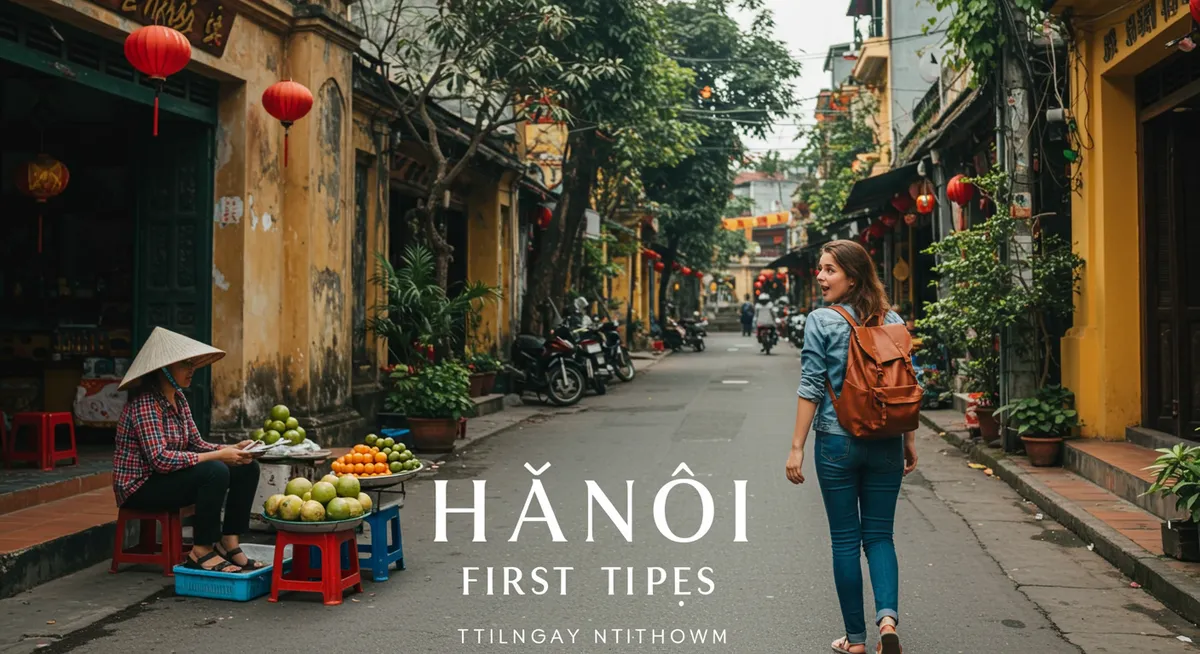
TL;DR: Hanoi rewards travelers who arrive prepared. Use Grab for transport, cross streets slowly and steadily, eat where locals eat, carry cash in Vietnamese dong, dress comfortably for walking, and budget roughly 800,000–1,500,000 VND per day. Spring (March–April) and autumn (October–November) offer the best weather. Read on for the complete breakdown.
After multiple trips to Hanoi across different seasons, one thing is clear: the city is far easier to navigate once you know what to expect. This guide collects every essential Hanoi travel tip for first-timers into one practical resource — from crossing chaotic intersections to finding the best bowl of phở, avoiding common scams, and packing the right gear for Hanoi's unpredictable weather. Whether you are planning a 3-day Hanoi itinerary or a longer exploration, these tips will help you travel confidently in 2026.
Best Time to Visit Hanoi in 2026
Turn this guide into a personal route with our free Hanoi itinerary planner.
Hanoi has four distinct seasons, and timing your visit can make or break the experience. The two sweet spots are spring (March–April) and autumn (October–November), when temperatures hover between 20–28°C with lower humidity and minimal rainfall.
Summer (June–August) brings intense heat — daytime temperatures regularly hit 35°C, and humidity pushes the feels-like temperature above 40°C. Winter (December–February) is cool and drizzly, with temperatures occasionally dropping to 10°C. If you visit in winter, pack layers because many indoor spaces lack central heating.
For 2026 specifically, Tết (Vietnamese Lunar New Year) falls in mid-February. During Tết week, many local businesses close, but the city is beautifully decorated and the atmosphere is festive. Plan accordingly if your trip overlaps. To decide on the right trip length, check our guide on how many days to spend in Hanoi.
Getting Around Hanoi: Transport Tips
Navigating Hanoi's traffic is the single biggest concern for first-timers, and rightfully so. Here is how to handle it confidently.
Crossing the Street
The golden rule: walk slowly and steadily at a constant pace. Do not stop, do not run, and do not make sudden movements. Motorbike riders calculate their path around you based on your trajectory. Look to your left (traffic comes from the right in Vietnam), make eye contact with drivers when possible, and simply keep moving. It feels terrifying the first time and completely natural by day two.
Grab Is Your Best Friend
Download the Grab app before you arrive. It works like Uber and covers cars, motorbikes, and food delivery. Fares are transparent and metered through the app, eliminating haggling. A Grab car across the city rarely exceeds 80,000 VND (roughly $3.20 USD in 2026). For a detailed breakdown of all transport options, see our Hanoi transportation guide.
Getting From the Airport
Noi Bai International Airport sits about 25 km north of the Old Quarter. Options include the official airport bus (route 86, 45,000 VND), Grab car (around 250,000–350,000 VND), or a pre-booked private transfer. Avoid unlicensed taxi touts inside the arrivals hall. Our Hanoi airport transfer guide covers every option with current 2026 pricing.
Walking and Cyclos
Hanoi's Old Quarter is compact and best explored on foot. For a scenic experience, consider a cyclo (pedicab) ride — but always agree on the price before you get in. A 30-minute ride should cost no more than 100,000–150,000 VND.
Street Food: What to Eat and How to Stay Safe
Hanoi's street food scene is legendary, and skipping it means missing the soul of the city. Here are the dishes every first-timer should try and practical tips for eating safely.
Must-Try Dishes
- Phở bò — Hanoi's iconic beef noodle soup, best eaten for breakfast at a busy sidewalk stall (30,000–60,000 VND)
- Bún chả — smoky grilled pork patties with rice noodles and herbs, the quintessential Hanoi lunch
- Bánh mì — crispy baguette stuffed with pâté, pickled vegetables, and your choice of protein
- Egg coffee (cà phê trứng) — whipped egg yolk with condensed milk over strong Vietnamese coffee, uniquely Hanoian
- Chả cá Lã Vọng — turmeric-marinated fish with dill, a northern specialty worth seeking out
- Bánh cuốn — delicate steamed rice rolls filled with minced pork and mushrooms
For a deep dive into where to find these dishes and more, explore our comprehensive Hanoi food guide.
Street Food Safety Tips
Follow the locals: stalls with high customer turnover mean fresh ingredients. Choose places where food is cooked to order in front of you. Hot dishes are safer than cold ones. Carry hand sanitizer since not every stall has a handwashing station. Tap water is not drinkable — stick to bottled water or ask for "nước lọc" (filtered water).
Money, Budget, and Tipping
Vietnam uses the Vietnamese dong (VND). In 2026, the approximate exchange rate is 25,000 VND to 1 USD. The large denominations can be confusing at first — pay attention to the color and number of zeros on each bill.
Daily Budget Breakdown
- Budget traveler: 800,000–1,200,000 VND/day ($32–48 USD) — hostel dorms, street food, walking and public transport
- Mid-range traveler: 1,500,000–3,000,000 VND/day ($60–120 USD) — boutique hotel, mix of street food and restaurants, Grab rides, entrance fees
- Comfort traveler: 3,000,000+ VND/day ($120+ USD) — upscale hotel, guided tours, fine dining
Cash vs Cards
Cash is king in Hanoi, especially at markets, street food stalls, and small shops. ATMs are widely available (most charge 22,000–55,000 VND per withdrawal). International credit cards work at hotels, upscale restaurants, and modern cafes, but always carry cash as a backup. Notify your bank before traveling to avoid card blocks.
Tipping
Tipping is not expected in Vietnam but is appreciated for good service. Rounding up the bill at restaurants or leaving 5–10% at sit-down establishments is generous. For tour guides, 100,000–200,000 VND per person is standard.
Avoiding Scams and Staying Safe
Hanoi is generally a safe city for tourists, but petty scams targeting first-timers do exist. Knowing the common ones makes them easy to avoid.
- Motorbike bag snatching: Wear cross-body bags on the side away from the road. Keep your phone in your pocket when walking near traffic.
- Taxi overcharging: Use Grab instead of street taxis. If you must hail a cab, insist on the meter and use reputable companies like Mai Linh or Vinasun.
- Shoe-shine scam: Someone "accidentally" squirts polish on your shoe, then demands an inflated cleaning fee. Politely decline and walk away.
- Overly friendly strangers: People who approach you with unsolicited help or conversation in tourist areas may be steering you toward overpriced shops or services.
- Market overpricing: Always bargain in markets. Start at 40–50% of the asking price and settle around 60–70%. Compare prices at multiple stalls before buying.
For personal safety, keep photocopies (or phone photos) of your passport, visa, and travel insurance documents. Hanoi's emergency number is 113 (police) and 115 (ambulance).
What to Pack for Hanoi
Packing right saves you hassle. Here is what experienced travelers always bring:
- Comfortable walking shoes — Hanoi's uneven sidewalks demand sturdy, broken-in footwear
- Light, breathable clothing — cotton or moisture-wicking fabrics for the heat and humidity
- Rain jacket or compact umbrella — rain is possible year-round, especially May–September
- Layers for winter — if visiting November–February, pack a warm jacket and scarf
- Universal power adapter — Vietnam uses Type A, C, and F plugs (220V)
- Sunscreen and insect repellent — essential in warmer months
- Reusable water bottle — refill at hotels and filtered water stations to reduce plastic waste
Cultural Etiquette Every First-Timer Should Know
Vietnamese culture values respect and politeness. These customs will help you connect with locals and avoid unintentional offense.
- Remove your shoes when entering homes, temples, and some shops — look for a pile of shoes at the entrance as your cue
- Dress modestly at temples — cover your shoulders and knees when visiting pagodas and religious sites
- Use both hands when giving or receiving items, especially money and business cards
- Ask before photographing people — most locals are happy to pose, but always ask first
- Learn a few Vietnamese phrases — "Xin chào" (hello), "Cảm ơn" (thank you), and "Bao nhiêu?" (how much?) go a long way
- Bargain with a smile — haggling is expected in markets but should always remain friendly and lighthearted
Top Things to Do on Your First Visit
With so much to see, prioritizing helps. These experiences give first-timers the best introduction to Hanoi:
- Explore the Old Quarter — wander the 36 ancient streets, each historically dedicated to a specific trade. Our Old Quarter itinerary maps out the best walking route.
- Walk around Hoan Kiem Lake — the spiritual heart of the city, especially beautiful at sunrise and on weekend nights when surrounding streets close to traffic
- Visit the Temple of Literature — Vietnam's first university, dating to 1070, with stunning traditional architecture
- See Ho Chi Minh's Mausoleum Complex — includes the mausoleum, Presidential Palace, and One Pillar Pagoda (closed Mondays and Fridays)
- Take a day trip — Halong Bay, Ninh Binh (Tam Coc), or Perfume Pagoda are all accessible from Hanoi. Browse our day trips from Hanoi guide for options.
- Experience the night scene — from bia hơi corners to rooftop cocktail bars, Hanoi after dark has something for everyone. Check our Hanoi nightlife guide for recommendations.
For a complete list of attractions, see our guide to the best things to do in Hanoi.
Where to Stay: Neighborhoods for First-Timers
Your choice of neighborhood shapes your entire Hanoi experience. The Old Quarter puts you in the center of the action — street food, markets, and nightlife are steps away, though it can be noisy. Hoan Kiem (around the lake) offers a slightly calmer base with easy access to major sights. Ba Dinh is quieter and more residential, ideal if you prefer a local feel.
For detailed neighborhood comparisons, hotel recommendations, and booking tips, read our where to stay in Hanoi guide.
Connectivity and Practical Essentials
- SIM card: Buy a tourist SIM at the airport (Viettel, Mobifone, or Vinaphone) for around 100,000–200,000 VND with generous data. eSIMs are also available for newer phones.
- Wi-Fi: Free Wi-Fi is available at virtually every cafe, hotel, and restaurant in Hanoi.
- Visa: Many nationalities now qualify for Vietnam's 90-day e-visa (introduced in 2023). Check current requirements before booking. Citizens of 13 countries enjoy visa-free entry for up to 45 days.
- Travel insurance: Strongly recommended. Medical care in Hanoi is affordable but quality varies; insurance ensures access to international-standard hospitals like Vinmec or French Hospital.
- Language: English is widely spoken in tourist areas but limited elsewhere. Google Translate's camera feature works well for menus and signs in Vietnamese.
Frequently Asked Questions
What should first-timers know about Hanoi's traffic?
Is street food safe to eat in Hanoi?
How much money do I need per day in Hanoi?
What are the most common scams in Hanoi?
What is the best time of year to visit Hanoi?
Do I need a visa to visit Hanoi in 2026?
How do I get from Hanoi airport to the city center?
These Hanoi travel tips for first-timers cover everything you need to arrive prepared and make the most of Vietnam's captivating capital in 2026. From mastering street crossings to discovering hidden food stalls, each tip comes from real experience on the ground. Hanoi has a way of converting cautious first-timers into lifelong fans — and with this guide in hand, you are ready to join them.
Start building your perfect trip with our complete Hanoi itinerary, or explore a focused 5-day Hanoi itinerary for a deeper experience.