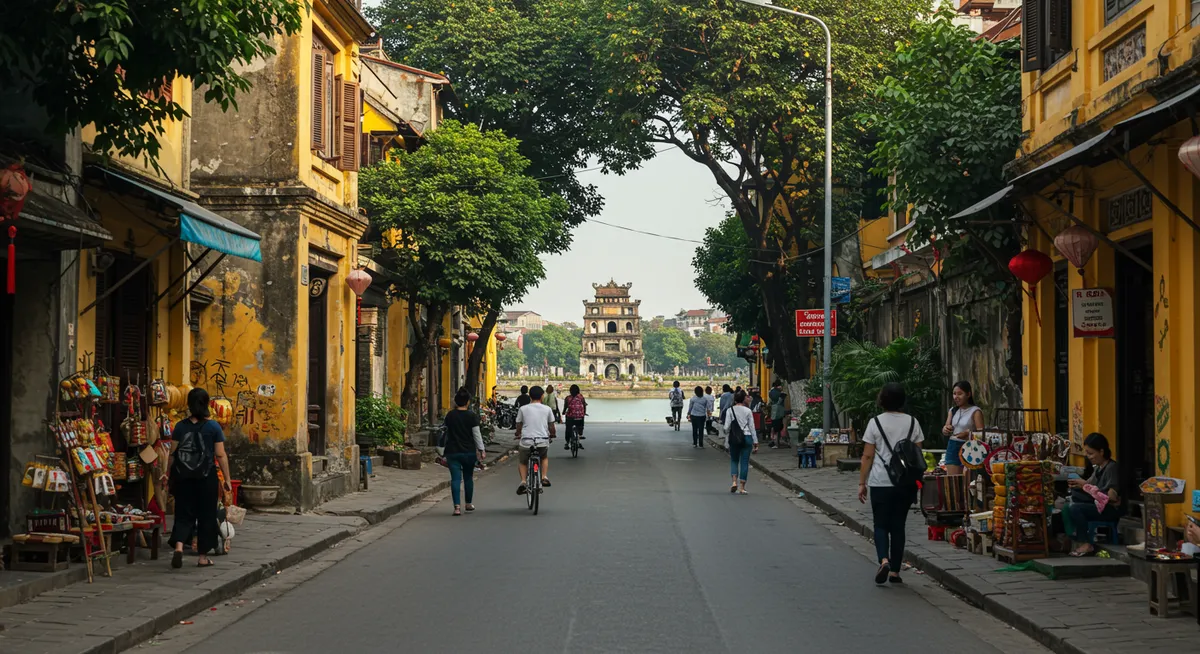
TL;DR: Spend 3 days in Hanoi's Old Quarter exploring the 36 guild streets, sampling legendary street food (pho, bun cha, egg coffee), visiting Hoan Kiem Lake and Ngoc Son Temple, shopping at Dong Xuan Market, catching a water puppet show, and hitting the weekend night market. Below is a detailed day-by-day Hanoi Old Quarter itinerary for 2026 with walking routes, local tips, and budget advice.
The Old Quarter is the beating heart of Hanoi — a fascinating maze of 36 guild streets where centuries-old trades, colonial architecture, Buddhist temples, and some of the best street food on the planet converge into a few dense square kilometers. Whether you are a first-time visitor or returning for another taste of bun cha, this Hanoi Old Quarter itinerary gives you a structured yet flexible 3-day plan to experience the district's highlights without feeling overwhelmed.
Having walked these narrow alleys across multiple visits, we can confirm: comfortable shoes, an empty stomach, and a willingness to get lost are all you really need. For a broader city-wide plan, pair this guide with our full Hanoi itinerary.
Day 1: Hoan Kiem Lake, Guild Streets, and First Bites
Turn this guide into a personal route with our free Hanoi itinerary planner.
Morning — Hoan Kiem Lake and Ngoc Son Temple
Start early at Hoan Kiem Lake, ideally before 7 AM, when locals practice Tai Chi along the promenade and the light is soft enough for great photos. Cross the iconic red Huc Bridge to Ngoc Son Temple, perched on a small island in the lake. The temple honors the scholar Van Xuong and the military hero Tran Hung Dao, and its peaceful courtyard offers a welcome contrast to the lively streets just meters away. Entrance costs 30,000 VND (roughly $1.20 USD in 2026).
Late Morning — The 36 Guild Streets Walking Route
From the lake, head north into the heart of the Old Quarter. The 36 guild streets were originally named after the specialized crafts that supplied the royal court at Thang Long Citadel. A few streets still live up to their names:
- Hang Bac (Silver Street) — jewellery shops and money changers, a tradition spanning centuries.
- Hang Gai (Silk Street) — boutique silk tailors, galleries, and custom-made clothing.
- Lan Ong — a fragrant corridor of traditional herbal medicine shops with wooden cabinets stacked floor to ceiling.
- Hang Ma — vibrant paper goods, lanterns, and seasonal decorations that make for stunning photos.
Allow 2 to 3 hours for this loop. Wear comfortable walking shoes — the narrow sidewalks and cobbled alleys can be uneven.
Afternoon — Street Food Introduction
Grab lunch at one of the legendary pho stalls along Hang Ga or Bat Dan streets. A bowl of pho bo (beef noodle soup) typically costs 40,000 to 60,000 VND. Follow it up with a ca phe trung (egg coffee) at Cafe Giang on Nguyen Huu Huan Street — this iconic drink was invented here in the 1940s and remains a Hanoi signature. If you want a deeper dive into the city's food scene, our Hanoi food guide covers the top dishes and where to find them.
Evening — Hoan Kiem Walking Street
On weekends (Friday through Sunday), the streets around Hoan Kiem Lake close to traffic from 6 PM and become a massive pedestrian zone. Street performers, local families, and food vendors fill the area. It is one of the most vibrant evening scenes in Southeast Asia. For weekday evenings, stroll along Hang Ngang and Hang Dao streets where the atmosphere stays lively year-round.
Day 2: Markets, Culture, and the Night Market
Morning — Dong Xuan Market and Bach Ma Temple
Dong Xuan Market is the Old Quarter's largest covered market, established in the early 20th century. The ground floor is packed with wholesale textiles, household goods, and souvenirs, while the upper floors sell clothing and accessories. Haggling is expected — start at about 50 percent of the asking price and negotiate from there.
A five-minute walk south brings you to Bach Ma Temple on Hang Buom Street, one of Hanoi's oldest temples dating to the 11th century. It honors the white horse spirit believed to have guided King Ly Thai To in building the city walls. Entry is free.
Late Morning — Ma May Ancient House
Stop by the restored Ancient House at 87 Ma May Street to see how a traditional Old Quarter merchant family lived in the 19th century. The long, narrow tube-house layout — designed to maximize street frontage while extending deep into the block — is characteristic of Hanoi's historic architecture. Admission is 10,000 VND.
Afternoon — Water Puppet Show and St. Joseph Cathedral
Catch a performance at the Thang Long Water Puppet Theatre near the northeast corner of Hoan Kiem Lake. Shows run multiple times daily, last about 50 minutes, and cost 100,000 VND. The puppetry tradition dates back over 1,000 years to the rice paddies of the Red River Delta — it is one of Vietnam's most distinctive art forms.
Afterward, walk to St. Joseph Cathedral on Nha Tho Street. Built in 1886 in neo-Gothic style, the cathedral is sometimes called the "little Notre Dame" and the surrounding Nha Tho area is filled with boutique cafes and shops. If you are planning your first visit to the city, our Hanoi travel tips for first-timers covers visa, currency, SIM cards, and more.
Evening — Old Quarter Night Market
On Friday, Saturday, and Sunday evenings (6 PM to 11 PM), the night market stretches from Hang Dao Street to Dong Xuan Market — roughly 3 kilometers of stalls selling clothing, handicrafts, souvenirs, and street food. Peak hours are 7:30 to 10 PM. Must-try night market snacks include grilled pork skewers, stuffed sticky rice balls, and hot chestnuts. For nightlife options beyond the market, see our guide to Hanoi nightlife.
Day 3: Hidden Gems, Train Street, and Farewell Feast
Morning — Hidden Temples and Quiet Alleys
On your final day, venture beyond the main tourist streets. The Old Quarter rewards those who wander: tucked between shopfronts you will find small communal temples, century-old banyan trees growing through tile roofs, and quiet residential alleys where daily life unfolds at a slower pace. Start on Hang Quat Street (once the fan-making street, now known for altar goods and Buddhist supplies) and let curiosity guide you.
Late Morning — Train Street
A 10-to-15-minute walk southwest from Hoan Kiem Lake brings you to Hanoi's famous Train Street, nestled between Nam De and Tran Phu streets. Houses line both sides of the narrow railway tracks, and over 30 cafes have set up right along the rails. In 2026, trains typically pass twice daily (check local schedules as times shift seasonally). Order a Vietnamese iced coffee and watch life unfold — but stay alert and follow staff instructions when the train approaches.
Afternoon — Bun Cha Farewell and Last Shopping
No Hanoi Old Quarter itinerary is complete without a proper bun cha lunch. Head to Hang Manh or Le Van Huu Street for smoky charcoal-grilled pork patties served with rice noodles, herbs, and a tangy dipping broth. A full meal costs 50,000 to 80,000 VND. Spend the remaining afternoon picking up last-minute souvenirs — hand-embroidered goods on Hang Gai, lacquerware on Hang Hom, or artisan coffee beans from any of the specialty roasters that have popped up across the quarter.
Evening — Sunset at the Lake
End your 3-day Hanoi Old Quarter itinerary where you started: Hoan Kiem Lake at sunset. The Turtle Tower glows against the fading sky, and the promenade fills with families and couples. It is a fitting farewell to one of Southeast Asia's most atmospheric neighborhoods.
Practical Tips for Visiting Hanoi Old Quarter in 2026
- Best time to visit: October to December offers cool, dry weather. March to April is pleasant but can be humid. Avoid July and August if you dislike heat and heavy rain.
- Getting around: Walk whenever possible. For longer distances, use the Grab app (Vietnam's equivalent of Uber). Cyclos (pedicabs) are fun but agree on a price before boarding.
- Budget: Street food meals cost 40,000 to 80,000 VND ($1.60 to $3.20). A day in the Old Quarter can be done comfortably on $15 to $25 USD excluding accommodation.
- Safety: The Old Quarter is generally safe. Keep valuables secure in crowded areas and watch for motorbikes on sidewalks — they are part of the landscape.
- Accommodation: Staying inside the Old Quarter puts you within walking distance of everything. For neighborhood-level advice, check our guide on where to stay in Hanoi.
- Airport transfers: Noi Bai International Airport is about 30 km from the Old Quarter. Our Hanoi airport transfer guide covers taxi, bus, and private car options.
Day Trips from the Old Quarter
If you have extra days in Hanoi beyond this 3-day Old Quarter itinerary, several world-class destinations are within easy reach. Ha Long Bay, Ninh Binh (Trang An), and Perfume Pagoda are all popular day trips. Our guide to day trips from Hanoi breaks down transport options, costs, and the best tours for each destination. Deciding how long to stay? Our analysis of how many days in Hanoi helps you plan the right trip length.
Frequently Asked Questions
How many days do you need for Hanoi Old Quarter?
What is the best way to get around the Hanoi Old Quarter?
Is the Hanoi Old Quarter safe for tourists in 2026?
What are the must-try foods in the Hanoi Old Quarter?
When is the Hanoi Old Quarter night market open?
What is the best time of year to visit Hanoi Old Quarter?
Can you visit Hanoi Train Street in 2026?
This Hanoi Old Quarter itinerary gives you a day-by-day framework for experiencing one of Southeast Asia's most captivating historic districts in 2026. From the ancient guild streets and legendary street food to hidden temples and the buzzing night market, every corner of the Old Quarter tells a story. Use this guide as your starting point, but leave room for spontaneous detours — that is where the best memories in Hanoi are made. For a complete city experience, explore our best things to do in Hanoi and build a full trip with our 3-day Hanoi itinerary.