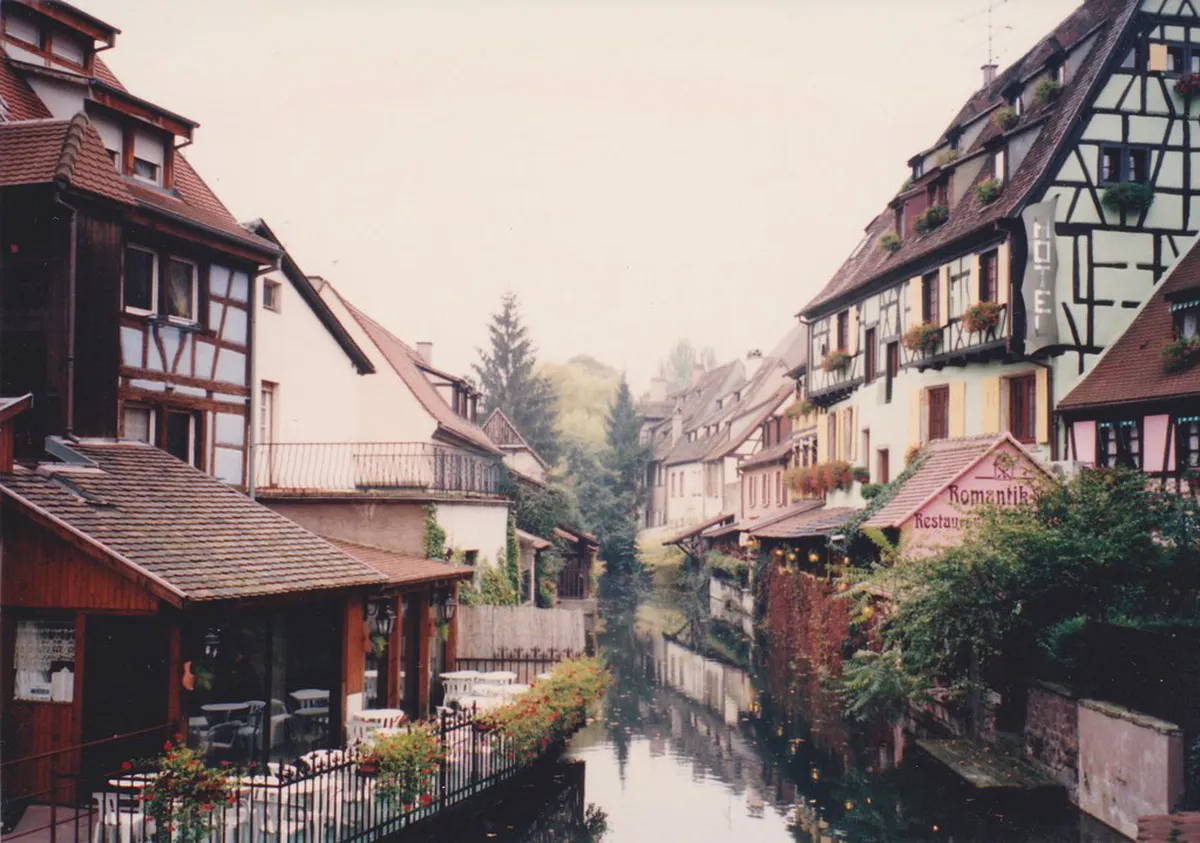
Colmar's medieval street grid survived World War II almost entirely intact — because the city surrendered without a siege. That single historical fact shapes everything about this walking tour: the facades you see are original, not reconstructed. The compact old city packs its best landmarks into roughly 2.5 kilometres of walkable lanes, canals, and squares. This guide gives you a numbered route, per-stop time estimates, entry costs, and the local details most visitors miss.
Why Colmar Is Made for Walking
Turn this guide into a personal route with our free Colmar itinerary planner.
Few European cities can claim a medieval centre this intact without a single reconstructed street. Colmar's old town covers barely one square kilometre, so every major landmark is reachable on foot within minutes. The terrain is mostly flat, though cobblestone surfaces dominate — more on that in the planning section below.
Arriving by train drops you at Gare de Colmar, about a 15-minute walk from Petite Venise. If you're still planning your arrival, see our guide on how to get to Colmar from Paris, Strasbourg, and Basel for transport options. Most visitors find that a single well-planned day covers the highlights without feeling rushed.
The city's Alsatian identity — a blend of French and German heritage — shows up in every facade, signpost, and menu. Half-timbered houses line narrow lanes that dead-end into open squares without warning. That quality of surprise is part of what makes walking, rather than cycling or driving, the right way to explore here.
Half-Day vs. Full-Day: Plan Your Walk
Before you lace up, decide how much time you actually have — the route scales well to either option. A half-day (roughly 3 hours) covers all exterior stops for free and works well for visitors with limited time or mobility. A full-day (6–7 hours) adds the Musée Unterlinden (~€13), the Dominican Church (~€2.50), and a long lunch break. Budget around €15–20 total for entry fees on a full-day walk.
For the best seasonal timing before you plan, check the best time to visit Colmar guide. If you're visiting in December, the Colmar Christmas market guide adds a separate layer of route logistics worth reading first. For a tighter single-day framework, the 1-day itinerary in Colmar pairs well with this route guide.
Three things catch first-time visitors off guard on this walk. First, Petite Venise between 11:00 and 14:00 in July and August is packed with tourist boats — arrive earlier. Second, the Marché Couvert (Covered Market) is closed on Mondays, so adjust your route day if that stop matters. Third, 2.5 kilometres sounds short but feels longer on uneven cobblestone — trail-running shoes beat sandals every time.
Visitors with mobility constraints should note that Rue des Marchands and Place de la Cathédrale have smooth-enough paving for most. The canal-side paths near Petite Venise are narrower and less even, so plan extra time there. Pont Saint-Pierre and the main quay are both accessible, but the cobblestone lanes behind Quai de la Poissonnerie are not ideal for wheelchairs.
The Colmar Walking Tour Route: 10 Stops
The route below runs in a logical loop from the train station area toward the canals and back through the old town. Download the Colmar official city map PDF before you go — it's free and fits a phone screen well. Each stop below includes a recommended time allowance, entry cost, and the best moment for photos.
For stop 4, the Marché Couvert, read our detailed Marché Couvert Colmar opening hours and what to buy guide before visiting. Hours and market days shift seasonally, so confirming in advance saves a wasted detour. All other stops listed are open most days, though the Dominican Church keeps shorter winter hours.
- Musée Unterlinden — Place d'Unterlinden
- Time needed: 60–90 min
- Entry: ~€13 adults
- Best photo: exterior courtyard, morning light
- Note: Houses the Isenheim Altarpiece
- Maison des Têtes — 19 Rue des Têtes
- Time needed: 10 min exterior
- Entry: free (exterior only)
- Best photo: midday, south-facing facade
- Note: 106 carved stone heads on the facade
- Église Saint-Martin — Place de la Cathédrale
- Time needed: 20–30 min
- Entry: free
- Best photo: late afternoon from the west
- Note: Gothic collegiate church, 13th–15th century
- Marché Couvert — Rue des Écoles
- Time needed: 20–30 min
- Entry: free
- Best photo: interior iron hall, mid-morning
- Note: Closed Mondays — plan around this
- Ancienne Douane — Place de l'Ancienne Douane
- Time needed: 10 min exterior
- Entry: free (exterior only)
- Best photo: early morning, empty square
- Note: 15th-century customs house, now event venue
- Maison Pfister — 11 Rue des Marchands
- Time needed: 15–20 min with courtyard
- Entry: free (courtyard closes at dusk)
- Best photo: courtyard loggia, overcast light
- Note: One of Alsace's finest Renaissance houses
- Place des Six Montagnes Noires — GPS 48.073925, 7.356537
- Time needed: 10–15 min
- Entry: free
- Best photo: fountain, any time of day
- Note: Quiet picnic and rest spot, 16th-century fountain
- Couvent des Dominicains — Place des Dominicains
- Time needed: 15 min
- Entry: ~€2.50 adults
- Best photo: nave interior, morning side-light
- Note: Houses Schongauer's Virgin of the Rose Bower
- Quai de la Poissonnerie — Fishmongers' Wharf
- Time needed: 20 min
- Entry: free
- Best photo: 07:30–09:00 from Pont Saint-Pierre
- Note: Working residential street — keep noise low
- Petite Venise — Pont Saint-Pierre viewpoint
- Time needed: 20–30 min
- Entry: free
- Best photo: 07:30–09:00, canal reflections peak
- Note: Avoid 11:00–14:00 in summer (peak boat traffic)
Little Venice and Fishmongers' Wharf
Petite Venise is Colmar's most photographed corner — and also its most misunderstood. Most visitors crowd the main quay, but the best canal reflections are visible from Pont Saint-Pierre, one bridge further along. Arriving between 07:30 and 09:00 gives you unobstructed water reflections before tourist boats begin their morning runs. By 11:00, especially in July and August, the canal fills with activity and the light flattens.
Quai de la Poissonnerie — the Fishmongers' Wharf running alongside the canal — looks picture-postcard perfect but functions as a working residential street. Locals live in the coloured half-timbered houses you're photographing, so keep voices down, especially early in the morning. Walking the full quay takes about 10 minutes and connects naturally to Pont Saint-Pierre without backtracking.
The canal here drains the Lauch River through the southern edge of the old city. From Pont Saint-Pierre on a calm morning, the reflections of orange and yellow facades double in the water below. That composition — symmetrical, still, unpeopled — is the image most visitors are looking for, and it requires only an early alarm.
Old Town, Rue des Marchands, and Landmark Facades
Rue des Marchands is the spine of Colmar's old town — a single street that connects the cathedral to the canal quarter. Walking it end-to-end takes around 20 minutes and costs nothing, making it the best free activity on the route. The street concentrates Maison Pfister, Maison des Têtes (a short detour north), and the Ancienne Douane at its southern end.
Maison Pfister at number 11 is worth the five-minute courtyard detour if you're an architecture or photography enthusiast. The Renaissance loggia on the upper floor is one of the most detailed in all of Alsace, and entry is free. The courtyard closes at dusk, so visit before early evening if you plan a long lunch in between.
Place de la Cathédrale, home to Église Saint-Martin, benefits from late-afternoon westerly light that warms the sandstone facade. Arriving around 16:00–17:00 in spring or summer positions you for the strongest natural light on the Gothic portal. The square itself is a useful orientation point — most of the old town's lanes radiate outward from here.
Place des Six Montagnes Noires: The Quiet Square
This small square sits roughly in the centre of the old town but appears in none of the major competitor walking guides. Find it via the Place des Six Montagnes Noires map pin on Google Maps — GPS coordinates 48.073925, 7.356537. The fountain at its centre dates to the 16th century and marks one of the oldest civic gathering points in Colmar.
Unlike Place de la Cathédrale, this square rarely draws tour groups, making it genuinely useful as a rest stop or picnic spot. A bakery and a café sit on opposite sides, offering shade seating on warm afternoons. It connects directly to Rue des Marchands via a short lane, so building it into your route adds barely five minutes.
Iconic Landmarks: A Quick Comparison
Three landmarks on Rue des Marchands and its immediate surroundings confuse first-time visitors who don't know how to prioritise them. Maison des Têtes, Maison Pfister, and the Ancienne Douane all appear on every walking map, but they offer very different experiences. The comparison below helps you decide where to spend time based on your interests.
The Couvent des Dominicains deserves a special mention here because competitors either omit it or list it without context. It houses Martin Schongauer's *Virgin of the Rose Bower* (1473) — the single most important artwork in Colmar outside the Musée Unterlinden. At around €2.50 entry and just 15 minutes inside, the value ratio is hard to beat. Skip it only if museum fatigue is already setting in after Unterlinden.
The Musée Unterlinden anchors the northern end of the route and should ideally be your first stop of the day. Visiting early means smaller crowds around the Isenheim Altarpiece, Colmar's crown jewel. Allow at least 90 minutes inside — rushing through one of the finest museum collections in eastern France is a genuine waste.
- Maison des Têtes — 19 Rue des Têtes
- Access: exterior only
- Entry: free
- Best angle: south-facing, midday sun
- Time: 10 min
- Trade-off: facade detail only; no interior access
- Maison Pfister — 11 Rue des Marchands
- Access: courtyard open, no paid interior
- Entry: free
- Best angle: inner loggia, overcast light
- Time: 15–20 min
- Trade-off: closes at dusk; best for photographers
- Ancienne Douane — Place de l'Ancienne Douane
- Access: exterior only (event venue inside)
- Entry: free
- Best angle: open square, early morning
- Time: 10 min
- Trade-off: interior rarely accessible to tourists
Beyond the Main Path: Colmar's Hidden Corners
Three spots near the main route earn almost zero coverage in competitor guides, yet each adds genuine character to a visit. None require a detour of more than 10 minutes from the numbered stops. For a deeper dive into off-route discoveries, the hidden gems in Colmar beyond Petite Venise guide expands on all three.
Rue des Écoles runs parallel to the Marché Couvert and is home to intact 17th-century residential facades largely untouched by tourism. The lane is quieter than Rue des Marchands and gives a better sense of how ordinary Colmariens have always lived. Walk it south to north on the way from the market to Place des Six Montagnes Noires.
The Quartier des Tanneurs (Tanners' Quarter) sits along the Lauch River just north of Petite Venise and looks best at dusk. The tall, narrow houses with their distinctive drying lofts were built by tanners who needed to air hides above the river. Late afternoon light catches the upper floors in a way that midday sun never does.
Pont de la Halle offers a canal view that is less famous than Pont Saint-Pierre but arguably more intimate. Standing on the bridge at low sun puts the Dominican Church tower in your background and the canal in your foreground. It is a 3-minute walk from the Ancienne Douane and fits naturally at the end of the route loop.
Where to Stay in Colmar
All three accommodation tiers below place you within walking distance of the old city route. Staying close to the centre lets you beat early-morning crowds at Petite Venise without booking a taxi. Each option listed links directly to a booking page so you can check current availability and rates.
- Budget — Ibis Budget Colmar Centre Gare
- Best for: cost-conscious solo and couple travellers
- Location: 5-min walk to old city
- Book via: Budget accommodation Ibis Budget Colmar Centre Gare
- Mid-range — Odalys City Colmar La Rose d'Argent
- Best for: families and longer stays
- Location: Central, near Place Rapp
- Book via: Mid-range accommodation Odalys City Colmar La Rose d'Argent
- Central apartment — Apartments Center Colmar
- Best for: self-catering and flexibility
- Location: Old town, steps from Rue des Marchands
- Book via: Central apartment Apartments Center Colmar
Frequently Asked Questions
Frequently Asked Questions
How long does a typical Colmar walking tour take?
A half-day walk covering exterior stops only takes around 3 hours. Adding museum visits — Musée Unterlinden (90 min) and the Dominican Church (15 min) — stretches the day to 6–7 hours. Build in 30–45 minutes for lunch or a coffee break. See the 1-day itinerary in Colmar for a timed schedule.
Is Colmar Old Town easily walkable for everyone?
Most of the old city is accessible on foot, but cobblestone surfaces cover a significant portion of the route. Rue des Marchands and Place de la Cathédrale are manageable for most visitors, including those with light mobility constraints. The canal-side paths near Petite Venise are narrower and less even. Wheelchair users should plan alternative paving routes and allow extra time.
Can I find a free Colmar walking tour map?
Yes. The Colmar official city map PDF is free to download from the tourist office website and covers all major landmarks. The tourist office on Rue Unterlinden also distributes printed copies. Both include the main walking routes and street index.
How much does it cost to visit Colmar's main landmarks?
Many top stops are free: Rue des Marchands, Petite Venise, Place des Six Montagnes Noires, Ancienne Douane exterior, and Maison Pfister courtyard. Paid entry landmarks include the Musée Unterlinden (~€13) and the Couvent des Dominicains (~€2.50). Budget €15–20 total for a full-day walk with museum access. The Marché Couvert is free to enter.
What should I wear for a Colmar walking tour?
Trail-running shoes or sturdy flat-soled shoes are strongly recommended over sandals or heels. Cobblestone surfaces cover most of the old city and become slippery when wet. In summer, light layers work well — mornings near the canal can be cooler than midday. In winter, waterproof shoes add comfort on wet stone surfaces.
What should travelers avoid when planning a Colmar walking tour?
Avoid arriving at Petite Venise between 11:00 and 14:00 in July–August — tourist boat traffic peaks and canal reflections disappear. Avoid scheduling a Marché Couvert visit on a Monday, as the market is closed. Do not underestimate the 2.5 km cobblestone distance, especially if mixing in museum visits. Check the Colmar language and etiquette tips for local customs before you go.
Colmar rewards walkers who arrive early, move slowly, and resist the urge to tick every landmark off a list. The medieval street grid that survived intact through the 20th century is the real attraction — the museums and facades are just entry points into it. Use this route as a framework, not a rigid schedule, and leave room for the lanes you weren't expecting.
Whether you choose three hours or a full day, the old city delivers a density of architectural detail that few towns in France can match. Pack your best walking shoes, download the official map PDF, and plan your Petite Venise visit for early morning. The canal reflections at 08:00, with no one else around, are worth setting an alarm for.