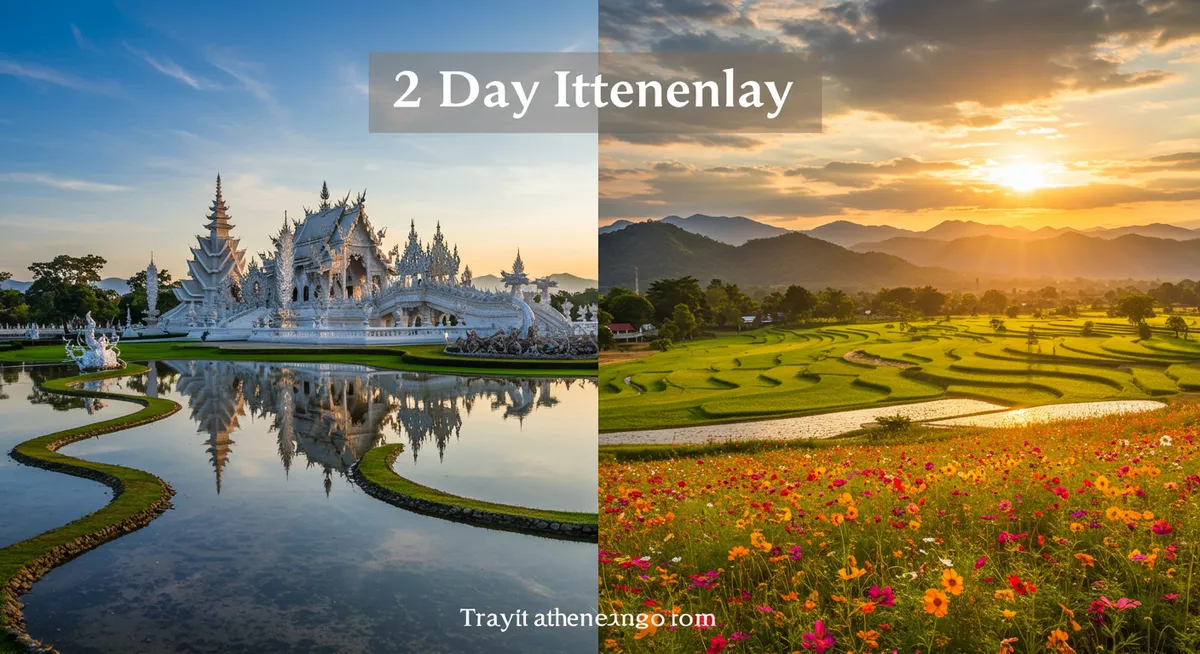
TL;DR — Chiang Rai in 48 Hours
Turn this guide into a personal route with our free Chiang Rai itinerary planner.
Day 1: White Temple, Blue Temple, Black House, Chiang Rai Night Bazaar. Day 2: Golden Triangle viewpoint, Hall of Opium Museum, Mekong boat ride, Choui Fong Tea Plantation. Budget roughly 1,500–2,500 THB per person per day (excluding accommodation). Best visited November–February for cool, dry weather. Rent a scooter or hire a private driver to cover everything comfortably.
Why Chiang Rai Deserves Two Full Days in 2026
Chiang Rai sits at the crossroads of three countries, yet it remains one of Northern Thailand's most underrated destinations. While Chiang Mai draws the crowds, a well-crafted Chiang Rai 2 day itinerary delivers an equally powerful experience in a fraction of the time — think world-class contemporary art temples, the storied Golden Triangle, and a thriving night-market scene that rivals anything in the north. In 2026, new road improvements along Route 1 have cut travel time from Chiang Mai to under three hours, and several boutique hotels have opened near the riverfront, making a 48-hour trip more accessible than ever.
This guide maps out every hour so you can skip the guesswork. Whether you are a first-timer or returning for a deeper look, the itinerary balances iconic landmarks with local experiences that most visitors miss.
Day 1: Iconic Temples and the Chiang Rai Night Bazaar
Morning — White Temple (Wat Rong Khun)
Start early at the White Temple, Chiang Rai's most photographed landmark. Designed by national artist Chalermchai Kositpipat, the all-white exterior symbolises the Buddha's purity, while the interior murals blend traditional Buddhist imagery with pop-culture references. Arrive before 09:00 to beat tour-bus crowds and spend roughly 60–90 minutes exploring. Admission in 2026 is 100 THB for foreign visitors. The on-site art gallery behind the main hall is free and well worth a look. For a deeper dive into the temple trio, see our dedicated guide to the White Temple, Blue Temple, and Black House in Chiang Rai.
Late Morning — Blue Temple (Wat Rong Suea Ten)
A 15-minute drive south brings you to the Blue Temple, where vivid sapphire walls and a towering white Buddha create one of the most striking interiors in all of Thailand. Entry is free, and the temple is far less crowded than its white counterpart. Budget 30–45 minutes here. The surrounding gardens are a peaceful spot for photos.
Afternoon — Black House (Baan Dam Museum)
Head north to the Black House, the late Thawan Duchanee's sprawling complex of dark teakwood pavilions filled with animal bones, crocodile skins, and surreal sculptures. The contrast with the morning's temples is deliberate and thought-provoking. Allow at least an hour; the grounds cover roughly 40 buildings. Admission is 80 THB.
Evening — Chiang Rai Night Bazaar
Return to the city centre for the nightly bazaar on Phahonyothin Road. Stalls open around 18:00 and serve everything from khao soi to sai oua (Northern Thai sausage). A full meal costs 80–150 THB. The open-air stage hosts traditional hill-tribe dance performances most evenings, and the surrounding shops sell handwoven textiles, silverwork, and locally grown coffee beans — ideal souvenirs that support local artisans.
Day 2: Golden Triangle, Mekong Cruise, and Tea Country
Morning — Golden Triangle Viewpoint and Hall of Opium Museum
Drive 60 km north along Route 1290 to the Golden Triangle, where Thailand, Laos, and Myanmar converge at the Mekong River. The hilltop viewpoint offers panoramic views of all three countries. Nearby, the Hall of Opium Museum (entrance 200 THB) traces the region's complex history with the opium trade through immersive exhibits spanning 5,600 square metres. Plan about two hours for both stops. For the complete Golden Triangle experience including boat options and border-market tips, check our Golden Triangle tour guide from Chiang Rai.
Midday — Mekong River Boat Ride
Long-tail boat rides depart from the pier below the viewpoint. A 30-minute loop costs around 300 THB per person and takes you past the Laotian casino island and the Myanmar shoreline. It is the fastest way to set foot — symbolically — in three countries in a single morning. Boats run between 08:00 and 16:00 daily.
Afternoon — Choui Fong Tea Plantation
On the return drive, detour to Choui Fong Tea Plantation in Mae Chan district. The hilltop cafe serves oolong and matcha lattes with sweeping views across terraced tea fields. Entry is free; drinks cost 60–120 THB. It is a relaxing counterpoint to a busy morning and a great spot for golden-hour photos if you linger until late afternoon.
Evening — Dinner and Night Market at Chiang Rai Walking Street
If your visit falls on a Saturday, the Walking Street market along Thanalai Road rivals the Night Bazaar for food quality and adds live music. Otherwise, head to the riverside restaurants near Kok River for grilled fish and papaya salad. Either option rounds out your Chiang Rai 2 day itinerary perfectly.
Getting Around Chiang Rai in 48 Hours
Chiang Rai's top sights are spread across a wide area, so transport planning matters. A rented scooter (200–300 THB per day) offers the most flexibility and is the most popular choice for solo travelers and couples. If you prefer not to drive, hiring a private car with driver costs 1,500–2,500 THB per day and covers all major stops without hassle. Grab is available in the city centre but unreliable for out-of-town trips like the Golden Triangle. Songthaews (shared red trucks) run fixed routes for 20–30 THB but are slow and infrequent. For a full breakdown, consult our guide to getting around Chiang Rai.
Where to Stay for a 2-Day Chiang Rai Trip
Book a hotel in the city centre to minimise transit time. The area around the Clock Tower puts you within walking distance of the Night Bazaar and most restaurants. Budget guesthouses start at 400 THB per night; mid-range boutique hotels along the Kok River run 1,200–2,500 THB. For a curated list of options by neighbourhood and budget, see our Chiang Rai accommodation guide.
Insider Tips and Hidden Gems
- Best photo times: The White Temple glows at sunrise; the Blue Temple is most vivid under overcast skies.
- Cash matters: ATMs are plentiful in town but scarce near the Golden Triangle. Withdraw before you head north.
- Hill-tribe etiquette: If you visit an Akha or Karen village, ask before photographing people, and buy directly from village artisans rather than middlemen.
- Coffee culture: Chiang Rai province is Thailand's top arabica-growing region. Try single-origin beans from Doi Chaang or Doi Tung — both available at the Night Bazaar.
- Extend your stay: With a third day you can add waterfalls, cycling routes, and deeper cultural experiences — see our Chiang Rai 3-day itinerary for details.
For off-the-beaten-path ideas beyond this itinerary, browse our list of Chiang Rai hidden gems and local experiences.
Frequently Asked Questions
What is the best time of year to visit Chiang Rai for a 2-day trip?
Is 2 days enough time to see Chiang Rai?
How much does a 2-day Chiang Rai trip cost in 2026?
What is the best way to get from Chiang Mai to Chiang Rai?
Can I do the Golden Triangle as a day trip from Chiang Rai?
Do I need to book temples or attractions in advance?
A thoughtfully planned Chiang Rai 2 day itinerary packs an extraordinary amount of culture, history, and natural beauty into just 48 hours. From the dazzling artistry of the White Temple to the geopolitical drama of the Golden Triangle and the quiet charm of hillside tea plantations, this compact trip proves that Northern Thailand's second city deserves far more attention than a quick stopover. Use this 2026 guide as your blueprint, adjust the pace to suit your style, and prepare for one of the most rewarding short trips in Southeast Asia.