After visiting Cologne five times over the last decade, I have learned that the city's heartbeat is found inside its wood-paneled beer halls. These historic spaces are more than just pubs; they are living museums where local traditions are protected by law and custom. This guide was last refreshed in October 2025 to ensure all pricing and hours are accurate for your 2026 travels.
Cologne's beer culture centers on Kölsch, a light, top-fermented ale that is as crisp as a lager. Drinking here requires knowing a few unwritten rules, from how to handle your coaster to understanding the blunt humor of the waiters. Whether you want a lively crowd near the Cathedral or a quiet neighborhood corner, these 11 spots offer the most authentic experience.
What is Kölsch? Understanding Cologne’s Beer Culture
Turn this guide into a personal route with our free cologne itinerary planner.
Kölsch is a unique hybrid beer that is brewed with top-fermenting yeast but finished at cold temperatures like a lager. The 1986 Kölsch Convention ensures that only about 20 breweries in and around the city can legally use the name. This regional protection is similar to how Champagne is regulated in France, according to the Cologne Brewers Association.
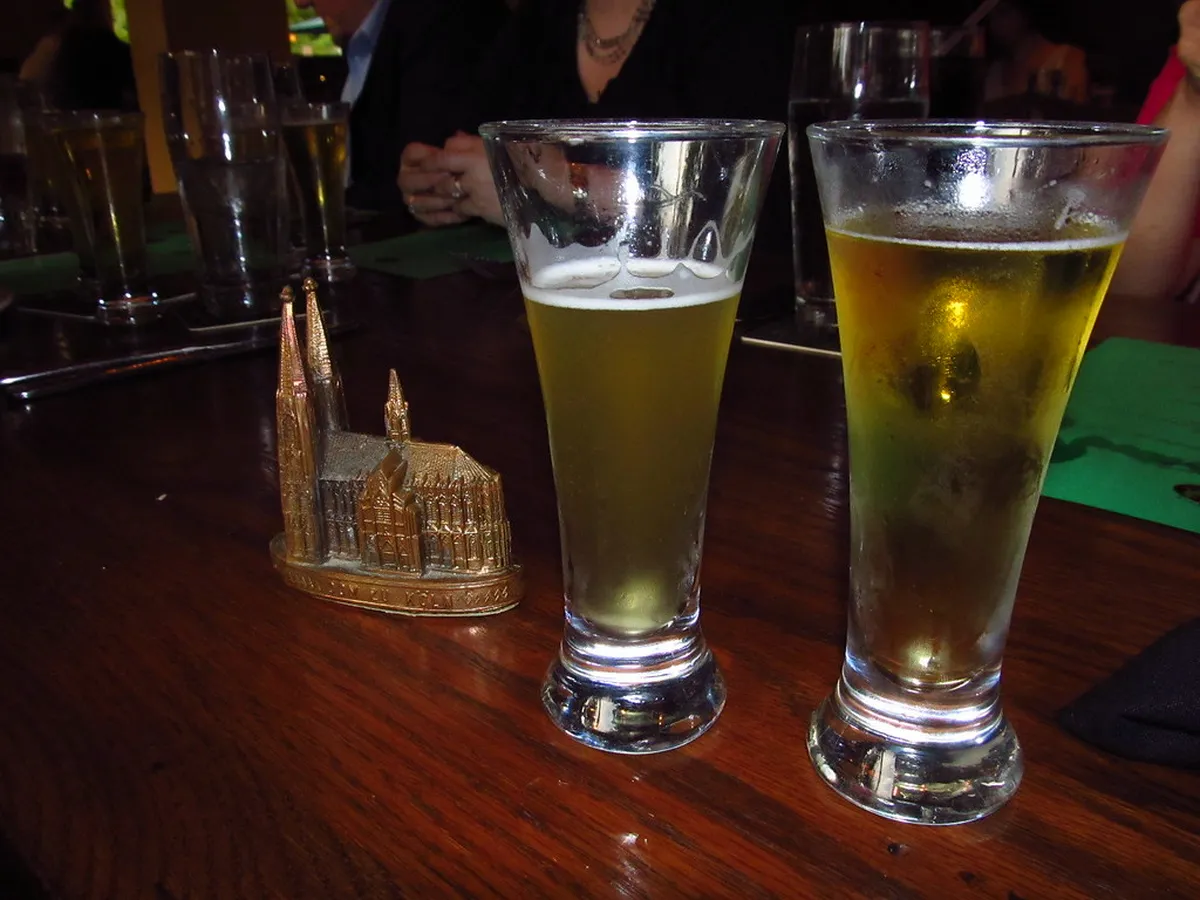
You will always see this beer served in a 0.2-liter cylindrical glass known as a Stange. The small size is intentional, ensuring the beer remains cold and carbonated until the very last sip. Our Kölsch beer guide explains the technical brewing process in much greater detail.
The beer is traditionally carried in a circular tray called a Kranz, or wreath, which allows the waiter to move quickly. Seeing a Köbes balance multiple wreaths through a crowded hall is a quintessential Cologne sight. Expect a pale, straw-colored pour with a delicate balance of hoppy bitterness and fruity notes.
Brauhaus Etiquette: How to Drink Like a Local
The waiter in a traditional brewhouse is called a Köbes, easily identified by his blue apron and leather money pouch. He is famously brusque and will likely place a fresh beer in front of you the moment your glass is empty. Many visitors find this service style intimidating, but it is actually a sign of efficiency and local pride.
To stop the flow of beer, you must place your cardboard coaster on top of your glass. The Köbes marks your coaster with a pencil stroke for every beer delivered to track your final bill. This system is standard across the Cologne Old Town and neighborhood pubs alike.
Dining is equally traditional, featuring hearty dishes like Himmel un Ääd, which consists of mashed potatoes, applesauce, and black pudding. If you want a light snack, order a Halve Hahn, which is a rye roll served with aged gouda and mustard. Reviewing our local customs tips can help you avoid common social blunders during your visit.
For those who want a deeper dive into these traditions, consider joining guided walking tours of Cologne with local experts. They can explain the history of specific halls while helping you navigate the sometimes complex seating arrangements. Reservations are rarely taken for small groups, so arriving before 5:00 PM is usually your best bet for a table.
11 Best Cologne Beer Halls and Brewhouses
Cologne's brewhouse scene is divided into massive historic halls in the center and smaller, family-run gems in the outer districts. The following list represents the best of both worlds, focusing on beer quality, atmosphere, and culinary consistency. I have grouped these by their primary beer brand to help you sample the full spectrum of local flavors.
Most of these locations are easily accessible via the city's tram network. Using Cologne public transport tickets makes it simple to hop between different neighborhoods in a single evening. Always carry some cash, as many traditional halls still do not accept credit cards for small totals.
To get the most out of your visit, try a Cologne: 3 Old Town Brewery Tour for a curated tasting experience. These tours often include hidden history that you might miss when visiting solo. The following selections are the absolute gold standard for 2026.
- Früh am Dom (The Iconic Cathedral-Side Classic)
- This massive hall features vaulted cellars and a labyrinth of wood-paneled rooms right next to the cathedral.
- Expect to pay roughly €2.20 to €2.50 per Stange, with the kitchen open daily from 11:00 AM until midnight.
- The outdoor terrace is perfect for people-watching, but the real atmosphere is found in the historic 'Brauhauskeller' downstairs.
- Brauerei zur Malzmühle (A Historic Favorite in Heumarkt)
- Located in the Heumarkt area, this brewery became world-famous after Bill Clinton stopped by for a meal in 1999.
- The Mühlen Kölsch served here is slightly maltier than other brands and costs about €2.30 per glass.
- They are open daily from noon until late, and I highly recommend trying their signature marinated pot roast.
- Päffgen Brauhaus (The Purist’s Choice for Fresh Kölsch)
- This is the only major brewery that does not bottle its beer, meaning you must visit the source to taste it.
- The hall on Friesenstraße is legendary for its lively, no-frills atmosphere and incredibly fresh, unfiltered-style Kölsch.
- Doors open at 10:00 AM most days, and the venue often reaches capacity by early evening on weekends.
- Peters Brauhaus (Traditional Charm in the Old Town)
- Peters is known for its beautiful stained-glass ceilings and a slightly more refined atmosphere than the larger halls.
- A standard glass costs approximately €2.40, and the kitchen serves excellent versions of traditional Rhenish specialties.
- Located in the heart of the Altstadt, it is open daily from 11:00 AM and is a favorite for local families.
- Gaffel am Dom (Modern Vibes in a Historic Setting)
- This brewhouse occupies the historic Deichmannhaus and offers a more contemporary, high-energy environment for younger crowds.
- Prices for beer are standard at €2.30, and the venue is open late into the night, especially on weekends.
- Check the schedule for live music nights where local bands perform traditional 'Karneval' songs year-round.
- Brauhaus Sünner im Walfisch (The Oldest Brewery Experience)
- Housed in a building dating back to the 1600s, this spot features a distinctive stepped gable and cozy interior.
- Sünner is one of the oldest brands in the city, with a crisp taste that pairs perfectly with their hearty pork knuckles.
- The hall is tucked away in a quiet alley, making it a great escape from the main tourist thoroughfares.
- Gilden im Zims (The Home of Heroes in Alter Markt)
- This multi-level hall in Alter Markt is dedicated to Cologne's local legends and historical figures.
- Beer prices range from €2.30 to €2.60, and the kitchen is particularly well-regarded for its large schnitzel portions.
- The basement level often hosts private events but is worth a peek for its ancient stone masonry.
- Brauerei Pfaffen (A Family-Run Gem for Beer Lovers)
- Pfaffen is a smaller, independent operation that offers a very personal and welcoming brewhouse experience.
- Their beer is noted for a slightly more bitter, hoppy finish compared to the larger commercial brands.
- Located near Heumarkt, it is open from 11:00 AM daily and often attracts a loyal local following.
- Brauhaus Sion (A Rebuilt Classic with Deep Roots)
- The Sion family has been brewing in Cologne since the 14th century, though the current hall was rebuilt after WWII.
- It offers a bright, spacious environment that is less cramped than some of the older neighborhood spots.
- A glass of Sion Kölsch typically costs €2.20, and the hall is open daily from 11:30 AM until midnight.
- Brauhaus Reissdorf (The Local Neighborhood Favorite)
- Located in the Severinsviertel district, this hall feels much more like a community hub than a tourist attraction.
- Consult the Brauhaus Reissdorf Official Site for current seasonal menus and opening times.
- Prices here are often slightly lower than in the city center, typically around €2.10 per glass.
- Brauhaus Schreckenskammer (The Chamber of Horrors)
- Despite the intimidating name, this is one of the friendliest and most authentic halls near the Ursulaplatz.
- They serve their own brand of Kölsch which is famously carbonated naturally without added CO2.
- The hall is closed on Mondays, so plan your visit for later in the week to enjoy their rustic charm.
What to Skip: Avoiding the Tourist Traps
While most Cologne beer halls are excellent, some locations in the immediate vicinity of the main train station can feel like assembly lines. I recommend skipping any venue that has large, glossy photo menus displayed on the sidewalk. These spots often sacrifice beer quality and service speed for high tourist turnover.
Avoid the temptation to order a large 'pint' of beer if it is offered on the menu. Authentic Kölsch is only served in 0.2L glasses to maintain its temperature and flavor profile. Ordering a large glass marks you as a tourist and often results in warm, flat beer by the time you finish.
Be wary of 'Kölsch' brands sold in plastic bottles at convenience stores around the city center. These rarely capture the true character of the beer, which is best enjoyed fresh from a wooden barrel. For a better experience, stick to the best food spots where the beer is handled with proper care.
Frequently Asked Questions About Cologne Beer Halls
Navigating the social landscape of a German brewhouse can be confusing for first-time visitors. Most questions revolve around the unique service style and how to handle the bill at the end of the night. Here are the most common queries I receive from travelers planning their first beer tour.
Remember that these halls are social hubs where sharing a table with strangers is completely normal. If you see an empty seat at a large wooden table, simply ask if it is free and take a seat. This is one of the best ways to meet locals and experience the true 'Gefühl' of the city.
Pair this with our broader main Cologne itinerary for the full city overview. For related Cologne deep-dives, see our Cologne food guide and Kölsch beer guide guides.
Frequently Asked Questions
Do I need to make a reservation for a Cologne beer hall?
Reservations are usually only necessary for groups of six or more people during peak evening hours. For smaller parties, simply walk in and look for an open spot at the communal wooden tables. Most halls have a high turnover, so a short wait is rarely an issue.
Is Kölsch beer expensive compared to other German cities?
Kölsch is very affordable, with a standard 0.2L glass typically costing between €2.20 and €2.60 in 2026. While the glasses are small, the price per liter remains competitive with beer prices in Munich or Berlin. Check our Cologne pass guide for potential dining discounts.
What is the best time to visit a brewhouse to avoid crowds?
Weekday afternoons between 2:00 PM and 4:30 PM are the quietest times to enjoy a peaceful beer. If you prefer a lively atmosphere, arrive after 7:00 PM on a Friday or Saturday. Many locals also enjoy a late morning 'Frühschoppen' on Sundays after church services.
Cologne's beer halls are the soul of the city, offering a unique blend of history, hospitality, and high-quality brewing. By following the local etiquette and choosing the right spots, you can experience a tradition that has remained largely unchanged for centuries. I recommend starting your journey at a historic spot like Früh am Dom before heading to a neighborhood gem like Päffgen.
Whether you are here for a single night or a full week, these 11 brewhouses will provide the perfect backdrop for your trip. For more planning help, see our comprehensive Cologne itinerary to map out your entire visit. Prost to an unforgettable experience in the heart of the Rhineland!