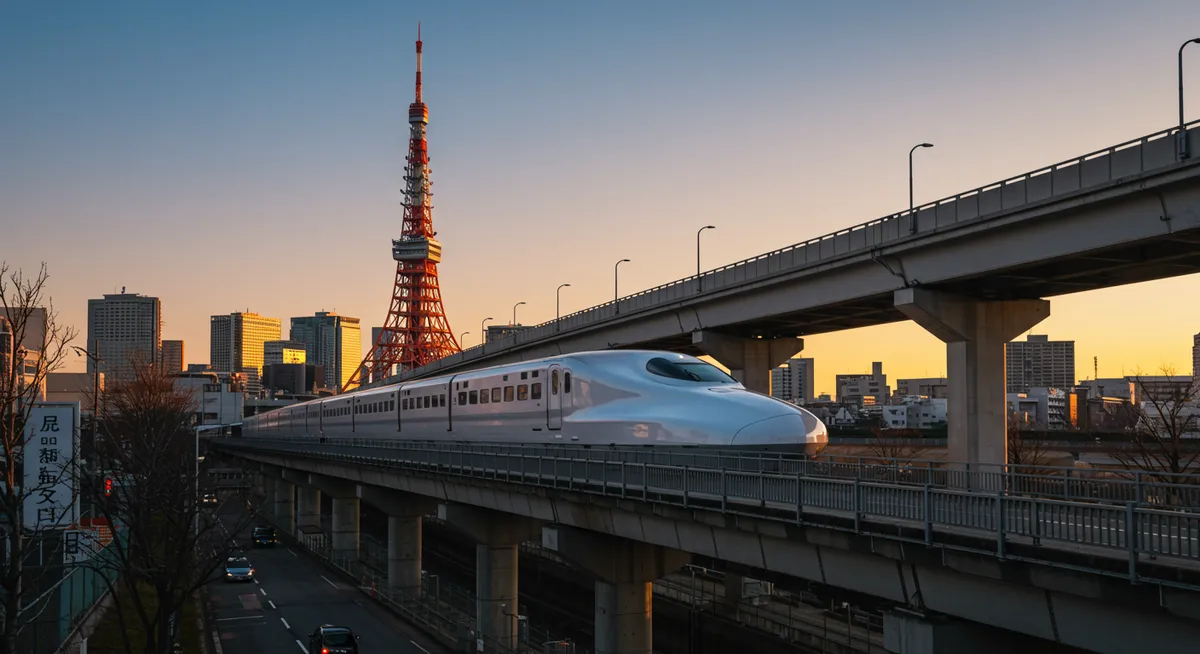
TL;DR — Most Shinkansen bullet trains leave from Tokyo Station (Tokaido, Tohoku, Hokuriku, Joetsu, Yamagata, Akita lines). Shinagawa Station is a less-crowded alternative for the Tokaido Shinkansen heading to Nagoya, Kyoto, and Osaka. Ueno Station also serves northbound lines. Below you will find platform details, ticket-buying tips, 2026 luggage rules, and a step-by-step boarding walkthrough.
Tokyo Station: The Main Shinkansen Hub
Turn this guide into a personal route with our free Tokyo itinerary planner.
Tokyo Station is the single most important departure point for bullet trains in Japan. Located in the Marunouchi district, it serves as the origin or major stop for virtually every Shinkansen line running through the capital in 2026. If you are wondering where does bullet train leave from in Tokyo, the short answer is almost always here.
Shinkansen Lines at Tokyo Station
- Tokaido Shinkansen — Platforms 14-19 on the Yaesu (east) side. Nozomi, Hikari, and Kodama services to Nagoya, Kyoto, Shin-Osaka, Hiroshima, and Hakata.
- Tohoku Shinkansen — Platforms 20-23. Hayabusa and Yamabiko services north to Sendai, Morioka, and Shin-Aomori, continuing to Shin-Hakodate-Hokuto via the Hokkaido Shinkansen.
- Joetsu Shinkansen — Platforms 20-23. Toki services to Niigata.
- Hokuriku Shinkansen — Platforms 20-23. Kagayaki and Hakutaka services to Nagano, Kanazawa, and Tsuruga.
- Yamagata Shinkansen — Tsubasa services branching off the Tohoku line toward Yamagata and Shinjo.
- Akita Shinkansen — Komachi services branching toward Akita.
The Tokaido platforms sit on the Yaesu side, while the Tohoku, Joetsu, and Hokuriku platforms are slightly north. Follow the overhead signage — in both English and Japanese — to the correct Shinkansen transfer gates. Arriving 20 to 30 minutes early gives you time to clear the ticket gates, find your platform, and pick up an ekiben (station bento) for the ride. For a deeper look at what the station itself offers, see our Tokyo Station shopping guide.
Shinagawa Station: The Faster Alternative for Westbound Trains
Shinagawa Station sits two stops south of Tokyo Station on the JR Yamanote Line and serves the Tokaido Shinkansen exclusively. In 2026, it remains the preferred departure point for travelers heading to Nagoya, Kyoto, or Osaka who are staying in southern Tokyo or arriving from Haneda Airport via the Keikyu Line.
Why choose Shinagawa over Tokyo Station? Three reasons stand out:
- Shorter queues. Fewer tourists know about it, so ticket gates and platform areas are noticeably calmer.
- Faster airport connection. The Keikyu Line links Haneda Airport to Shinagawa in roughly 15 minutes, letting you transfer directly to the Shinkansen without backtracking through central Tokyo.
- Same trains, same price. Every Nozomi, Hikari, and Kodama that stops at Tokyo Station also stops at Shinagawa — no schedule penalty.
If your plans include a bullet-train day trip from the city, Shinagawa can shave 15 to 20 minutes off your total travel time compared to starting at Tokyo Station. Check our Tokyo day trips by bullet train guide for route ideas.
Ueno Station: Northbound Gateway
Ueno Station is a third option for Shinkansen departures in Tokyo. It handles the same northbound lines as Tokyo Station — Tohoku, Joetsu, Hokuriku, Yamagata, and Akita Shinkansen — and is especially handy if you are staying in the Taito or Arakawa wards, or arriving from Narita Airport on the Keisei Skyliner.
Because most tourists board at Tokyo Station, Ueno platforms tend to be quieter. The trade-off is a slightly smaller station with fewer dining and shopping options. Still, its proximity to Ueno Park, Ameyoko Market, and the National Museum makes it a natural starting point for a northbound trip after a morning of sightseeing. If you are planning broader day trips from Tokyo, keeping Ueno in mind as an alternative departure can save precious time.
How to Buy Shinkansen Tickets in 2026
Knowing where does bullet train leave from in Tokyo is only half the equation — you also need to secure the right ticket. Here are your main options as of 2026:
At the Station
- Midori-no-Madoguchi (ticket counters) — Staffed JR ticket offices where you can ask for help in English. Available at Tokyo, Shinagawa, and Ueno stations.
- Ticket machines — Touch-screen kiosks with English menus. Insert your credit card, select the line, choose reserved or non-reserved, pick a seat, and print.
Online
- SmartEX / EX-IC — JR Central's official app for the Tokaido-Sanyo Shinkansen. Book and pay online, then tap your IC card or scan a QR code at the gate. No paper ticket needed.
- Eki-net — JR East's reservation site for Tohoku, Joetsu, and Hokuriku lines. Tickets can be collected from station machines.
Japan Rail Pass
The JR Pass remains a cost-effective option for multi-city trips in 2026. It covers Hikari and Kodama trains on the Tokaido line plus all Tohoku, Joetsu, Hokuriku, Yamagata, and Akita services. Note that the pass does not cover Nozomi or Mizuho trains. If speed is critical, you will need a separate ticket for those fastest services. Planning a longer trip? Our 2-week Japan itinerary breaks down when the JR Pass pays for itself.
Shinkansen Luggage Rules You Need to Know
Luggage regulations on the Shinkansen have tightened since 2020 and remain in force in 2026. Understanding them before you arrive at the platform avoids a last-minute scramble.
- Standard luggage (up to 160 cm total dimensions): No reservation required. Store bags in overhead racks or at your feet.
- Oversized luggage (160-250 cm total): You must reserve a "seat with oversized baggage area" in advance — at no extra cost. These seats are in the last row of designated cars, with storage space behind the seats.
- Without a reservation: Bringing oversized bags without a reservation incurs a 1,000 yen surcharge, and staff will direct you to available space.
- Maximum size: Bags exceeding 250 cm total or 30 kg are not allowed on board.
Baggage-sizer frames are installed near Shinkansen gates at Tokyo Station and Shinagawa so you can check dimensions before boarding. If your luggage is too large, consider Japan's excellent takkyubin (courier delivery) service to ship bags directly to your hotel.
Step-by-Step: Boarding the Bullet Train at Tokyo Station
For first-time riders, the process can feel overwhelming. Follow this straightforward sequence:
- Enter Tokyo Station through any gate (Marunouchi west side or Yaesu east side). If you have a Suica/Pasmo IC card, tap in at the regular JR gates first.
- Follow Shinkansen signs to the correct transfer gate. Tokaido Shinkansen gates are on the Yaesu side; Tohoku/Joetsu/Hokuriku gates are nearby but separate.
- Insert your ticket (or tap your IC/QR code) at the Shinkansen transfer gate. If you entered via regular JR gates, both your local ticket and Shinkansen ticket feed through together.
- Check the departure board for your train name, time, and platform number.
- Go to your platform and stand at the numbered floor marker matching your car number. Trains stop precisely at these marks.
- Board and find your seat — row and seat letter are printed on your ticket. Stow luggage overhead or behind the last-row seats if you reserved oversized baggage space.
The entire process from station entrance to seated on the train typically takes 10 to 15 minutes once you are familiar with the layout. If you are exploring the station beforehand, our Tokyo Station shopping guide covers the best food halls and souvenir shops to visit while you wait.
Which Station Should You Choose?
The right departure station depends on three factors: your destination, your hotel location, and your airport.
| Scenario | Best Station | Why |
|---|---|---|
| Heading to Kyoto, Osaka, or Hiroshima | Shinagawa or Tokyo | Both serve the Tokaido Shinkansen; Shinagawa is less crowded |
| Heading north (Sendai, Niigata, Kanazawa) | Tokyo or Ueno | All northbound lines depart from both; Ueno is calmer |
| Arriving from Haneda Airport | Shinagawa | 15-minute Keikyu connection, no city-center detour |
| Arriving from Narita Airport | Ueno or Tokyo | Keisei Skyliner terminates at Ueno; Narita Express goes to Tokyo |
| Staying in Shinjuku/Shibuya | Tokyo (via Chuo Line) | 15 minutes on the Chuo Rapid Line to Tokyo Station |
For travelers building a multi-day plan around the capital, our Tokyo itinerary and Tokyo transportation guide pair well with this Shinkansen departure overview.
Frequently Asked Questions
Can I use the Japan Rail Pass for all bullet trains from Tokyo?
How early should I arrive at Tokyo Station before my Shinkansen departs?
What are the 2026 luggage rules for the Shinkansen?
Is Shinagawa or Tokyo Station better for the bullet train to Kyoto?
Can I buy Shinkansen tickets online in English?
Do all Shinkansen lines stop at Ueno Station?
Understanding where does bullet train leave from in Tokyo comes down to matching your destination with the right station. Tokyo Station covers every line, Shinagawa offers a calmer westbound alternative, and Ueno handles northbound routes with less congestion. Whichever station you choose, book your seats early during peak seasons like Golden Week and Obon, arrive with time to spare, and double-check your luggage dimensions. With those basics covered, the Shinkansen is one of the smoothest and most punctual travel experiences in the world — and the perfect launchpad for exploring Japan beyond the capital. For more trip-planning help, browse our full library of day trips from Tokyo and Tokyo budget travel tips.