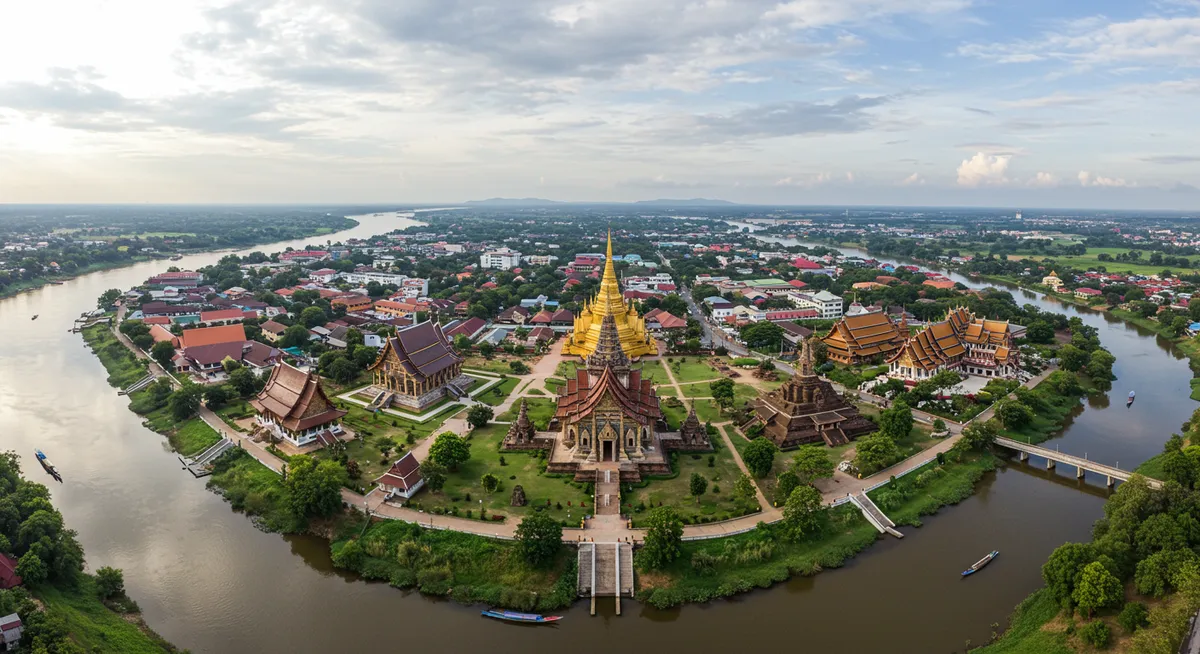
TL;DR: Ubon Ratchathani is one of Thailand's richest temple destinations in 2026, home to the iconic golden stupa at Wat Phra That Nong Bua, the rare stilted scripture library at Wat Thung Si Muang, the mesmerising glow-in-the-dark murals at Wat Sirindhorn Wararam Phu Prao, and dozens of lesser-known shrines and cultural landmarks. This guide covers the must-visit temples, practical tips on dress code and etiquette, the best time to visit for festivals, and how to build a perfect temple-hopping itinerary across Isaan's spiritual capital.
Why Ubon Ratchathani Is a Must-Visit for Temple Lovers in 2026
Turn this guide into a personal route with our free Ubon Ratchathani itinerary planner.
Tucked into the far northeast corner of Thailand where the Mun and Mekong rivers converge, Ubon Ratchathani has quietly earned a reputation as Isaan's spiritual capital. While most visitors rush to Bangkok or Chiang Mai, this province rewards slower travellers with over 200 active temples, living craft traditions, and a festival calendar — headlined by the spectacular Candle Festival every July — that rivals anywhere in Southeast Asia. In 2026, improved domestic flight connections and a growing boutique-hotel scene make Ubon more accessible than ever, yet it retains the unhurried authenticity that mass-tourism destinations have long lost. Whether you are drawn to centuries-old Khmer-influenced architecture, contemporary Buddhist art, or the simple peace of morning alms rounds along the river, Ubon Ratchathani cultural sites and temples deliver experiences you will remember for years. For the full picture of what the city offers beyond temples, start with our comprehensive Ubon Ratchathani travel guide.
Wat Phra That Nong Bua — Isaan's Golden Landmark
No exploration of Ubon Ratchathani cultural sites and temples is complete without standing before the towering golden chedi of Wat Phra That Nong Bua. Modelled after India's Mahabodhi Temple in Bodh Gaya, the square-based stupa rises sharply against the sky and is visible from several kilometres away. Construction began in 1957 to mark the 25th Buddhist century, and the result is a monument that fuses Indian Buddhist geometry with classic Thai craftsmanship.
Step inside the base of the chedi to find detailed murals illustrating the Jataka tales — the previous lives of the Buddha — painted in a style unique to the Isaan region. The surrounding grounds are immaculately kept, with meditation pavilions shaded by frangipani trees that bloom profusely between November and February. Early morning visits, around 06:30 to 07:30, are ideal: the golden surface catches the first light while monks complete their chanting, creating an atmosphere that photographs cannot fully capture. The temple is centrally located and pairs perfectly with a broader list of the best things to do in Ubon Ratchathani.
Wat Thung Si Muang — The Stilted Scripture Library
Among Ubon Ratchathani's cultural treasures, Wat Thung Si Muang holds a special place thanks to its Ho Trai, a wooden scripture hall elevated on stilts above a lotus pond. This ingenious design served a deeply practical purpose: keeping precious palm-leaf manuscripts safe from floods and termites during the monsoon season. The structure dates to the reign of King Rama III and is one of the best-preserved examples of traditional Isaan religious architecture still standing.
The walls of the Ho Trai feature bas-relief carvings depicting scenes from the Ramayana and local folklore, blending Hindu and Buddhist iconography in a way that reflects the region's layered cultural history. The main ordination hall (ubosot) nearby houses another set of remarkable murals that chronicle daily Isaan life in the 19th century — farmers planting rice, traders along the Mun River, and elaborate temple processions. Visiting Wat Thung Si Muang is like walking through a living textbook of northeastern Thai heritage, and it sits within easy walking distance of the city centre, making it a natural stop on any 3-day Ubon Ratchathani itinerary.
Wat Sirindhorn Wararam Phu Prao — The Glowing Temple
For a completely different dimension of Ubon Ratchathani's temple culture, drive 75 kilometres northeast to Wat Sirindhorn Wararam Phu Prao — universally known as "the glowing temple." Perched on a forested hillside overlooking the Mekong River and Laos beyond, this modern temple has become one of Thailand's most photographed spiritual sites, and for good reason.
The rear wall of the main chapel features a monumental "Tree of Life" mural painted entirely with phosphorescent pigments. As daylight fades after 18:00, the mural erupts into vivid green-blue luminescence, depicting the Bodhi tree, celestial beings, and flowing water in an ethereal glow that lasts well into the night. The effect is both contemporary art installation and sacred space — a combination that draws Buddhist devotees and Instagram travellers in equal measure.
Practical tips for 2026 visitors: arrive by 17:30 to secure a good viewing spot, especially on weekends. The temple is free to enter, though donations are welcomed. A torch or phone light helps on the unpaved path from the car park. If you are planning your route from central Ubon, our guide on how to get around Ubon Ratchathani covers the best transport options for reaching outlying temples like this one.
The City Pillar Shrine and Lesser-Known Sacred Sites
Beyond the headline temples, Ubon Ratchathani's spiritual fabric is woven through dozens of smaller shrines, spirit houses, and community temples that rarely appear in guidebooks but offer some of the most genuine cultural encounters in the region.
The City Pillar Shrine (San Lak Mueang), located near the provincial hall, anchors the city's animistic traditions. Locals believe the pillar protects Ubon from misfortune, and you will often see residents arriving with garlands, incense, and food offerings, particularly on auspicious calendar dates. Observing these rituals — respectfully and from a slight distance — provides a window into the seamless blend of Buddhism and animism that defines Isaan spirituality.
Other worthwhile stops include Wat Supattanaram Worawihan, one of the province's highest-ranking royal temples with a distinctive multi-tiered European-influenced facade, and Wat Ban Na Muang, famous for its wildly imaginative concrete boat-shaped chapel. Each temple adds a different chapter to the story of how Ubon Ratchathani's communities express faith through architecture. After a long day of temple-hopping, check our recommendations for Ubon Ratchathani hotels and accommodation to find a comfortable base.
Temple Etiquette and Practical Tips for 2026 Visitors
Respecting local customs is essential when visiting Ubon Ratchathani cultural sites and temples. Here are the key guidelines to keep in mind during your 2026 trip:
- Dress modestly: Cover shoulders and knees. Many temples provide sarongs for visitors who arrive underprepared, but carrying a lightweight shawl in your bag avoids the issue entirely.
- Remove shoes: Always take off your shoes before entering any temple building (bot, viharn, or ubosot). Look for the shoe rack near the entrance as your cue.
- Photography: Exterior photography is generally welcome, but always check for "no photo" signs inside ordination halls. Never pose disrespectfully with Buddha images.
- Entrance fees: The vast majority of Ubon Ratchathani temples are free to enter. Donations (20-100 baht) are appreciated and help with upkeep.
- Timing: Temples open early — usually by 06:00 — and the morning hours are the most atmospheric. Midday heat between 11:00 and 14:00 can be intense from March to May.
If you are flying in, our Ubon Ratchathani airport transfer guide will help you get from UBP airport to the city centre quickly so you can start exploring without delay.
Best Time to Visit Ubon Ratchathani's Temples
Ubon Ratchathani's temples can be visited year-round, but each season offers a distinct experience. The cool season from November through February brings comfortable daytime temperatures around 25-30 degrees Celsius and clear skies — ideal for walking between temples. The hot season from March to May pushes temperatures above 35 degrees, making early-morning or late-afternoon visits advisable. The rainy season from June to October transforms temple grounds into lush green landscapes and coincides with the Candle Festival in July, when enormous hand-carved wax sculptures are paraded through the city — one of Thailand's most visually stunning Buddhist celebrations.
For detailed seasonal planning, see our dedicated best time to visit Ubon Ratchathani guide. And if you are considering day trips to nearby provinces while you are in the area, our day trips from Ubon Ratchathani guide covers the top options.
Frequently Asked Questions
What is the most famous temple in Ubon Ratchathani?
Are Ubon Ratchathani temples free to visit?
What should I wear when visiting temples in Ubon Ratchathani?
When is the best time to visit Ubon Ratchathani for temples and festivals?
How many days do I need to explore Ubon Ratchathani's cultural sites?
Can I visit the glowing temple (Wat Phu Prao) during the day?
Ubon Ratchathani's cultural sites and temples offer one of the most rewarding spiritual journeys in all of Thailand. From the golden grandeur of Wat Phra That Nong Bua to the otherworldly glow of Wat Phu Prao and the quiet historical charm of Wat Thung Si Muang, each site reveals a different facet of Isaan's deep Buddhist heritage. In 2026, with improving infrastructure and growing recognition among discerning travellers, there has never been a better time to explore this remarkable corner of northeastern Thailand. Plan your visit with our complete Ubon Ratchathani itinerary and pair it with our local food and restaurant guide for the full experience.