TL;DR: Trieste's bus network, operated by Trieste Trasporti, is the backbone of local transit in 2026. A single 75-minute ticket costs roughly 1.45 EUR, but the FVGcard gives unlimited rides plus free museum entry. Download Moovit or the Trieste Trasporti app for real-time tracking, always validate your ticket on board, and combine buses with walking to cover this compact Adriatic city efficiently.
Trieste sits at the crossroads of Italy, Slovenia, and the Adriatic Sea, and its public transport system reflects that accessibility. Whether you are arriving by train from Venice or flying into Trieste Airport, the local bus network connects you to every corner of the city and its surroundings. This guide gives you everything you need to ride Trieste's buses, trams, and regional services with confidence in 2026. If you are still deciding how to reach the city, read our guide on how to get to Trieste first.
How Trieste's Public Transport Network Works in 2026
Turn this guide into a personal route with our free Trieste itinerary planner.
Trieste Trasporti operates all city and suburban bus lines across the Trieste metropolitan area. The network fans out from the central hub near Piazza Oberdan and the main train station (Stazione Centrale), reaching neighborhoods along the coastline, the hillside Carso plateau, and outlying suburbs. In 2026, roughly 50 active lines keep the city connected from early morning until late evening.
Bus stops are marked by yellow poles bearing the Trieste Trasporti logo and a list of routes that call there. Electronic departure boards have expanded to more stops in 2026, showing real-time estimated arrivals. Most buses are modern, air-conditioned, and accessible for wheelchairs and strollers.
Services run at their highest frequency on weekdays between 7:00 AM and 8:00 PM, with buses on popular routes arriving every 8 to 12 minutes. Weekend service is lighter, and some suburban lines switch to hourly schedules on Sundays. Night buses cover core routes until around midnight, though coverage thins considerably after 10:00 PM. Always check the Trieste Trasporti website or app before heading out late.
For visitors planning a multi-day stay, understanding the network early will save time and stress. Pair your transport planning with our Trieste itinerary for a well-organized trip.
Tickets, Fares, and the FVGcard Explained
Getting the right ticket is the first step to hassle-free travel. Here is a breakdown of ticket types and prices for 2026:
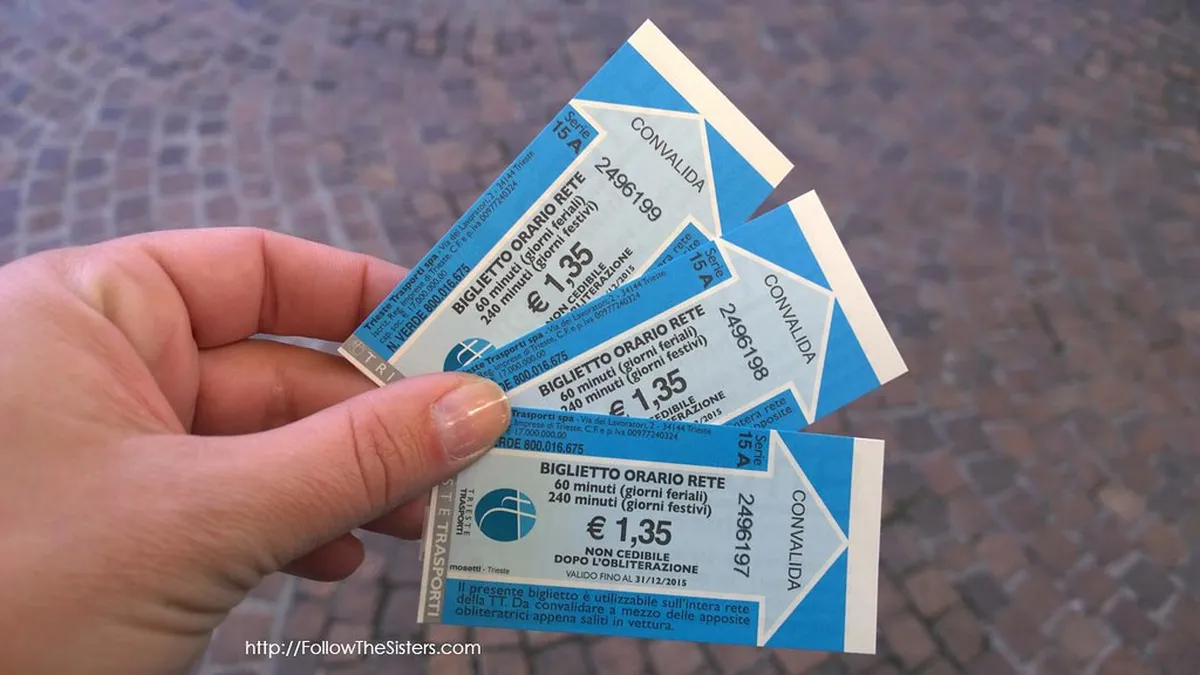
- Single ticket (75 minutes): Approximately 1.45 EUR. Valid for unlimited transfers within the time window. Must be validated immediately when you board.
- 10-trip carnet: Around 12.50 EUR, saving about 15 percent compared to buying singles. Ideal if you plan several short bus trips across your stay.
- 24-hour pass: Roughly 4.50 EUR. Unlimited travel on all city lines for a full day from first validation.
- Weekly pass: About 12.00 EUR. Best value for extended visits or working remotely from Trieste.
Buy tickets at tabaccherie (look for the large "T" sign), newsstands, the Trieste Trasporti ticket office at Piazza Oberdan, or through the official Trieste Trasporti mobile app. You generally cannot purchase tickets on the bus, so always stock up before you board. Failure to carry a validated ticket can result in a fine of 50 EUR or more.
The FVGcard: Best Deal for Sightseers
If you plan to visit museums, castles, and attractions beyond just riding buses, the FVGcard is the standout value in 2026. Available in 48-hour and 72-hour versions, this regional card bundles unlimited public transport across Friuli Venezia Giulia with free entry to over 40 museums and discounts on tours and activities.
Purchase the FVGcard online, at Trieste's tourist information office on Piazza Unità d'Italia, or at major attractions like Miramare Castle. Activate it before your first use. The 48-hour version costs about 20 EUR and the 72-hour version about 25 EUR, both of which pay for themselves quickly if you are visiting two or more paid attractions. For more ways to stretch your euros, see our Trieste budget travel tips.
Key Routes and How to Navigate Them
With dozens of lines, it helps to know which ones matter most for visitors. Here are the routes you will use most often in 2026:
- Line 6: Connects the train station to Piazza Unità d'Italia and continues along the waterfront toward Barcola beach. Perfect for a seaside afternoon.
- Line 36: Runs from the city center to Miramare Castle, one of Trieste's most popular attractions. The ride takes about 20 minutes and follows the scenic coastal road.
- Line 24: Heads uphill toward the Carso plateau and the village of Opicina. Useful when the Tram de Opcina is not running.
- Lines 8, 10, 11: Suburban connectors that reach residential neighborhoods and shopping areas outside the historic center.
For real-time route planning, the Moovit app and Google Maps both work reliably in Trieste. The official Trieste Trasporti app adds the ability to buy mobile tickets directly. Between these tools, you will always know when the next bus arrives and which stop to wait at.
Physical route maps are posted at major stops and available as printable PDFs on the Trieste Trasporti website. If you are exploring the city's highlights, pair these routes with our guide to Trieste's top attractions.
The Tram de Opcina: Trieste's Iconic Ride
No guide to Trieste public transport is complete without the Tram de Opcina, also called Tram di Opicina. This historic hybrid tram-funicular has climbed from Piazza Oberdan to the Opicina plateau since 1902, offering some of the most spectacular views in the entire Adriatic region.
After years of restoration work, the Tram de Opcina returned to service and remains operational in 2026. The journey takes about 25 minutes and covers a dramatic elevation change of over 300 meters. The steepest section uses a funicular mechanism, where the tram attaches to a cable-hauled cart for the ascent.
A regular bus ticket or FVGcard covers the ride. Departures run approximately every 20 minutes during peak hours. At the top, Opicina village offers cafes, trailheads into the Carso, and a viewpoint looking back across the Gulf of Trieste toward Slovenia and Croatia on clear days.
Consider combining the tram ride with Trieste day trip ideas that venture into the surrounding Karst region. After the ride, walk back downhill through the Val Rosandra nature reserve for an unforgettable afternoon.
Ferries and Boat Trips Across the Gulf of Trieste
Trieste's waterfront setting means public transport is not limited to buses and trams. Between June and September, a seasonal boat service known locally as the Delfino Verde (Green Dolphin) links the harbor near Molo Bersaglieri with Muggia, the fishing town across the gulf, and with Grado and Sistiana further along the coast. The Muggia crossing takes about 20 minutes, well under the roughly 40 minutes the number 20 bus needs to loop around the bay by road, while the run out to Grado takes closer to 80 minutes with a couple of stops en route.
Boats typically depart two to four times a day depending on the route and season, and fares run from around 5 EUR for the short Muggia hop up to 12-15 EUR for Grado. Neither the standard Trieste Trasporti ticket nor the FVGcard is valid on board, so budget separately and buy at the harborside kiosk before boarding.
Sailings are weather-dependent and get cancelled in strong bora wind, which hits Trieste more often than most Adriatic ports, so confirm the schedule the day before rather than assuming a fixed timetable. The Muggia crossing works well as a half-day loop from the historic center, and its harborside trattorias serve some of the freshest seafood in the gulf — see our Trieste local food guide for recommendations beyond the city center.
Practical Tips for Stress-Free Travel
These tried-and-tested tips will help you navigate Trieste's public transport like a local in 2026:
- Always validate: Insert your paper ticket into the yellow validation machine as soon as you board. Inspectors do check, and ignorance is not accepted as an excuse.
- Board at the front: While not mandatory, boarding at the front door puts you closest to the validation machine and allows you to ask the driver a quick question if needed.
- Peak hours: Buses get crowded between 7:30 and 9:00 AM and again from 5:00 to 7:00 PM on weekdays. If your schedule is flexible, travel outside these windows for a more comfortable ride.
- Sunday schedules: Services are significantly reduced on Sundays and public holidays. Plan accordingly and check specific line schedules the day before.
- Accessibility: Most modern buses are low-floor with retractable ramps. Priority seating near the front is available for elderly passengers, pregnant women, and people with disabilities.
- Combine with walking: Trieste's historic center is compact and extremely walkable. Use buses for longer stretches such as reaching Miramare or Opicina, and walk between central attractions. Our Trieste walking tours guide maps out the best pedestrian routes.
- Airport connection: Bus line 51 connects Trieste Airport (Ronchi dei Legionari) to the city center. The journey takes about 50 minutes and costs the price of a standard ticket. An alternative is the regional train from the airport station.
If you are visiting Trieste for the first time, our Trieste itinerary for first timers pairs perfectly with these transport tips.
Where to Stay for Easy Transit Access
Your accommodation choice directly affects how much public transport you need. Staying near Piazza Oberdan, the train station, or along the waterfront near Piazza Unità d'Italia puts you within walking distance of most attractions and at the heart of the bus network. From these central locations, you can reach Miramare Castle, Barcola beach, and the Carso plateau in under 30 minutes by bus.
If you prefer quieter neighborhoods like Roiano or Opicina, expect to rely on buses more regularly, but enjoy lower accommodation prices and a more residential atmosphere. For a full breakdown of neighborhoods and hotel recommendations, see our where to stay in Trieste guide.
After a day of exploring by bus and on foot, reward yourself with a stop at one of Trieste's legendary coffee houses. The city has a coffee culture unlike anywhere else in Italy, and our Trieste coffee culture guide will show you the best spots.
Cross-Border Buses to Slovenia and Croatia
Trieste sits only a few kilometers from the Slovenian border, which makes day trips beyond Italy practical without a rental car. Local buses cross into Slovenia and reach Koper (Capodistria) in about 45 minutes; a standard Trieste Trasporti ticket does not cover the Slovenian side of the route, so carry a few euros in cash for the fare collected once you cross.
For destinations further afield, long-distance coaches leave from the bus station (Autostazione) beside the main train station on Via Fabio Filzi. FlixBus and other regional operators run several daily departures to Ljubljana, taking roughly two and a half hours, and to Rijeka and Pula on the Istrian coast, with journey times of two to four hours depending on the route and border stop. Book online or through the operator's app in advance, since walk-up availability is limited and fares rise closer to departure.
A passport or EU ID card is required for all of these crossings even though Slovenia and Croatia are both Schengen members, and queues at the Škofije or Fernetti crossings can add 15 to 20 minutes on busy summer weekends. If a Slovenia day trip fits your plans, our Trieste itinerary for five days outlines a schedule that leaves a full day free for it, and our guide to the best time to visit Trieste flags which months bring the heaviest border traffic.
Frequently Asked Questions
How much does a single bus ticket cost in Trieste in 2026?
A single bus ticket in Trieste costs approximately 1.45 EUR in 2026. It is valid for 75 minutes from the moment you validate it and allows unlimited transfers within that window. Purchase tickets at tabaccherie, newsstands, or through the Trieste Trasporti app before boarding.
Can I buy bus tickets on board in Trieste?
No, Trieste buses do not sell tickets on board. You must purchase your ticket in advance from a tabaccheria, newsstand, the Trieste Trasporti ticket office at Piazza Oberdan, or via the official mobile app. Always carry a valid ticket before boarding to avoid fines of 50 EUR or more.
Is the FVGcard worth buying for Trieste visitors in 2026?
Yes, the FVGcard is excellent value if you plan to visit at least two paid attractions. The 48-hour version costs about 20 EUR and includes unlimited public transport plus free entry to over 40 museums and sites across Friuli Venezia Giulia. It pays for itself within a single day of active sightseeing. Pair it with a Trieste 3-day plan for maximum benefit.
Is the Tram de Opcina running in 2026?
Yes, the Tram de Opcina (Tram di Opicina) is operational in 2026 following its multi-year restoration. It runs from Piazza Oberdan to the Opicina plateau approximately every 20 minutes during peak hours. A standard bus ticket or FVGcard covers the fare. Check the Trieste Trasporti website for the latest schedule before your visit.
How do I get from Trieste Airport to the city center by public transport?
Bus line 51 connects Trieste Airport (Ronchi dei Legionari) directly to the city center. The ride takes about 50 minutes and costs the price of a standard ticket. Alternatively, you can take a regional train from the airport's nearby railway station to Trieste Centrale. Both options run multiple times daily throughout 2026.
What apps should I use for Trieste public transport?
The two best apps for navigating Trieste's buses in 2026 are Moovit and Google Maps, both of which provide real-time arrival data and route planning. The official Trieste Trasporti app adds mobile ticket purchasing. Download at least one before your trip for the smoothest experience.
Key Takeaways
- Trieste Trasporti operates all city buses, with about 50 lines covering the metro area in 2026.
- Buy tickets in advance from tabaccherie, newsstands, or the mobile app, and validate immediately on board.
- The FVGcard bundles unlimited transport with museum access and pays for itself within a day.
- Line 36 reaches Miramare Castle; the Tram de Opcina offers a scenic climb to the Carso plateau.
- Download Moovit or Google Maps for real-time bus tracking and route planning.
- Bus line 51 connects the airport to the city center in about 50 minutes.