Planning your full visit? Compare trip lengths and route choices in the Óbidos itinerary planner.
After wandering the cobblestone streets of Óbidos on three separate trips, I still find new details in its whitewashed walls. The town was famously gifted to Portuguese queens for centuries, and that royal history still shows in its churches, ramparts, tiled gate, and polished main street. It is small, but it rewards visitors who plan around light, crowds, and the steep lanes.
Refreshed for 2026, this guide focuses on the best things to do in Óbidos, Portugal, from walking the medieval walls to sipping ginjinha in a chocolate cup. It also explains when a Lisbon day trip is enough, when an overnight stay is better, and how to add the lagoon or nearby coastal towns without rushing. Start with the best way to get to Óbidos if your timing depends on the bus from Lisbon.
The magic is not only the castle view. It is the quiet after the day tours leave, the azulejos above Porta da Vila, and the side alleys most visitors miss.
Is Óbidos Worth a Day Trip from Lisbon?
Turn this guide into a personal route with our free Óbidos itinerary planner.
Óbidos is worth a day trip if you want a compact medieval town with strong atmosphere and easy logistics from Lisbon. The Rápida Verde bus makes the trip simple, and the historic center is small enough to see in four to six hours. That is enough time for the gate, main street, walls, castle exterior, bookshops, ginjinha, and a relaxed lunch.
An overnight stay is better if you care about photography, quieter streets, or a second-day side trip. Day trippers usually arrive between 10:30 and 15:30, which makes the main gate and Rua Direita feel crowded. Stay after 17:00 and the same lanes become calmer, especially outside festival periods.
The town's Queen's Gift history gives the visit more depth. From the 13th century, Óbidos was associated with Portuguese queens, which helped preserve its churches, walls, and ceremonial feel. A focused Óbidos itinerary keeps the day efficient.
Walk the Medieval Castle Walls
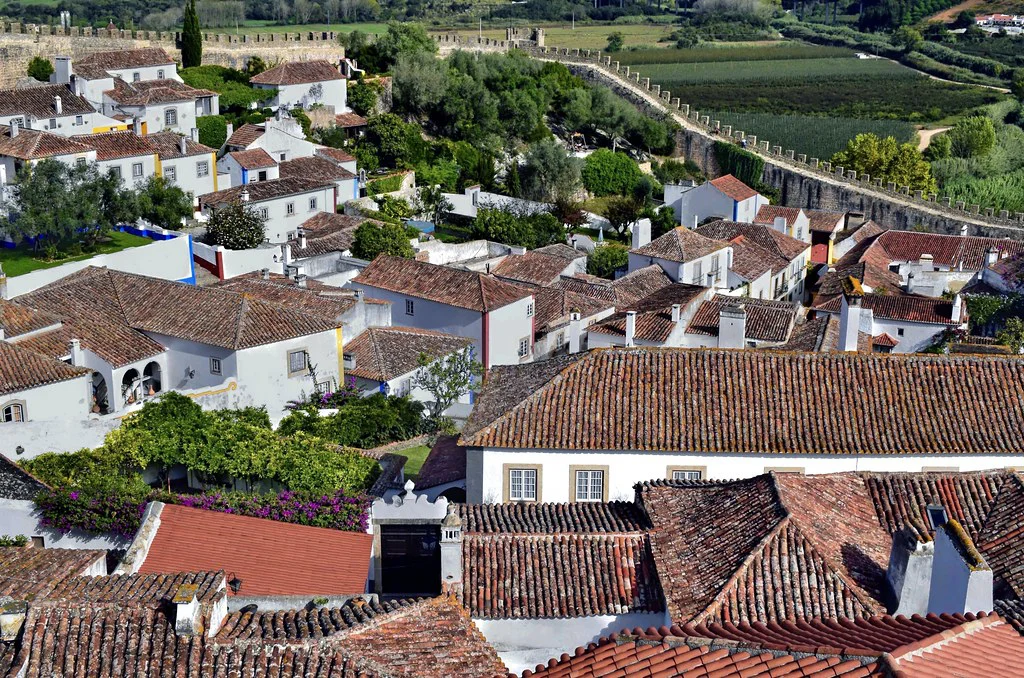
The wall walk is the signature Óbidos experience. From the ramparts you see the terracotta roofs, the castle towers, the fields beyond town, and the white lanes folding into each other below. It is free, open-air, and most memorable just after sunrise or during golden hour.
Treat it seriously. Several stretches have no railings, the stone steps are uneven, and wind can make exposed corners feel unsafe. Wear shoes with grip, keep children close, avoid the walls after rain, and use the lower streets instead if you dislike heights.
The easiest first look is near Porta da Vila, where you can climb a short section without committing to the full circuit. For a longer route, use our Óbidos wall walk guide before you start, because exit points are not always obvious once the path gets busy.
Explore the Castelo de Óbidos
The Castelo de Óbidos anchors the top of the village and gives the town its fairytale silhouette. Most visitors can explore the exterior, courtyards, and viewpoints, while the preserved interior functions as a luxury pousada. Even if you do not stay there, walk up to the castle area for the best sense of the town's scale.
If sleeping inside a medieval fortress is part of the dream, book the Pousada do Castelo de Óbidos well in advance. Festival weekends, spring holidays, and summer Fridays can sell out early, but the location is unmatched after the gates quiet down.
The castle is also the focus for seasonal events. Before locking in 2026 dates, check the Events at the Castle calendar, because a festival can make the visit more festive or much more crowded.
Sip Ginjinha in a Chocolate Cup
Ginjinha is the small ritual nearly every Óbidos guide agrees on. The sour-cherry liqueur is usually poured into a tiny dark chocolate cup, then you drink the liqueur and eat the cup. Expect to pay about €1 to €1.50 at stands along Rua Direita.
The busiest stall near the entrance is not always the best choice. Walk a little farther uphill and you will find quieter vendors with the same drink and shorter lines. If you want more context, a dedicated Óbidos cherry liqueur tasting makes sense before buying a bottle to take home.
It is sweet, strong, and touristy in the best possible way. Try one after lunch rather than before climbing the walls, especially on a hot afternoon.
Wander the Rua Direita
Rua Direita is the main spine of Óbidos, running from the tiled gate toward the upper part of town. It is lined with craft shops, bakeries, restaurants, souvenir displays, and flower-trimmed houses. Arrive before 10:00 if you want photographs without tour groups.
For shopping, look for ceramics, cork goods, local preserves, and small artisan pieces rather than generic magnets. Many Óbidos handicraft shops are clustered on or just off this street.
- For a quick snack, stop at a bakery for bread with chouriço, almond sweets, or a simple pastry.
- For lunch, compare menus one or two lanes away from Rua Direita before sitting down.
- For gifts, choose handmade ceramics or local ginjinha instead of mass-produced souvenirs.
Visit the Literary Church of São Tiago
São Tiago Church is one of the best examples of Óbidos as a literary town. The former church has been transformed into a bookshop, with shelves rising where religious fittings once stood. It is a quick stop, but the setting makes it feel different from a normal store.
Combine it with The Literary Man Hotel library, the market bookshop, and smaller wine-and-book corners around town. The Óbidos Book Town identity is strongest when you slow down and browse, rather than treating these as photo stops.
Admire the Azulejos at Igreja de Santa Maria
Igreja de Santa Maria sits near the main square and is worth entering if the doors are open. The exterior is restrained, but the interior has blue-and-white azulejos, painted details, and a calm atmosphere that contrasts with the busy shopping street.
This is also where the royal history of Óbidos feels less abstract. Its long association with Portuguese queens shaped the churches, civic spaces, and careful preservation.
Photograph the Porta da Vila
Porta da Vila is the first major sight for most visitors, but many people hurry through it too quickly. Look up inside the gate to see the tiled chapel balcony and vaulted azulejo work. The best light is early morning, before the passage fills with tour groups.
For the classic fairytale frame, stand just outside the gate before 09:00 and shoot back toward the tiled entrance. For a quieter angle, climb the nearby lower wall section and photograph the rooftops with the gate below. This is the easiest photography stop to reach if you are only in town for a few hours.
See the Aqueduto de Usseira
The Aqueduto de Usseira sits outside the walled center and is easy to miss if you only follow the main street. The 16th-century aqueduct carried water toward Óbidos and still gives the approach to town a dramatic, historic edge.
You do not need long here. View it from the parking area or make a short walk for a wider photo of the arches. It pairs well with the Santuário do Senhor Jesus da Pedra if you want a quick break from the busiest lanes.
Attend a Seasonal Festival
Óbidos changes character during festivals. The International Chocolate Festival usually brings spring crowds, the Medieval Market turns the castle area into a costumed event space, and Vila Natal makes the town popular around Christmas. These events can be fun, but they change prices, parking, and restaurant availability.
For 2026, confirm dates before booking transport or lodging. Festival days are poor for empty-lane photography, but excellent for food stalls and family-friendly programming.
Find the Baloiço Óbidos Secret Swing
The Baloiço Óbidos is a simple wooden swing with a view back toward the walls. It has become a modern photo stop because it frames the village from outside the tight medieval lanes. Search for "Baloiço Óbidos" on your map app and allow about 10 to 15 minutes on foot from the castle area.
Go near sunset if the sky is clear, but do not save it for your only wall view. The path can feel less obvious than the main village route, and it is better as a bonus stop than a must-do for visitors with limited mobility or very little time.
Things To Do In Obidos — Day Two
A second day lets Óbidos breathe. Spend the morning revisiting the walls or side streets before the bus groups arrive, then use the afternoon for the lagoon, nearby villages, or the Silver Coast.
The Lagoa de Óbidos is the strongest day-two option if you have a car. It is about 15 minutes away and works well for kayaking, paddleboarding, birdwatching, or a seafood lunch. Budget roughly €15 to €30 per hour for basic water activities.
If you prefer towns, Nazaré is about 30 minutes away by car and Peniche is about 25 minutes away. Our Nazaré day trip guide is best for big-wave viewpoints, while Peniche suits beaches and seafood.
Day Trip vs Overnight Stay
The right choice depends on how much you value atmosphere. A day trip is efficient and cheaper, but you will share the town with the peak crowd. An overnight stay costs more, yet it gives you sunrise, blue hour, and dinner after the lanes clear.
| Plan | Best for | Trade-off |
|---|---|---|
| Lisbon day trip | First-timers with one free day, travelers using the direct bus, and visitors focused on the main sights. | You get the busiest hours and less flexibility for the lagoon or sunset. |
| Overnight stay | Photographers, slow travelers, couples, families, and anyone adding Nazaré, Peniche, or Lagoa de Óbidos. | Rooms inside the walls are limited and should be booked early. |
If you stay overnight, book dinner ahead during festivals and weekends. The town quiets down early, and the best tables fill quickly when accommodation is sold out.
Plan a Wall-Free Route for Kids, Vertigo, and Wind
You do not have to walk the full ramparts to enjoy Óbidos. If you are traveling with small children, have limited mobility, dislike heights, or arrive on a windy day, use a lower route instead. Start at Porta da Vila, follow Rua Direita slowly, detour into side lanes, visit Santa Maria, then continue toward São Tiago and the castle courtyard.
This route keeps the medieval atmosphere without the exposed drops. You can still get elevated views from safer short sections near the gate or from open viewpoints around the castle approach.
How to Get to Óbidos from Lisbon
The bus is usually the best public transport choice. The Rápida Verde service from Campo Grande takes about one hour and drops passengers close to the walls. Trains are less convenient because the station sits outside the center and schedules are slower for most Lisbon visitors.
| Method | Time | Best use |
|---|---|---|
| Bus from Campo Grande | About 1 hour | Simple day trips without parking stress. |
| Rental car via A8 | About 1 hour | Lagoon, Nazaré, Peniche, or multiple Silver Coast stops. |
| Train | Usually 2 hours or more | Only useful for specific routes where the timetable fits. |
Drivers should park outside the walls and walk in. Do not plan to drive inside the historic center unless your accommodation gives specific instructions.
Where to Stay in Óbidos
Inside the walls is best for atmosphere. The Pousada do Castelo is the splurge, while small guesthouses give you easier access to dawn, dusk, and quiet lanes. Outside the walls can be more practical if you have a car or want lower prices.
Book early for spring weekends, the Chocolate Festival, the Medieval Market, and Christmas events. For a bookish stay, The Literary Man Hotel is a strong fit because its lounges and restaurant lean into the town's literary identity.
What to Skip in Óbidos
Skip the generic souvenir shops closest to the gate unless you only need a quick magnet. You will find better crafts, ceramics, and food gifts farther up Rua Direita or in quieter side streets. The same logic applies to ginjinha: the first stand is convenient, not essential.
Also skip a full restaurant meal on the main street at peak lunch if every table is packed with tour groups. Walk one or two lanes away, or eat slightly earlier than 12:30. Óbidos is more enjoyable when you avoid the predictable bottlenecks.
FAQ About Visiting Óbidos, Portugal
Plan at least four hours for the historic center, or a full day if you want lunch, shopping, and a slow wall walk. Óbidos is worth a day trip from Lisbon, but better overnight if you want quiet streets and golden-hour photos. The walls are free, but weather and footwear matter.
The best time of year is spring or early autumn for mild weather. Summer can be hot and crowded, while winter is calmer but wetter. For ginjinha, try a quieter stand away from the gate.
For the full city overview, see our complete Óbidos itinerary guide.
For related Óbidos guides, see our 12 Best Tips and Attractions for Obidos with Kids.
Óbidos remains one of Portugal's most enchanting small towns because it blends medieval structure with a living village. Walk the walls if conditions are safe, drink the ginjinha, step into the bookshops, and save time for the lanes that are not on your first map.
Whether you come for a day or stay overnight, build the plan around timing. Early morning, late afternoon, and a possible second day at the lagoon or coast make the town feel larger than it looks from the gate.
Frequently Asked Questions
How long do you need for the main things to do in Óbidos?
Allow six to eight hours for the gate, village lanes, churches or bookshops, lunch and a weather-appropriate wall decision.
Are the Óbidos walls free?
Public rampart access is generally free, but the narrow largely unguarded route is unsuitable in rain, strong wind, poor light or for many families.
Is Óbidos Castle a museum?
The castle building operates as a pousada. Museums and ticketed events have their own access rather than one general castle ticket.
What should you do in Óbidos when it rains?
Skip the slippery ramparts and prioritize bookshops, open churches, museums, food stops and short ground-level links.
Official Sources to Check Before You Go
Transport, admission, event, weather and access details can change after publication. Recheck the source that affects your date instead of treating a copied schedule or price as permanent.