Qingdao Food Guide: Seafood, Dumplings and Beer (2026)
A practical Qingdao food guide to seafood, dumplings, local beer, Laoshan tea, ordering by weight, dietary communication and meal planning.
Editor14 min read
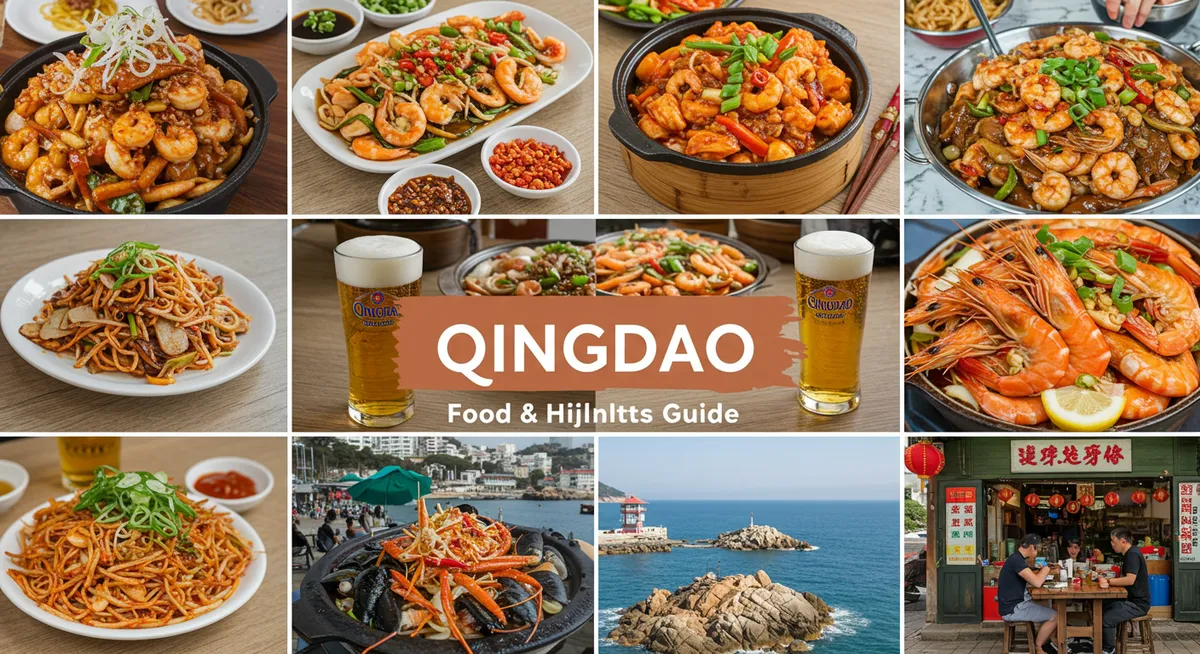
<h1>Qingdao Food Guide: Seafood, Dumplings and Beer</h1>
<aside class="affiliate-slot" data-nosnippet
data-affiliate-unit="experience_finder"
data-affiliate-provider="getyourguide"
data-affiliate-widget="getyourguide_city"
data-affiliate-format="widget"
data-affiliate-placement="primary"
data-affiliate-campaign="itimaker-com-unit-gcity-qingdao-food-drink-guide"
data-affiliate-city="Qingdao"
data-affiliate-location-id="1246"
style="min-height:400px">
<span class="affiliate-badge">Sponsored</span>
<div class="affiliate-skeleton" aria-hidden="true"></div>
<p class="affiliate-unit__loading" role="status">Loading live activities…</p>
<div class="affiliate-inner"><div
data-gyg-href="https://widget.getyourguide.com/default/city.frame"
data-gyg-location-id="1246"
data-gyg-locale-code="en-US"
data-gyg-widget="city"
data-gyg-partner-id="26CH4CT"
data-gyg-campaign="itimaker-com-unit-gcity-qingdao-food-drink-guide"
data-gyg-cmp="itimaker-com-unit-gcity-qingdao-food-drink-guide"
loading="lazy"></div></div>
</aside>
<p>The essential Qingdao foods are sautéed clams, simply cooked shellfish, Spanish mackerel dumplings, pot stickers and other Shandong dishes, followed by fresh local beer or Laoshan green tea. For a first visit, plan one seafood meal, one dumpling or home-style meal and one beer-or-tea stop, choosing the actual venue from current branch information rather than an old ranking.</p>
<figure>
<img src="/images/qingdao-food-drink-guide.webp" alt="Seafood, dumplings and local drinks in Qingdao" loading="lazy">
<figcaption>Build a Qingdao food plan around dishes and districts, then confirm the current venue details before you go.</figcaption>
</figure>
<aside class="quick-answer" aria-label="Qingdao food guide quick answer">
<h2>Qingdao food in one minute</h2>
<ul>
<li><strong>First seafood order:</strong> clams plus one steamed shellfish or fish dish, with the price unit confirmed before cooking.</li>
<li><strong>Best easy lunch:</strong> Spanish mackerel dumplings, pot stickers or a Shandong home-style set.</li>
<li><strong>Best planning rule:</strong> eat near the sights already in your day instead of crossing the city for a viral restaurant.</li>
<li><strong>Live check:</strong> verify the exact branch, today's hours, recent menu photos, price unit and reservation policy.</li>
<li><strong>Dietary caution:</strong> visible vegetables do not prove a dish is vegetarian, vegan, gluten-free or free from allergen cross-contact.</li>
</ul>
</aside>
<p>This guide is deliberately separate from the city's attraction-led beer content. Use the <a href="https://www.itimaker.com/blog/tsingtao-brewery-museum-guide">Tsingtao Brewery Museum guide</a> for a museum visit and the <a href="https://www.itimaker.com/blog/qingdao-beer-festival-guide">Qingdao Beer Festival guide</a> for dated event logistics. Here, beer is treated as one part of a broader Qingdao meal.</p>
<aside class="affiliate-slot" data-nosnippet
data-affiliate-unit="experience_finder"
data-affiliate-provider="viator"
data-affiliate-widget="viator_widget"
data-affiliate-format="widget"
data-affiliate-placement="secondary"
data-affiliate-campaign="itimaker-com-unit-vauto-qingdao-food-drink-guide"
data-affiliate-city="Qingdao"
data-affiliate-location-id=""
style="min-height:600px">
<span class="affiliate-badge">Sponsored</span>
<div class="affiliate-skeleton" aria-hidden="true"></div>
<p class="affiliate-unit__loading" role="status">Loading live activities…</p>
<div class="affiliate-inner"><div
data-vi-partner-id="P00271059"
data-vi-widget-ref="W-d5dc59c4-3a04-417e-8a46-7be440461eba"
data-vi-search-term="Qingdao"
data-vi-campaign="itimaker-com-unit-vauto-qingdao-food-drink-guide"
data-campaign="itimaker-com-unit-vauto-qingdao-food-drink-guide"></div></div>
</aside>
<h2>What food is Qingdao famous for?</h2>
<p>Qingdao is most strongly associated with seafood, especially clams, prawns, scallops, oysters and fish, plus wheat-based Shandong staples such as dumplings and pot stickers. Local food culture also includes preserved or braised specialties, Tsingtao beer and Laoshan tea. Preparation often matters more than luxury: steaming, boiling or a quick stir-fry lets fresh seafood remain the focus.</p>
<aside class="affiliate-slot" data-nosnippet
data-affiliate-unit="experience_finder"
data-affiliate-provider="getyourguide"
data-affiliate-widget="getyourguide_activities"
data-affiliate-format="widget"
data-affiliate-placement="tertiary"
data-affiliate-campaign="itimaker-com-unit-gact-qingdao-food-drink-guide"
data-affiliate-city="Qingdao"
data-affiliate-location-id="1246"
style="min-height:420px">
<span class="affiliate-badge">Sponsored</span>
<div class="affiliate-skeleton" aria-hidden="true"></div>
<p class="affiliate-unit__loading" role="status">Loading live activities…</p>
<div class="affiliate-inner"><div
data-gyg-href="https://widget.getyourguide.com/default/activities.frame"
data-gyg-location-id="1246"
data-gyg-locale-code="en-US"
data-gyg-widget="activities"
data-gyg-partner-id="26CH4CT"
data-gyg-campaign="itimaker-com-unit-gact-qingdao-food-drink-guide"
data-gyg-cmp="itimaker-com-unit-gact-qingdao-food-drink-guide" data-gyg-number-of-items="4"
loading="lazy"></div></div>
</aside>
<p>Official Qingdao cultural-tourism coverage highlights steamed shellfish and seafood dumplings filled with ingredients such as Spanish mackerel, cuttlefish, sea urchin, shrimp and yellow croaker. A separate city food feature explains that <em>tianshai yu</em>, literally “sweet-dried fish,” refers to a drying method rather than a sugary flavor. Those are durable food traditions; the restaurant serving them best this week is a live-search question.</p>
<h2>Must-try Qingdao dishes and how to recognize them</h2>
<p>If time is limited, choose foods that reveal different sides of the city: one clam dish, one simply cooked seafood plate, one dumpling filling and one non-seafood Shandong specialty. The table gives practical Chinese names for menu search and ordering, without attaching a universal price to a seasonal product.</p>
<div class="table-responsive">
<table>
<thead>
<tr>
<th>Dish or drink</th>
<th>What to expect</th>
<th>Useful ordering cue</th>
</tr>
</thead>
<tbody>
<tr>
<td><strong>Sautéed clams</strong><br>辣炒蛤蜊 / 辣炒嘎啦</td>
<td>Small clams stir-fried with aromatics and, often, chile. “Gala” is a local name for clams.</td>
<td>Ask for mild heat if needed: <em>wei la</em> (微辣).</td>
</tr>
<tr>
<td><strong>Steamed shellfish</strong><br>清蒸贝类</td>
<td>Scallops, oysters, clams or other shellfish cooked simply; availability changes with supply.</td>
<td>Confirm whether the quote is per piece, plate, 500 grams or kilogram.</td>
</tr>
<tr>
<td><strong>Spanish mackerel dumplings</strong><br>鲅鱼水饺</td>
<td>A coastal Shandong dumpling with a soft fish filling, commonly mixed with seasoning and other ingredients.</td>
<td>Ask how many dumplings are in one order and whether the filling contains pork.</td>
</tr>
<tr>
<td><strong>Cuttlefish dumplings</strong><br>墨鱼水饺</td>
<td>A seafood dumpling sometimes made with darkened dough or filling.</td>
<td>Confirm the filling if allergies or dietary limits matter.</td>
</tr>
<tr>
<td><strong>Pot stickers</strong><br>锅贴</td>
<td>Pan-fried dumplings with a crisp base; fillings vary by shop.</td>
<td>Order by filling, not only by the word <em>guotie</em>.</td>
</tr>
<tr>
<td><strong>Sweet-dried fish</strong><br>甜晒鱼</td>
<td>Fish preserved by a local drying method. Despite the English rendering, it is not necessarily sweetened.</td>
<td>Ask which fish is used and how it will be cooked.</td>
</tr>
<tr>
<td><strong>Liuting braised pig's trotters</strong><br>流亭猪蹄</td>
<td>A savory braised meat specialty associated with Qingdao's Liuting area.</td>
<td>Useful for a non-seafood tasting plate; portion formats vary.</td>
</tr>
<tr>
<td><strong>Pork cracklings</strong><br>脂渣</td>
<td>Rendered, crisp pieces of pork eaten as a snack or used in dishes.</td>
<td>Rich and salty; share a small order before committing to more.</td>
</tr>
<tr>
<td><strong>Laoshan green tea</strong><br>崂山绿茶</td>
<td>A protected geographical-indication tea from the Qingdao area.</td>
<td>For packaged tea, inspect producer, grade, packing date and net weight.</td>
</tr>
</tbody>
</table>
</div>
<h3>Seafood: let season and turnover lead</h3>
<p>A long menu does not guarantee better seafood. Start with what has a clear label, visible turnover and a cooking method you understand. Steamed or boiled shellfish and whole fish are straightforward comparison orders. A sauced or elaborate preparation can be excellent, but it makes the ingredient and final cost harder to judge.</p>
<p>Supply changes with season, weather, fishing rules and the restaurant's purchasing. Ask <em>jin tian you shenme xian de?</em> (今天有什么鲜的?), “What is fresh today?” Then choose from that answer. Do not assume a species mentioned in a travel article will be local, wild-caught or available during your visit.</p>
<h3>Dumplings and Shandong cooking beyond seafood</h3>
<p>Dumplings are the most flexible low-friction meal because you can order by filling and share several kinds. Fish dumplings are the Qingdao-specific priority, while pork, vegetable and egg fillings can balance the table. Ask whether one “portion” means a fixed count, a plate or an amount sold by weight.</p>
<p>For another expression of Shandong cooking, look for braised dishes, clear soups, scallion-led preparations and crisp fried foods. Sea cucumber with scallion is a well-known banquet-style choice, but it is not essential to understanding Qingdao. A simple neighborhood meal can be more useful than an expensive prestige dish.</p>
<h2>How to order seafood by weight without surprises</h2>
<p>Before any seafood is cooked, confirm the species, measurement unit, weight, unit price, cooking fee and estimated total. In mainland China, one <em>jin</em> (斤) is 500 grams, but a board may instead quote per piece or per kilogram. Ask the staff to show the complete calculation on a menu, label or calculator and keep a photo until the bill arrives.</p>
<div class="table-responsive">
<table>
<thead>
<tr>
<th>Ordering point</th>
<th>What to confirm</th>
<th>Chinese prompt</th>
</tr>
</thead>
<tbody>
<tr>
<td>Price unit</td>
<td>Per piece, plate, 500 grams (<em>jin</em>) or kilogram</td>
<td>这个价格按只、份、斤,还是公斤?</td>
</tr>
<tr>
<td>Weight</td>
<td>Actual weight and whether water or packaging is excluded</td>
<td>请称一下,给我看重量。</td>
</tr>
<tr>
<td>Preparation</td>
<td>Steamed, boiled, grilled or stir-fried; desired spice level</td>
<td>清蒸,少油,不辣。</td>
</tr>
<tr>
<td>Extra charges</td>
<td>Cooking, seasoning, tableware, room or service fees</td>
<td>加工费和其他费用是多少?</td>
</tr>
<tr>
<td>Estimated total</td>
<td>Seafood plus preparation before the kitchen starts</td>
<td>做好以后总共大约多少钱?</td>
</tr>
<tr>
<td>Final bill</td>
<td>Species, quantity, unit and fee match what you approved</td>
<td>请给我看明细账单。</td>
</tr>
</tbody>
</table>
</div>
<p>This is more than defensive travel advice. Qingdao's market regulator has told seafood businesses to display both price and measurement method rather than use vague “seasonal price” labels. A 2026 enforcement update also lists clear pricing, scales and beer sales among inspection priorities. If the unit or fee remains unclear after you ask, decline the item before cooking.</p>
<p>The market-to-kitchen model adds another layer: the seafood seller and the kitchen may be separate businesses. Confirm whether the kitchen accepts outside purchases and obtain its processing price before buying. Never assume an arrangement described in an older article still operates.</p>
<h2>How to choose a restaurant or food market today</h2>
<p>The best current venue is one that serves your chosen dish, fits your route and shows recent evidence of clear pricing and reliable operation. Restaurant rankings age badly, branches close and night-market formats move. Use this five-step check on the day or week of your meal.</p>
<ol>
<li><strong>Search the exact branch.</strong> Match the Chinese name and street address, not just an English transliteration or brand name.</li>
<li><strong>Check recent evidence.</strong> Look for customer photos of the storefront, menu and dish from the last few months. A recent review is evidence of operation, not proof of quality.</li>
<li><strong>Verify today's hours.</strong> Check the venue's official account or call, especially on Mondays, public holidays and outside peak season.</li>
<li><strong>Read for clarity.</strong> Give more weight to comments about price labels, weighing, bill detail, turnover and service than to a single star score.</li>
<li><strong>Confirm before traveling.</strong> Ask whether the target dish is available, whether reservations are needed and whether the market or event is operating that evening.</li>
</ol>
<p>Busy service can suggest turnover, but it does not certify hygiene or allergy controls. Likewise, an attractive live tank does not establish origin or quality. Treat visible handling, clean surroundings, intact price labels and responsive staff as useful signals, then make your own judgment.</p>
<h2>Qingdao food districts: choose by itinerary, not hype</h2>
<p>Qingdao is spread along the coast, so a meal can create unnecessary backtracking. Start with the <a href="https://www.itimaker.com/blog/qingdao-itinerary">Qingdao itinerary hub</a>, group each day by area, and search for the dish within that area. The <a href="https://www.itimaker.com/blog/getting-around-qingdao-metro-taxis-didi">Qingdao transport guide</a> helps test whether a food detour is realistic.</p>
<div class="table-responsive">
<table>
<thead>
<tr>
<th>Area</th>
<th>Useful for</th>
<th>Decision note</th>
</tr>
</thead>
<tbody>
<tr>
<td>Old Town and Zhongshan Road</td>
<td>Dumplings, home-style food and snacks around heritage sightseeing</td>
<td>Choose for route efficiency; do not expect one permanent, concentrated night market.</td>
</tr>
<tr>
<td>Shibei and Taidong</td>
<td>Casual restaurants and evening browsing</td>
<td>Verify the current market footprint and operating night from live listings or local notices.</td>
</tr>
<tr>
<td>Shinan, May Fourth Square and the eastern waterfront</td>
<td>Malls, hotels, contemporary dining and convenient group meals</td>
<td>Good when service ease matters; sea views do not guarantee seafood value.</td>
</tr>
<tr>
<td>Laoshan</td>
<td>Tea and a meal combined with a mountain or village day</td>
<td>Confirm access, appointment requirements and return transport; do not travel only for an unverified tea-room listing.</td>
</tr>
<tr>
<td>West Coast and Huangdao</td>
<td>Meals attached to a beach, resort or festival-area day</td>
<td>Keep it in the West Coast itinerary block rather than crossing the bay for dinner alone.</td>
</tr>
</tbody>
</table>
</div>
<p>Your hotel location should influence the meal plan. If you have not chosen a base, compare travel trade-offs in the <a href="https://www.itimaker.com/blog/where-to-stay-in-qingdao-neighborhoods">Qingdao neighborhood guide</a>.</p>
<h2>A practical one-day Qingdao meal plan</h2>
<p>A strong food day uses different meal formats rather than three large destination restaurants. Eat a simple breakfast near the hotel, make dumplings or home-style Shandong food the main lunch, and reserve seafood for dinner when the group has time to confirm the order.</p>
<h3>Morning: local convenience, not a cross-city mission</h3>
<p>Look near your accommodation for steamed buns, porridge, soy milk, eggs or a savory pancake. These are common Chinese breakfast formats rather than uniquely Qingdao foods, so choose by visible turnover and current opening information. If breakfast is included at the hotel or you have an early departure, use it without fear of “missing” a signature dish.</p>
<h3>Lunch: fish dumplings or a home-style table</h3>
<p>Lunch is the easiest time to try Spanish mackerel dumplings, pot stickers, vegetables and a soup or cold dish. Solo travelers can order one dumpling portion and a vegetable; groups can compare two fillings and add a Shandong dish. Confirm the portion size before ordering multiple plates.</p>
<h3>Dinner: one measured seafood order</h3>
<p>At dinner, start with clams, then add one shellfish or fish dish and a vegetable. Follow the weight checklist before cooking. If the price, species or preparation remains confusing, switch to a fixed-price menu item. Add beer only if it suits your group; tea and non-alcoholic drinks are equally local choices.</p>
<h2>Beer and Laoshan tea without turning the meal into an attraction</h2>
<h3>How to order Qingdao beer</h3>
<p>Tsingtao Brewery traces its roots to Qingdao in 1903, which explains why beer remains central to the city's identity. At restaurants, ask what is on tap, the serving volume, the price for that volume and whether the beer is unfiltered or standard draft. Draft beer may appear in glasses, pitchers or takeaway containers, so “one beer” is not a reliable unit.</p>
<p>Freshness depends on storage and turnover, not simply distance from a historic brewery. Choose a busy, well-maintained tap and drink responsibly. Do not treat a “Beer Street” label or a plastic-bag presentation as a quality guarantee. For brewery history and tastings, use the museum guide linked above; for the annual festival, confirm the current dates and venue in the festival guide.</p>
<h3>How to buy or taste Laoshan green tea</h3>
<p>Laoshan green tea is a formally recognized geographical-indication product, making it the clearest local alternative to beer. At a tasting, ask whether there is a fee and what grade and harvest you are sampling. For a purchase, prefer sealed packaging with producer, origin, grade, packing date and net weight rather than relying on a seller's “premium” label.</p>
<p>A tea stop fits naturally into a <a href="https://www.itimaker.com/blog/laoshan-mountain-day-trip-guide">Laoshan day trip</a>, but tea farms and tasting rooms can require advance contact. Verify access and current hours before building the day around one.</p>
<h2>Vegetarian, vegan, gluten-free and allergy communication</h2>
<p>Dietary communication in Qingdao requires ingredient-level questions. A vegetable dish may contain oyster sauce, dried shrimp, meat stock, lard or chicken seasoning. Fish dumplings may include pork or shared preparation surfaces. Plain-looking seafood can still be seasoned with soy sauce or handled beside shellfish.</p>
<ul>
<li><strong>Vegetarian:</strong> state whether you eat egg and dairy, then ask about meat, seafood, stock and lard.</li>
<li><strong>Vegan:</strong> ask separately about egg, dairy, honey, oyster sauce, stock and animal fat; the word “vegetarian” alone may not communicate all exclusions.</li>
<li><strong>Gluten-free:</strong> ask about wheat noodles, dumpling wrappers, soy sauce, batter and shared fryers. A dish description cannot guarantee the absence of gluten or cross-contact.</li>
<li><strong>Food allergy:</strong> carry a professionally translated card naming the allergen and the need to avoid cross-contact. Ask whether that specific kitchen can meet the requirement. If the answer is uncertain, do not eat the dish.</li>
</ul>
<p>Useful phrases include <em>wo bu chi rou he haixian</em> (我不吃肉和海鲜, “I do not eat meat or seafood”) and <em>qing bu yao fang hao you</em> (请不要放蚝油, “Please do not add oyster sauce”). These phrases are conversation starters, not safety guarantees. For severe allergies or a medically required diet, seek professional medical and translation advice before travel and retain your emergency plan.</p>
<h2>Reliable sources and what still needs a live check</h2>
<p>Enduring culinary context in this guide was checked against primary or official sources. Venue hours, prices, market layouts, menus, harvest availability and event dates remain live variables and should be rechecked close to the meal.</p>
<ul>
<li><a href="https://www.qingdao.gov.cn/zwgk/xxgk/whly/gkml/gzxx/202512/t20251222_10415836.shtml" target="_blank" rel="noopener noreferrer">Qingdao Municipal Government: local seafood and seafood-dumpling traditions</a></li>
<li><a href="https://www.qingdao.gov.cn/zwgk/xxgk/whly/gkml/gzxx/202602/t20260213_10513071.shtml" target="_blank" rel="noopener noreferrer">Qingdao Municipal Government: enduring regional foods including sweet-dried fish and Liuting pig's trotters</a></li>
<li><a href="https://amr.qingdao.gov.cn/zt/fwxzfjxs/202310/t20231025_7556545.shtml" target="_blank" rel="noopener noreferrer">Qingdao market regulator: seafood price and measurement disclosure</a></li>
<li><a href="https://www.qingdao.gov.cn/zwgk/xxgk/scjdglj/gkml/gzxx/202602/t20260226_10519132.shtml" target="_blank" rel="noopener noreferrer">Qingdao Municipal Government: 2026 food, price, weighing and beer-sale inspections</a></li>
<li><a href="https://std.samr.gov.cn/gb/search/gbDetailed?id=71F772D7E3EFD3A7E05397BE0A0AB82A" target="_blank" rel="noopener noreferrer">China national standards platform: Laoshan green tea geographical indication</a></li>
<li><a href="https://www.tsingtao.com.cn/TsingTao/upload/Attachment/20191017/2013e.pdf" target="_blank" rel="noopener noreferrer">Tsingtao Brewery annual report: company history from 1903</a></li>
</ul>
<h2>Qingdao food guide FAQ</h2>
<div class="faq-section" itemscope itemtype="https://schema.org/FAQPage">
<div class="faq-item" itemscope itemprop="mainEntity" itemtype="https://schema.org/Question">
<h3 itemprop="name">What food is Qingdao most famous for?</h3>
<div itemscope itemprop="acceptedAnswer" itemtype="https://schema.org/Answer">
<p itemprop="text">Qingdao is best known for clams and other seafood, seafood dumplings, Shandong dishes, Tsingtao beer and Laoshan green tea. A good first meal combines clams, one simply cooked seafood dish, dumplings and a vegetable.</p>
</div>
</div>
<div class="faq-item" itemscope itemprop="mainEntity" itemtype="https://schema.org/Question">
<h3 itemprop="name">How do I order seafood by weight in Qingdao?</h3>
<div itemscope itemprop="acceptedAnswer" itemtype="https://schema.org/Answer">
<p itemprop="text">Confirm the species, unit price, measurement unit, actual weight, cooking method, processing fee and estimated total before cooking. Ask to see the calculation and keep a photo of the price label or written quote until payment.</p>
</div>
</div>
<div class="faq-item" itemscope itemprop="mainEntity" itemtype="https://schema.org/Question">
<h3 itemprop="name">What does one jin mean on a Qingdao seafood menu?</h3>
<div itemscope itemprop="acceptedAnswer" itemtype="https://schema.org/Answer">
<p itemprop="text">One <em>jin</em> (斤) in mainland China equals 500 grams. Do not assume every seafood price uses <em>jin</em>; it may instead be per piece, per plate or per kilogram, so ask which unit applies.</p>
</div>
</div>
<div class="faq-item" itemscope itemprop="mainEntity" itemtype="https://schema.org/Question">
<h3 itemprop="name">Is Qingdao food spicy?</h3>
<div itemscope itemprop="acceptedAnswer" itemtype="https://schema.org/Answer">
<p itemprop="text">Not all Qingdao food is spicy. Sautéed clams may include chile, while steamed seafood, dumplings, braised dishes and soups can be mild. Ask for <em>bu la</em> (不辣) for no chile or <em>wei la</em> (微辣) for mild heat.</p>
</div>
</div>
<div class="faq-item" itemscope itemprop="mainEntity" itemtype="https://schema.org/Question">
<h3 itemprop="name">Where should I eat in Qingdao without relying on restaurant rankings?</h3>
<div itemscope itemprop="acceptedAnswer" itemtype="https://schema.org/Answer">
<p itemprop="text">Choose the district already in your itinerary, then check exact branches using recent storefront and menu photos, current hours, price clarity and the availability of your target dish. Verify directly before making a long detour.</p>
</div>
</div>
<div class="faq-item" itemscope itemprop="mainEntity" itemtype="https://schema.org/Question">
<h3 itemprop="name">Is Taidong night market open every night?</h3>
<div itemscope itemprop="acceptedAnswer" itemtype="https://schema.org/Answer">
<p itemprop="text">Do not assume a fixed market footprint or nightly schedule. Street works, weather, regulation and events can change the layout and operating pattern. Check current local listings, recent photos or an official district notice on the day you plan to visit.</p>
</div>
</div>
<div class="faq-item" itemscope itemprop="mainEntity" itemtype="https://schema.org/Question">
<h3 itemprop="name">Can vegetarians eat well in Qingdao?</h3>
<div itemscope itemprop="acceptedAnswer" itemtype="https://schema.org/Answer">
<p itemprop="text">Vegetarians can find vegetables, tofu and some dumplings, but must ask about seafood, oyster sauce, meat stock, lard and chicken seasoning. State whether egg and dairy are acceptable and confirm the ingredients of each dish.</p>
</div>
</div>
<div class="faq-item" itemscope itemprop="mainEntity" itemtype="https://schema.org/Question">
<h3 itemprop="name">What should travelers with a seafood allergy do in Qingdao?</h3>
<div itemscope itemprop="acceptedAnswer" itemtype="https://schema.org/Answer">
<p itemprop="text">Carry a professionally translated allergy card, identify the exact allergen and ask whether the kitchen can prevent cross-contact. Seafood is widely handled in Qingdao restaurants, so if staff cannot confirm suitable controls, choose another venue or do not eat the dish.</p>
</div>
</div>
<div class="faq-item" itemscope itemprop="mainEntity" itemtype="https://schema.org/Question">
<h3 itemprop="name">Do I need to visit Beer Street to try Qingdao beer?</h3>
<div itemscope itemprop="acceptedAnswer" itemtype="https://schema.org/Answer">
<p itemprop="text">No. Beer is available across Qingdao, and quality depends more on storage, tap maintenance and turnover than on a street label. Choose a convenient current venue and confirm the beer style, serving volume and price before ordering.</p>
</div>
</div>
</div>
<h2>Build the rest of your Qingdao trip</h2>
<p>Place meals beside the neighborhoods and sights you already want to visit, leave time for one measured seafood order, and keep a backup restaurant within the same area. Use the <a href="https://www.itimaker.com/blog/qingdao-itinerary-3-days">three-day Qingdao itinerary</a> for a compact route, then open the <a href="https://www.itimaker.com/chatbot?destination=Qingdao%20food%20trip">ItiMaker trip planner</a> to organize meals, transport and daily stops in one plan.</p>
Keep exploring
Make this guide part of your trip.
Turn the ideas you like into a personal day-by-day route, then edit every detail.
Build my itinerary