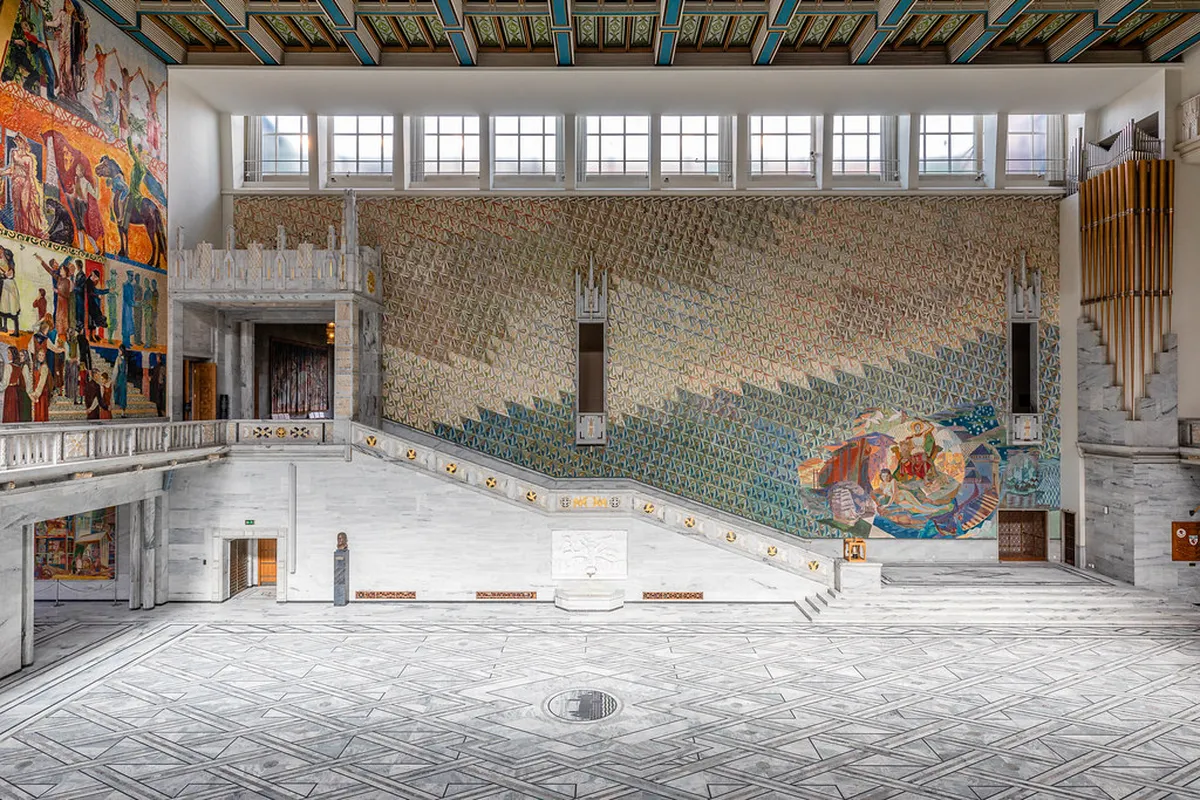
Oslo Rådhus, also known as Oslo City Hall, stands as a prominent city landmark. Its unique architectural style fascinates visitors worldwide. This guide explores the distinct design elements of this iconic building. You will learn about its rich history and deep cultural significance. Discover what makes Oslo City Hall architecture so remarkable in 2026. It is truly one of Oslo's architectural landmarks.
The Design Journey: History and Influences
Turn this guide into a personal route with our free Oslo itinerary planner.
The visionary construction of Oslo Rådhus began in 1931. However, global events caused significant delays. It was finally completed and inaugurated in 1950, post-World War II. Architects Arnstein Arneberg and Magnus Poulsson spearheaded its design. They aimed to create a structure embodying Norwegian national identity.
Their ambitious vision cleverly combined traditional forms with modern ideas. This period strongly emphasized national pride and cultural expression. The design therefore draws from various artistic movements. It perfectly reflects both strong functionalist principles and national romantic sensibilities. This unique blend creates a truly powerful and distinctive aesthetic. Many historical Oslo buildings subtly influenced its grand scale.
The architects meticulously considered the building's vital purpose. It serves as both the city's administrative heart and a vibrant public gathering place. This crucial dual role shaped its internal layouts and external appearance. The grand scale unequivocally signifies its importance to Oslo citizens. Consider adding this monumental site to your essential Oslo architecture itinerary this year.
Functionalism Defined: Structure and Form
Nordic Functionalism profoundly influences Oslo Rådhus's core structure. This influential architectural style emphasizes absolute practicality and clean, simple lines. It purposefully rejects excessive ornamentation in favor of ultimate utility. The building prominently features two imposing rectangular towers. These strong towers provide a powerful, perfectly symmetrical silhouette against the sky.
The extensive use of dark red brick is a paramount functionalist element. These robust bricks were largely sourced locally from Norway. They give the entire building a strong, incredibly grounded appearance. This deliberate choice of local building materials deeply reflects Norwegian construction traditions. It also ensures remarkable durability against the harsh Nordic climate for centuries to come.
Generously sized windows allow abundant natural light to flood the interior spaces. This thoughtful design promotes efficiency and a healthy, productive work environment. The internal spaces feel exceptionally open and remarkably spacious. This design approach is quite common in Oslo's modernist buildings from that era. Functionalism ensured the building serves its crucial civic purpose with utmost effectiveness.
The facade details are deliberately minimal but highly purposeful. Strong, defining vertical and horizontal lines clearly delineate the exterior. This structural simplicity significantly enhances its monumental, commanding presence. It eloquently speaks to a modern, highly efficient government administration. The unwavering focus remains firmly on supreme function over any elaborate, decorative flourishes.
National Romanticism: Art and Symbolism
Despite its formidable functionalist shell, Oslo Rådhus beautifully embraces National Romanticism. This artistic style deeply seeks to express national identity through powerful art. The building's magnificent interior proudly showcases a wealth of stunning Norwegian art. These captivating artworks collectively narrate compelling stories of Norwegian history and its vibrant culture.
Grand mural paintings spectacularly cover many vast walls and soaring ceilings. Renowned Norwegian artists diligently contributed to these truly impressive pieces. They vividly depict scenes ranging from ancient Norse sagas to depictions of everyday life. These powerful artistic expressions add immense warmth and narrative depth. They provide a vital balance to the building's often stark functionalist exterior.
The central ceremonial hall, famously known as the "Great Hall," is particularly striking. Here, immense murals illustrate the rich tapestry of Norwegian working life. They proudly celebrate the country's storied past and its future aspirations. This grand, awe-inspiring space frequently hosts significant public ceremonies. It truly highlights the seamless blend of public art and architecture in Oslo.
Intricate wood carvings and beautifully woven tapestries further enhance the interior's charm. These traditional crafts powerfully reflect Norway's rich heritage. They collectively create a strong, undeniable sense of place and national pride. The meticulous attention to detail provides a wonderful counterpoint to modernism. Prepare to be absolutely amazed when visiting Oslo City Hall.
Exploring the Grandeur: Exterior and Interior
The exterior of Oslo Rådhus is immediately recognizable to anyone visiting. Its two dominant brick towers majestically stand tall against the city skyline. The main entrance features a grand, impressive arched portal. Numerous sculptural reliefs adorn the facade, vividly telling stories of Oslo's past. Important statues by acclaimed artist Per Palle Storm also grace the entire exterior.
Inside, the magnificent Great Hall truly dominates the central space. It is a vast, expansive room with extraordinarily towering ceilings. This iconic room has the honor of hosting the annual Nobel Peace Prize ceremony every December. Visitors can freely explore many public areas on most days. Always check the official schedule for public access in early 2026.
Beyond the Great Hall, you can discover numerous smaller, charming chambers. Each unique room boasts its own distinct artworks and intriguing historical details. Be sure to look for the famous Munch Room and the City Council Chamber. These fascinating spaces provide deeper insights into Norwegian art and governance. You can explore many highlights on dedicated Oslo architectural walking tours.
Guided tours are often readily available for a small, reasonable fee. These valuable tours offer expert commentary on both the art and the architecture. The onsite gift shop provides unique, locally themed souvenirs for visitors. Public admission to the main public areas is usually free of charge. Indeed, free Oslo architecture experiences abound at City Hall.
Frequently Asked Questions
What defines the unique Oslo Rådhus architectural style?
The Oslo Rådhus architectural style is a compelling fusion. It blends austere Nordic Functionalism with decorative National Romanticism. Functionalism contributes its signature red brick and twin-towered structure. National Romanticism fills the interior with rich, expressive Norwegian art and profound symbolism.
Can I visit Oslo City Hall for free in 2026?
Yes, public access to the main hall and some exhibition areas is generally free. This policy is expected to continue throughout 2026. Guided tours, however, may incur a nominal fee. Always check the official Oslo City Hall website for current opening hours and tour availability before your planned trip.
What are the best times to see the architecture and art?
Visiting during weekdays generally offers the best and most serene experience. Weekends can be quite crowded, especially during peak tourist season. Consider avoiding major public holidays for a quieter visit. Spring and autumn provide pleasant weather for exterior exploration. Learn more about the best time for architecture tours in Oslo.
The Oslo Rådhus architectural style masterfully combines two distinct yet complementary movements. It brilliantly offers both monumental functionalism and rich national romanticism. This creates an iconic landmark that is truly and uniquely Norwegian. Explore its captivating art and profound design on your next Oslo visit. Plan your architectural journey using an Oslo architecture map for an unforgettable cultural experience in 2026.
Key Takeaways
- Oslo Rådhus masterfully blends Nordic Functionalism and National Romanticism.
- The building features robust local red brick and extensive Norwegian public art.
- Public areas are generally free to visit, offering a rich cultural experience.