ItiMaker
10 Best Obidos Photography Instagram Spots and Tips (2026)

10 Best Obidos Photography Instagram Spots and Tips (2026)

By
2564 words13 min read

About the Author

Travel Expert & Content Creator

Our travel experts have visited hundreds of destinations worldwide and are passionate about sharing authentic, practical travel advice. With years of experience in travel planning and content creation, we help travelers make informed decisions and create unforgettable journeys.

Óbidos is compact enough to cross in 15 minutes, but it can fill an entire camera roll before you reach the castle. The best Obidos photography Instagram spots are not only the obvious ramparts and gates. They are also the blue-trimmed side lanes, tiled interiors, ginjinha counters, and quiet corners that appear once the Lisbon day-trip crowds move on.

This 2026 guide focuses on real shooting decisions: where to stand, when to arrive, what lens works, and which locations are worth waiting for. Most visitors arrive via the bus from Lisbon and enter through Porta da Vila, so the route below starts there before moving uphill toward the castle and side streets.

Why Óbidos is Portugal's Most Photogenic Town

Óbidos works so well in photos because the town has a strict visual language. Whitewashed walls are edged with cobalt blue, ochre yellow, or deep red, giving portraits a clean frame without needing a styled backdrop. The dark cobblestones add texture, while terracotta roofs and stone walls keep wider scenes from feeling too bright.

The village is also a UNESCO Creative City of Literature, so the usual medieval streets come with bookshops inside churches and small literary details in unexpected corners. That combination gives you more than one type of image: castle panoramas, tiled architecture, lifestyle shots, and quiet editorial frames.

Flowers matter here, especially from May to September. Bougainvillea, geraniums, and climbing vines soften the stone and make the alleys feel lived in rather than staged. The best compositions usually place those colors against a simple wall, not against a busy shopfront.

Porta da Vila: The Grand Tiled Entrance

Porta da Vila is the first shot most people want, and it deserves the attention. The gateway has a small chapel covered in blue-and-white azulejo tiles, with a bright opening toward Rua Direita beyond it. The contrast between the darker tunnel and the sunlit street creates a natural frame.

Arrive before 9:00 if you want the tiles without a queue of visitors stopping beneath them. A phone handles the tight space well, but a 16-35mm lens gives you more control if you want the arch, tiles, and street in one frame.

  • Best time is early morning, before the first day-trip groups reach the gate.
  • Crowd level is high after 10:00 because everyone enters through the same bottleneck.
  • Difficulty is easy, but tripods are awkward here because the passage is narrow.

Rua Direita: The Colorful Heart of the Village

Rua Direita runs from the gate toward the castle and gives you the classic Óbidos street shot: white houses, painted trim, flower pots, ginjinha signs, and shop displays. The medieval architecture along this main street dates back centuries and defines the town's character. It is also the fastest place to lose the medieval mood if you arrive too late, because souvenir racks and shoulder-to-shoulder visitors fill the frame.

Use Rua Direita as a moving sequence rather than one single photo. Start with a wide establishing shot near the gate, then switch to doorways, window boxes, and hand-painted signs as the street gets busier. The Óbidos itinerary route works well if you want to combine photography with the main sights.

  • Best time is 8:30 to 9:30 for empty cobblestones and soft wall light.
  • Crowd level is very high from late morning through mid-afternoon.
  • Difficulty is moderate because you need patience and fast framing.

The Castle Walls: Walking the Medieval Ramparts

The ramparts are the strongest wide-angle location in Óbidos. This fortified village offers a rare chance to walk complete medieval walls while framing the terracotta roofs inside the village, the castle towers ahead, and the green countryside outside the fortifications. A 16-35mm lens exaggerates the curve of the wall, while a 50mm or short telephoto compresses roof layers into a cleaner pattern.

For composition, use the stone walkway as a leading line rather than just a viewpoint. Stand where the parapet bends, place the castle near the upper third of the frame, and let the wall guide the eye toward it. This is the easiest way to make the ramparts look intentional instead of like a random high viewpoint.

The walkway is free, but it is narrow and has unguarded drops in places. Skip it in rain, strong wind, or if you are carrying bulky gear. Families with small children and anyone uncomfortable with heights should photograph the walls from ground level instead.

  • Best time is golden hour for roof color, or early morning for empty paths.
  • Crowd level is medium because many visitors avoid the unprotected sections.
  • Difficulty is high compared with the rest of town due to height and footing.

Castelo de Óbidos: A Fairy-Tale Fortress

Castelo de Óbidos anchors the southern end of town and gives the village its storybook silhouette. The interior now functions as the Pousada Castelo de Óbidos, so the best public photos are usually from the exterior approach, the courtyard edges, and the wall sections facing the towers.

Use a low angle if you want the stone towers to feel imposing. For portraits, step back and let the crenellations sit behind the subject rather than placing the person directly against the wall. The stone is warmest near sunset, when the castle looks less grey and more golden.

  • Best time is late afternoon, especially when the western light reaches the fortress.
  • Crowd level is medium, with short surges when walking tours arrive.
  • Difficulty is easy outside, but hotel areas are not general shooting spaces.

Igreja de Santa Maria: Historic Architecture and Light

Igreja de Santa Maria gives you a different visual rhythm after the alleys and walls. Outside, the square offers a clean church facade, a pillory, and enough space to step back for symmetrical compositions. Inside, the blue tilework and painted ceiling are better suited to slow, careful framing.

Midday can be useful here because the church and gate interiors handle harsh light better than the open streets. Keep your ISO ready for the interior, and avoid flash unless signs explicitly allow it. If the square is busy with market tents or event setup, move to the lanes behind the church for quieter stone-and-whitewash frames.

  • Best time is midday for interior light or late afternoon for the square.
  • Crowd level is medium, with more space than Rua Direita.
  • Difficulty is easy outside and moderate inside due to low light.

The Hidden Blue and Yellow Alleys

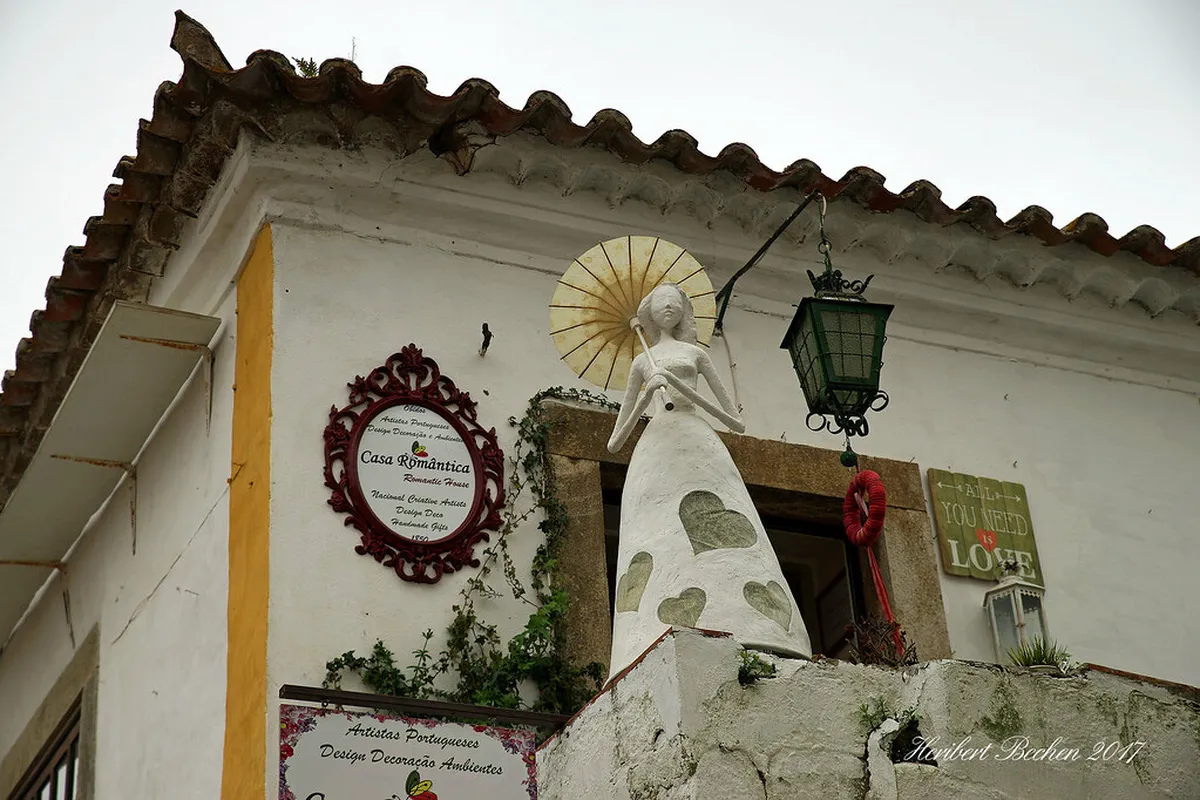
The side streets are where Óbidos becomes more than a checklist. Step away from Rua Direita and the crowd drops quickly, even around 14:00. Look for blue base trim, yellow door frames, climbing vines, laundry lines, and small ceramic plaques that make the village feel residential.

Respect matters most in these alleys because many of the best doors are private homes. Keep voices low, do not block entrances, and avoid staging long tripod sessions in front of windows. Neutral clothing photographs well here because the colored trim and flowers already carry the palette.

  • Best time is late morning to early afternoon, when narrow lanes finally receive light.
  • Crowd level is low once you leave the main route.
  • Difficulty is easy, but exposure can change quickly between sun and shade.

Livraria de Santiago: The Church Turned Bookstore

Livraria de Santiago is one of the most useful indoor photo stops because it connects Óbidos' literary identity with the architecture of a former church. Shelves rise inside a historic space, giving you vertical lines, warm book colors, and a quieter mood than the outdoor viewpoints.

Check current opening hours before building your route around it, as small-town schedules can shift by season and event. When inside, photograph wide first, then move to details such as books against stone, arches above shelves, and light falling across the nave. Keep the camera discreet if staff or readers are nearby.

  • Best time is weekday morning or early afternoon when foot traffic is lower.
  • Crowd level is low to medium depending on tour groups.
  • Difficulty is moderate because interiors may be dim.

Ginjinha Stalls: Capturing the Spirit of Óbidos

Ginjinha de Óbidos is the town's best lifestyle shot. The cherry liqueur is often served in a small dark chocolate cup, usually for about €1 to €2. A close frame of the pour, the ruby liquid, and the vendor's hands says more about the town than another empty alley.

The trade-off is atmosphere versus clarity. Rua Direita stalls have the recognizable bustle, but crowds can leave you with a messy background. A quieter side-alley vendor often gives you a more authentic frame, especially if there is a tiled wall, wooden counter, or handwritten sign behind the cup.

Ask before photographing a vendor at close range, then buy the tasting if you spend time composing the shot. For social content, shoot one vertical close-up and one wider frame with the cup held against the white-and-blue streetscape.

  • Best time is late morning before the densest tasting crowds arrive.
  • Crowd level is high on Rua Direita and lower on side lanes.
  • Difficulty is easy, but background control makes the difference.

Essential Logistics: Timing, Drones, and Pro Tips

Most photographers should park below the walls and walk in through Porta da Vila. The old town is not designed for regular visitor traffic, and the cobbles are slippery enough that sturdy shoes matter more than a second lens. Allow two to three hours for highlights, or a full day if you want a second pass in better light.

Drone pilots need to be conservative in 2026. Óbidos is a dense heritage town with narrow streets, crowds, and sensitive castle surroundings, so do not launch inside the walls or fly directly over people. Check current ANAC guidance and the Voa na Boa app before flying, then use open ground outside the walls near the aqueduct only if the airspace is clear and conditions are safe.

A 24-70mm lens covers most street and detail shots. Add a wide-angle lens for the ramparts, and carry a circular polarizer if you shoot midday white walls. If you want softer light and fewer people, plan around the off-season months rather than a peak summer weekend.

How Long Do You Need to Photograph Óbidos?

A two-hour visit works if you only need Porta da Vila, Rua Direita, one alley, and a quick rampart view. It does not leave much room for waiting out crowds or returning to a location when the light improves. For most visitors, three to four hours is the practical minimum.

Overnight is the best option for serious photography. After the day-trippers leave, the village feels calmer, and blue hour adds warm lamps against dark stone. You can also start again at sunrise before buses arrive, especially if you choose one of the budget-friendly guesthouses inside or close to the walls.

PlanBest forTrade-off
Day tripMain gate, Rua Direita, castle walls, quick ginjinha shotEfficient, but crowds and harsh midday light limit clean compositions
OvernightBlue hour, sunrise, empty alleys, slower portrait sessionsCosts more, but gives the best chance of distinctive images

Should You Hire a Professional Photographer in Óbidos?

Hiring a professional makes sense for elopements, engagement shoots, family portraits, and high-end social content where you need to be in the frame. Óbidos is small, but the light changes quickly, and local photographers know which alleys stay quiet when Rua Direita is full.

Expect a private session to last around two to three hours. Prices vary by package and editing style, but a professional shoot in Portugal commonly starts in the low hundreds of euros and rises with deliverables, travel, and peak-season demand. Book early for spring, summer, and wedding dates.

For solo travelers, the main benefit is not only posing help. A photographer can carry the route, watch the background, and time the castle, tiles, and ginjinha shots so you are not juggling a tripod in narrow lanes.

More Portugal Photography Guides

Óbidos pairs naturally with Lisbon, Sintra, Nazaré, and a longer Central Portugal route. If you are planning from Lisbon, compare your timing with the best day trips from Lisbon so you do not squeeze too many photo stops into one day.

For a wider route, use the Lisbon itinerary to connect Óbidos with capital-city photo time. If castle-and-palace photography is your priority, add the Sintra day trip guide to compare timing, crowds, and lens choices.

Frequently Asked Questions

When is the best time of day to take photos in Óbidos?

The best time is between 8:00 AM and 10:00 AM for empty streets and soft morning light. Alternatively, the hour before sunset provides a beautiful glow on the castle walls and terracotta roofs. Overnight stays offer the best access to the quiet blue hour.

Can I use a drone to photograph the Óbidos castle?

Drone use is heavily restricted within the village walls due to heritage status and safety. You should launch from the open areas near the aqueduct outside the main gate. Always use the Voa na Boa app to verify current flight zones and local regulations.

Are there any photography fees for the Óbidos castle ramparts?

Walking and photographing on the castle ramparts is completely free for visitors. However, the path is narrow and lacks safety rails, so you must be very careful with your equipment. Professional commercial shoots may require a permit from the municipal council.

For related Óbidos guides, see our 10 Best Obidos Sunset Spots.

Óbidos rewards photographers who slow down. The famous shots are worth taking, but the stronger set usually comes from mixing the tiled gate, rampart lines, quiet color-coded alleys, and small lifestyle details like ginjinha in a chocolate cup.

Check the weather forecast before your trip, then build your route around light instead of landmarks alone. Early morning, late afternoon, and an overnight stay give this small town enough space to feel personal again.

Prefer AI to do the work? Try our free online itinerary maker to plan this trip in minutes.

Share this article