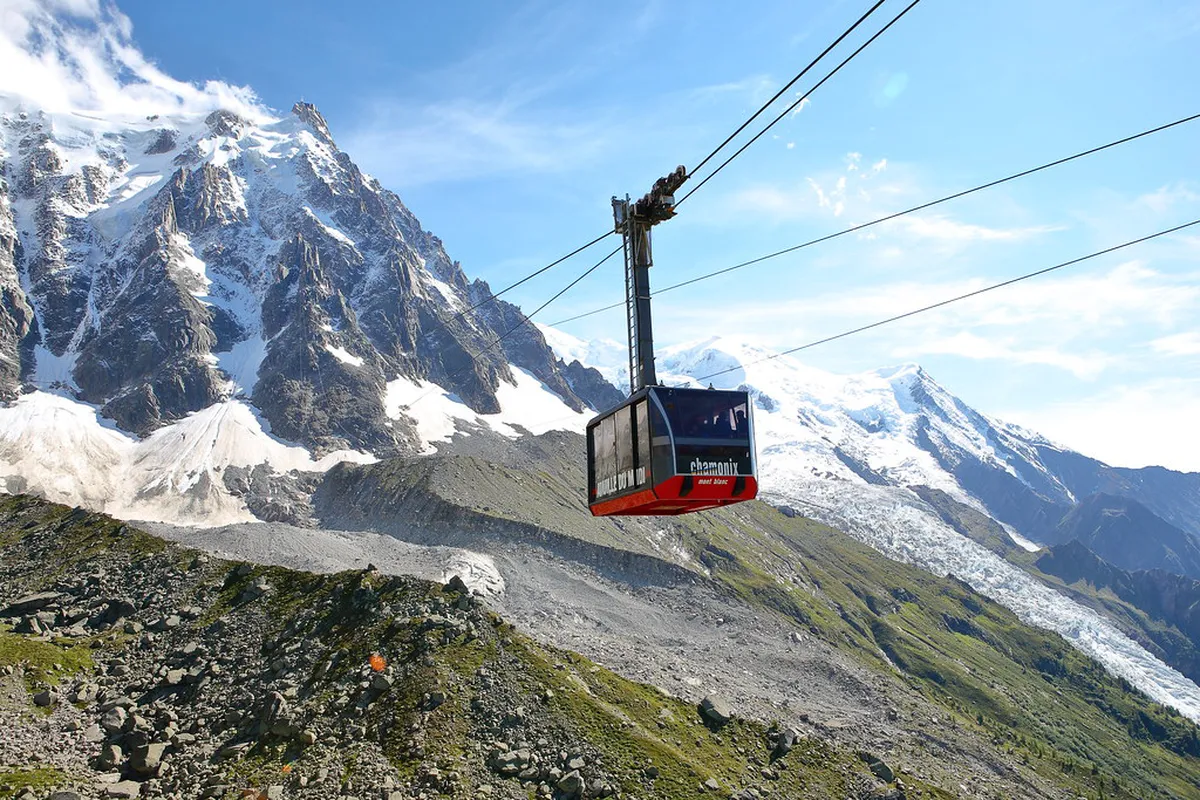
Chamonix sits beneath one of the most dramatic mountain skylines in Europe, and its cable cars give every traveler a front-row seat. Choosing the right one depends on what you actually want—sweeping panoramas, glacier access, serious hiking, or a relaxed afternoon above the treeline. Each lift has a distinct character, price point, and crowd level that can make or break your day. This guide breaks down every major Chamonix cable car so you can pick the one that fits your trip.
Aiguille du Midi: Highest and Most Iconic
Turn this guide into a personal route with our free Chamonix itinerary planner.
The Aiguille du Midi cable car is the crown jewel of Chamonix, climbing to a breathtaking 3,842 meters above sea level. The ascent runs in two stages, departing right from the center of Chamonix town, making it easy to reach without a car. At the summit, the views stretch across Mont Blanc, the Vallée Blanche, and into Italy and Switzerland on clear days. Nothing else in the valley matches this altitude or visual scale.
That prestige comes with a real trade-off: this is the busiest and most expensive cable car in the region. Tickets regularly sell out days in advance during summer, so booking Aiguille du Midi tickets early is essential. Altitude sickness is a genuine concern at nearly 3,900m, especially for anyone arriving directly from lower elevations. If heights or thin air bother you, factor that in before committing.
Morning slots tend to offer the clearest skies and the best light for photography. Crowds build sharply by mid-morning, so an early departure improves both the experience and the photo opportunities. A warm jacket is non-negotiable at the top, even on the hottest summer days.
- Aiguille du Midi at a glance
- Summit: 3,842m above sea level
- Stages: Two (Chamonix to Plan de l'Aiguille, then summit)
- Best for: Panoramic views, Mont Blanc sightseeing, photographers
- Cost: Around €60–€70 return (verify current prices before booking)
- Crowd level: Very high in summer—book days ahead
Brévent: Best Face-On Views of Mont Blanc
The Brévent cable car delivers what many consider the most photogenic angle of Mont Blanc—a direct, west-facing panorama at 2,525 meters. The ride runs in two stages, stopping first at Planpraz before continuing to the Brévent summit. Unlike Aiguille du Midi, you are looking across the valley at Mont Blanc rather than standing on the same massif. That separation creates a spectacular sense of scale that surprises many first-time visitors.
Brévent also connects to La Flégère via a high-altitude traverse trail, making it a natural anchor for a longer hiking day. The Planpraz midstation is a comfortable stopping point for families or anyone who prefers a less exposed summit. Crowd levels are noticeably lower here than at Aiguille du Midi, which makes the experience feel more relaxed. For a broader look at the valley's scenic highlights, the best viewpoints in Chamonix guide offers useful context.
The summit restaurant at Brévent makes it a pleasant spot for lunch with a view. Afternoon light from the west catches Mont Blanc beautifully, rewarding those who linger into the early evening.
- Brévent at a glance
- Summit: 2,525m above sea level
- Stages: Two (Chamonix to Planpraz, then Brévent)
- Best for: Mont Blanc panoramas, hikers, photography
- Cost: Around €30–€40 return (check official pricing)
- Crowd level: Moderate—less busy than Aiguille du Midi
La Flégère: Quieter Access for Hikers
La Flégère gondola departs from Les Praz, a short bus ride from Chamonix center, and climbs to 1,877 meters at the Index station. From there, well-marked trails fan out toward Lac Blanc, one of the most rewarding half-day hikes in the entire valley. The terrain suits moderate hikers who want real altitude without the exposure or cost of Aiguille du Midi. Families with older children often find this the most accessible starting point for a genuine alpine hike.
The gondola connects to Brévent via the high traverse, giving experienced hikers a compelling point-to-point option. Crowd levels are among the lowest of any Chamonix lift, which keeps the experience calm and genuinely enjoyable. The Index midstation adds a further 300 meters of elevation via chairlift, useful for reaching higher trail networks. If you are comparing one full day in the valley, the 1-day Chamonix itinerary explains how to combine these lifts efficiently.
Tickets cost less than the bigger cable cars, making La Flégère a strong value choice for hikers on a tighter budget. Afternoon thunderstorms are common in summer, so plan to start the hike early and descend before midday clouds build.
- La Flégère at a glance
- Summit: 1,877m (Index station higher at ~2,385m)
- Stages: One gondola from Les Praz
- Best for: Hiking, Lac Blanc access, quieter experience
- Cost: Around €20–€30 return (verify before visiting)
- Crowd level: Low—ideal for those avoiding peak crowds
Montenvers Railway: Gateway to Mer de Glace
Montenvers is technically a rack railway, not a cable car, but it belongs in any honest Chamonix lift comparison. The historic train climbs to 1,913 meters and drops you at the edge of the Mer de Glace, France's largest glacier. A short cable car then descends directly to the glacier surface, where an ice cave carved into the ice awaits. For a full breakdown of what to expect, the Mer de Glace glacier visit guide covers access, timing, and current ice conditions.
This is the most family-friendly option in the valley, combining a scenic train ride with a glacier walk. The ice cave is genuinely impressive, but note that the glacier has retreated significantly over recent decades. Signage along the path marks historical ice levels, which provides a sobering and educational perspective. Combined tickets covering the train, cable car, and ice cave offer the best value for most visitors.
The journey takes about 20 minutes each way, and the station has a restaurant with good valley views. Booking in advance is wise during the July and August peak, when queues can stretch well past an hour.
- Montenvers at a glance
- Summit: 1,913m at Montenvers station
- Transport: Rack railway up, cable car to glacier
- Best for: Families, glacier access, ice cave visit
- Cost: Around €40–€50 return with glacier access
- Crowd level: High in summer—book combined tickets ahead
Le Tour–Balme: A Peaceful High-Altitude Escape
Le Tour sits at the far northeastern end of the Chamonix valley, about 15 kilometers from the town center. The gondola and chairlift system reaches around 2,200 meters on the Balme plateau, touching the Swiss border. Most visitors to Chamonix never make it this far, which keeps the atmosphere genuinely tranquil. Wide, open meadows and straightforward paths make this an excellent choice for families with young children.
The views here differ from the rest of the valley—you look back down toward Chamonix rather than at Mont Blanc directly. The terrain suits easy-to-moderate walking rather than technical hiking, so proper boots are helpful but not mandatory. Combining Le Tour with a morning in Chamonix town makes for a well-rounded, lower-intensity day.
- Le Tour–Balme at a glance
- Summit: ~2,200m at Balme plateau
- Stages: Gondola plus chairlift
- Best for: Families, quiet days, easy walks, cross-border scenery
- Cost: Around €25–€35 return (check current rates)
- Crowd level: Very low—the valley's quietest lift option
How to Choose the Right Chamonix Cable Car
The best cable car for you depends on three things: what you want to see, how much you want to walk, and your comfort with altitude. Aiguille du Midi is non-negotiable for anyone chasing the highest possible views, but it demands advance planning and costs the most. Brévent wins if you want that classic face-on Mont Blanc shot without the full commitment of a near-4,000m ascent. La Flégère suits hikers who want genuine trails and fewer tourists at a lower price point.
Families with children tend to get the most out of Montenvers or Le Tour, where terrain is manageable and the experience feels less intense. If you only have one day in Chamonix, prioritize a single cable car done well over rushing between several. Multi-lift passes can save money across two or more days and are worth calculating if your stay extends beyond 24 hours.
One mistake many visitors make is assuming all cable cars offer the same experience at different prices—they do not. Each one points in a different direction, reaches a different altitude, and suits a different traveler profile. Matching the lift to your actual goal, rather than picking the most famous option by default, makes for a far better day. A broader look at the valley's top experiences can help you plan across multiple activities and lift options.
Frequently Asked Questions
Which Chamonix cable car is best for first-time visitors?
Aiguille du Midi is the top pick for most first-timers thanks to its dramatic 3,842m summit and sweeping views of Mont Blanc. However, booking in advance is essential since tickets sell out quickly in summer. If budget is a concern, Brévent offers an excellent alternative with strong views at a lower cost.
How far in advance should I book Chamonix cable car tickets?
For Aiguille du Midi, book at least three to five days ahead during July and August—sometimes more. Montenvers and Brévent can often be booked a day or two before. La Flégère and Le Tour rarely need advance booking outside peak weekends. Check the Aiguille du Midi tickets guide for the latest booking tips.
Can I visit more than one Chamonix cable car in a single day?
Yes, but it requires good timing and realistic expectations. Combining Brévent and La Flégère via the high traverse is a popular and achievable option for fit hikers. Pairing Aiguille du Midi with Montenvers in one day is possible but leaves little room for delays or exploration at either stop.
Is altitude sickness a risk on Chamonix cable cars?
Altitude sickness is a real risk on Aiguille du Midi, which sits close to 3,900 meters. Symptoms include headache, dizziness, and nausea. The other lifts top out below 2,600 meters, where altitude effects are far less common for most healthy travelers. Descend promptly if you feel unwell at any summit.
Which Chamonix cable car is best for families with young children?
Montenvers is a strong family choice because the rack railway ride is exciting and the glacier visit is memorable for all ages. Le Tour is the calmest option, with easy walking terrain and very few crowds. Both are less intimidating than the exposed summit of Aiguille du Midi for younger children.
Every cable car in Chamonix offers something distinct—altitude, hiking access, glacier scenery, or pure tranquility. Matching the right lift to your travel style makes the difference between a rushed tick-box and a genuinely memorable day. Whether you choose the iconic Aiguille du Midi or the quieter slopes of Le Tour, the Chamonix valley rewards careful planning.
Start with one lift that fits your priorities, and build from there if time allows. Check current ticket prices and availability before your trip, as schedules and costs change seasonally. With a little preparation, any of these lifts can become the highlight of your entire French Alps visit.