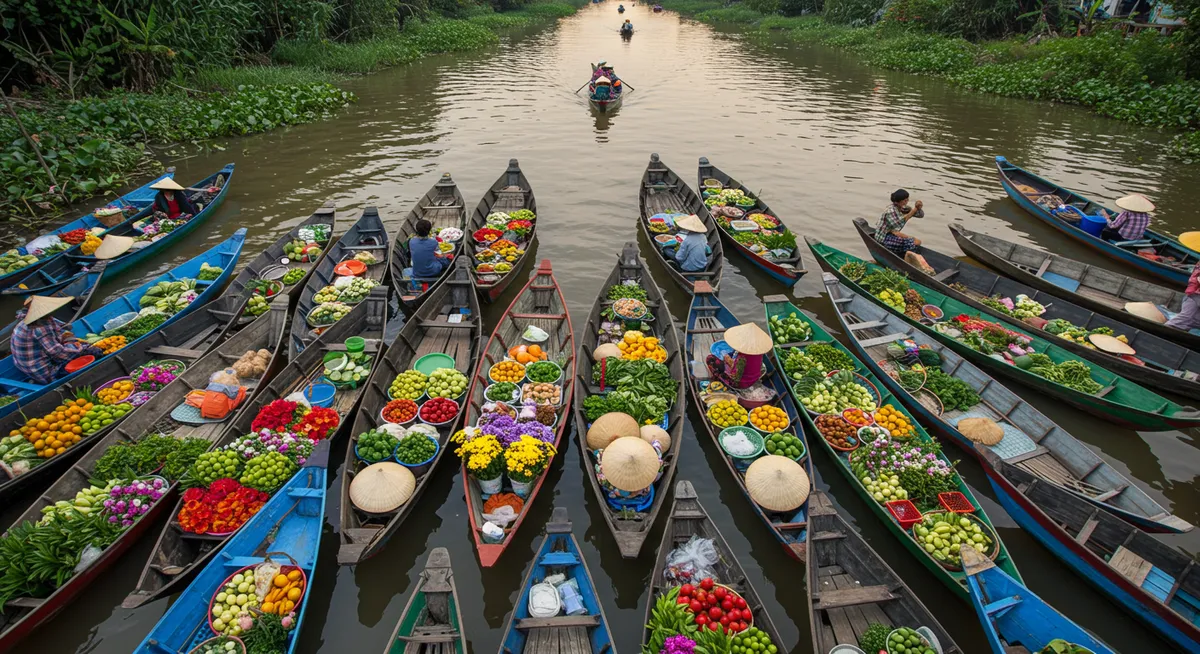
TL;DR: Cai Rang Floating Market is the Mekong Delta's largest and most vibrant water market, located just 6 km from Can Tho city center. Arrive between 5:00 and 6:30 AM for peak activity, hire a boat from Ninh Kieu Wharf (200,000-500,000 VND), and budget 2-4 hours. The dry season from December to April offers the best weather, but the market operates year-round. Do not miss the on-water hu tieu breakfast and fresh tropical fruit sold straight from boats.
Cai Rang Floating Market is not a tourist attraction that was manufactured for visitors. It is a living, functioning wholesale market where hundreds of Mekong Delta traders have gathered before dawn for over a century, selling fruit, vegetables, and goods directly from their boats on the Can Tho River. Recognized by Vietnam's Ministry of Culture as a national intangible cultural heritage site, this floating market remains one of the most authentic cultural experiences available anywhere in Southeast Asia in 2026.
This guide covers everything you need to plan a visit to Cai Rang Floating Market in Can Tho, from the practical logistics of getting there and what it costs, to the food you should try and the cultural context that makes it worth the early wake-up call. Whether you are building a 3-day Can Tho itinerary or passing through the Mekong Delta on a longer journey, this is the one experience you should not skip.
Why Cai Rang Floating Market Is Worth Visiting in 2026
Turn this guide into a personal route with our free Can Tho itinerary planner.
Many floating markets across Southeast Asia have become heavily commercialized, catering primarily to tourists rather than local traders. Cai Rang is different. It remains a genuine wholesale trading hub where farmers from across the Mekong Delta converge each morning to sell their harvest. The scale is remarkable: on a busy morning, you will see 300 to 400 boats packed together, each one displaying its goods on a tall bamboo pole called a "cay beo" so buyers can identify what is for sale from a distance.
The Vietnamese government invested in upgrading infrastructure around the market in 2024 and 2025, improving boat access and adding safety measures without undermining the market's authentic character. In 2026, Cai Rang remains fully operational as a commercial market first and a tourist destination second. This distinction matters because it means you are witnessing real commerce, not a performance. The energy of vendors shouting prices, boats jostling for position, and the smell of fresh fruit mixing with river water creates an atmosphere that no staged attraction can replicate.
The market also holds deep cultural significance. Floating markets developed because the Mekong Delta's extensive canal and river network made water transport far more practical than road travel. Even as roads have improved, the floating market tradition persists because it remains an efficient way to move large quantities of produce from rural farms to urban markets. Visiting Cai Rang connects you to a way of life that has defined this region for generations.
Best Time to Visit Cai Rang Floating Market
Timing your visit correctly makes the difference between an unforgettable experience and an underwhelming one. The market follows a strict daily rhythm tied to the wholesale trading schedule.
Best Hours of the Day
The market is most active between 5:00 AM and 7:00 AM. Arriving at 5:00 AM places you in the thick of peak trading activity, with the added bonus of watching the sunrise over the river. By 7:30 AM, many wholesale transactions are complete and boats begin dispersing. After 8:30 AM, only a handful of boats remain, and the experience loses much of its energy. Aim to depart your hotel by 4:30 AM at the latest.
Best Months to Visit
The dry season from December through April offers the most comfortable conditions, with lower humidity and minimal rain. January and February are particularly good as the market swells with extra activity around Tet (Vietnamese Lunar New Year), when demand for fruit and flowers spikes dramatically. For detailed seasonal planning, check our best time to visit Can Tho guide.
The wet season (May to November) does not shut the market down, but expect occasional heavy rain showers and muddier conditions. The upside is fewer tourists during these months.
How to Get to Cai Rang Floating Market From Can Tho
Cai Rang Floating Market sits approximately 6 km southwest of Can Tho city center on the Can Tho River, a tributary of the Hau River (one of the main branches of the Mekong). There are several ways to reach it.
By Boat From Ninh Kieu Wharf (Recommended)
The most popular and scenic option is hiring a boat from Ninh Kieu Wharf in central Can Tho. The boat ride takes about 30 minutes and passes through smaller canals before reaching the main market area. In 2026, expect to pay:
- Private sampan (2-4 people): 200,000-350,000 VND (approximately $8-14 USD)
- Private motorboat (up to 8 people): 400,000-600,000 VND ($16-24 USD)
- Group tour boat: 80,000-150,000 VND per person ($3-6 USD)
Most boat trips last 2-4 hours and include stops at fruit orchards, a rice noodle factory, and smaller canals along the way. If you are arriving from Ho Chi Minh City, see our Ho Chi Minh to Can Tho transportation guide to plan your journey.
By Road to the Market Bridge
You can take a taxi or motorbike to the Cai Rang Bridge, where a viewing platform allows you to observe the market from above. While this provides a good aerial perspective, it lacks the immersive experience of being on the water among the boats. This option works if you are short on time or have mobility limitations.
Hotel-Arranged Tours
Most hotels and guesthouses in Can Tho arrange floating market tours with pickup as early as 4:30 AM. These typically cost 250,000-500,000 VND per person and include a guide, boat, and sometimes breakfast. Check our Can Tho accommodation guide for hotels that offer convenient tour arrangements.
What to See and Do at the Market
Once you arrive at Cai Rang Floating Market, the experience unfolds organically. Here is what to look for and how to make the most of your time on the water.
The Cay Beo (Sample Poles)
Each large trading boat displays a tall bamboo pole with samples of what they sell hanging from it. A pole loaded with pineapples means that boat is selling pineapples wholesale. This ingenious system allows buyers to scan the market quickly from a distance. Photographing these colorful poles against the morning sky is one of the iconic shots of the Mekong Delta.
Wholesale Trading in Action
Watch the negotiation process between wholesale buyers and sellers. Smaller boats pull alongside larger ones to purchase goods in bulk, which they then distribute to land-based markets throughout the region. The speed and coordination of these transactions, conducted entirely on moving water, is impressive.
Floating Food Vendors
Smaller boats weave through the market selling prepared food and drinks to the traders. These floating kitchens serve some of the best breakfast food you will find anywhere in Vietnam. The hu tieu (Mekong-style pork noodle soup) cooked on these boats is a must-try. Vietnamese iced coffee (ca phe sua da) served from a bobbing boat is an experience in itself.
Fruit Orchards and Canal Side Trips
Most boat tours include a detour through narrow canals lined with tropical fruit orchards. You can stop to taste seasonal fruits like longan, rambutan, mangosteen, and durian, often picked fresh from the trees. A visit to a traditional rice noodle or rice paper factory is another common stop.
What to Eat at Cai Rang Floating Market
Food is central to the floating market experience. The traders and vendors eat their breakfast right on the water, and you should do the same.
- Hu Tieu Nam Vang: The signature Mekong Delta breakfast noodle soup. Rich pork broth with rice noodles, shrimp, pork slices, and fresh herbs. Expect to pay 20,000-30,000 VND per bowl.
- Banh Mi: Fresh baguettes with various fillings, sold from small boats. A quick and filling option at 15,000-25,000 VND.
- Fresh Tropical Fruit: Buy seasonal fruits directly from the trading boats. Mangoes, pineapples, dragon fruit, and watermelon are available year-round. Prices are wholesale-level cheap.
- Ca Phe Sua Da: Vietnamese iced coffee with condensed milk, served from floating coffee vendors. 10,000-15,000 VND.
- Banh Cong: Deep-fried shrimp and mung bean cakes, a Can Tho specialty rarely found outside the region.
For a deeper exploration of Can Tho's food scene beyond the floating market, read our Can Tho local food guide.
Costs and Budget Planning for 2026
Visiting Cai Rang Floating Market is remarkably affordable. Here is a realistic budget breakdown for 2026:
- Boat hire (private, 2-4 hours): 200,000-500,000 VND ($8-20 USD)
- Breakfast on the water: 30,000-60,000 VND ($1.20-2.40 USD)
- Fresh fruit purchases: 20,000-50,000 VND ($0.80-2.00 USD)
- Tips for boat driver (optional but appreciated): 50,000-100,000 VND ($2-4 USD)
- Total per person: Approximately 150,000-350,000 VND ($6-14 USD)
This makes the floating market one of the best value experiences in all of Vietnam. Even including accommodation and transport to Can Tho, the total cost of the trip remains well within budget traveler range.
Insider Tips for First-Time Visitors
After multiple visits to Cai Rang Floating Market across different seasons, here are the practical tips that will improve your experience the most.
- Book your boat the evening before. Ask your hotel to arrange a boat for 4:30-5:00 AM departure. Morning-of arrangements waste precious early trading time.
- Bring a waterproof phone case. Spray from other boats and the occasional splash are inevitable. A waterproof case lets you photograph freely without worry.
- Wear a hat and apply sunscreen before departure. Even at 5 AM, the sun rises fast and intensifies quickly on the open water. There is no shade on most boats.
- Carry small denominations of VND. Vendors on small boats cannot break large bills. Have plenty of 10,000 and 20,000 VND notes ready.
- Skip the souvenir boats. Some boats specifically target tourists with overpriced hats and trinkets. The real experience is in the wholesale trading area and the floating food vendors.
- Request a stop at a smaller canal. Ask your boat driver to detour through the narrow residential canals. These quieter waterways offer a peaceful contrast to the busy market and reveal daily life along the riverbanks.
- Combine with other Can Tho attractions. After the market winds down by 8 AM, you still have a full day ahead. For more ideas on what to do, explore our Can Tho hidden gems guide or plan a longer stay with our 5-day Can Tho itinerary.
For more general advice on navigating Can Tho as a visitor, see our Can Tho travel tips for first-timers.
Frequently Asked Questions
Is Cai Rang Floating Market open every day?
Yes, Cai Rang Floating Market operates every day of the year, including weekends and public holidays. Activity levels are highest on weekdays when wholesale trading volume peaks. The market is especially busy in the days leading up to Tet (Vietnamese Lunar New Year), when demand for fruit and flowers surges.
How early do I need to wake up to visit the market?
Plan to leave your hotel by 4:30 AM to arrive at the market around 5:00-5:15 AM. The boat ride from Ninh Kieu Wharf takes approximately 30 minutes. Arriving before 5:30 AM ensures you catch the peak trading window. If you are not a morning person, know that arriving by 6:30 AM still gives you a worthwhile experience, though the intensity drops noticeably after 7:00 AM.
Is the floating market safe for children and elderly visitors?
The market is generally safe, but boarding and moving between boats requires reasonable mobility. Life jackets are provided on all tourist boats (mandatory as of 2025 regulations). Children should be supervised closely. For elderly visitors or anyone with mobility concerns, viewing from the Cai Rang Bridge offers a comfortable alternative. Most boat operators are experienced and accustomed to helping passengers with varying mobility levels.
Can I visit Cai Rang Floating Market without a tour?
Yes, you can independently hire a boat at Ninh Kieu Wharf without booking through a tour company. Simply arrive at the wharf early in the morning and negotiate directly with boat operators. This approach gives you more flexibility on timing and duration. However, a guided tour adds cultural context and ensures you do not miss key areas of the market. First-time visitors generally benefit from having a guide.
What is the difference between Cai Rang and Phong Dien floating markets?
Cai Rang is larger, more commercial, and more accessible, operating as a wholesale market with hundreds of boats. Phong Dien is smaller, quieter, and feels more intimate, functioning primarily as a retail market for local residents. Phong Dien is located about 20 km from Can Tho and is best visited in combination with Cai Rang if you have time. Many boat tours offer a combined trip covering both markets in one morning.
Do I need to book a boat tour in advance?
Advance booking is not strictly necessary but is strongly recommended during peak season (December through February) and around Tet. During the low season, boats are readily available at the wharf each morning. Booking through your hotel the evening before is the easiest approach and often secures better rates than negotiating on the spot at dawn.
What should I bring to the floating market?
Essential items include a hat, sunscreen, a waterproof phone case or dry bag, small denomination VND notes, a light rain jacket (wet season), and a camera. Leave large bags at your hotel as space on boats is limited. Avoid wearing flip-flops as boat surfaces can be slippery; closed-toe shoes with good grip are safer.
Cai Rang Floating Market remains one of Vietnam's most rewarding cultural experiences in 2026. The combination of authentic wholesale trading, exceptional food, and the unique setting of the Mekong Delta's waterways creates a morning you will remember long after you leave Can Tho. If you are also interested in exploring other markets and shopping opportunities in the city, check out our Can Tho local markets and shopping guide for more options beyond the floating market.