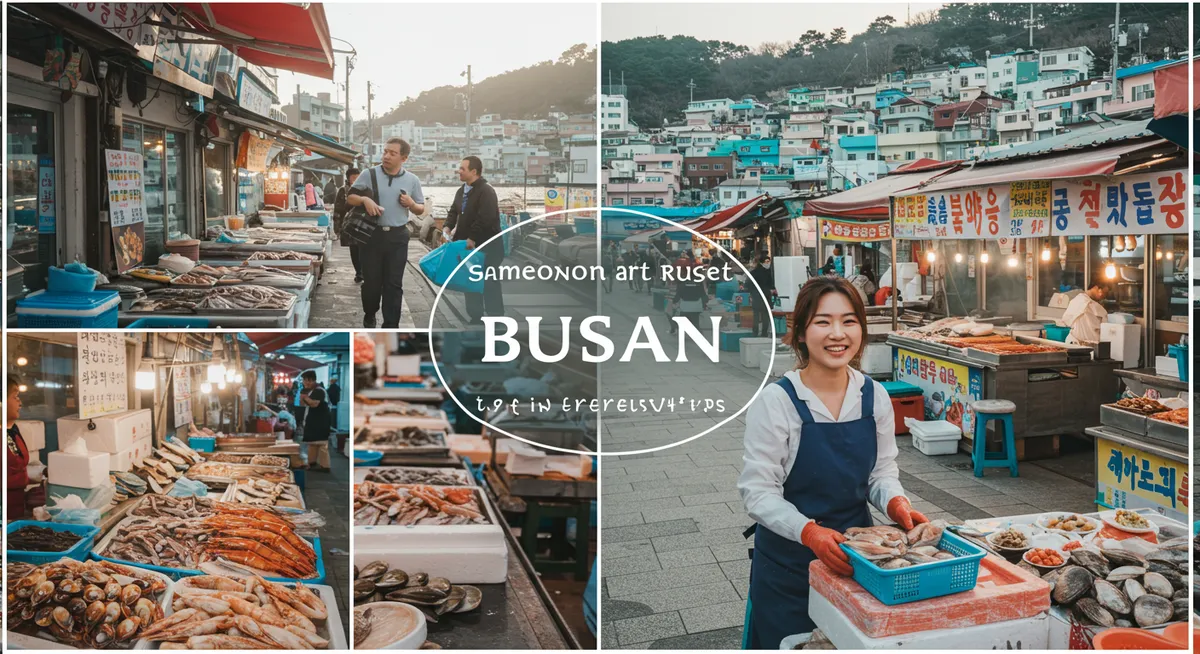
TL;DR: Budget travelers can explore Busan for roughly ₩55,000–₩85,000 KRW ($40–$60 USD) per day in 2026. Hostels start at ₩15,000/night, street food meals average ₩3,000–₩7,000, metro rides cost ₩1,400 with a T-Money card, and many of Busan's best attractions — beaches, temples, culture villages — are completely free. This guide breaks down every category so you can plan a rewarding trip without overspending.
Busan consistently ranks among Asia's most budget-friendly coastal cities, and 2026 is no exception. Whether you're a backpacker stretching every won or a mid-range traveler seeking smart savings, this city delivers world-class beaches, incredible street food, and rich cultural experiences at a fraction of what you'd spend in Tokyo or Hong Kong. These Busan travel budget tips draw from up-to-date 2026 pricing, local insights, and practical strategies that actually work on the ground. Start planning your trip with our 3-day Busan itinerary to see how these tips fit into a real schedule.
Realistic Daily Budget Breakdown for Busan in 2026
Turn this guide into a personal route with our free Busan itinerary planner.
Before you pack, it helps to know exactly what Busan costs in 2026. Here's a realistic per-person daily breakdown across three travel styles:
| Category | Budget (₩/day) | Mid-Range (₩/day) | Comfort (₩/day) |
|---|---|---|---|
| Accommodation | ₩15,000–₩25,000 | ₩60,000–₩100,000 | ₩150,000–₩300,000 |
| Food | ₩15,000–₩25,000 | ₩30,000–₩50,000 | ₩60,000–₩100,000 |
| Transport | ₩5,000–₩8,000 | ₩10,000–₩15,000 | ₩20,000–₩40,000 |
| Activities | ₩0–₩10,000 | ₩15,000–₩30,000 | ₩30,000–₩80,000 |
| Daily Total | ₩35,000–₩68,000 | ₩115,000–₩195,000 | ₩260,000–₩520,000 |
| USD Equivalent | $25–$48 | $82–$139 | $185–$371 |
These figures reflect 2026 pricing (at approximately ₩1,400 = $1 USD). Busan remains noticeably cheaper than Seoul across all categories — for a side-by-side comparison, see our Seoul budget travel tips. The biggest variable is accommodation; choosing hostels or guesthouses over hotels can cut your daily spending nearly in half.
Budget Accommodation in Busan: Where to Stay for Less
Accommodation is your largest controllable expense, and Busan offers excellent options across every price point. The key is choosing the right neighborhood and booking type for your budget. For a full neighborhood breakdown, check our guide to where to stay in Busan.
Best Budget Neighborhoods
- Seomyeon: Busan's central hub with the best metro connectivity. Hostels start at ₩15,000–₩20,000/night, and you'll find plenty of affordable restaurants and convenience stores.
- Nampo-dong: Close to Jagalchi Market and BIFF Square, with guesthouses from ₩18,000/night. Ideal for food-focused travelers.
- Haeundae: Slightly pricier but worth it for beach access. Off-season rates (November–March) drop 30–40% compared to summer peaks.
Money-Saving Accommodation Strategies
- Jimjilbangs (찜질방): Korean spa-bathhouses that double as overnight accommodation for ₩10,000–₩15,000. You get access to saunas, sleeping rooms, and showers — a uniquely Korean budget hack.
- Book 2–4 weeks ahead: Especially during cherry blossom season (late March–April) and summer beach season (July–August), early booking saves 20–30%.
- Shoulder season stays: Visit in May, June, September, or October for the best balance of weather and prices.
- Weekly discounts: Many guesthouses offer 10–15% discounts for stays of 5+ nights — always ask directly.
Eating in Busan on a Budget: Street Food, Markets, and Local Gems
Busan's food scene is one of the most affordable and delicious in South Korea. You can eat incredibly well for under ₩20,000 per day if you know where to look. For a deep dive into local specialties, see our Busan food guide.
Cheapest Ways to Eat Well
- Street food markets: Gukje Market, BIFF Square, and Haeundae Market serve tteokbokki (₩3,000), hotteok (₩1,500), fish cakes (₩2,000), and kimbap (₩2,500). A full street food meal costs ₩5,000–₩8,000.
- Baekban (백반) restaurants: Set-meal restaurants serving rice, soup, and 4–6 side dishes for ₩7,000–₩9,000. Look for places packed with Korean office workers at lunch — they know the best value.
- Convenience store meals: CU, GS25, and 7-Eleven sell triangle kimbap (₩1,200), boxed meals (₩3,500–₩5,000), and instant ramyeon (₩1,500). Perfect for breakfast or a late-night snack.
- Jagalchi Fish Market: Buy fresh seafood on the ground floor and have it prepared upstairs for a small cooking fee (₩3,000–₩5,000). This is often cheaper than ordering at a restaurant and significantly fresher.
Food Budget Pro Tips
- Eat your main meal at lunch — many restaurants offer lunchtime set menus 20–30% cheaper than dinner prices.
- Carry cash in ₩1,000 and ₩5,000 notes; many market vendors and small eateries don't accept cards.
- Tap water is safe to drink in Busan — skip bottled water and carry a reusable bottle to save ₩1,000–₩2,000 daily.
- Download the Naver Map app for restaurant reviews; it's far more accurate than Google Maps for Korean dining spots.
Getting Around Busan Cheaply: Transport on a Budget
Busan's public transit system is extensive, clean, and remarkably affordable. Mastering it is one of the most impactful Busan travel budget tips you can follow. For the full breakdown, read our Busan public transport guide.
T-Money Card: Your Essential Travel Tool
Buy a T-Money card at any convenience store for ₩2,500 (card cost) and load it with credit. Every ride costs ₩1,400 instead of ₩1,500 for single tickets, and you get free transfers within 30 minutes between subway and bus. Over a 5-day trip with 4 rides per day, that saves roughly ₩6,000 — not huge, but the convenience of tap-and-go is worth it alone.
Visit Busan Pass
If you plan to visit multiple paid attractions, the Visit Busan Pass (24-hour: ₩35,000 / 48-hour: ₩55,000) bundles admission to 30+ sites including Busan Tower, SEA LIFE Aquarium, and various museums. It pays for itself if you visit 3–4 attractions in a day.
Budget Transport Strategies
- Walk between nearby attractions: Gamcheon Culture Village, Songdo Beach, and Jagalchi Market are all walkable from each other.
- Use buses for coastal routes: Bus 1001 runs along the entire coast from Haeundae to Songdo — better views than the subway and the same price.
- Getting to Busan affordably: Express buses from Seoul cost ₩23,000–₩35,000 (4–5 hours), roughly half the price of KTX trains. For full arrival options, see our Busan airport transportation guide.
- Avoid taxis for short trips: The base fare is ₩4,800, which covers more than most short subway rides cost. Taxis make sense only for groups of 3–4 splitting the fare or for late-night travel when transit stops running (around midnight).
Free and Cheap Things to Do in Busan
Busan is exceptionally generous with free attractions. Some of the city's most memorable experiences cost absolutely nothing. For a complete activity list, browse our top things to do in Busan.
Completely Free Attractions
- Haeundae Beach & Gwangalli Beach: Busan's iconic coastline — swim, sunbathe, or watch the sunset over Gwangan Bridge at no cost.
- Gamcheon Culture Village: A hillside neighborhood of pastel-colored houses, murals, and street art. Entry is free; pick up a stamp-trail map for ₩2,000 if you want the interactive experience. Learn more in our Gamcheon Culture Village tips guide.
- Beomeosa Temple: One of Korea's most significant Buddhist temples, nestled in the mountains with peaceful hiking trails. Free entry, donations appreciated.
- Taejongdae Park: Dramatic coastal cliffs with a free walking trail. The Danubi train (₩3,000) is optional — the hike itself is the highlight.
- Haedong Yonggungsa Temple: A stunning seaside temple perched on ocean cliffs. Free admission, best visited early morning to avoid crowds.
- Igidae Coastal Walk: A 5km cliffside trail with panoramic views of Haeundae and Gwangalli — one of Busan's best-kept budget secrets.
Low-Cost Experiences Under ₩10,000
- Busan Museum of Art: Permanent collection is free; special exhibitions typically ₩5,000.
- Spa Land (Shinsegae Centum City): Premium jimjilbang experience for ₩18,000–₩22,000 depending on the day — splurge-worthy but still affordable by international spa standards.
- Oryukdo Skywalk: A free glass-bottomed walkway over the sea. Short but thrilling.
Seasonal Timing: When Busan Is Cheapest
When you visit dramatically affects your budget. Here's how Busan's pricing shifts across the year — this is one of the most overlooked Busan travel budget tips:
- Cheapest months (December–February): Accommodation drops 30–40% from peak rates. Cold weather (0–8°C) but fewer crowds, and winter seafood is at its peak freshness.
- Best value (May, June, September, October): Pleasant weather, moderate prices, and thinner crowds than summer. This is the best time to visit Busan for most travelers.
- Peak pricing (July–August): Beach season drives accommodation up 50–100%. Book 6–8 weeks ahead or consider staying in Seomyeon instead of beachfront areas.
- Cherry blossom premium (late March–mid April): Prices spike 20–30% for about three weeks. Beautiful but budget-unfriendly.
Day Trips from Busan That Won't Break the Bank
If you have extra days, several affordable day trips extend your Busan experience without significant added cost. The KTX and intercity buses make neighboring cities easily accessible. For full recommendations, see our Busan day trips guide.
- Gyeongju: The "museum without walls" — bus fare is ₩5,000–₩7,000 each way, and many historical sites are free or under ₩3,000 entry.
- Tongyeong: Coastal town known for fresh seafood, reachable by bus for ₩10,000. The cable car (₩15,000) offers stunning views of the Hallyeohaesang National Park islands.
- Geoje Island: Connected by bus (₩8,000), with free beaches and the Windy Hill viewpoint.
Plan how many days in Busan you'll need to fit in both city highlights and day trips without rushing.
Essential Money-Saving Tools and Apps
A few digital tools can stretch your budget further in 2026:
- Naver Map: More reliable than Google Maps in Korea for transit directions, restaurant discovery, and walking routes.
- KakaoTaxi: Korea's ride-hailing app — no surge pricing, and you can see the fare estimate before booking.
- Coupang Eats / Baedal Minjok: Food delivery apps with frequent promotions and first-order discounts. Useful for group meals that split cheaper than dining out.
- Klook / Trazy: Activity booking platforms with bundled discounts on attractions, day tours, and transport passes.
- Wise or Revolut: Multi-currency cards with near-zero exchange fees — avoid airport currency exchanges, which charge 3–5% markups.
Frequently Asked Questions
What is a realistic daily budget for Busan in 2026?
Is Busan cheaper than Seoul for tourists?
What is the cheapest way to get from Seoul to Busan?
What are the best free things to do in Busan?
Is the Visit Busan Pass worth it for budget travelers?
How much should I budget for food in Busan per day?
With these Busan travel budget tips for 2026, you have everything you need to explore one of South Korea's most exciting cities without overspending. From ₩3,000 street food feasts to free clifftop temple visits, Busan proves that incredible travel experiences don't require a large budget. The combination of affordable transit, cheap and delicious food, and a coastline full of free attractions makes this city one of the best value destinations in Asia. Plan your trip with our complete Busan itinerary, or explore more of South Korea with a 5-day Busan itinerary that covers the highlights at a comfortable pace. If Jeju Island is also on your itinerary, our Jeju budget travel tips will help you save there too.