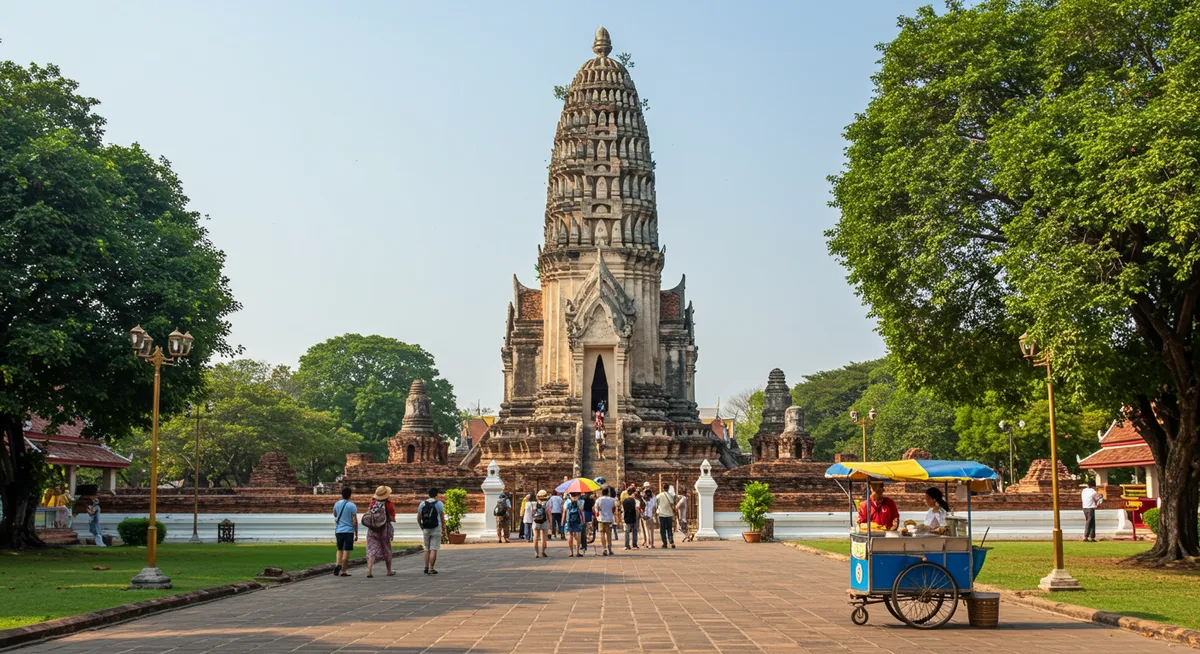
TL;DR: Phitsanulok is one of Thailand's most affordable destinations in 2026. Expect to spend 800-1,200 THB ($22-35 USD) per day covering guesthouses, street food, songthaew rides, and temple visits. The city delivers rich culture, riverside charm, and legendary noodle soup without the tourist-inflated prices of Bangkok or Chiang Mai.
Phitsanulok sits in Thailand's Lower Northern region where the Nan River curves through a city steeped in Sukhothai-era history. While most travelers rush past on the train to Chiang Mai, those who stop discover one of the country's best-kept secrets for budget travel. From family-run guesthouses under 400 THB a night to night markets where a full meal costs less than 60 THB, Phitsanulok rewards visitors who travel slowly and spend wisely. This 2026 guide breaks down every cost category so you can plan a trip that is both rich in experience and light on your wallet.
Where to Stay in Phitsanulok on a Budget
Turn this guide into a personal route with our free Phitsanulok itinerary planner.
Accommodation is typically the biggest travel expense, but Phitsanulok keeps prices remarkably low compared to other Thai cities. In 2026, budget travelers have several strong options depending on comfort level and location preference.
Guesthouses near the train station remain the most popular choice for backpackers arriving by rail. Expect to pay 250-450 THB per night for a clean private room with air conditioning and Wi-Fi. Family-run properties in this area often include a simple breakfast or free coffee, adding even more value. Walking distance to the station also means you save on transport costs when arriving or departing.
Hostels near Naresuan University cater to a younger crowd and typically offer dorm beds from 150-250 THB. The university area also has affordable restaurants, copy shops, and convenience stores, making it a practical base for extended stays.
Riverside guesthouses along the Nan River offer the most atmospheric setting. Prices run slightly higher at 400-600 THB, but the sunset views from your balcony and the proximity to night markets often justify the premium. Always check reviews on Agoda or Booking.com, but also walk around on arrival since many local guesthouses do not list online and offer better rates for walk-in guests.
For a broader look at accommodation options across all price ranges, see our guide to the best hotels in Phitsanulok.
Eating Well for Less: Street Food and Local Markets
Phitsanulok's food scene punches well above its weight class, and the best meals happen to be the cheapest. The city is famous across Thailand for its flying vegetable stalls and one particular noodle soup that draws food pilgrims from Bangkok.
Night markets along the Nan River are the epicenter of affordable eating. Open from roughly 5 PM to 10 PM, these markets serve pad thai, som tam, grilled meats on sticks, mango sticky rice, and fresh fruit shakes, all priced between 30-60 THB per dish. A full dinner with a drink rarely exceeds 100 THB.
Phitsanulok noodle soup (kuay tiew) deserves special mention. Local noodle shops, particularly those near Wat Yai, serve bowls for 35-50 THB that rival anything you will find elsewhere in Thailand. The broth is slow-simmered and the portions are generous. Eating two bowls still costs less than a single meal at a tourist restaurant.
Morning markets near the city center sell fresh fruit, Thai coffee, and khao tom (rice porridge) for 20-40 THB, making breakfast the cheapest meal of the day. Pair a 15 THB bag of fresh-cut mango with a 20 THB iced coffee and you have a satisfying start for under a dollar.
Convenience stores like 7-Eleven and Lotus's Go Fresh provide snacks, water, and quick meals at fixed prices. Stocking up on water bottles here rather than at tourist spots saves a surprising amount over a multi-day trip. For a deep dive into Phitsanulok's culinary highlights, read our guide on what to eat in Phitsanulok.
Getting Around Phitsanulok Cheaply
Transport costs can quietly drain a travel budget, but Phitsanulok's compact layout and affordable local options keep this category firmly under control.
Walking covers most of the city center. The main cluster of temples, the Nan River promenade, the night market, and several guesthouses all fall within a 2-kilometer radius. Comfortable shoes and a hat for sun protection are all you need.
Songthaews (shared red trucks) run fixed routes through the city for 10-15 THB per ride. They are the local equivalent of a city bus and the most budget-friendly motorized option. Flag one down, tell the driver your destination, and pay when you exit. For routes to attractions outside the center, agree on a fare before boarding.
Bicycle rental costs 50-100 THB per day from guesthouses and small shops near the river. Cycling is ideal for reaching slightly farther sites like the Sergeant Major Thawee Folk Museum or the Buddha Casting Foundry without paying for individual songthaew trips. Many riverside paths are flat and shaded, making cycling comfortable even in warm weather.
Motorbike rental runs 200-300 THB per day and opens up day trip possibilities to Phu Hin Rong Kla National Park or the Sukhothai Historical Park. Fuel is cheap and traffic in Phitsanulok is far less chaotic than in larger Thai cities. If you are planning excursions beyond the city, check our guide to day trips from Phitsanulok for route ideas. For getting to the city itself, our how to get to Phitsanulok guide covers trains, buses, and flights with current 2026 pricing.
Free and Low-Cost Attractions
One of the biggest advantages of budget travel in Phitsanulok is that many of the city's best experiences cost nothing or next to nothing.
Wat Phra Si Rattana Mahathat (Wat Yai) houses the Phra Phuttha Chinnarat, widely considered the most beautiful Buddha image in Thailand. Entry is free, though a small donation of 20-50 THB is customary and appreciated. The temple complex is stunning at any hour but particularly atmospheric in the early morning when monks chant and locals make offerings.
The Nan River promenade offers a free evening activity that rivals any paid attraction. Walk along the riverbank as the sun sets, watch houseboats drift past, and browse the night market stalls that line the waterfront. The golden hour light on the river is one of Phitsanulok's most photographed scenes.
Sergeant Major Thawee Folk Museum charges a small admission of 50 THB and showcases an impressive private collection of traditional Thai tools, crafts, and household items. It provides genuine cultural context that enhances your understanding of rural Thai life.
Buddha Casting Foundry near Wat Yai is free to visit and offers a rare chance to watch artisans create bronze Buddha images using traditional lost-wax techniques. Few tourists know about this workshop, making it a quiet and memorable stop.
Cycling the Nan River loop combines exercise and sightseeing at no cost beyond the bicycle rental. The route passes temples, riverside communities, and rice paddies on the city's outskirts. For history enthusiasts, our guide to Phitsanulok historical sites covers the temples and ruins in greater detail. If you want a full activity list, see things to do in Phitsanulok.
Sample Daily Budget Breakdown for 2026
Here is a realistic daily budget for a solo traveler practicing budget travel in Phitsanulok in 2026:
- Accommodation: 300-450 THB (guesthouse, private room with A/C)
- Breakfast: 35-50 THB (market porridge or coffee and fruit)
- Lunch: 40-60 THB (noodle soup or rice dish at a local shop)
- Dinner: 60-100 THB (night market spread)
- Snacks and drinks: 30-50 THB
- Transport: 50-100 THB (songthaew rides or bicycle rental)
- Attractions: 0-50 THB (most sites are free)
Total: 515-860 THB ($14-24 USD) per day. Couples traveling together can reduce the per-person cost further by splitting accommodation. Travelers willing to stay in dorms can push the daily total below 500 THB.
Money-Saving Tips Specific to Phitsanulok
Beyond the standard backpacker advice, these Phitsanulok-specific strategies help stretch your budget even further in 2026:
- Visit midweek. Guesthouse prices occasionally increase on Friday and Saturday nights when Thai domestic tourists visit. Midweek stays are consistently cheaper.
- Eat where locals eat. If a noodle shop is packed with Thai customers at lunchtime, the food is good and the price is right. Tourist-oriented restaurants near major temples charge two to three times more for similar dishes.
- Carry cash in small bills. Many street vendors and songthaew drivers cannot break 1,000 THB notes. Having 20 and 50 THB bills ready avoids awkward situations and occasional overcharging.
- Refill water bottles. Many guesthouses offer free filtered water refills. Bring a reusable bottle to cut daily water costs.
- Combine Phitsanulok with Sukhothai. A bus to Sukhothai Historical Park costs under 60 THB and takes about an hour. Basing yourself in cheaper Phitsanulok and day-tripping to Sukhothai saves significantly compared to staying in Sukhothai's tourist zone.
For a structured multi-day plan that builds these savings into a real itinerary, see our Phitsanulok 3-day itinerary. If you prefer a broader overview of the city, our Phitsanulok travel guide covers everything from weather to cultural etiquette.
Frequently Asked Questions
How much does a daily budget for Phitsanulok typically cost in 2026?
What are the cheapest ways to get around Phitsanulok?
Is Phitsanulok cheaper than Chiang Mai for budget travelers?
What free attractions are available in Phitsanulok?
When is the best time to visit Phitsanulok on a budget?
Can I use Phitsanulok as a base for visiting Sukhothai Historical Park?
Phitsanulok proves that meaningful travel does not require a large budget. With affordable guesthouses, world-class street food priced for locals, free temples and riverside walks, and cheap transport options, this Lower Northern Thai city delivers exceptional value in 2026. Whether you base yourself here for a few days or use the city as a springboard to Sukhothai and beyond, your wallet will thank you. Start planning your trip with our Phitsanulok itinerary and discover why budget travelers keep coming back.