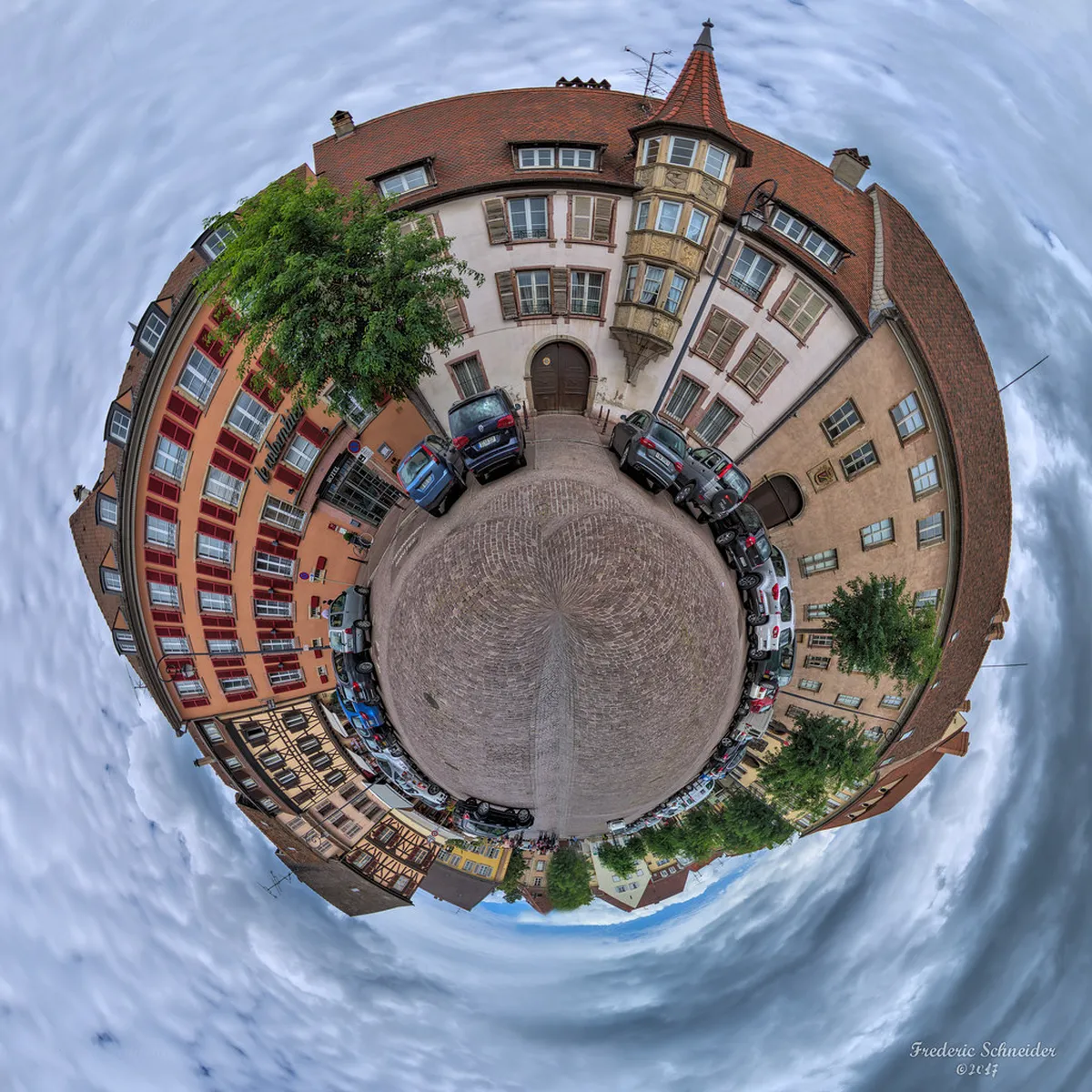
Colmar sits at the geographic heart of Alsace, which makes it the best base in the region for day excursions in 2026. The train station puts Strasbourg thirty minutes to the north and the Swiss city of Basel forty minutes to the south. The Wine Route villages of Riquewihr, Eguisheim, and Kaysersberg are all within twenty kilometres by car or bus. No other town in the Grand Est gives you this combination of medieval charm and transport reach.
This guide covers every major day trip category: the Wine Route village clusters, the Vosges mountain ridge, the cross-border escapes into Germany and Switzerland, and the museum city of Mulhouse. Each entry includes specific transport times, ticket prices in EUR, and a recommendation on how many hours to budget. Use the comparison table below to match each destination to your priorities before committing your day.
Day Trips from Colmar: Quick Comparison Table
Turn this guide into a personal route with our free colmar itinerary planner.
The table below covers the twelve most practical day trips from Colmar. Travel times are from Colmar city centre. Costs are per adult in 2026 where entry is charged; "free" means no gate ticket, though food and wine tastings add cost on the ground.
| Destination | Distance | Best Transport | Travel Time | Entry Cost | Hours Needed |
|---|---|---|---|---|---|
| Eguisheim | 7 km | Car / bike | 10 min | Free (village) | 3–4 h |
| Turckheim | 6 km | Train / car | 10 min | Free | 2–3 h |
| Kaysersberg | 12 km | Bus 68R013 / car | 20 min | Free | 3–4 h |
| Riquewihr | 14 km | Car / bus | 20 min | Free (village) | 3–4 h |
| Ribeauvillé | 16 km | Car / bus | 25 min | Free (ruins hike) | 4–5 h |
| Hunawihr | 16 km | Car | 25 min | Free (village) | 2–3 h |
| Haut-Koenigsbourg | 25 km | Train + shuttle | 45 min | ~13 EUR | 3–4 h |
| Route des Crêtes | 30 km | Car | 40 min | Free | Half/full day |
| Strasbourg | 70 km | TER train | 30 min | Free (street) | 6–8 h |
| Freiburg im Breisgau | 50 km | Train (via Breisach) | 45–55 min | Free (old town) | 5–7 h |
| Basel | 65 km | TER train | 40 min | Free (old town) | 5–7 h |
| Mulhouse – Cité de l'Auto | 40 km | Train + tram | 20 min train | ~19 EUR | 3–4 h |
Why Colmar Works as a Base for Alsace Day Trips
The geography of the Haut-Rhin department makes Colmar a natural logistics hub. Most of the famous plus beaux villages de France in Alsace sit within fifteen kilometres of the central train station. You can reach three or four different villages on the Wine Route in a single day without ever doubling back. Full planning details for the city itself are in our our complete Colmar guide.
Public transport is serviceable for the main axes. TER regional trains run north to Strasbourg every thirty minutes and south to Mulhouse and Basel every hour. The 'Fluo Grand Est' bus network covers Kaysersberg, Ribeauvillé, and Riquewihr with several departures daily, though schedules thin out on Sundays. For the smaller villages and the Vosges mountains, a rental car makes a decisive difference.
Choosing Colmar also preserves your evenings well. You can spend the day in a quiet hamlet and return in time for dinner at an Alsatian winstub. The city's own restaurants, wine bars, and the Petite Venise canal quarter give you a reason to come back each night rather than pushing to the next town. That rhythm — active days, relaxed evenings — is what makes longer Colmar stays rewarding.
The Wine Route Villages: Riquewihr, Eguisheim, Kaysersberg, Ribeauvillé, Hunawihr, Turckheim
These six villages form the core of any Alsace Wine Route itinerary, and all sit within thirty kilometres of Colmar. The logic for visiting them as day trips — rather than moving hotels — is sound: each village is at its best in the early morning or early evening after the tour coaches leave. Our dedicated guide on the half-day vs full-day Alsace wine region tours breaks down how to combine them efficiently.
| Destination | Distance/time | How to get there | Best for |
|---|---|---|---|
| Eguisheim | 7 km / 10 min | Bus 440, car or bike (vineyard cycle path) | The easiest half-day; circular old town and France's favourite village |
| Riquewihr | 14 km / 20 min | Bus 106 or car (park outside the walls) | The most photographed village; Dolder tower and Grand Cru Riesling |
| Kaysersberg | 12 km / 20 min | Bus 68R013 or car | Fortified bridge, castle ruins and Albert Schweitzer history |
| Strasbourg | 70 km / 30 min | TER train every 30 min (~€10–14 return) | A full-city day: the cathedral, Petite France and the EU quarter |
| Haut-Koenigsbourg | 25 km / 45 min | Train to Sélestat + seasonal shuttle (Apr–Oct) | Alsace's most-visited fortress and panoramic ridge views |
| Freiburg (Germany) | 50 km / 45–55 min | TER to Breisach + DB train, or drive the A35 | A cross-border escape; Gothic Münster and cheaper dining |
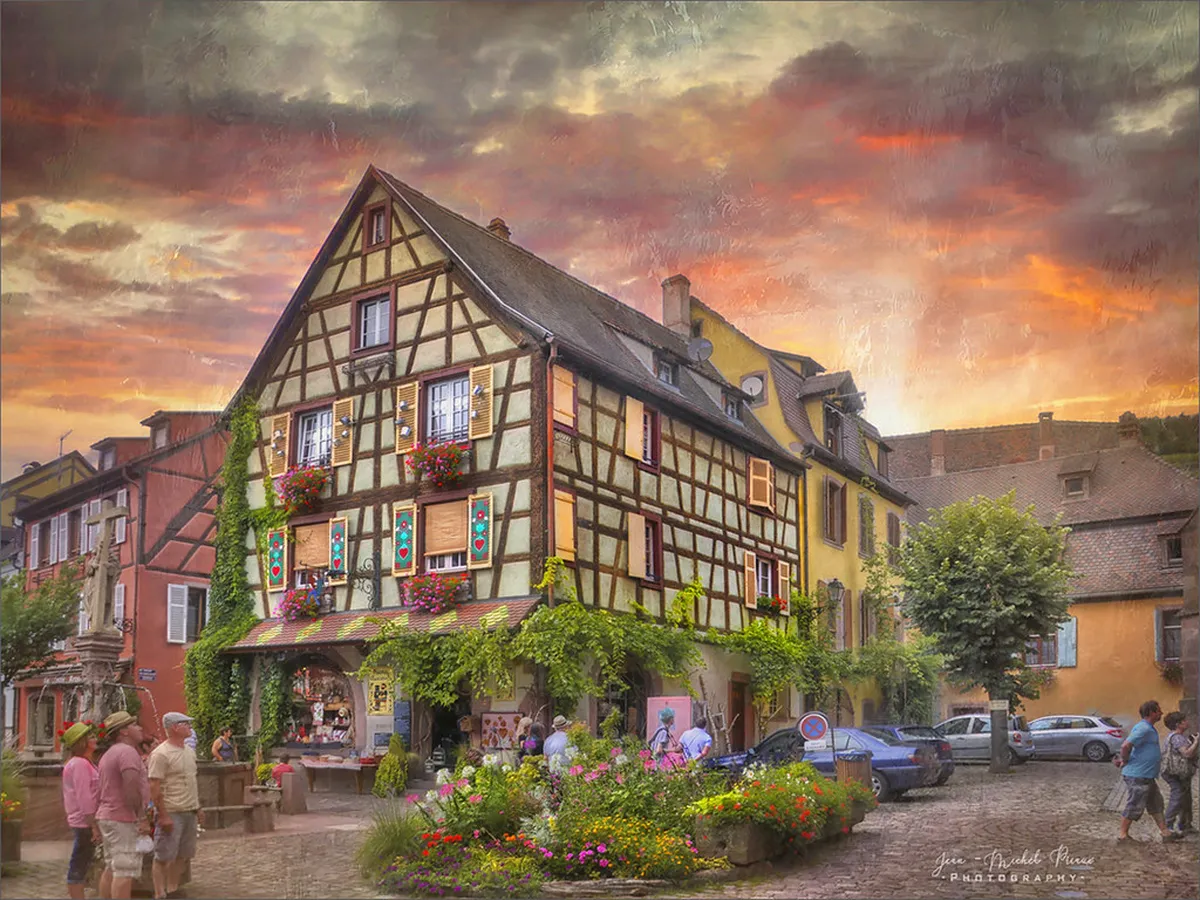
Riquewihr (14 km, 20 min by car) is the most-photographed village in Alsace. The Dolder tower and the 16th-century half-timbered façades along the main street are in near-perfect condition. For a full breakdown of what to see and how to get there, read our standalone Riquewihr day trip guide. Arrive before 09:30 if you visit in summer — the main street fills with group tours by 11:00.
Eguisheim (7 km, 10 min) was voted France's favourite village and is the easiest half-day from Colmar. It is built in three concentric circles around an 8th-century castle and chapel; the narrow ring streets are best explored anticlockwise. The village is free to walk; wine tastings at local cellars run 10–20 EUR per person. Everything you need to plan the visit is in our Eguisheim day trip guide.
Kaysersberg (12 km, 20 min via bus 68R013 or car) is the most historically layered of the Wine Route villages, partly because it was home to Albert Schweitzer. The medieval fortified bridge over the Weiss river and the castle ruins above the town are both free to enter from dawn to dusk. Climb the castle tower stairs before 10:00 to get clear views before haze builds. Ribeauvillé (16 km, 25 min) is larger and has a steep hike to three distinct castle ruins — Girsberg, Saint-Ulrich, and Haut-Ribeaupierre — that takes about 2.5 hours return. Hunawihr (16 km, 25 min by car) is smaller and often skipped, but the fortified church surrounded by vineyards is one of the most striking images in the entire region. Turckheim (6 km, 10 min) maintains the tradition of a night watchman patrolling in period costume; the walk starts at 22:00 every evening from May through October and is free to join.
The Fortress Heights: Haut-Koenigsbourg and the Route des Crêtes
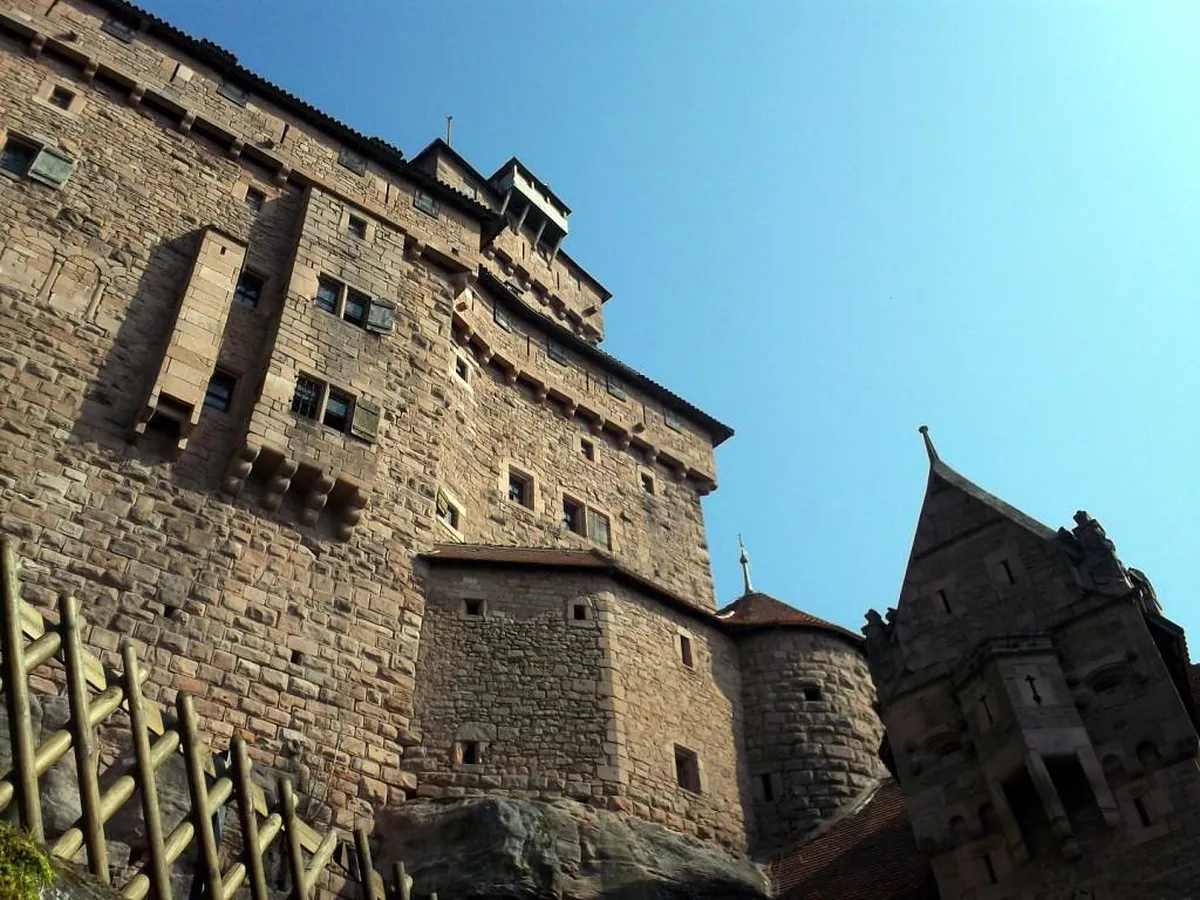
Château du Haut-Koenigsbourg is the single most visited historic site in Alsace, and it earns the attention. The massive pink sandstone fortress sits on a 757-metre summit and on a clear day you can see the Black Forest to the east and the Alps to the southeast. Adult tickets cost approximately 13 EUR in 2026; the castle is open daily except 1 January, 1 May, and 25 December. Book your timed entry slot online in advance during July and August, as interior halls have strict capacity limits.
To get there without a car, take a TER train from Colmar to Sélestat (15 min, about 5 EUR) and then the seasonal 'Navette du Haut-Koenigsbourg' shuttle bus from Sélestat station. The shuttle runs from April through October, departing roughly at 09:15, 10:45, and 12:15, with returns in the afternoon. Allow a full half-day at the castle; the interior rooms, courtyard, and panoramic terrace together take at least two hours to see properly.
The Route des Crêtes is the Vosges ridge road that runs north–south along the watershed between Alsace and Lorraine, and it offers a completely different character from the village circuit. The road passes through Markstein and Le Bonhomme, with viewpoints over the Rhine plain and on clear days the Swiss Alps. You cannot do this route without a car or motorbike. A 40-kilometre drive west from Colmar brings you onto the ridge; the full loop back through the Munster valley takes about three to four hours with stops at the Chaume de la Gentiane viewpoint and the Lac Blanc glacial lakes. Pack a windbreaker even in summer — temperatures on the ridge run roughly 10°C cooler than the Colmar valley below.
Strasbourg: The Regional Capital (30 Minutes by Train)
Strasbourg is the most accessible full-city day trip from Colmar, and also the most rewarding for first-time visitors to Alsace. TER trains run from Colmar Gare every thirty minutes; the journey takes about 30–35 minutes and tickets cost roughly 10–14 EUR return depending on the fare class and booking window. Buy on SNCF Connect in advance for the cheapest fares; the machine on the platform charges full walk-up price.
The UNESCO-listed Grande Île is the entire agenda for a single day. The Cathédrale Notre-Dame de Strasbourg is free to enter; the cathedral platform climb costs about 9 EUR and gives a rooftop view over the Alsatian plain. The 'Petite France' quarter with its tanner's houses along the Ill river takes one to two hours to walk at a relaxed pace. From Strasbourg station, take tram line C or D to 'Homme de Fer' to reach the island in eight minutes.
Strasbourg is also home to the European Parliament and several EU institutions, which are open for public tours on specific days — worth booking ahead if that interests you. Allow six to eight hours for a comfortable day that includes the cathedral, Petite France, the Covered Bridges, and lunch. Most restaurants in the old town serve from 12:00 to 14:00 and 19:00 to 22:00; the 'Maison des Tanneurs' in Petite France is the classic tourist choice, but smaller winstubs on side streets are cheaper and equally good.
Freiburg im Breisgau: A Cross-Border Escape into Germany
Freiburg is one of the most underused day trips from Colmar, sitting just 50 kilometres away across the Rhine. The journey takes 45–55 minutes by train: take the TER from Colmar to Breisach (about 25 min, ~5 EUR), then the regional Deutsche Bahn RB31 train from Breisach to Freiburg Hauptbahnhof (about 30 min, ~7 EUR). You can also drive the A35 motorway across the Pont de l'Europe border bridge; the crossing is fully open (Schengen area — no passport check, no stopping required) and takes about 45 minutes door to door.
Freiburg is a compact and walkable university city with a very different feel from the French side of the Rhine. The red sandstone Münster cathedral in the central market square is one of the finest Gothic churches in southern Germany, free to enter and open daily. The surrounding Münstermarkt runs every morning except Sunday and sells regional produce, Badisch wines, and fresh Flammkuchen. The 'Bächle' — narrow streams that run through the old-town streets — are unique to Freiburg and a useful orientation landmark.
One detail that surprises visitors: you will need euros on both sides of the border, as Freiburg uses EUR the same as France. Prices in Freiburg's restaurants and cafés run roughly 20–30% lower than in Strasbourg or Colmar for equivalent quality. The Schlossberg hill above the old town offers a free cable car (Schlossberg-Seilbahn) and panoramic views over the Rhine valley back toward Alsace — a good way to close the day before catching the train back. Budget five to seven hours for a satisfying Freiburg day.
Basel: Switzerland in Under an Hour
Basel sits 65 kilometres south of Colmar and is reached by TER train in about 40 minutes (roughly 15–20 EUR return; Swiss public transport pricing applies once you cross the border, so buy a Colmar–Basel ticket through SNCF). Basel is a tri-national city touching France, Germany, and Switzerland simultaneously, and its old town is compact enough to see in a half-day. Like Freiburg, the Rhine crossing is Schengen — no border formalities for EU and Schengen-zone passport holders.
The Altstadt (old town) sits on a sandstone bluff above the Rhine. The Basler Münster cathedral and Münsterplatz are free to visit; the adjacent terrace over the river is one of the best viewpoints in the city. Basel is also the world capital of contemporary art fairs — Art Basel runs each June — but the permanent collections at Kunstmuseum Basel (28 CHF in 2026) and the Museum für Gegenwartskunst are open year-round and worth a detour for art-focused travellers. The Fondation Beyeler in nearby Riehen is one of Europe's finest private art museums (30 CHF).
Note that Basel uses Swiss francs (CHF) rather than euros, though many shops and restaurants near the station accept EUR at a rough 1:1 rate that works slightly against you. Withdrawing a few CHF from an ATM at the station is more cost-efficient. The city centre is walkable from Basel SBB station, and the free Museum Tram (the red tram line running through the centre on Sundays) is a quick orientation ride. Allow five to seven hours for a comfortable Basel day that includes the Altstadt, the Rhine bank, and at least one museum.
Mulhouse: The World's Largest Car Museum
Mulhouse is twenty minutes south of Colmar by TER train (roughly 6–8 EUR return) and is largely visited for one reason: the Cité de l'Automobile, which houses the Schlumpf collection of over 400 vintage vehicles including the world's largest collection of Bugattis. Adult tickets cost approximately 19 EUR in 2026; the museum is open daily from 10:00 to 18:00. From Mulhouse train station, take tram line 1 to 'Cité de l'Automobile' — the journey is three stops and takes about eight minutes.
Allow three to four hours inside the museum if you have any interest in automotive history. The collection spans 1878 to the present, with the Bugatti Royale and the pre-war French Grand Prix cars as the centrepieces. The building itself is a converted 19th-century textile factory; the scale of the hall allows the larger vehicles to be seen in proper context rather than crammed together. Children under 12 enter free, making this one of the better family day trips from Colmar.
Mulhouse also has a secondary attraction: the Cité du Train, housed in the same 'Parc des Expositions' complex and ticketed separately (approximately 14 EUR). If you combine both museums, budget a full six-hour day. The city centre of Mulhouse itself is functional but not particularly scenic; most visitors come purely for the museums and return to Colmar for the evening.
Getting Around: Transport Options for Day Trips from Colmar
The choice between car and train depends on your destination list. Trains handle the north–south axis — Strasbourg, Mulhouse, Basel — efficiently and cheaply, with departures every thirty to sixty minutes from Colmar Gare. The 'Fluo Grand Est' buses cover Kaysersberg (68R013), Ribeauvillé, and Riquewihr with multiple daily departures, though service drops to two or three runs on Sundays. Always check the current Fluo schedule on their app before assuming a departure time.
A rental car unlocks everything else: the smaller Wine Route villages, the Route des Crêtes, Haut-Koenigsbourg, and the cross-border trips to Freiburg. Driving in Alsace is straightforward, with clear Route des Vins brown signage throughout. Expect to pay 50–90 EUR per day for a compact car including basic insurance; most village centres are pedestrian-only so park in the designated peripheral lots (typically 3–5 EUR flat fee per day) and walk in. The Véloroute du Vignoble cycle path runs parallel to the Wine Route and is excellent for the flat village segments; e-bike rental in Colmar runs about 35–45 EUR per day.
For groups of four or more, a private half-day wine tour can cost less per person than renting a car independently while also removing the designated-driver problem. Most tours depart from Place de la Mairie or the central train station. For a full breakdown of what to expect from organised tours, see our comparison of half-day vs full-day Alsace wine region tours.
Practical Tips for Planning Colmar Day Trips in 2026
Start early on Wine Route village days. Tour coaches from Strasbourg and Colmar typically arrive in the villages between 10:30 and 11:30. Being there at 08:30 means you have the streets largely to yourself for the first two hours. The village boulangeries open at 07:00–07:30 and selling out of croissants by 09:00 is normal — another reason to move quickly in the morning.
Carry cash in EUR. Most wine cellars and village bakers have a card minimum of 10–15 EUR; some smaller tasting rooms are cash-only. For the German and Swiss trips, euros are accepted in Freiburg without friction, but Basel is better served with a small amount of CHF. An ATM at Colmar Gare or at Basel SBB station handles both currencies. English is widely spoken in all tourist areas on both sides of the border, though opening any interaction with 'Bonjour' in France and 'Guten Tag' in Germany is always the right call.
Village shops close for a lunch break from approximately 12:00 to 14:00. If you arrive mid-day and find shuttered doors, this is why — not a holiday. Plan your tasting-room visits for mid-morning (10:00–12:00) or mid-afternoon (14:00–17:00). For the best month to visit Colmar and the surrounding region, our our complete Colmar guide covers the seasonal trade-offs in detail.
Frequently Asked Questions
Which day trips from Colmar fit first-time visitors best?
First-time visitors should prioritize Eguisheim and Riquewihr because they offer the most iconic 'fairytale' architecture. These villages are very close to Colmar and easy to navigate in a single afternoon. You can easily combine them with a quick stop at the Bartholdi Statue of Liberty.
Is it better to take a train or car for day trips from Colmar?
A car is better for exploring the small villages of the Wine Route where bus schedules are limited. However, trains are superior for visiting larger cities like Strasbourg or Mulhouse. Trains are frequent, affordable, and drop you directly in the city centers.
How much time should you plan for day trips from Colmar?
Most village day trips require four to five hours, including travel time and a leisurely lunch. If you plan to hike to castle ruins, allow for a full six-hour excursion. City trips to Strasbourg or Mulhouse generally take a full eight-hour day.
Colmar is more than just a beautiful destination; it is a gateway to one of Europe's most unique cultural landscapes. By using the city as your base, you can experience the best of the Wine Route without the hassle of moving hotels. Whether you choose the heights of Haut-Koenigsbourg or a cross-border afternoon in Freiburg, the range of day trips available from Colmar is hard to match anywhere in France. Plan your routes early, check train schedules in advance, and prepare to cover more ground than you expect.