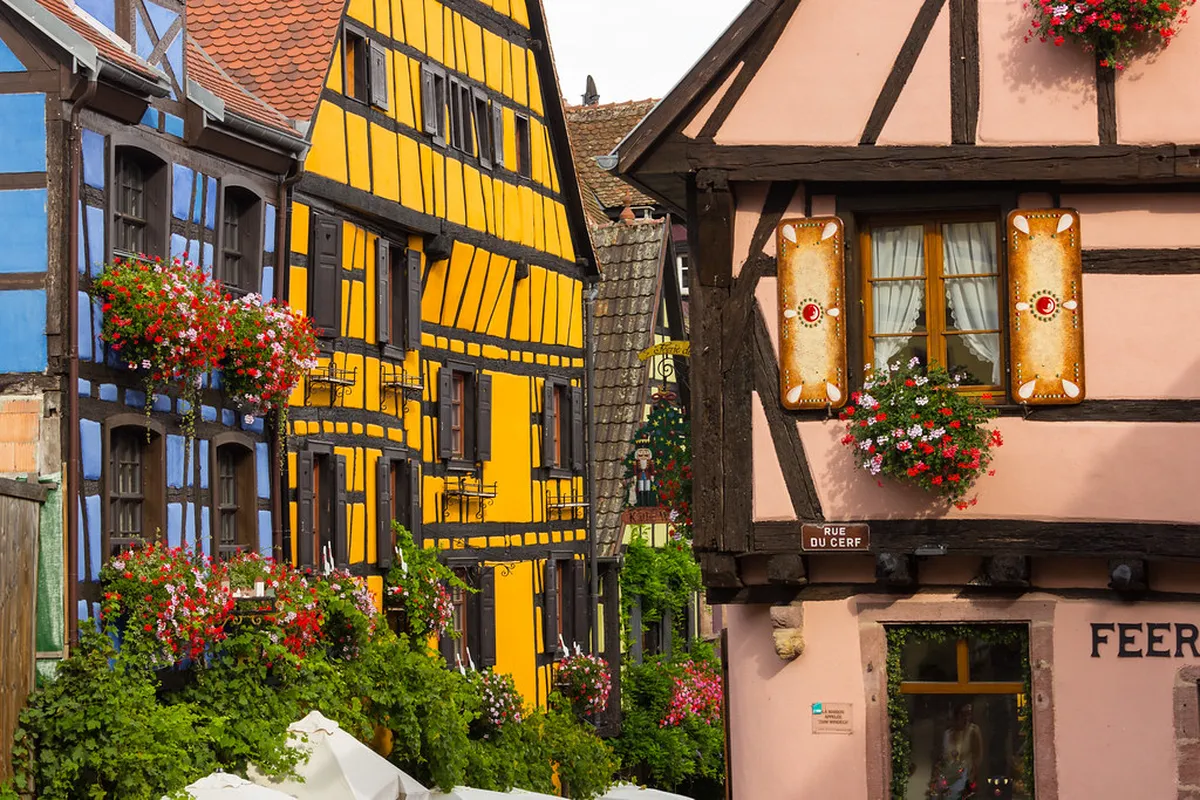
Riquewihr is the village that most people picture when they imagine Alsace: a tight knot of cobbled lanes, leaning half-timbered houses in shades of ochre and rose, and vineyards climbing the slopes right up to the medieval walls. Nicknamed the 'pearl of the Alsace vineyard', it survived the wars of the last five centuries almost untouched, which is why a walk through its ramparts feels like stepping straight into the 16th century. Most travellers arrive on a short hop from the city, slotting Riquewihr neatly into a wider list of things to do around Colmar.
The village sits roughly 15 minutes north of Colmar on the Route des Vins, and it pairs naturally with a tasting tour because its name is stamped on some of the most famous Riesling and Gewurztraminer in France. There is real substance behind the postcard prettiness too — a 13th-century gate tower, a torture museum tucked inside the old fortifications, a small museum dedicated to Alsace's most beloved illustrator, and centuries-old wine houses still pouring in their original cellars. This guide walks through the main sights, the best cellars, the famous Christmas market, and exactly how to get there and back from Colmar.
Top Things to Do in Riquewihr
Turn this guide into a personal route with our free colmar itinerary planner.
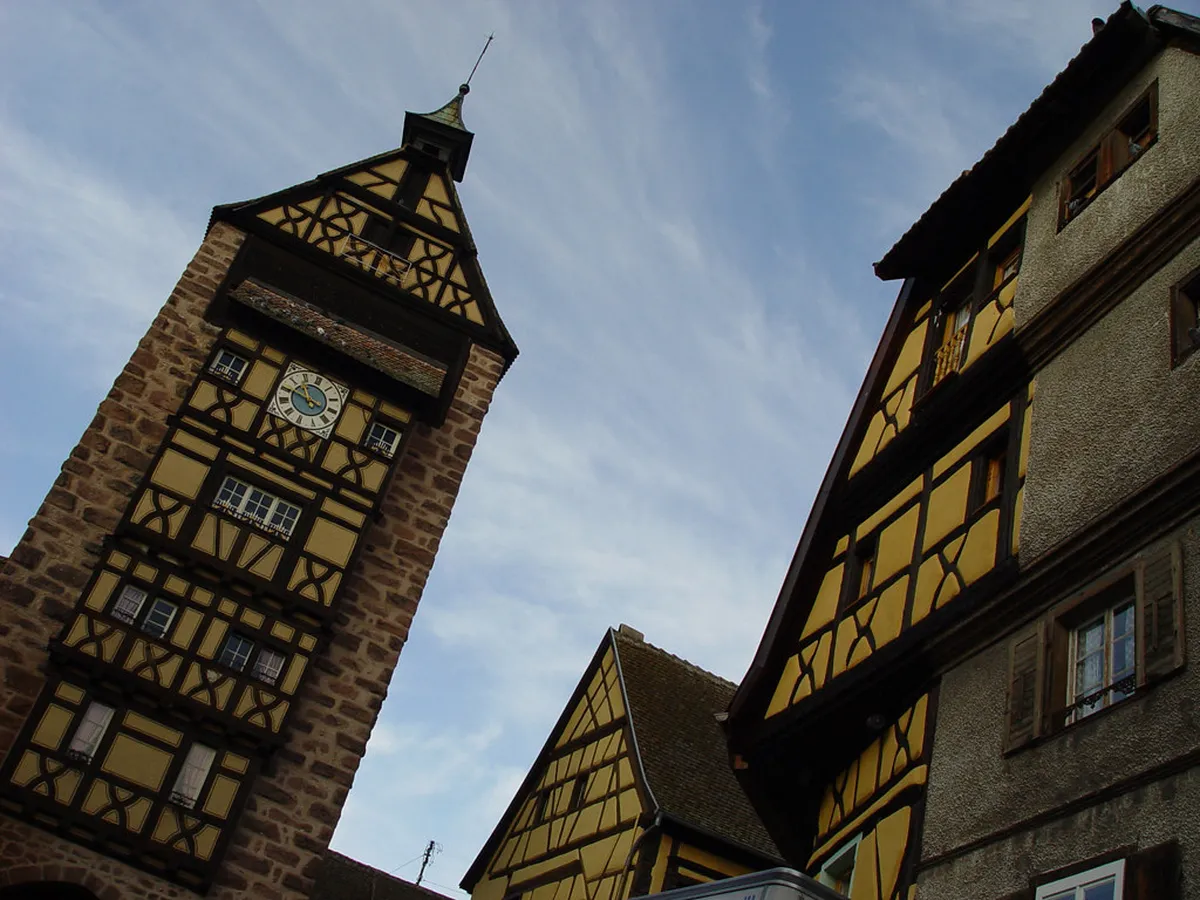
The Dolder Tower is the village's signature landmark, a 25-metre belfry built in 1291 that once served as the main gate and watchtower of the upper town. Its half-timbered upper storeys and bell make it the most photographed building in Riquewihr, and the small museum inside displays armour, weaponry, and town artefacts. Climbing it gives you a rampart-level view back down the main street and out over the vineyards. The adjoining Obertor (upper gate) still frames the entrance to the old town exactly as it did in the Middle Ages. Entry costs around €3.
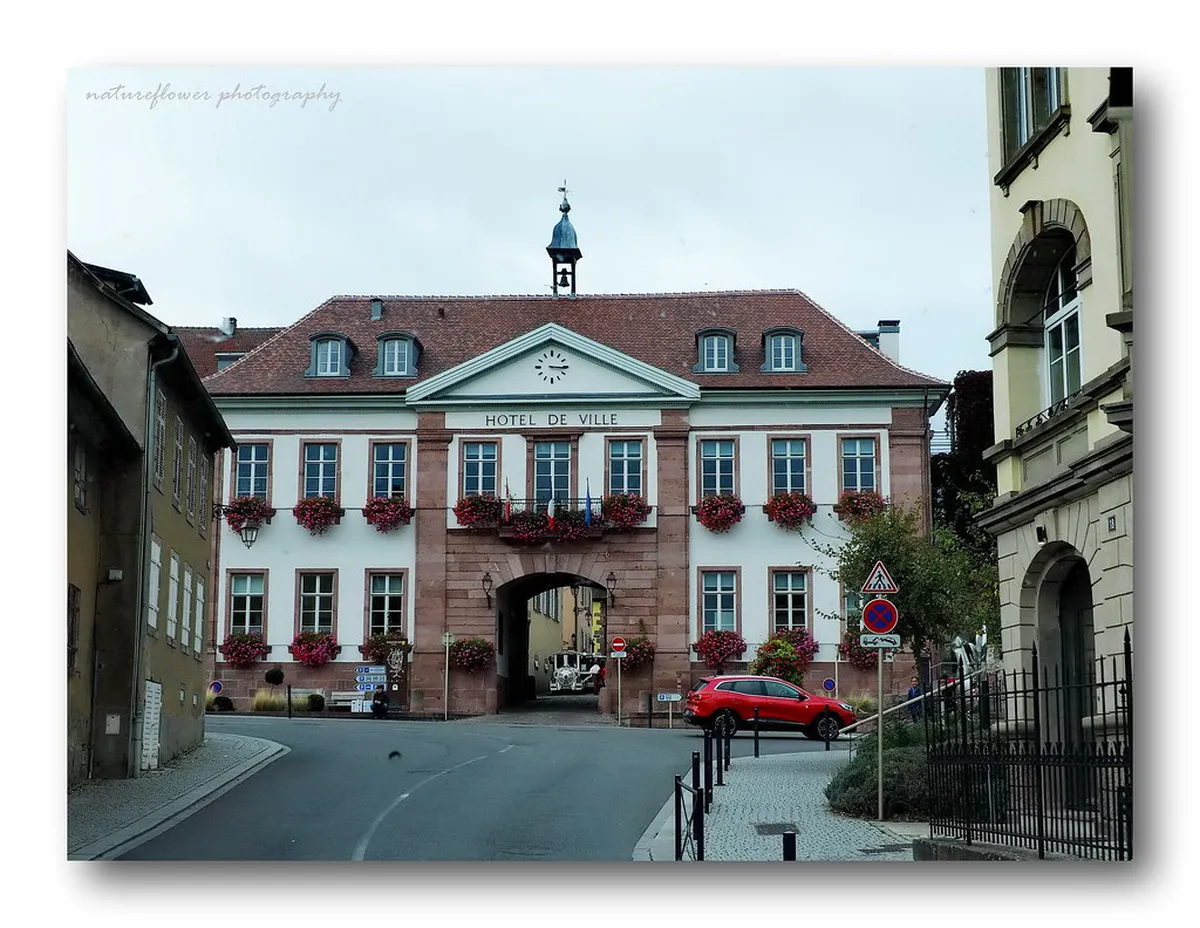
The Tour des Voleurs, or Thieves' Tower, sits just off the main lane and houses a small but vivid torture museum inside a former prison, complete with a dungeon and the original judge's room. It is one of the few attractions that breaks the sugary fairytale mood with a dose of grim medieval reality — instruments of punishment, an original rack, and a cell cut into the base of the tower. Entry costs around €4. A combined ticket covering both the Dolder and the Thieves' Tower is available for approximately €5, which saves a small but useful amount if you plan to visit both.
Beyond the headline sights, the pleasure of Riquewihr is simply wandering the back lanes and the line of the old ramparts, where storks nest on the rooftops and tasting cellars open straight onto the street. Drop into a famous wine house such as Hugel & Fils or Dopff au Moulin to see working cellars that have poured here for centuries. Allow time to step out of the lower gate into the vineyards for a postcard view of the whole village against the hills. If you are stitching several villages together, see how Riquewihr fits the top excursions you can make from Colmar before locking in your route.
Rue du Général de Gaulle and Maison Hansi
The Rue du Général de Gaulle runs the full length of the village as its sloping cobbled spine, and this is where Riquewihr concentrates its most striking architecture. The street is lined with 15th- and 16th-century merchant houses, their carved wooden beams and painted shutters in every shade from cream to deep ochre. Window boxes cascade with geraniums in summer, and ground-floor shops sell wine, bredele biscuits, ceramics, and handmade ornaments year-round. Walking from the lower gate to the Dolder at the top takes about ten minutes at a stroll, though most people take far longer.
Partway along the main street stands Maison Hansi, the museum dedicated to Jean-Jacques Waltz — the Alsatian illustrator and patriot who published under the pen name "Hansi". Born in Colmar in 1873, Waltz spent much of his working life in Riquewihr and is responsible for the round-cheeked, rosette-wearing vision of Alsatian village life that still defines the region's visual identity today. His illustrations of chubby children in traditional dress, half-timbered houses, and stork-filled skies were published in books such as Mon Village and L'Alsace Heureuse, and his distinctive style is behind much of what visitors now expect when they picture Alsace. The museum displays original drawings, book editions, and personal artefacts in a period house interior; entry is modest and the visit takes around 30 to 40 minutes.
The Hansi connection is easy to overlook if you only know the famous wine labels, but it is central to understanding why Riquewihr looks the way it does in tourist imagery. Many of the painted signs, embroidered tablecloths, and souvenir prints sold throughout Alsace descend from his visual vocabulary. Visiting Maison Hansi before wandering the street gives you a useful frame for the decoration and colour choices you see in the buildings around you.
The Best Wineries and Riesling Tasting in Riquewihr
Riquewihr is one of the most prestigious names on the Alsace Wine Route, and it sits beside two Grand Cru vineyards — Schoenenbourg and Sporen — that produce exceptional Riesling and Gewurztraminer. The Schoenenbourg slopes in particular are famous for mineral, age-worthy Riesling, while the warmer Sporen plots lend themselves to rich, aromatic Gewurztraminer and late-harvest sweet wines. Tasting here means sampling grapes grown on the very hills you can see from the ramparts, which makes the experience feel rooted rather than generic.
Two historic wine houses anchor any tasting visit. Hugel & Fils has poured in the village since 1639 and is a benchmark producer worldwide, with a central tasting room on the main street where you can compare classic, estate, and Vendange Tardive bottlings. Dopff au Moulin, equally storied, helped pioneer Crémant d'Alsace sparkling wine in the region and offers tastings that explain the traditional method alongside its still wines. Both are walk-in friendly, though larger groups should book ahead, and tasting fees are modest and often credited against any purchase.
For your tasting, focus on the four noble grapes: Riesling for its dry precision, Gewurztraminer for its lychee-and-rose aromatics, Pinot Gris for body, and Muscat for floral freshness. If you enjoy sweeter styles, ask specifically for a Vendange Tardive or a Sélection de Grains Nobles — these late-harvest wines are an Alsace speciality and pair beautifully with the region's foie gras and fruit tarts. To go deeper across multiple villages and estates, a guided route makes the logistics painless; compare the Colmar sightseeing plan to match a wine day to your overall schedule.
Riquewihr at Christmas: The Famous Market
Riquewihr transforms into one of the most atmospheric Christmas destinations in Alsace, and its market is famous well beyond the region. The medieval streets, already storybook in summer, are draped with garlands, lights, and elaborate window displays that turn the whole village into an open-air advent scene. Wooden chalets cluster around the squares and along the Rue du Général de Gaulle, selling handmade ornaments, ceramics, candles, and the spiced bredele biscuits that are an Alsatian holiday tradition.
The sensory pull is the real draw: the smell of vin chaud (mulled wine), roasting chestnuts, and warm bretzels drifting through the cold air as choirs and brass bands play in the squares. Because the village is compact and almost entirely pedestrian, the market feels immersive rather than sprawling — you are never walking through a car park to reach the next stall. Evenings are especially magical once the lights come on and the half-timbered facades glow, though they are also the busiest hours, so weekday visits or an earlier afternoon arrival pay off.
The market typically runs across the four weekends of Advent in 2026, from late November to late December, with weekends drawing the heaviest crowds and the warmest atmosphere. Dress for genuine cold — the narrow stone lanes hold the chill — and consider arriving by mid-afternoon so you can shop in daylight and then watch the village light up at dusk. If you are touring several towns during the season, coordinate timings and parking carefully, since Riquewihr, Colmar, and the neighbouring villages each peak on different days. A wider day-trip plan from Colmar helps you string the best markets together without backtracking.
How to Get to Riquewihr from Colmar
Riquewihr lies about 13 kilometres north of Colmar and is one of the easiest wine villages to reach without a car. The most reliable public option is the regional bus line 106, which runs from Colmar's main bus station (next to the train station) directly to Riquewihr in roughly 30 minutes for around €2.50 each way. Buses run several times a day on weekdays, with reduced services on Sundays and holidays, so it pays to check the timetable in advance and note the last return departure before you settle into a tasting room.
| Option | Duration | Cost (2026) | Notes |
|---|---|---|---|
| Bus 106 (Fluo Grand Est) | ~30 min | ~€2.50 each way | From Colmar bus station next to the train station; several daily on weekdays, reduced on Sundays/holidays — check the last return time. |
| Car (D3 / D1bis) | 15–20 min | Fuel + ~€3–5 parking/day | Park in the paid lots outside the walls near the lower gate; the old town is pedestrianised and closed to traffic. |
| Guided wine-route tour | Half or full day | ~€60–90 per person | Departs daily from Colmar in summer; usually covers Riquewihr plus 2–3 villages — no driving or parking, free to taste. |
Driving is even quicker, taking about 15 to 20 minutes via the D3 and D1bis. The key rule is that the historic centre is pedestrianised and effectively closed to visitor traffic, so you park outside the walls. Several paid car parks ring the village near the lower gate and the tourist office, typically charging a few euros for the day; arrive before 10:00 in summer and on December weekends, as the closest lots fill fast. From the car park it is a flat two-minute walk through the gate into the main street.
There is no train station in Riquewihr itself — the nearest rail stop is Colmar, so the bus or a car are your only direct options. Taxis and rideshares from Colmar run around €15 to €20 one way and are worth considering for a late return after an evening market visit when bus service stops. Organised wine-route minibus tours from Colmar depart daily in summer and cover Riquewihr as a stop, which removes all driving and parking stress for groups wanting to taste freely.
Combining Riquewihr with Ribeauvillé, Hunawihr, and Eguisheim
Riquewihr is surrounded by exceptional villages, all within a few kilometres, which makes it almost negligent to visit just one. The most natural pairing is Hunawihr, barely 2 kilometres away, whose 14th-century hilltop fortified church (one of the most photographed in Alsace) and famous stork reintroduction centre make it a very different experience from the wine-village bustle of Riquewihr. The stork centre, the Centre de Réintroduction des Cigognes, is open spring through autumn and lets you watch white storks at close range — a particular draw for families and wildlife-minded visitors.
Ribeauvillé sits about 5 kilometres north and is larger and livelier than Riquewihr, with its own wine market (the oldest in Alsace, held in September), three ruined castles on the hillside above the town, and a main street that sees fewer tour-group bottlenecks. It shares the bus 106 route with Riquewihr, so you can step off at one village and back on at the other without a car. A half-day built around Hunawihr, Riquewihr, and Ribeauvillé — in that order from south to north, finishing with the larger town — gives you the best contrasts in the northern Wine Route without retracing your steps.
In the other direction, Eguisheim is about 6 kilometres south of Colmar and has a completely different layout from Riquewihr — a concentric circular old town of coloured half-timbered houses rather than a linear street. Combining it with Riquewihr on the same day is possible but long; most people choose one cluster (Riquewihr–Hunawihr–Ribeauvillé to the north, or Eguisheim to the south) per outing. For how those options compare and which fits your available time, see our full rundown of the the nearby village of Eguisheim.
Practical Travel Tips: Timing, Crowds, and Parking
Riquewihr's biggest challenge is its own popularity, so timing is everything. The village fills with tour groups and day-trippers between roughly 11:00 and 16:00, when the main street can feel shoulder-to-shoulder in peak season. Arriving by 09:00 or staying into the early evening rewards you with quiet, beautifully lit lanes and far easier photography. If you only have a couple of hours, the early slot is the single best decision you can make.
For parking, head straight for the paid lots outside the ramparts rather than circling the closed old town; the main visitor car parks near the lower gate and tourist office are signposted on the approach roads. In summer and across December weekends, the nearest lots can be full by mid-morning, so an early start or a willingness to walk a few extra minutes from an outer lot saves a lot of frustration. Taking bus 106 sidesteps the parking problem entirely and is well worth considering on the busiest days.
Plan around the rhythm of village life, too. Many shops and tasting rooms close for a couple of hours over the traditional French lunch break (typically 12:00 to 14:00), so build your meal into that window rather than fighting it. Wear comfortable shoes for the cobblestones, which are uneven and slippery in wet weather, and carry a light layer even in summer, as the shaded lanes stay cool. Half a day is enough to see the highlights, but a full day lets you add a wine tasting, lunch, and a walk out into the vineyards. To weave Riquewihr into a longer trip, anchor it within a broader Colmar sightseeing plan so your days flow logically between the city and the wine villages.
For the full city overview, see our things to do in Colmar guide.
Frequently Asked Questions
Is Riquewihr worth visiting?
Yes, Riquewihr is one of the most rewarding stops in Alsace. As the 'pearl of the vineyard' and a model for storybook villages, it offers an almost perfectly preserved medieval centre, the landmark Dolder Tower, world-class Riesling and Gewurztraminer cellars, and a famous Christmas market. Arriving early to beat the crowds makes the experience even better.
How do you get from Colmar to Riquewihr?
The easiest public option is regional bus line 106 from Colmar's main bus station, which reaches Riquewihr in about 30 minutes for around €2.50 each way. By car it takes 15 to 20 minutes via the D3, after which you park in the paid lots outside the pedestrianised old town. Many visitors also combine Riquewihr with nearby Hunawihr and Ribeauvillé on the same route.
How much time do you need in Riquewihr?
Half a day, around 2 to 4 hours, is enough to walk the main street, climb the Dolder Tower, and enjoy a wine tasting. A full day lets you add lunch, a visit to the Thieves' Tower torture museum, and a walk out into the vineyards, or combine it with neighbouring villages. It slots neatly into a wider our complete Colmar guide.
What wine is Riquewihr famous for?
Riquewihr is best known for its Riesling and Gewurztraminer, grown on two Grand Cru vineyards, Schoenenbourg and Sporen. Historic houses such as Hugel & Fils and Dopff au Moulin offer tastings of dry whites, sparkling Crémant d'Alsace, and late-harvest Vendange Tardive wines. Most tasting rooms welcome walk-ins, though groups should book ahead.
Riquewihr packs an extraordinary amount into a small footprint: a flawless medieval streetscape, defensive towers you can climb, the illustrated world of Hansi, and cellars pouring some of the finest wine in France. It is the kind of village where the architecture, the history, and the glass in your hand all tell the same story of a prosperous wine town that simply never lost its old character. That density of charm is exactly why it tops so many Alsace wish lists.
Plan around the crowds, lean into an early or late visit, and give yourself time for a proper tasting, a look through Maison Hansi, and a stroll out into the vineyards. Whether you come for the Christmas lights, the Grand Cru Riesling, or simply the most photogenic streets in Alsace, Riquewihr deserves more than a quick photo stop. Make it a centrepiece of your wine-route plans and one of the finest day trips you can take from Colmar.