Bergen, Norway, captivates visitors with its unique charm. This city boasts a rich architectural tapestry. Understanding Bergen architecture history facts enriches your journey. You will discover centuries of building evolution here.
From ancient wooden structures to modern designs, Bergen tells a visual story. Fires repeatedly reshaped the cityscape. Each rebuilding effort added new architectural layers. Explore the diverse styles on a Bergen architecture walking tour. Learn how resilience shaped this beautiful city.
Bergen's Early Wooden Foundations and Medieval Roots
Turn this guide into a personal route with our free Bergen itinerary planner.
Bergen began as a trading post in the 11th century. Early buildings were mostly timber structures. Wood was an abundant and practical material. These early homes reflect Nordic building traditions.
Fires were a constant threat to the wooden city. Major fires ravaged Bergen many times. Despite this, some medieval elements remain. St. Mary's Church is a key example, built in stone around 1130. Its Romanesque design shows early European influence.
Explore these ancient structures to understand Bergen building materials history. Learn about early construction techniques. Discover the resilience of Bergen's early settlers. Their simple designs laid the city's foundation.
Bryggen's Hanseatic Legacy: Iconic Bergen Architecture Facts
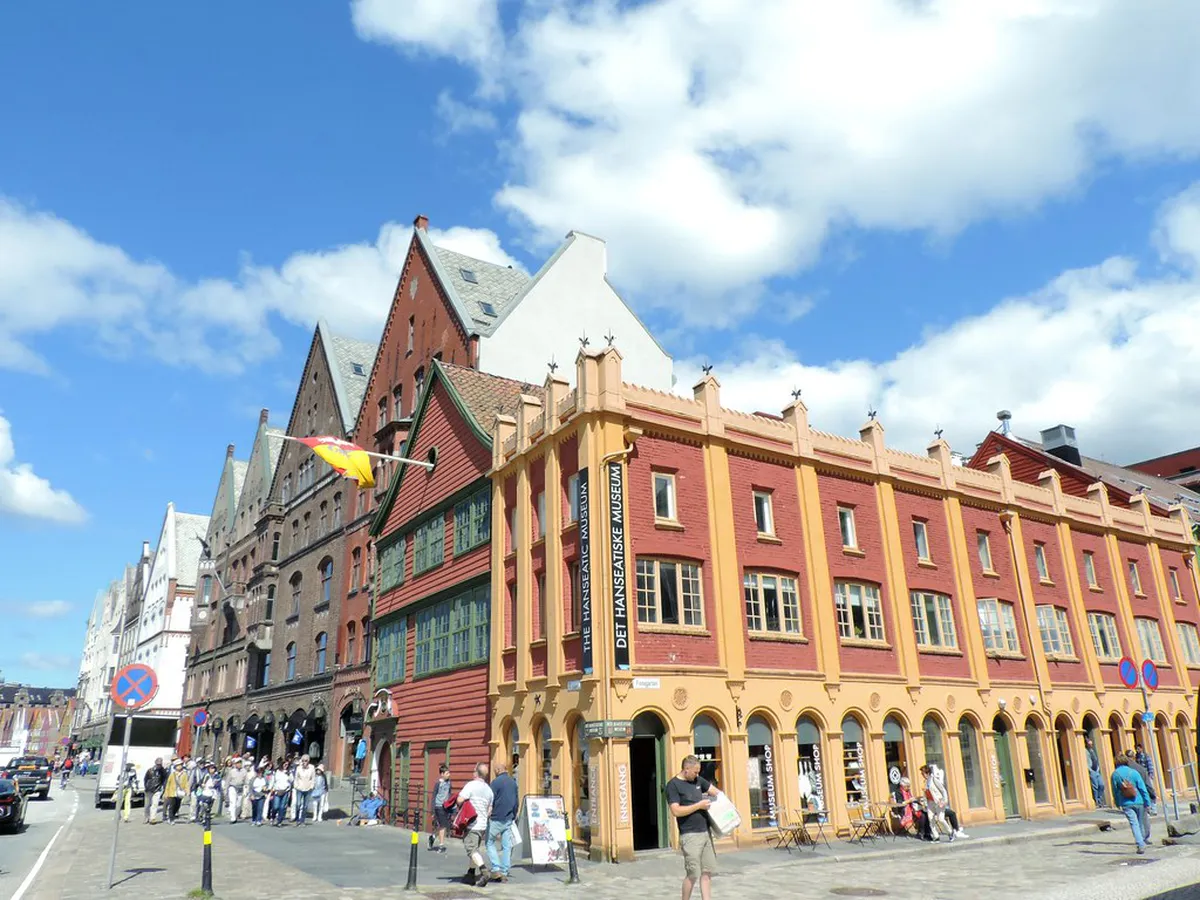
Bryggen is Bergen's most famous district. It showcases classic Hanseatic architecture. German merchants dominated trade here for centuries. They built tall, narrow wooden warehouses along the harbor.
These buildings served as offices and storage. Their distinctive gables face the waterfront. Bryggen has suffered many devastating fires. The current structures date mostly from 1702 onwards.
Yet, they faithfully replicate older styles. UNESCO recognized Bryggen as a World Heritage Site. Take a Bryggen architecture guide to appreciate its details. It offers crucial Bergen historic architecture insights.
In 2026, Bryggen remains a vibrant area. It houses artisan shops and museums today. Visitors can explore the narrow passages. This unique architecture is a must-see in Bergen.
Post-Fire Rebuilding: Neoclassicism and Empire Styles
After the great fire of 1702, Bergen rebuilt. The city introduced stricter building codes. Stone and brick became more common. This change aimed to reduce fire risks.
Many buildings adopted Neoclassical designs. They featured classical columns and symmetry. The Empire style also gained popularity. These elegant facades brought a new sophistication to Bergen.
Architects like Ole Peter Riis Høegh shaped this era. His designs influenced many public buildings. You can find these grand structures city-wide. They mark a significant shift in Bergen architectural styles timeline.
Several buildings near Torgallmenningen exemplify this period. They often have decorative elements. These grander scales contrast with earlier wooden homes. Explore the city to find these beautiful examples of famous Bergen landmarks' architecture.
Art Nouveau and Functionalism: Modernist Bergen Forms
The early 20th century brought new architectural trends. Art Nouveau, or Jugendstil, emerged. It featured elaborate ornamentation and organic forms. Bergen boasts some charming Art Nouveau buildings.
These structures often include decorative details. Look for curved lines and floral motifs. Functionalism later arrived, emphasizing utility. This style favored clean lines and minimal decoration.
Bergen's city planning evolved with these styles. Functionalist buildings are often streamlined. They served practical purposes for a growing city. Discover how Art Nouveau Bergen buildings contribute to the city's character. You can find many of these styles around the central areas.
Many of Bergen's public buildings showcase these movements. They represent a departure from historical styles. This period reflects a modernizing Norway. Explore these unique architectural periods on a self-guided Bergen architecture itinerary.
Contemporary Architecture and Sustainable Bergen Designs
Today, Bergen continues to innovate in architecture. Modern buildings blend with historical elements. Glass and steel coexist with traditional wood. This creates a fascinating urban landscape.
New developments often focus on sustainability. Architects incorporate eco-friendly solutions. Green roofs and energy-efficient designs are common. This reflects Norway's commitment to the environment.
The city encourages innovative designs. You can find striking examples near the harbor. Visit areas like Sandviken for newer structures. Learn more about modern architecture Bergen offers.
Efforts are also made for Bergen architectural preservation efforts. Historic buildings receive careful restoration. This balance maintains Bergen's unique identity. Experience the fusion of old and new in 2026.
Frequently Asked Questions
What makes Bergen's architecture so unique?
Bergen's architecture is unique due to its history of fires. Repeated rebuilding efforts created diverse styles. You see medieval, Hanseatic, Neoclassical, and modern designs. This blend reflects resilience and adaptation.
The city's strong reliance on wood is also distinct. Despite fires, wooden houses remain prominent. Bryggen's iconic wooden wharf buildings are world-famous. Explore Bergen architecture unique features to understand its charm. Its harbor location also shaped its distinctive growth.
Where can I find the oldest Bergen architecture history facts?
The oldest architectural remnants are in Bryggen. The foundations of some buildings date back centuries. St. Mary's Church offers a glimpse into the 12th century. It is the oldest stone church in Bergen.
The Bergenhus Fortress also holds ancient structures. Håkon's Hall dates back to the 13th century. These sites provide tangible connections to Bergen's past. Consider a Bergen fortress architecture tour. You will find incredible historical information there.
How did fires influence Bergen's building styles?
Fires profoundly shaped Bergen's building styles. After each major fire, new regulations emerged. These rules often mandated different building materials. Stone and brick became more common over time.
Architectural trends also changed with each reconstruction. Neoclassical and Empire styles appeared after major fires. This created a layered historical landscape. The fires forced a continuous evolution of Bergen architectural styles timeline. It is a story of destruction and rebirth.
Bergen's architecture offers a captivating journey through time. Its history of resilience is evident in every street. From wooden Hanseatic wharves to sleek modern designs, the city fascinates. These Bergen architecture history facts illuminate its unique character.
Plan your visit to explore these historical layers yourself. Take a Bergen architecture walking tour. Discover the beauty shaped by centuries of change. Bergen truly is an architectural gem in Norway.
Key Takeaways
- Bergen's architecture is shaped by recurrent fires and rebuilds.
- Bryggen's Hanseatic wooden buildings are a UNESCO World Heritage site.
- The city blends medieval, Neoclassical, Art Nouveau, and modern styles beautifully.