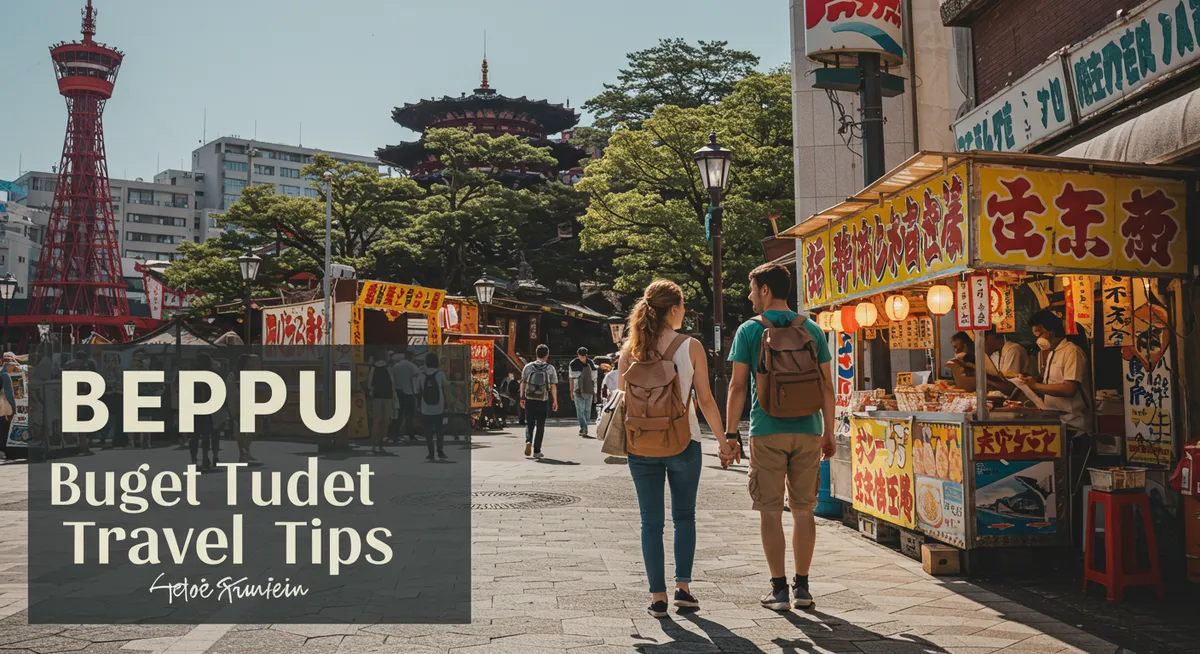
TL;DR: Beppu is one of the most affordable hot-spring destinations in Japan. Budget travelers can explore the city for roughly ¥8,000–¥12,000 per day by staying in hostels or guesthouses, eating at local noodle shops, using the Kamenoi bus pass, and soaking in public bathhouses that cost as little as ¥100–¥300. This 2026 guide breaks down every money-saving strategy you need.
Beppu sits on the eastern coast of Kyushu and produces more hot-spring water than almost any other city on Earth. That volcanic abundance translates into hundreds of public baths, many of them shockingly cheap. Add in affordable Kyushu food culture and a compact, walkable layout, and you have a destination that rewards budget travelers more than most places in Japan. These Beppu budget travel tips are based on real 2026 prices so you can plan with confidence. If you are mapping out a broader Kyushu trip, our guide on getting to Beppu from Fukuoka covers the cheapest transit options.
Daily Budget Breakdown for Beppu in 2026
Turn this guide into a personal route with our free Beppu itinerary planner.
Before diving into individual tips, here is a realistic daily budget breakdown for a budget traveler in Beppu in 2026:
- Accommodation: ¥2,500–¥4,500 (hostel dorm or capsule hotel)
- Food: ¥2,000–¥3,000 (convenience-store breakfast, local lunch set, budget dinner)
- Transport: ¥1,000–¥1,500 (Kamenoi day pass or walking)
- Activities: ¥500–¥2,000 (public onsen entry, one paid attraction)
- Total: roughly ¥8,000–¥12,000 per day (about $55–$80 USD at 2026 rates)
The weak yen in 2026 makes Japan roughly 25–30 percent cheaper for visitors paying in USD, EUR, or GBP compared to a few years ago. Beppu was already affordable by Japanese standards, so the savings compound nicely. For an hour-by-hour spending plan, check our Beppu 1 day itinerary which includes a full budget breakdown. For a country-wide budget perspective, see our Tokyo budget travel guide.
Affordable Accommodation: Where to Stay for Less
Beppu has a wide range of cheap lodging that still delivers a comfortable experience:
- Hostels and guesthouses: Expect ¥2,500–¥4,000 per night for a dorm bed. Several hostels near Beppu Station include small shared onsen baths at no extra charge, essentially giving you a free hot-spring soak every evening.
- Business hotels: Compact rooms near the station run ¥4,500–¥6,500. Many come with a public bath on-site.
- Capsule hotels: A uniquely Japanese option at ¥2,500–¥4,500, available in the station area.
- Booking strategies: Reserve at least two to three months in advance. Midweek stays (especially Wednesday) tend to be the cheapest. Shoulder-season months like June, July, and September offer lower rates than peak autumn.
Staying slightly outside the immediate station area, such as in the Kannawa or Hamawaki neighborhoods, can save another 10–20 percent while keeping you within bus range of everything. Check our where to stay in Beppu guide for neighborhood-by-neighborhood recommendations.
Budget-Friendly Dining and Local Food
Eating well in Beppu on a tight budget is straightforward once you know the local food scene:
- Teishoku (set meal) restaurants: A complete meal with rice, miso soup, pickles, and a main dish for ¥700–¥1,000. Look for the daily specials board outside small eateries.
- Ramen and udon shops: A filling bowl costs ¥600–¥900 at local shops away from tourist areas.
- Jigoku Mushi (hell-steamed cooking): In Kannawa, you can rent a steam vent at the Jigoku Mushi Kobo workshop for about ¥500–¥700 and cook your own food using natural geothermal steam. Bring ingredients from a nearby supermarket to keep costs minimal — it is both a meal and an experience.
- Convenience stores and supermarkets: Onigiri (¥120–¥200), bento boxes (¥400–¥600), and evening-discount sushi trays are reliable budget standbys. Lawson, FamilyMart, and local supermarkets are everywhere.
- Morning markets: Beppu's local markets sell fresh produce, pickles, and street snacks at low prices.
For a deeper dive into what to eat, our Beppu food guide covers the must-try dishes and where to find them.
Free and Cheap Onsen Experiences
The main reason most travelers visit Beppu is the hot springs, and the good news is that many of them are nearly free:
- Public neighborhood baths (sentos): Dozens of local bathhouses charge just ¥100–¥300 per visit. Kaimonji Onsen and Shibaseki Onsen are popular budget picks, offering indoor baths, outdoor baths, and steam rooms.
- Takegawara Onsen: One of the city's most iconic baths, built in 1879, charges only ¥300 for a regular bath or ¥1,500 for the unique sand bath experience.
- Free foot baths (ashiyu): Scattered throughout the city, especially in Kannawa and near Beppu Station. Carry a small towel to dry off afterward.
- Free hand baths: Even more common than foot baths. Keep an eye out for stone basins with steaming water along main streets.
- Hyotan Onsen: A Michelin three-star onsen that charges around ¥800 — still budget-friendly for the quality and variety of baths on offer.
Make sure you know the customs before stepping into any bath. Our Beppu onsen etiquette guide explains what to expect and how to avoid common mistakes. For a ranked list of the best soaks, see best onsen in Beppu.
Free and Low-Cost Attractions Beyond the Onsen
Beppu has plenty to see even after you have had your fill of hot springs:
- Hells of Beppu (Jigoku Meguri): The full seven-hell pass costs ¥2,000. If your budget is tight, visiting just one or two individual hells at ¥400 each gives you the experience without the full price. Our Beppu Hells tour guide helps you pick the best ones.
- Beppu Park: A large, free public park with walking trails, a playground, and seasonal flowers. Great for a morning stroll.
- Kannawa neighborhood walks: Wander through steam-filled alleys where geothermal vents puff from between houses. The atmosphere is otherworldly and completely free to enjoy.
- Kifune Castle observation deck: Entry costs just ¥300 and offers panoramic views over Beppu Bay.
- Beppu Tower: The observation deck is around ¥200 and gives you sweeping views of the city, especially at sunset.
- Local festivals and events: Beppu hosts free community events throughout the year, including the famous Beppu Christmas Fantasia illumination in winter.
Need help structuring your visit? Our things to do in Beppu guide and 3-day Beppu itinerary will help you prioritize.
Smart Transport: Getting Around Beppu Cheaply
Beppu is compact enough that you can walk between many attractions, but buses are essential for reaching the Hells and outer neighborhoods:
- Kamenoi Bus "My Beppu Free" pass: Costs approximately ¥1,000 for a one-day pass with unlimited rides. Pick it up at the bus terminal next to Beppu Station. The pass pays for itself after two or three rides and covers routes to the Hells, the ropeway, and most tourist areas.
- Walking: The central area between Beppu Station and Takegawara is flat and walkable in about 15 minutes. Free and healthy.
- Getting to Beppu: From Fukuoka, the JR Sonic limited express takes about two hours (¥6,000 one way, or covered by JR Pass). Highway buses from Fukuoka cost around ¥3,250 and are a solid budget alternative.
- Avoid taxis: Taxis in Beppu start at ¥680 and climb quickly. Reserve them for late-night emergencies or heavy luggage situations only.
Best Time to Visit Beppu on a Budget
Timing your trip can shave a significant amount off your total spend:
- Cheapest months: June, July, and September. Hotel rates drop, crowds thin out, and you can often snag last-minute deals.
- Shoulder season sweet spots: October and November offer pleasant weather with moderately lower prices than the golden-week or cherry-blossom peaks.
- Day of the week: Midweek stays (Tuesday through Thursday) are consistently cheaper than weekends.
- Avoid: Golden Week (late April to early May), Obon (mid-August), and New Year, when prices spike and availability drops.
Money-Saving Tips Locals Know
A few extra strategies that can stretch your yen further in Beppu:
- Carry cash: Many budget eateries and public baths are cash-only. Withdraw from 7-Eleven ATMs (fee-free for many international cards) to avoid surcharges.
- Use IC cards: Load a Sugoca or Nimoca IC card for seamless bus payments without fumbling for coins.
- Evening supermarket discounts: Most supermarkets slash sushi, bento, and prepared-food prices by 20–50 percent after 7 PM.
- Free Wi-Fi: Beppu Station, many cafes, and some onsen offer free Wi-Fi, saving you data costs if you do not have a local SIM.
- Combine paid and free activities: Pair one paid attraction (like a Hell or Hyotan Onsen) with several free foot baths and neighborhood walks in the same half-day to keep costs low.
- Pack a small towel: Instead of renting towels at every onsen (¥100–¥200 each time), bring your own quick-dry towel and save over multiple visits.
Frequently Asked Questions
How much does a day in Beppu cost on a budget in 2026?
Is Beppu cheaper than Tokyo or Osaka?
What are the cheapest ways to experience Beppu's hot springs?
How can I save money on food in Beppu?
What is the best time to visit Beppu on a budget?
Is the Beppu Hells pass worth the money?
Do I need a JR Pass to get to Beppu?
Beppu proves that world-class hot-spring experiences do not require a luxury budget. With public baths costing less than a cup of coffee, filling local meals under ¥1,000, and a bus pass that unlocks the entire city for ¥1,000, your money stretches remarkably far here. Use these Beppu budget travel tips to plan a trip that is rich in experience without being hard on your wallet. Ready to build your full itinerary? Start with our complete Beppu itinerary or explore our 5-day Beppu itinerary for a deeper dive into the city.