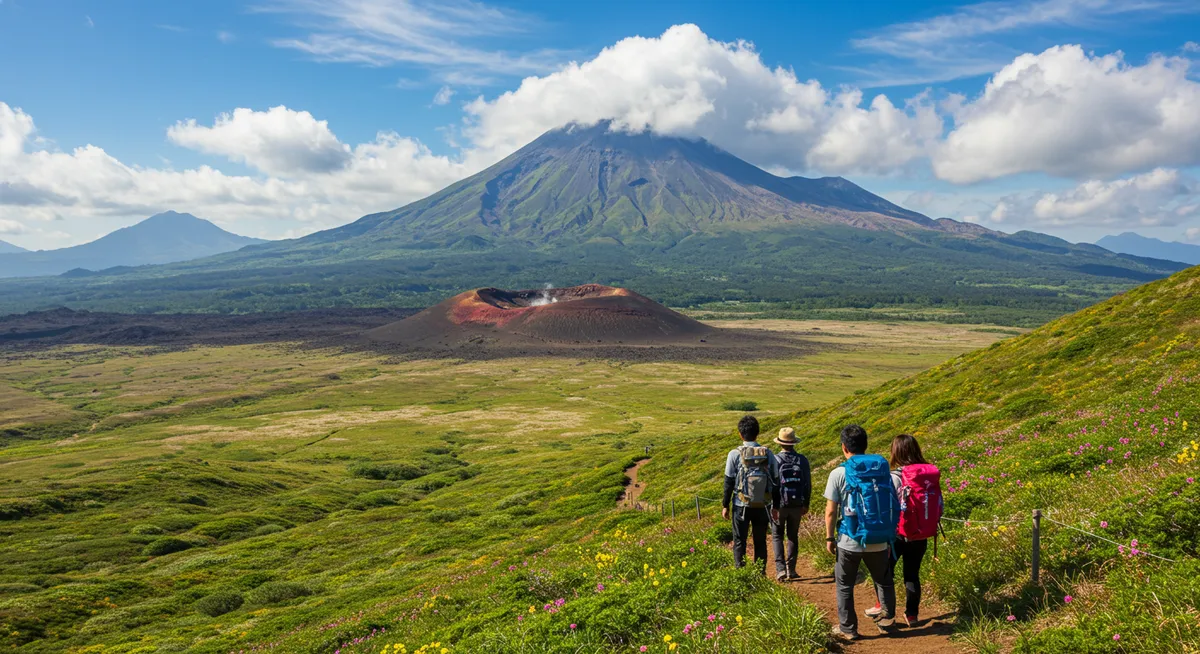
TL;DR: An Aso Volcano day trip from Kumamoto takes 8-10 hours. Drive or take the Kyushu Odan Bus, hit Daikanbo Observatory at sunrise, explore Kusasenri Grasslands, visit Nakadake Crater (check alert levels first), and finish at Aso Shrine. Pack layers, start by 8 AM, and budget around 5,000-8,000 yen for the day excluding transport.
Mount Aso sits at the center of one of the world's largest volcanic calderas, stretching 25 kilometers north to south and 18 kilometers east to west. For travelers based in Kumamoto City, this geological marvel is less than two hours away, making it the definitive day trip in Kyushu. Having visited Aso across multiple seasons, I can confirm that no two visits feel the same — the crater's activity, the grasslands' colors, and the mountain weather shift constantly, creating a landscape that rewards repeated exploration. This 2026 guide walks you through a complete Aso Volcano day trip from Kumamoto, from early-morning departure to evening return, with practical details on transport, timing, costs, and what to do when volcanic alerts change your plans.
How to Get from Kumamoto City to Mount Aso in 2026
Turn this guide into a personal route with our free Kumamoto itinerary planner.
Your transport choice shapes the entire day. Each option has distinct trade-offs for flexibility, cost, and scheduling that you should weigh before committing.
Rental car (recommended): The drive from Kumamoto Station to the Aso caldera area takes roughly 1.5 hours via the Kumamoto-Ozu Expressway and Route 57. Renting a compact car costs approximately 5,000-7,000 yen per day in 2026, plus highway tolls of around 1,200 yen each way. A car lets you visit viewpoints on your own schedule and reach spots like Daikanbo or Komezuka that are difficult to access by public transport. Free parking is available at most major stops.
Kyushu Odan Bus: The express bus runs from Kumamoto Station (Sakuramachi Bus Terminal) to Aso Station, taking about 2 hours. As of 2026, round-trip tickets cost approximately 3,000 yen. Departures are limited — typically two to three morning services — so check the Kyushu Sanko Bus website for the latest timetable. From Aso Station, local buses connect to major sightseeing points, though frequency drops outside peak season.
JR Hohi Line: The train from Kumamoto to Aso Station takes around 70 minutes on limited express services. The JR Kyushu Rail Pass covers this route. From Aso Station, you will need a local bus or taxi to reach the crater and viewpoints, adding time and cost. This option suits JR pass holders who want to minimize expenses.
Regardless of your transport, plan to leave Kumamoto by 8:00 AM at the latest. For a deeper overview of Kumamoto's transport network including city buses and trams, see our Kumamoto public transport guide.
Hour-by-Hour Aso Day Trip Itinerary
This sample schedule assumes a rental car departure from central Kumamoto. Adjust timing by 30-45 minutes if using public transport, and allow extra buffer for bus connections.
8:00 AM — Depart Kumamoto City. Head north on Route 57. The drive itself is scenic, passing through rural Kumamoto Prefecture with views of the outer caldera rim as you approach. Stop briefly at Aso Station area if you need supplies or a restroom break.
9:30 AM — Daikanbo Observatory. Arrive at this elevated viewpoint on the northern rim of the caldera. On clear mornings, you get an unobstructed panorama of all five Aso peaks (Neko-dake, Taka-dake, Naka-dake, Eboshi-dake, and Kishima-dake), the town of Aso below, and the patchwork farmland inside the caldera. The viewing platform is free and takes about 20-30 minutes. Morning light is best for photography — another reason to start early.
10:15 AM — Komezuka (Rice Mound). Drive south along the Aso Panorama Line. Komezuka is a perfectly symmetrical cinder cone that looks like an inverted rice bowl. You cannot climb it, but there is a pull-off area with excellent photo angles. A five-minute stop is sufficient.
10:45 AM — Kusasenri Grasslands. This vast plateau at the foot of Mount Eboshi is one of Aso's most recognizable landscapes. A shallow crater lake sits at the center, surrounded by rolling green grasslands in spring and summer, or golden-brown expanses in autumn. Horseback rides are available (approximately 1,500 yen for a short circuit). The adjacent Aso Volcano Museum (500 yen admission) has live crater camera feeds — useful if Nakadake access is restricted. Spend 45-60 minutes here.
11:45 AM — Nakadake Crater. The active crater of Mount Aso is the headline attraction. From Kusasenri, drive or take the shuttle to the Aso Ropeway station area (the ropeway itself has been out of service since 2016; a shuttle bus or walking trail now provides access). The crater emits sulfurous gas, and on accessible days, you can peer into the turquoise crater lake from the observation deck. Important: Access depends entirely on the volcanic alert level. At Level 1 (normal), the crater is open. At Level 2 or above, the area within 1 km of the crater is closed. Check the Japan Meteorological Agency alert page on the morning of your visit. If the crater is closed, spend extra time at Kusasenri and the Volcano Museum instead. Allow 30-60 minutes when accessible.
12:45 PM — Lunch in Aso Town. Descend to the town of Aso for lunch. The area around Aso Station and Uchinomaki Onsen has several restaurants serving local specialties: Aso red beef (Akaushi), dangojiru (dumpling soup), and takana-meshi (pickled mustard greens over rice). Budget 1,000-2,000 yen for a hearty set meal. If you want a quick bite, the roadside rest stops along Route 57 offer decent options too.
2:00 PM — Aso Shrine. One of Japan's oldest Shinto shrines, Aso Shrine was severely damaged in the 2016 Kumamoto earthquakes. Reconstruction of the two-story romon gate and main hall has been a major ongoing effort and is largely complete as of 2026. The shrine is beautifully framed by cedar trees and the surrounding caldera mountains. The adjacent Monzen-machi shopping street has small souvenir shops and street food stalls. Spend about 45 minutes.
2:45 PM — Optional: Uchinomaki Onsen or Nabegataki Falls. If time allows, soak in one of the public hot spring baths at Uchinomaki Onsen (300-500 yen entry). Alternatively, drive 30 minutes west to Nabegataki Falls, a waterfall you can walk behind — one of Aso's hidden gems. Either option adds roughly an hour to your schedule.
4:00 PM — Depart for Kumamoto. The return drive takes 1.5-2 hours depending on traffic. You should arrive back in Kumamoto by 5:30-6:00 PM, in time for dinner in the city.
What to Pack and How to Prepare for Mount Aso
Mount Aso's weather is notably different from Kumamoto City. The caldera sits at 500-600 meters elevation, and the crater area is above 1,000 meters. Temperatures can be 5-10 degrees Celsius cooler than the city, and conditions change rapidly.
Clothing: Dress in layers regardless of season. A windproof and waterproof outer shell is essential even on sunny days. In winter (December-February), temperatures near the crater can drop below freezing, and snow is common. Summer visitors still need a light jacket for the crater area.
Footwear: Sturdy walking shoes or light hiking boots are strongly recommended. The Nakadake crater path and Kusasenri trails have uneven volcanic rock surfaces. Flip-flops or dress shoes will limit what you can safely access.
Supplies: Carry at least one liter of water and snacks. Vending machines exist at major stops, but gaps between facilities can be long, especially if you venture to lesser-known viewpoints. Sunscreen and a hat are critical in summer — there is minimal shade on the grasslands.
Health note: The sulfurous gases near Nakadake crater can irritate the respiratory system. Visitors with asthma, heart conditions, or respiratory issues should exercise caution and may want to avoid the crater area entirely. Masks are sometimes distributed at the crater entrance when gas levels are borderline.
If this is your first trip to the region, our Kumamoto travel tips for first-timers covers everything from accommodation zones to local etiquette.
Best Seasons to Visit Aso Volcano in 2026
Each season transforms the caldera landscape dramatically, and your experience will differ significantly depending on when you visit.
Spring (April-May): The grasslands turn vivid green after controlled burning (noyaki) in March. Wildflowers bloom across the plateaus, and daytime temperatures average 15-20 degrees Celsius at the caldera floor. This is peak season for photography and hiking. Golden Week (late April to early May) brings crowds, so weekdays are preferable.
Summer (June-August): Lush vegetation covers the caldera, but June brings tsuyu (rainy season) with frequent downpours and reduced visibility. July and August are warm (25-30 degrees Celsius in the lowlands) but storms can roll in quickly at elevation. Morning visits are ideal before afternoon thunderstorms build.
Autumn (October-November): Arguably the most scenic season. The susuki (pampas grass) on Kusasenri and surrounding hillsides turns golden, and clear skies offer sharp mountain views. Temperatures are comfortable at 10-18 degrees Celsius. Late November can be cold at elevation.
Winter (December-February): Snow blankets the peaks and grasslands, creating an austere beauty. Some roads may be closed or require chains. Fewer tourists mean solitude, but public transport frequency drops. The crater is often accessible in winter if alert levels permit. Daytime highs hover around 2-5 degrees Celsius at the caldera floor.
What to Do If the Crater Is Closed
Volcanic alert levels at Nakadake fluctuate throughout the year. In recent years, the crater has been closed for significant stretches. Do not treat a closure as a reason to cancel your trip — the caldera experience extends far beyond the crater itself.
Alternative highlights when the crater is restricted:
- Aso Volcano Museum: The real-time crater cameras here give you a close-up view of the crater lake and fumaroles even when physical access is denied. Interactive exhibits explain the geological history of the caldera.
- Naka-dake hiking trails: Even when the summit crater is closed, lower trails around the mountain remain open at Level 2. The trail from the ropeway station toward Sunasenri offers excellent views of the volcanic landscape.
- Extended Kusasenri exploration: Walk the full perimeter of the grasslands (approximately 4 km loop) for a more immersive experience than the usual quick visit.
- Sensuikyo Gorge: A lesser-known ravine on the eastern side of the caldera with a short hiking trail, waterfalls, and autumn foliage.
- Aso Farm Land: A family-friendly resort area with hot springs, animal interactions, and dome-shaped accommodations. Good for travelers with children.
Budget Breakdown for an Aso Day Trip in 2026
Understanding costs upfront helps you plan without surprises. Here is a realistic breakdown for one person in 2026.
| Expense | Rental Car | Public Transport |
|---|---|---|
| Transport (round trip) | 5,000-7,000 yen + 2,400 yen tolls | 3,000-4,500 yen |
| Fuel | 1,500-2,000 yen | N/A |
| Aso Volcano Museum | 500 yen | 500 yen |
| Horseback riding (optional) | 1,500 yen | 1,500 yen |
| Lunch | 1,000-2,000 yen | 1,000-2,000 yen |
| Onsen (optional) | 300-500 yen | 300-500 yen |
| Total | 10,700-15,400 yen | 6,300-10,000 yen |
Splitting a rental car with two to four people makes driving the most economical and flexible option. If you are staying overnight near Aso, check our guide to where to stay in Kumamoto for accommodation options that make early departures easier.
Combining Aso with Your Broader Kumamoto Itinerary
Most travelers spend two to five days in the greater Kumamoto area, and the Aso day trip slots naturally into the middle of that stay. On your non-Aso days, explore Kumamoto Castle and its surrounding district, stroll through Suizenji Garden, or dive into the local food scene with our Kumamoto food guide. For a complete multi-day plan, our 3-day Kumamoto itinerary builds the Aso trip into a balanced schedule with city exploration and cultural highlights.
If you have more time in Kyushu, pair your Kumamoto stay with a 3-day Kagoshima itinerary to see another active volcano — Sakurajima — and experience a completely different corner of southern Japan.
Frequently Asked Questions
Is Aso Volcano safe to visit in 2026?
How long does an Aso Volcano day trip from Kumamoto take?
Can I visit Aso Volcano without a car?
What is the best time of year to visit Aso Volcano?
How much does an Aso day trip cost per person in 2026?
What should I do if the Aso crater is closed during my visit?
An Aso Volcano day trip from Kumamoto remains one of the most rewarding experiences in Kyushu for 2026 travelers. The combination of a massive active caldera, sweeping grassland plateaus, ancient shrines, and local cuisine creates a day that balances natural drama with cultural depth. Whether the crater is steaming and accessible or quietly closed behind safety barriers, the caldera never fails to impress. Start early, pack smart, check the alert levels, and let Mount Aso redefine what you thought a day trip could be.