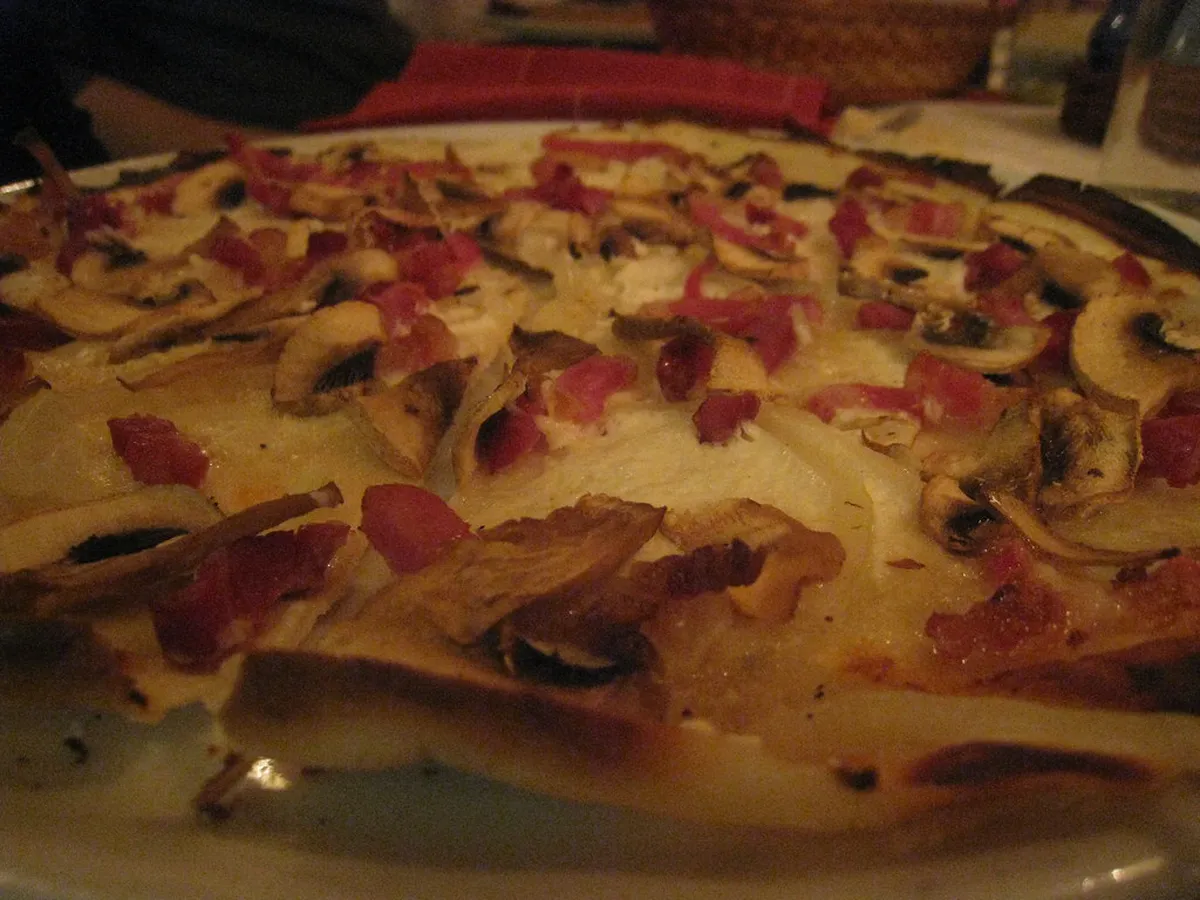
Colmar is one of France's most rewarding food destinations, sitting at the crossroads of French and German culinary traditions. The city's Alsatian identity shapes every dish — from hearty choucroute garnie to paper-thin tarte flambée. Knowing where to eat, what to order, and when to book makes all the difference on a first visit.
This Alsatian food guide walks you through the best restaurants in Colmar, the must-try dishes, and the practical details most travel guides skip. If you're planning your trip around food, pair this guide with a 1-day itinerary in Colmar for the full picture. Reserve at least two dinners in advance — tables at the top winstubs fill fast, especially on weekends.
Discover Colmar's Local Food: An Alsatian Culinary Guide
Turn this guide into a personal route with our free Colmar itinerary planner.
Colmar's dining scene splits naturally across three neighborhoods, and choosing the right zone saves time and money. Little Venice (Petite Venise) is the most scenic area, with canal-side terraces perfect for a romantic dinner. The Old Town, around Place de la Cathédrale, is the heartland of traditional winstubs — Franco-German taverns with generous portions and local wine.
Quartier des Tanneurs offers a quieter alternative with smaller, often more affordable restaurants tucked along cobbled lanes. Budget-conscious travelers will find better walk-in availability there, especially at lunch. Gourmet seekers should focus on Old Town and the hotel restaurants just off the main squares.
A well-structured food day in Colmar typically starts with a market visit, moves into a winstub lunch, and ends with a wine-bar apéritif before dinner. The Marché Couvert Colmar guide covers the best stalls, opening hours, and what to buy. Plan the market for a Tuesday to Saturday morning, when the selection is at its peak.
Exploring Traditional Alsatian Cuisine in Colmar
Alsatian cuisine is one of Europe's most distinctive regional identities, shaped by centuries of French and German rule. French cooking technique meets German portion sizes, rich pork cuts, and locally grown Riesling. The result is food that feels comforting and refined at the same time — unlike anything purely French or purely German.
First-timers often get confused by menu language, since many dishes appear in Alsatian dialect rather than standard French. Flammekueche is the local word for tarte flambée; baeckeoffe translates loosely as baker's oven stew. Asking your server for the French or English name of any dish is perfectly normal and widely welcomed.
A winstub is the defining dining format of Alsace — a casual tavern that blends a wine bar and a traditional restaurant. Winstubs serve local wines by the glass alongside hearty Alsatian plates in a convivial, unhurried atmosphere. Expect wooden interiors, shared tables during busy periods, and menus that change with the seasons.
Seasonal sourcing is a core principle for the best winstubs in Colmar. Spring brings fresh white asparagus paired with local Pinot Blanc; autumn means game and fermented cabbage at their peak. Visiting during the right season can meaningfully improve your experience — see the best time to visit Colmar season-by-season guide for more detail.
Must-Try Dishes: A Colmar Local Food Guide
Five dishes define the Alsatian food experience in Colmar, and each suits a different appetite and budget. The table below helps you choose quickly — whether you're vegetarian, on a budget, or after a full sharing feast. Prices below are approximate and may vary by restaurant; always confirm on arrival.
- Tarte flambée (Flammekueche)
- Best venue: Wistub Brenner or most winstubs
- Price range: €10–€14
- Dietary flag: Vegetarian version available (onion and crème fraîche only)
- Notes: Thin-crust, wood-fired — share one as a starter
- Choucroute garnie
- Best venue: Wistub Brenner or La Fleur de Sel
- Price range: €18–€26
- Dietary flag: Contains pork and sausage — not vegetarian
- Notes: Pair with a glass of local Riesling
- Baeckeoffe
- Best venue: Jadis et Gourmande or traditional winstubs
- Price range: €20–€28
- Dietary flag: Meat-based stew — not vegetarian
- Notes: Slow-cooked overnight; often requires advance order
- Bibalaskas (fromage blanc dip)
- Best venue: Marché Couvert or winstub starters
- Price range: €5–€9
- Dietary flag: Vegetarian-friendly
- Notes: A creamy herbed cheese dip — great as a shared appetizer
- Spätzle
- Best venue: Most winstubs as a side dish
- Price range: €4–€8 as a side
- Dietary flag: Often vegetarian, check for egg content
- Notes: Soft egg noodles — a filling, comforting choice
Best Restaurants in Colmar Map
Use the Colmar official city map PDF to locate restaurants before you arrive — most key spots cluster within a 10-minute walk of each other. Wistub Brenner, La Fleur de Sel, and Jadis et Gourmande all sit within the Old Town and Little Venice corridor. Marking these on a phone map before your visit prevents time lost navigating the narrow lanes.
Booking urgency varies sharply by season in Colmar. During Christmas market weeks (late November through late December), top winstubs fill two to three weeks in advance. Summer weekends (July and August) also require reservations, ideally at least a week ahead. For shoulder season visits in spring or early autumn, same-day booking by phone is often possible for lunch.
Walk-in dining is most realistic at lunch on weekdays, particularly in Quartier des Tanneurs. Evenings at the most popular spots — Wistub Brenner especially — almost always require a reservation. Arriving at opening time (typically noon or 19:00) gives walk-in travelers the best chance of a table.
Wistub Brenner — Traditional Alsatian Cuisine in Little Venice
Wistub Brenner is widely regarded as the benchmark winstub in Colmar, and it earns that reputation consistently. Chef Queille sources ingredients from local Alsatian producers, keeping the menu anchored in seasonal, regional cooking. The kitchen avoids shortcuts — which means dishes take time, and the atmosphere rewards patience over efficiency.
Two practical constraints separate Brenner from its competitors: cash is strongly preferred, and online booking is not available. Reservations require a direct phone call or an in-person visit earlier in the day. The queue during peak evenings can reach 30–45 minutes for walk-ins, so calling ahead is always the smarter move.
The tarte flambée here is a genuine benchmark — thin, lightly charred, and finished with quality crème fraîche. Order the choucroute garnie if you want the full Alsatian experience; it pairs well with a half-carafe of house Riesling. Portion sizes lean generous, so one shared starter and one main per person is usually plenty.
La Fleur de Sel
La Fleur de Sel occupies one of the most coveted spots in Colmar — a terrace table overlooking the Little Venice canals. The setting makes it a natural choice for a relaxed dinner on a warm evening or a long summer lunch. Arrive early to secure a terrace seat; indoor tables fill quickly once the canal-view spots are gone.
The menu at La Fleur de Sel is intentionally concise, focusing on a handful of well-executed Alsatian dishes. That small menu is a trade-off — fewer choices, but higher consistency across every plate. During Christmas market season, seasonal mulled wine appears alongside the usual drinks list, making it a popular early-evening stop.
For a gourmet step up from La Fleur de Sel, Restaurant l'Echevin in Hôtel Le Maréchal offers a polished tasting-menu experience with canal views. Prices at l'Echevin are noticeably higher, so treat it as a splurge option rather than an everyday pick. Check the restaurant's site directly for current opening hours and reservation availability before visiting.
Jadis et Gourmande and Other Mid-Range Picks
Jadis et Gourmande is the most practical mid-range Alsatian restaurant for solo travelers and couples visiting Colmar. It consistently earns strong reviews on Jadis et Gourmande on TripAdvisor for its warm service and well-priced seasonal menus. Unlike Wistub Brenner, it tends to be less crowded mid-week — making walk-in lunch more realistic.
The menu reads clearly in French, and staff are generally comfortable helping English-speaking visitors navigate it. Baeckeoffe here is a highlight; call ahead to confirm if it needs to be ordered in advance, as it varies by day. Budget around €25–€35 per person for a two-course meal with a glass of wine.
Caveau Saint Jean is another reliable mid-range option, popular with locals and well-reviewed for its wine selection. It suits travelers who want a quieter atmosphere than the main tourist-facing restaurants near Little Venice. For hidden dining finds away from the main tourist trail, explore the hidden gems in Colmar beyond Petite Venise.
La Bonneterie, Sweet Treats, and Daytime Eats
La Bonneterie is Colmar's top daytime café for brunch and a pre-dinner apéritif — no competitor covers it consistently. Its menu leans lighter than the traditional winstub format, making it ideal for travelers who want a break from heavy Alsatian portions. Note that La Bonneterie closes in the early evening, so it works as a daytime stop rather than a dinner venue.
Alsatian desserts and pastries deserve a dedicated stop on any food itinerary. Kougelhopf is the region's most iconic sweet — a ring-shaped brioche-style cake dusted with powdered sugar and sometimes studded with raisins. Pain d'épices (spiced gingerbread) and macarons d'Alsace are both available at local pâtisseries and at Marché Couvert stalls.
When deciding what to eat now versus what to take home, think about texture and shelf life. Pain d'épices and vacuum-packed Munster cheese travel well as edible souvenirs. Kougelhopf is best eaten fresh, so buy it on your last morning and enjoy it at the hotel or on the train. Marché Couvert is the most reliable source for all three — check the dedicated Marché Couvert Colmar guide for opening hours and stall tips.
Wines and Drinks: Perfect Pairings for Colmar Food
Alsace produces some of France's most food-friendly white wines, and pairing them correctly with your meal is straightforward once you know the basics. Riesling's bright acidity cuts through the fat in choucroute garnie — it's the classic match and the most widely available choice. Gewurztraminer, with its floral and spicy character, pairs beautifully with baeckeoffe and strong local cheeses.
Pinot Gris is a richer, fuller white that works well with tarte flambée and pork-based dishes. Crémant d'Alsace — the region's sparkling wine — is an excellent aperitif and pairs well with bibalaskas and lighter starters. Most winstubs offer all four by the glass, so mixing across the meal is perfectly normal.
For dedicated wine exploration, L'épicurien wine bistro is a local favourite with a well-curated Alsace-focused list. Caveau Saint Jean also runs a strong cellar, with knowledgeable staff who can guide you through lesser-known Alsace AOC labels. Both spots are walkable from Place de la Cathédrale and work well as a final stop before or after dinner.
Dining Etiquette and Tips for Your Colmar Culinary Journey
Ordering lunch instead of dinner at the same restaurant is the single most effective way to reduce your food budget in Colmar. Most winstubs and mid-range restaurants offer a plat du jour (dish of the day) at lunch for €12–€16 — the same kitchen, 30–40% less cost. This strategy works especially well at Jadis et Gourmande and La Fleur de Sel.
Tipping is not obligatory in France, but rounding up or leaving 5–10% for good service is appreciated. Service charges are almost always included in the final bill — look for "service compris" at the bottom of the menu. Leaving a small tip in cash is a friendly gesture, particularly at smaller family-run establishments.
French-only menus are common even in tourist-heavy areas of Colmar, so downloading a translation app before your trip is useful. Most staff at the top restaurants speak enough English to help, especially in Little Venice and the Old Town. If a menu uses Alsatian dialect terms, don't hesitate to ask — servers are generally proud to explain local dishes.
Booking urgency peaks during the Christmas market season and summer weekends — reservations two to three weeks ahead are strongly advised for those periods. The Colmar Christmas market guide covers restaurant logistics during that busy window. For shoulder seasons, same-week reservations by phone usually suffice for most spots outside the top two or three.
Must-Try Alsatian Dishes in Colmar
Colmar's menus revolve around a tight set of Alsatian specialities, and learning the shortlist before you sit down makes ordering far easier. Many of these dishes appear under their Alsatian dialect names rather than standard French, so the table below pairs each one with what it actually is, a rough 2026 price, and how best to order it. Most are made to share, which keeps a winstub dinner sociable and good value.
| Dish | What it is | Typical price (2026) | How to order it |
|---|---|---|---|
| Tarte flambée (Flammekueche) | Paper-thin wood-fired tart with crème fraîche, onions and lardons | €10–€14 | Share one as a starter; ask for the gratinée (cheese) or onion-only vegetarian version |
| Choucroute garnie | Wine-braised sauerkraut piled with pork cuts and Alsatian sausages | €18–€26 | The regional benchmark — order it at least once, with a glass of Riesling |
| Baeckeoffe | Three-meat stew (pork, lamb, beef) slow-cooked overnight in a sealed clay pot | €20–€28 | Often needs ordering in advance; ideal on a cold evening |
| Coq au Riesling | Chicken braised in Alsace Riesling with cream and mushrooms | €19–€25 | A gentler alternative to choucroute; pairs with the same Riesling used to cook it |
| Munster cheese | Pungent washed-rind cow's-milk cheese, often served warm with cumin seeds and potatoes | €7–€12 | Order as a cheese course or "Munster au cumin"; also sold vacuum-packed to take home |
| Bretzel | Soft Alsatian pretzel, plain or topped with salt or cheese | €2–€4 | A quick bakery or market snack between meals |
| Kougelhopf | Ring-shaped brioche-style cake studded with raisins and dusted with sugar | €4–€9 | Buy fresh from a pâtisserie on your last morning; best eaten the same day |
| Tarte aux quetsches | Open plum tart made with small late-summer Alsatian quetsche plums | €4–€7 per slice | A seasonal autumn dessert — look for it from late August onwards |
If you only have time for a few, lead with tarte flambée and choucroute garnie for the savoury essentials, then finish with kougelhopf or, in autumn, tarte aux quetsches. Vegetarians can still eat well: an onion-only flammekueche, a Munster cheese course, and a slice of plum tart cover a full meal without meat.
Best Restaurants & Winstubs in Colmar
Colmar's dining splits cleanly into three price tiers, and matching the tier to the occasion is the easiest way to eat well without overspending. The list below groups the most reliable Colmar restaurants by budget — from special-occasion tables to quick, walk-in-friendly spots near Petite Venise and the Old Town. Book the upper two tiers ahead, especially in summer and during the Christmas markets; the budget spots are usually fine for a same-day lunch.
Traditional winstubs (mid-range, €25–€40 per head)
- Wistub Brenner — the benchmark winstub on the edge of Little Venice; benchmark tarte flambée and choucroute garnie. Cash preferred, phone booking only, expect a queue at peak evenings.
- La Fleur de Sel — canal-side terrace tables overlooking Petite Venise with a short, well-executed Alsatian menu. Arrive early for a terrace seat.
- Jadis et Gourmande — a calmer mid-week alternative with warm service and good-value seasonal menus; reliable for solo travellers and couples.
- Caveau Saint Jean — a local favourite in a vaulted cellar, well-reviewed for its Alsace wine list and quieter atmosphere.
Gourmet & special occasion (€60+ per head)
- JY's — chef Jean-Yves Schillinger's Michelin-starred dining room beside the canals; modern, ambitious cooking and Colmar's top fine-dining address. Reserve well ahead.
- La Maison des Têtes — refined Alsatian gastronomy inside the landmark Renaissance "House of Heads", a memorable special-occasion setting.
- Restaurant l'Echevin (Hôtel Le Maréchal) — polished tasting menus with canal views; treat as a splurge.
Budget & quick eats (under €15)
- Marché Couvert food stalls — the covered market is the best-value sit-down or takeaway lunch, with regional dishes, charcuterie and cheese counters.
- La Bonneterie — a daytime café for lighter brunch plates and an apéritif; closes early evening, so plan it as a daytime stop.
- Bakeries and bretzel stands around Place de la Cathédrale — grab a bretzel, a tarte flambée slice, or a kougelhopf on the move.
One booking rule covers most visits: phone or reserve online two to three weeks ahead for the gourmet tier and for any evening during Christmas market season, a week ahead for summer weekends, and same-day for budget lunches. Lunch at the mid-range winstubs is the value sweet spot — the same kitchens often run a plat du jour for €12–€16.
Where to Eat: Best Areas
Colmar is compact, so the question is less "how far" and more "what kind of meal" — each food zone has a distinct character and price feel. Picking an area first, then a restaurant within it, is the fastest way to plan each meal of the day.
Petite Venise (Little Venice)
The canal-side quarter is the most scenic place to eat, with terrace tables right over the water and the city's headline addresses — Wistub Brenner, La Fleur de Sel and JY's — all within a short walk. It's the natural choice for a romantic dinner or a long summer lunch, but it's also the busiest and priciest zone, so book ahead and aim for an early terrace seat.
Marché Couvert (covered market)
For the best-value, most local meal of the day, head to the covered market on the edge of Petite Venise. Stalls serve regional dishes, charcuterie, cheese and pastries you can eat in or take away, and it's the single best stop for edible souvenirs like Munster and pain d'épices. Check opening hours and the best stalls in the dedicated Marché Couvert Colmar guide before you go.
Old Town squares
Around Place de la Cathédrale and the Old Town squares you'll find the heartland of traditional winstubs and the most walk-in availability, particularly at weekday lunch. It's the best area for an unhurried, classic Alsatian meal away from the tightest canal-side crowds, and bakeries here are ideal for a quick bretzel or kougelhopf between sights.
Frequently Asked Questions
What is the must-try traditional dish in Colmar?
Tarte flambée (Flammekueche) is the most accessible introduction to Alsatian cuisine — thin, lightly charred, and available at nearly every winstub. Choucroute garnie is the heartier regional benchmark and worth ordering at least once. Both dishes appear consistently at Wistub Brenner and La Fleur de Sel.
Do I need to book restaurants in advance in Colmar?
Yes, especially for evening dining at popular winstubs. During Christmas market season and summer weekends, book two to three weeks ahead. Lunch on weekdays allows more flexibility, and walk-ins are more realistic at Quartier des Tanneurs spots.
Are there vegetarian or vegan options in Colmar restaurants?
Vegetarian options exist but are limited in traditional winstubs — tarte flambée with onion and crème fraîche, bibalaskas, and spätzle are reliable choices. Vegan options are harder to find; La Bonneterie's lighter café menu is the most accommodating for plant-based travelers.
What is the best area for restaurants in Colmar?
Petite Venise (Little Venice) is the most scenic dining zone, with canal-side terraces and the top winstubs like Wistub Brenner and La Fleur de Sel, plus Michelin-starred JY's. The Old Town around Place de la Cathédrale is the heartland of traditional winstubs and the easiest place for a weekday-lunch walk-in, while the Marché Couvert covered market is the best-value area for a quick local meal.
Is eating out in Colmar expensive for tourists?
Colmar sits in the mid-range for French dining. A winstub main course typically costs €18–€28; lunch plats du jour run €12–€16. Using the lunch strategy at top restaurants saves 30–40% without sacrificing quality. See the best time to visit Colmar guide for seasonal pricing notes.
Where can I buy Alsatian food to take home from Colmar?
Marché Couvert is the best single stop for edible souvenirs — pain d'épices, vacuum-packed Munster cheese, and local Riesling all travel well. Kougelhopf is best bought fresh on your last morning from a pâtisserie. Most stalls accept card payment.
Colmar's food scene rewards travelers who come prepared with a short list of restaurants, a few advance reservations, and a willingness to order dishes by their Alsatian names. The Franco-Germanic culinary identity here is unlike anywhere else in France — generous, seasonal, and deeply regional. Whether you linger over a canal-side choucroute or pick up pain d'épices at Marché Couvert, every meal adds to the experience.
Start with a winstub dinner on your first evening to anchor your palate in Alsatian flavors. Then use the neighborhood zones — Little Venice for atmosphere, Old Town for tradition, Quartier des Tanneurs for value — to vary each meal. If you haven't sorted transport yet, the guide on how to get to Colmar from Paris, Strasbourg, and Basel covers all the practical options.