3 Days in Rome: What to Do and See (2026 Itinerary)
What to do and see with 3 days in Rome, Italy. A day-by-day 2026 itinerary covering the Colosseum, Vatican, Trastevere, hidden gems, local food spots, and practical tips for first-time visitors.
ItiMaker Team11 min read
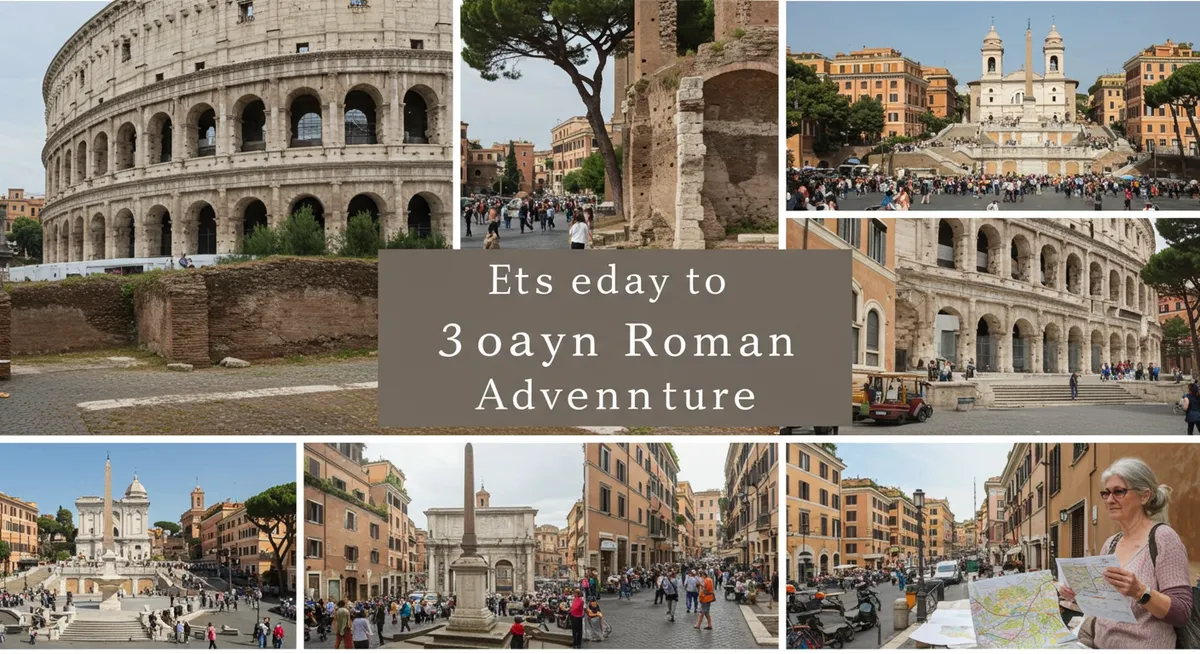
<p><strong>TL;DR:</strong> Three days in Rome lets you cover the Colosseum and Roman Forum on Day 1, Vatican City and Trastevere on Day 2, and the Borghese Gallery, Spanish Steps, and local food scene on Day 3. Book skip-the-line tickets in advance, wear comfortable shoes, and budget around EUR 50-80 per day for meals. This 2026 itinerary balances must-see landmarks with neighborhood exploration so you leave feeling like you truly experienced Rome.</p>
<h1>What to Do and See with 3 Days in Rome, Italy: The Complete 2026 Itinerary</h1>
<aside class="affiliate-slot" data-nosnippet
data-affiliate-unit="experience_finder"
data-affiliate-provider="getyourguide"
data-affiliate-widget="getyourguide_city"
data-affiliate-format="widget"
data-affiliate-placement="primary"
data-affiliate-campaign="itimaker-com-unit-gcity-what-to-do-and-see-with-3-days-in-rome-italy"
data-affiliate-city="Rome"
data-affiliate-location-id="33"
style="min-height:400px">
<span class="affiliate-badge">Sponsored</span>
<div class="affiliate-skeleton" aria-hidden="true"></div>
<p class="affiliate-unit__loading" role="status">Loading live activities…</p>
<div class="affiliate-inner"><div
data-gyg-href="https://widget.getyourguide.com/default/city.frame"
data-gyg-location-id="33"
data-gyg-locale-code="en-US"
data-gyg-widget="city"
data-gyg-partner-id="26CH4CT"
data-gyg-campaign="itimaker-com-unit-gcity-what-to-do-and-see-with-3-days-in-rome-italy"
data-gyg-cmp="itimaker-com-unit-gcity-what-to-do-and-see-with-3-days-in-rome-italy"
loading="lazy"></div></div>
</aside>
<p>Rome is one of those rare cities where every street corner tells a story stretching back thousands of years. Whether you are visiting for the first time or returning after a long absence, figuring out what to do and see with 3 days in Rome, Italy can feel overwhelming. The city holds over 900 churches, dozens of world-class museums, and countless piazzas where daily life unfolds against a backdrop of ancient ruins. This 2026 guide breaks everything down into a practical day-by-day plan so you can experience the best of the Eternal City without rushing or missing the highlights. For more trip planning tools, visit <a href="https://www.itimaker.com">ItiMaker.com</a>.</p>
<h2>Day 1: Ancient Rome and the Historic Center</h2>
<p>Start your first morning at the <strong>Colosseum</strong>, the 2,000-year-old amphitheater that once hosted gladiatorial contests for up to 50,000 spectators. As of 2026, timed-entry tickets are mandatory and sell out weeks ahead during peak season (April through October), so book through the official Parco Archeologico del Colosseo website well in advance. The underground level and arena floor tour offers a perspective most visitors miss, letting you stand where gladiators once waited before entering the arena.</p>
<aside class="affiliate-slot" data-nosnippet
data-affiliate-unit="experience_finder"
data-affiliate-provider="viator"
data-affiliate-widget="viator_widget"
data-affiliate-format="widget"
data-affiliate-placement="secondary"
data-affiliate-campaign="itimaker-com-unit-vauto-what-to-do-and-see-with-3-days-in-rome-italy"
data-affiliate-city="Rome"
data-affiliate-location-id=""
style="min-height:600px">
<span class="affiliate-badge">Sponsored</span>
<div class="affiliate-skeleton" aria-hidden="true"></div>
<p class="affiliate-unit__loading" role="status">Loading live activities…</p>
<div class="affiliate-inner"><div
data-vi-partner-id="P00271059"
data-vi-widget-ref="W-d5dc59c4-3a04-417e-8a46-7be440461eba"
data-vi-search-term="Rome"
data-vi-campaign="itimaker-com-unit-vauto-what-to-do-and-see-with-3-days-in-rome-italy"
data-campaign="itimaker-com-unit-vauto-what-to-do-and-see-with-3-days-in-rome-italy"></div></div>
</aside>
<p>Your Colosseum ticket includes access to the <strong>Roman Forum</strong> and <strong>Palatine Hill</strong>, both within a two-minute walk. The Forum was the political and commercial heart of the Roman Empire, and Palatine Hill offers sweeping views across the ruins and toward the Circus Maximus. Plan to spend about three hours exploring all three sites combined.</p>
<p>After lunch, walk north toward the <strong>Pantheon</strong>, one of the best-preserved ancient Roman buildings in the world. Its unreinforced concrete dome, completed around 125 AD, remains the largest of its kind. Entry is free but requires a timed reservation in 2026. From there, it is a short stroll to the <strong>Trevi Fountain</strong>, which looks stunning after recent restoration work. Toss a coin over your left shoulder with your right hand to follow the tradition that guarantees your return to Rome.</p>
<p>End your evening with dinner in the <strong>Monti neighborhood</strong>, Rome's oldest rione. This area has evolved into one of the city's most vibrant dining districts, with trattorias serving classic Roman pasta dishes like cacio e pepe and amatriciana at prices lower than those near major tourist sites. If you want to understand <a href="https://www.itimaker.com/blog/how-many-days-do-i-need-in-rome-italy">how many days you really need in Rome</a>, spending even one evening in Monti will make you wish you had more.</p>
<h2>Day 2: Vatican City, Castel Sant'Angelo, and Trastevere</h2>
<p>Dedicate your second day to Vatican City and the west bank of the Tiber. Arrive at the <strong>Vatican Museums</strong> right when they open at 8:00 AM to beat the crowds. The museums contain over 70,000 works of art across 54 galleries, culminating in the Sistine Chapel. Michelangelo's ceiling frescoes and the Last Judgment altarpiece are genuinely breathtaking in person, no matter how many photos you have seen. As of 2026, the Vatican has expanded its online ticketing system, and skip-the-line tickets cost around EUR 22 per adult.</p>
<aside class="affiliate-slot" data-nosnippet
data-affiliate-unit="experience_finder"
data-affiliate-provider="getyourguide"
data-affiliate-widget="getyourguide_activities"
data-affiliate-format="widget"
data-affiliate-placement="tertiary"
data-affiliate-campaign="itimaker-com-unit-gact-what-to-do-and-see-with-3-days-in-rome-italy"
data-affiliate-city="Rome"
data-affiliate-location-id="33"
style="min-height:420px">
<span class="affiliate-badge">Sponsored</span>
<div class="affiliate-skeleton" aria-hidden="true"></div>
<p class="affiliate-unit__loading" role="status">Loading live activities…</p>
<div class="affiliate-inner"><div
data-gyg-href="https://widget.getyourguide.com/default/activities.frame"
data-gyg-location-id="33"
data-gyg-locale-code="en-US"
data-gyg-widget="activities"
data-gyg-partner-id="26CH4CT"
data-gyg-campaign="itimaker-com-unit-gact-what-to-do-and-see-with-3-days-in-rome-italy"
data-gyg-cmp="itimaker-com-unit-gact-what-to-do-and-see-with-3-days-in-rome-italy" data-gyg-number-of-items="4"
loading="lazy"></div></div>
</aside>
<p>After the museums, walk through to <strong>St. Peter's Basilica</strong>. The interior is free to enter, though climbing the dome costs EUR 8 for the elevator option (you still climb 320 steps after the elevator stops). The view from the top of the dome is arguably the best panoramic viewpoint in all of Rome. Dress code is enforced: cover your shoulders and knees.</p>
<p>Cross back over the Tiber to <strong>Castel Sant'Angelo</strong>, Emperor Hadrian's former mausoleum turned papal fortress. The rooftop terrace provides excellent views of St. Peter's dome and the river below. In the late afternoon, continue south along the river to <strong>Trastevere</strong>, a neighborhood defined by ivy-covered facades, cobblestone lanes, and a thriving restaurant scene. Grab an aperitivo at a sidewalk cafe before settling into dinner at one of the local osterias. Trastevere comes alive after dark, making it the ideal spot for your second evening in Rome.</p>
<p>For families traveling with children, check our guide to <a href="https://www.itimaker.com/blog/best-rome-tours-with-kids">the best Rome tours with kids</a> for age-appropriate Vatican tour options.</p>
<h2>Day 3: Art, Piazzas, and the Roman Food Scene</h2>
<p>Your final day focuses on art, architecture, and culinary experiences. Start at the <strong>Borghese Gallery and Museum</strong>, which houses masterpieces by Bernini, Caravaggio, Raphael, and Titian in a stunning villa setting. Reservations are mandatory and limited to two-hour slots with a maximum of 360 visitors at a time. Book at least two weeks ahead, especially for morning slots. The gallery's collection of Bernini sculptures, including Apollo and Daphne and The Rape of Proserpina, are worth the trip to Rome on their own.</p>
<p>After the gallery, walk through the <strong>Villa Borghese gardens</strong> and descend the Pincian Hill toward the <strong>Spanish Steps</strong>. The 135-step stairway connecting Piazza di Spagna to the Trinita dei Monti church is one of Rome's most photographed spots. Continue west to <strong>Piazza Navona</strong>, built on the footprint of a first-century stadium. Bernini's Fountain of the Four Rivers anchors the center, and the piazza buzzes with street performers and outdoor cafes throughout the day.</p>
<p>For lunch, head to <strong>Campo de' Fiori</strong>, where the morning market sells fresh produce, aged cheeses, cured meats, and spices. Grab supplì (fried rice balls) from a nearby street vendor. In the afternoon, explore the <strong>Jewish Ghetto</strong>, one of Rome's most historically significant and often overlooked neighborhoods. Try the deep-fried artichokes (carciofi alla giudia) at any of the local restaurants for a dish you will not find prepared this way outside of Rome.</p>
<p>For your final dinner, consider the <strong>Testaccio neighborhood</strong>, known among locals as the birthplace of Roman cuisine. Restaurants here serve traditional dishes like trippa alla romana, rigatoni alla gricia, and saltimbocca. It is less touristy than the historic center and gives you an authentic farewell meal. If you are considering extending your trip, our guide on <a href="https://www.itimaker.com/blog/best-places-to-see-in-rome-in-3-days">the best places to see in Rome in 3 days</a> covers additional sights you might fit in.</p>
<h2>Practical Tips for Visiting Rome in 2026</h2>
<p>Getting the logistics right makes a significant difference in how much you enjoy your three days. Here are the essentials for planning a Rome trip in 2026:</p>
<ul>
<li><strong>Transportation:</strong> Rome's metro has three lines (A, B, and C). A single ticket costs EUR 1.50 and is valid for 100 minutes on buses and trams. However, the historic center is compact enough that walking is usually faster and more enjoyable. Budget about 15,000 to 20,000 steps per day.</li>
<li><strong>Best time to visit:</strong> April through June and September through October offer pleasant weather and manageable crowds. July and August are hot (often exceeding 35C) and packed with tourists. For detailed seasonal advice, see our guide on <a href="https://www.itimaker.com/blog/best-time-to-visit-rome">the best time to visit Rome</a>.</li>
<li><strong>Budget:</strong> Expect to spend EUR 50-80 per day on meals if you mix trattorias with street food. Museum entries total roughly EUR 50-70 for all major sites over three days. A Roma Pass (EUR 52 for 48 hours in 2026) covers one museum entry and unlimited public transport.</li>
<li><strong>Water:</strong> Rome has over 2,500 public drinking fountains called nasoni. Bring a refillable bottle and save money throughout the day.</li>
<li><strong>Safety:</strong> Rome is generally safe, but pickpocketing is common on crowded buses (especially lines 40 and 64 to the Vatican) and around major tourist sites. Keep valuables in a front pocket or crossbody bag.</li>
<li><strong>Day trips:</strong> If you have flexibility to add an extra day, consider a <a href="https://www.itimaker.com/blog/day-trips-from-rome-easy">day trip from Rome</a> to Tivoli, Ostia Antica, or the Castelli Romani hill towns.</li>
</ul>
<h2>Where to Stay in Rome for 3 Days</h2>
<p>Your choice of neighborhood shapes your entire experience. The <strong>Centro Storico</strong> (historic center around Piazza Navona and the Pantheon) puts you within walking distance of most Day 1 and Day 3 attractions but comes at premium prices. <strong>Monti</strong>, near the Colosseum, offers a more local atmosphere with excellent restaurants and slightly lower hotel rates. <strong>Trastevere</strong> is ideal if you prioritize nightlife and dining ambiance, though you will need to cross the river for most daytime sightseeing.</p>
<p>For budget travelers, the <strong>San Giovanni</strong> and <strong>Testaccio</strong> areas provide good value with direct metro access. Whichever neighborhood you choose, book accommodations with air conditioning if visiting between June and September. If you are planning a <a href="https://www.itimaker.com/blog/first-time-in-rome-itinerary-3-days">first-time Rome itinerary</a>, staying near a metro station gives you the most flexibility.</p>
<h2>Frequently Asked Questions</h2>
<div itemscope="" itemtype="https://schema.org/FAQPage">
<div class="faq-item" itemprop="mainEntity" itemscope="" itemtype="https://schema.org/Question">
<h3 itemprop="name">Is 3 days enough to see Rome?</h3>
<div itemprop="acceptedAnswer" itemscope="" itemtype="https://schema.org/Answer">
<div itemprop="text">Three days is enough to cover Rome's major landmarks including the Colosseum, Vatican City, the Pantheon, Trevi Fountain, and several key piazzas. You will also have time for neighborhood exploration and food experiences. However, you will need to prioritize and cannot visit every museum at a leisurely pace. Most first-time visitors find three days satisfying as an introduction, while repeat visitors might prefer four or five days to go deeper. Check our guide on <a href="https://www.itimaker.com/blog/how-many-days-do-you-need-in-rome">how many days you need in Rome</a> for a detailed breakdown.</div>
</div>
</div>
<div class="faq-item" itemprop="mainEntity" itemscope="" itemtype="https://schema.org/Question">
<h3 itemprop="name">What is the best way to get around Rome?</h3>
<div itemprop="acceptedAnswer" itemscope="" itemtype="https://schema.org/Answer">
<div itemprop="text">Walking is the best way to explore Rome's historic center, where most attractions are clustered within a 3-kilometer radius. For longer distances, the metro (lines A, B, and C) is fast and affordable at EUR 1.50 per ride. Buses cover routes the metro misses but can be slow due to traffic. Taxis are metered and reliable, with a flat rate of EUR 50 from Fiumicino airport to the city center as of 2026. Avoid renting a car, as driving in Rome's restricted traffic zones (ZTL) results in automatic fines.</div>
</div>
</div>
<div class="faq-item" itemprop="mainEntity" itemscope="" itemtype="https://schema.org/Question">
<h3 itemprop="name">How much does a 3-day trip to Rome cost?</h3>
<div itemprop="acceptedAnswer" itemscope="" itemtype="https://schema.org/Answer">
<div itemprop="text">A mid-range 3-day Rome trip in 2026 costs approximately EUR 500-800 per person excluding flights. This includes EUR 150-300 for accommodation (budget to mid-range hotel), EUR 150-240 for meals, EUR 50-70 for museum and attraction tickets, and EUR 20-40 for transportation. Budget travelers sharing rooms and eating street food can manage on EUR 300-400, while luxury travelers might spend EUR 1,500 or more. For a detailed cost breakdown, see our guide on <a href="https://www.itimaker.com/blog/4-day-trip-to-rome-cost">Rome trip costs</a>.</div>
</div>
</div>
<div class="faq-item" itemprop="mainEntity" itemscope="" itemtype="https://schema.org/Question">
<h3 itemprop="name">What should I pack for 3 days in Rome?</h3>
<div itemprop="acceptedAnswer" itemscope="" itemtype="https://schema.org/Answer">
<div itemprop="text">Pack comfortable walking shoes with good support (you will walk 15,000 to 20,000 steps daily on cobblestones), modest clothing that covers shoulders and knees for church visits, layers for variable weather, a refillable water bottle for the public fountains, sunscreen, a portable phone charger, and a crossbody bag for security. If visiting in summer, bring a hat and light, breathable fabrics. A compact umbrella is useful year-round as brief showers are common.</div>
</div>
</div>
<div class="faq-item" itemprop="mainEntity" itemscope="" itemtype="https://schema.org/Question">
<h3 itemprop="name">When is the best time to visit Rome?</h3>
<div itemprop="acceptedAnswer" itemscope="" itemtype="https://schema.org/Answer">
<div itemprop="text">The best months to visit Rome are April, May, September, and October. These shoulder-season months offer warm but comfortable temperatures (18-25C), fewer crowds than summer, and longer daylight hours than winter. June is also pleasant, though crowds increase. July and August bring intense heat (often above 35C) and peak tourist numbers, while many local restaurants close for vacation in mid-August. Winter (November through February) is the cheapest time to visit with the shortest queues, but some outdoor dining and attractions operate on reduced hours.</div>
</div>
</div>
<div class="faq-item" itemprop="mainEntity" itemscope="" itemtype="https://schema.org/Question">
<h3 itemprop="name">Do I need to book tickets in advance for Rome attractions?</h3>
<div itemprop="acceptedAnswer" itemscope="" itemtype="https://schema.org/Answer">
<div itemprop="text">Yes, advance booking is essential for the Colosseum (timed entry is mandatory in 2026), Vatican Museums, and Borghese Gallery. Without pre-booked tickets, you may face two-to-three-hour queues at the Colosseum and Vatican, or be turned away entirely at the Borghese Gallery. The Pantheon also requires a free timed reservation. Book Colosseum and Vatican tickets at least two weeks ahead during peak season, and Borghese Gallery tickets at least a month in advance.</div>
</div>
</div>
</div>
<p>Three days in Rome gives you a rich introduction to one of the world's greatest cities. By following this 2026 itinerary, you will experience ancient history at the Colosseum and Forum, artistic masterpieces at the Vatican and Borghese Gallery, and authentic Roman cuisine in neighborhoods like Trastevere, Testaccio, and Monti. The key to making the most of a short visit is booking tickets early, starting each morning before the crowds build, and leaving room for spontaneous detours down side streets. Rome rewards those who wander. For more Italy trip planning, explore our <a href="https://www.itimaker.com/blog/rome-and-florence-in-5-days">Rome and Florence 5-day itinerary</a> or check <a href="https://www.itimaker.com/blog/how-many-days-do-you-need-in-italy">how many days you need in Italy</a> to plan a longer adventure.</p>
Make this guide part of your trip.
Turn the ideas you like into a personal day-by-day route, then edit every detail.
Build my itinerary