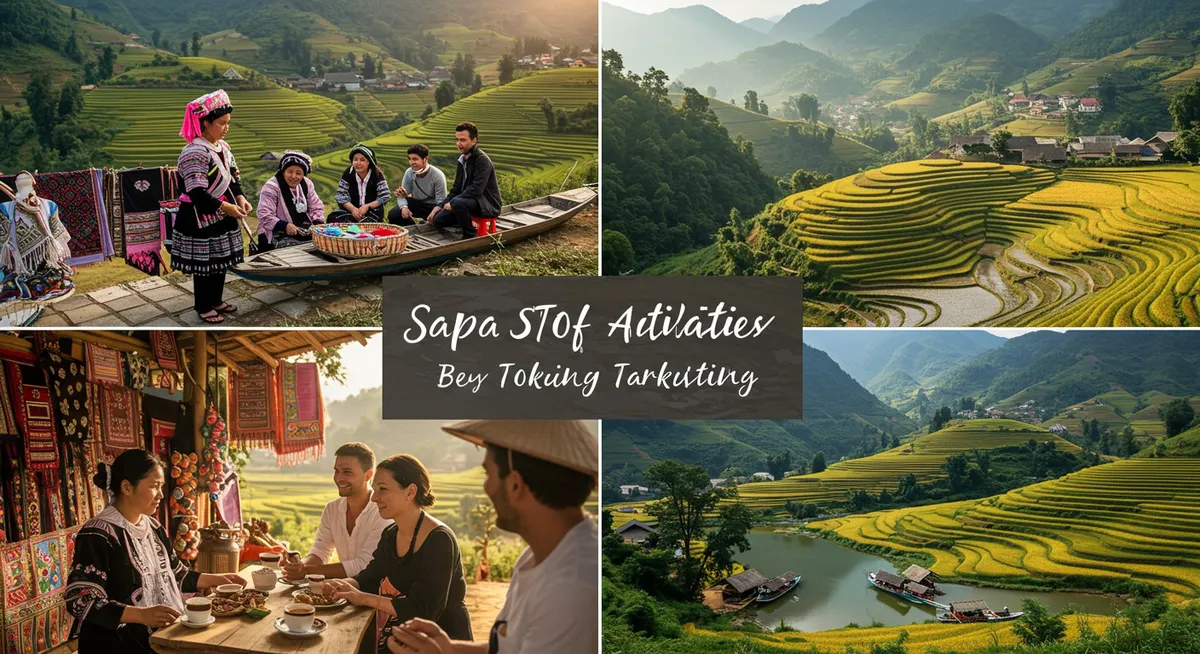
TL;DR: Sapa is far more than a trekking destination. In 2026, visitors can ride the Fansipan cable car for panoramic views, soak in Red Dao herbal baths, explore weekend ethnic markets, take local village tours, savour highland cuisine, and enjoy scenic motorbike rides through the terraces — all without lacing up hiking boots.
Sapa is almost synonymous with trekking, and for good reason — the Hoang Lien Son mountain range delivers some of Southeast Asia's most dramatic trails. But if sore knees, limited time, or simple curiosity has you searching for things to do in Sapa besides trekking, you will be pleasantly surprised. The highland town and its surrounding valleys are packed with cultural encounters, scenic viewpoints, wellness rituals, and culinary adventures that require nothing more strenuous than a comfortable pair of walking shoes. This 2026 guide covers every worthwhile non-trekking activity so you can build the perfect Sapa itinerary — hike-free.
Ride the Fansipan Cable Car for Jaw-Dropping Panoramas
Turn this guide into a personal route with our free Sapa itinerary planner.
Standing at 3,143 metres, Fansipan is the tallest peak in Indochina, and thanks to the Sun World cable car system you can reach the summit complex without a multi-day climb. The 6.3-kilometre ride sweeps you over deep valleys, bamboo forests, and cloud layers in roughly 15 minutes. At the top, a terraced stairway leads to the summit marker, a towering bronze Buddha, and the Bich Van Thien Tu pagoda complex — all offering 360-degree views across Lao Cai province and into China on clear days.
For the best experience, arrive early in the morning before clouds roll in. Ticket prices in 2026 start at around 800,000 VND for adults. If you want a detailed hour-by-hour plan for the cable car visit and what else to pair it with, our Fansipan cable car Sapa itinerary breaks it all down. This is one of the top things to do in Sapa besides trekking and arguably the single most photographed experience in the region.
Explore Ethnic Markets and Weekend Trading Culture
Sapa sits at the crossroads of several ethnic minority communities — H'mong, Red Dao, Tay, Giay, and Xa Pho among them — and their weekly markets are living windows into highland trade and culture. The Sapa town market runs daily but peaks on Saturday evenings and Sunday mornings when families from remote villages descend to sell handicrafts, herbal medicines, livestock, and seasonal produce. The atmosphere is electric: indigo-dyed fabrics draped over stone walls, the aroma of grilled corn and thang co wafting through narrow alleys, and animated bargaining in a dozen languages.
For a deeper dive, travel to the Bac Ha Sunday Market (about two hours northeast) or the smaller Can Cau Saturday Market. Both feel far less touristy and give you the chance to witness genuine trading traditions. Combine a market visit with a Sapa local village tour to see where the artisans live and work — it turns a morning of shopping into a full cultural immersion day.
Soak in a Traditional Red Dao Herbal Bath
After a day of sightseeing, few experiences rival a Red Dao herbal bath for pure relaxation. The Red Dao people have practiced herbal medicine for generations, steeping a closely guarded blend of forest leaves, roots, and bark into steaming wooden tubs. The bath is said to ease muscle pain, improve circulation, and relieve fatigue — and whether or not you buy the medicinal claims, the warmth and fragrance are undeniably soothing.
Several spas in Sapa town and surrounding villages offer the treatment, with prices ranging from 150,000 to 400,000 VND per person depending on the setting. For the most authentic experience, book at a homestay in Ta Phin village, where Red Dao families prepare the herbs fresh. A herbal bath pairs perfectly with a short-stay schedule — check our Sapa 2-day itinerary for ideas on fitting it in alongside other highlights.
Discover Waterfalls Without a Long Hike
You do not need to trek for hours to enjoy Sapa's waterfalls. Silver Waterfall (Thac Bac) sits right beside the main road to Lai Chau, about 12 kilometres from town. A short paved staircase leads to multiple viewing platforms where mist from the 200-metre cascade drifts across your face. Love Waterfall (Thac Tinh Yeu) is a further five kilometres down the same road and requires a gentle 1.5-kilometre walk through bamboo forest — scenic, flat, and manageable for all fitness levels.
Both waterfalls are at their most powerful between June and September when the rains swell the mountain streams. If you are visiting outside that window, the surrounding scenery still makes the trip worthwhile. Renting a motorbike is the most flexible way to reach them, and the road itself — winding through rice terraces and pine forests — is one of the most photogenic drives in northern Vietnam. Knowing the best time to visit Sapa helps you time your trip for the fullest falls and the greenest terraces.
Taste Sapa's Highland Cuisine
Sapa's food scene is a compelling reason to visit even if you never set foot on a trail. Start with thang co, a hearty horse-meat hotpot seasoned with cardamom, ginger, and lemongrass — it is the signature dish of the H'mong people and available at dedicated stalls in the market square. Grilled skewers of pork, chicken, and river fish are served streetside every evening, basted with wild honey and chili. For something gentler, try Sapa's cold-water salmon and trout, farmed in the mountain streams around Lao Cai and served as sashimi, hotpot, or grilled with herbs.
Do not leave without sampling corn wine or peach wine, both brewed locally and best enjoyed warm on a cold evening. For the adventurous, men men — a steamed cornmeal dish served with sesame salt — offers a taste of traditional H'mong home cooking that is rarely found in lowland Vietnam. If you are watching your budget, our Sapa budget travel guide lists affordable eateries and street food spots where you can eat well without overspending.
Take a Scenic Motorbike or Car Ride Through the Terraces
Some of Sapa's most breathtaking views are best appreciated from two wheels (or four). The road from Sapa town to Y Ty passes through remote Xa Pho and Lu communities, with barely another tourist in sight. Closer to town, the loop through Muong Hoa Valley — passing Ta Van, Lao Chai, and Giang Ta Chai — delivers postcard-worthy rice terrace views with minimal physical effort. You can rent a semi-automatic motorbike for around 150,000 to 250,000 VND per day, or hire a driver if you prefer to focus on the scenery.
For photographers, the golden hour just before sunset paints the terraces in warm amber tones, especially between September and October when the rice is ripe. If you are coming from the capital, plan your transport in advance — our guide on how to get to Sapa from Hanoi covers trains, buses, and private cars so you arrive rested and ready to explore.
Visit Cat Cat Village and the Sapa Museum
Cat Cat Village, perched on a hillside just two kilometres from the town centre, offers a gentle downhill walk past indigo dyeing stations, cotton looms, and a small but picturesque waterfall. Entry is around 100,000 VND and the loop takes about an hour at a leisurely pace. It is one of the most accessible things to do in Sapa besides trekking, suitable for families and older travellers alike.
Back in town, the Sapa Museum (free admission) provides essential context on the region's ethnic groups, their migration patterns, traditional costumes, and agricultural practices. The exhibits are compact but well-curated, and spending 30 to 45 minutes here before heading to the villages makes every subsequent cultural encounter richer. For a broader plan that includes Cat Cat and other activities, browse our main Sapa itinerary for flexible day-by-day suggestions.
Frequently Asked Questions
Is Sapa worth visiting if I don't want to trek?
What are the best non-trekking activities in Sapa for families?
Can I see Sapa's rice terraces without trekking?
How much should I budget for a non-trekking Sapa trip in 2026?
When is the best time to visit Sapa for non-trekking activities?
Is it safe to rent a motorbike in Sapa?
Sapa rewards every type of traveller, not just the ones willing to lace up trekking boots. Whether you are chasing panoramic views from Fansipan, soaking in a centuries-old herbal bath, navigating a bustling ethnic market, or simply cruising the terraced valleys on a motorbike, the things to do in Sapa besides trekking in 2026 are plentiful, varied, and deeply memorable. Use this guide as your starting point, mix and match activities to suit your pace, and discover why Sapa continues to captivate travellers who never take a single mountain trail.