TL;DR: Stavanger packs centuries of architectural history into a walkable city center. This 2026 itinerary covers four distinct zones — the white wooden houses of Gamle Stavanger, the colorful facades and street art murals of Fargegaten, modern waterfront landmarks like the Norwegian Petroleum Museum, and medieval sacred structures including Norway's oldest cathedral. Allow one full day, wear comfortable shoes, and visit during spring or fall for the best experience.
Stavanger rewards visitors who look up. From 18th-century timber cottages to petroleum-era modernism, the city compresses three hundred years of Norwegian building traditions into a compact coastal setting. This Stavanger architecture itinerary maps out the most rewarding route through four distinct architectural zones, each within walking distance of the others.
Whether you are a design professional, a photography enthusiast, or simply a curious traveler planning a 2026 trip, this guide provides the practical detail you need. You will find opening hours, entry costs, seasonal advice, and route suggestions that make the most of a single day. For seasonal planning, check our guide on the best time to visit Stavanger before booking your flights.
Stavanger's architectural identity is shaped by three forces: its fishing and maritime heritage, the oil boom that began in the 1960s, and a growing commitment to sustainable urban design. Understanding these layers transforms a casual walk into a meaningful journey through Norwegian history. You can also explore a self-guided architecture tour map for a printable route.
Gamle Stavanger: Europe's Largest Wooden House Settlement
Turn this guide into a personal route with our free Stavanger itinerary planner.
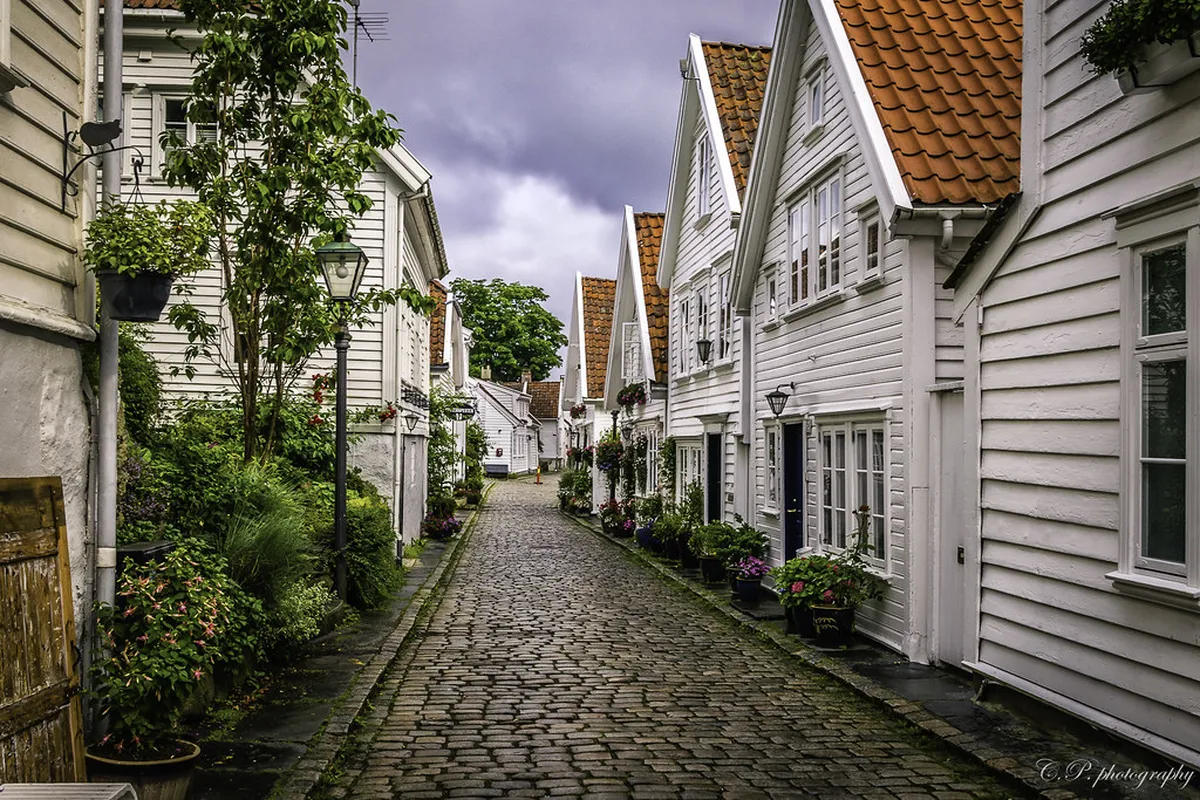
Begin your Stavanger architecture itinerary in Gamle Stavanger, located just west of the harbor. This district contains over 170 white-painted wooden houses, most dating from the late 18th and early 19th centuries. It is recognized as the largest and best-preserved wooden house settlement in Europe, and the protective efforts here have become a model for heritage conservation across Scandinavia.
The houses were originally built for workers in the sardine canning industry. Their simple clapboard construction reflects the materials and techniques available at the time. Narrow lanes wind between the homes, many of which still function as private residences. Notice the small front gardens, hand-carved doorframes, and the way each house sits slightly differently on its plot — no two are identical.
For photographers, early morning light between 07:00 and 09:00 produces the best conditions. The white facades glow warmly against the cobblestones, and you will have the lanes largely to yourself before tour groups arrive. Late afternoon offers similar quality light from the opposite direction. Dive deeper into the stories behind these structures with our article on Stavanger's wooden houses.
Budget roughly 60 to 90 minutes for Gamle Stavanger. The area is free to explore at any time. After walking the lanes, stop at one of the small cafes on the district's edge for coffee before continuing south toward Fargegaten. A dedicated walking tour of Old Stavanger architecture can add valuable context if you prefer a structured approach. You can also read about the history behind Gamle Stavanger's wooden houses for additional background.
Fargegaten and Street Art: Stavanger's Creative Pulse
From Gamle Stavanger, walk ten minutes southeast to Fargegaten, officially known as Ovre Holmegate. This short street underwent a radical transformation in the early 2000s when local hairdresser Tom Kjorsvik convinced building owners to paint their facades in bold, saturated colors. The result is a striking corridor of orange, turquoise, purple, and yellow that contrasts sharply with the white timber houses you just left.
Fargegaten is more than a photo opportunity. The street hosts independent boutiques, vintage shops, and several well-regarded cafes. Checkpoint Charlie, a bar and music venue partway along the street, is a local institution. The energy here reflects Stavanger's creative community, which has grown significantly since the city's tenure as European Capital of Culture in 2008. Explore more about the colorful houses of Fargegaten.
Extend your exploration beyond Fargegaten to discover Stavanger's internationally recognized street art scene. The NuArt Festival, held annually since 2001, commissions large-scale murals across the city. Works by artists such as Martin Whatson, Dotmasters, and Ernest Zacharevic appear on building walls, underpasses, and warehouse facades throughout the city center. Use our street art locations map to plan your route through the murals.
The street art changes over time as new festivals add fresh pieces and older works weather naturally. This makes each visit slightly different. Allow 45 to 60 minutes for Fargegaten and the surrounding murals. For a comprehensive overview, consult our Stavanger street art guide, which covers both permanent installations and recent additions.
Modern Landmarks and Industrial Heritage Along the Waterfront
Head east toward the harbor to reach Stavanger's modern architectural zone. The Norwegian Petroleum Museum is the anchor building here. Designed by Lunde and Lovseth Architects and completed in 1999, its angular concrete forms evoke oil platforms and coastal rock formations. The building sits directly on the waterfront, and its profile has become one of the city's most recognizable silhouettes.
Inside, the museum documents Norway's transformation from a fishing nation to one of the world's wealthiest petroleum producers. It is open daily from 10:00 to 16:00, with extended hours during summer. Adult admission costs approximately 150 NOK in 2026. The architecture itself justifies the visit, but the exhibits provide essential context for understanding why Stavanger's modern skyline looks the way it does. Learn more about top contemporary architecture in Stavanger.
Continue along the waterfront to discover adaptive reuse projects that connect Stavanger's industrial past to its cultural present. Tou Scene, a former brewery complex, now operates as one of Norway's largest independent cultural centers, hosting visual art exhibitions, theater productions, and live music. The conversion preserved the original brick and steel structure while inserting modern functional spaces. Explore more about Stavanger's industrial heritage buildings.
The waterfront area also showcases Stavanger's growing focus on sustainable architecture. Several eco-friendly architectural projects are now under development, incorporating green roofs, passive energy systems, and recycled materials. The new waterfront architectural projects are reshaping the harbor district with mixed-use buildings that prioritize pedestrian access and environmental performance. The University of Stavanger campus, located further out, features additional noteworthy modern design — see our guide to the University of Stavanger campus architecture.
Sacred Structures and Civic Architecture
Stavanger Cathedral, known locally as Stavanger Domkirke, stands at the heart of the city and at the heart of this itinerary. Consecrated around 1125, it is Norway's oldest cathedral still in regular use. The original Anglo-Norman Romanesque nave survives largely intact, while the Gothic choir was added after a fire in 1272. This combination of styles within a single building creates a compelling architectural dialogue.
The cathedral underwent significant restoration work between 2024 and 2026, addressing structural issues in the stone walls and refreshing the interior paintwork. Visitors in 2026 will see the building in excellent condition. Entry is free, though donations are appreciated. Opening hours vary by season, so check the cathedral's official website before visiting. The Stavanger Cathedral architecture page provides a detailed historical overview.
Nearby, Stavanger City Hall presents a different strand of civic architecture. Built in the 1960s, it combines functionalist design principles with local stone materials. The building is less celebrated than the cathedral but worth examining for its honest expression of mid-century Norwegian public architecture. Read about the architectural features of Stavanger City Hall for additional detail.
The Stavanger Maritime Museum, housed in restored merchant warehouses near the harbor, rounds out the civic architecture tour. These buildings date from the early 19th century and demonstrate how commercial structures were adapted over time. The museum itself documents the city's seafaring history through ship models, navigational instruments, and reconstructed interiors. Visit our overview of Stavanger Museum architecture for more examples of heritage buildings repurposed as cultural institutions.
Planning Your 2026 Visit: Practical Information
Stavanger's compact city center makes this entire architecture itinerary walkable in a single day. The route described above covers roughly five kilometers and can be completed in six to eight hours with breaks for meals and museum visits. Wear comfortable, weather-appropriate shoes — cobblestones in Gamle Stavanger and along the harbor are uneven in places.
Spring (April through June) and fall (September through October) offer the best conditions for an architecture walk. Temperatures are mild, daylight hours are generous, and tourist numbers are lower than during the peak summer months. Winter visits are possible but limited by shorter daylight and occasional snow on cobblestones.
Public transportation in Stavanger is reliable and affordable. Kolumbus operates the city's bus network, and a day pass costs approximately 100 NOK. However, for this itinerary, walking is both faster and more rewarding. Check the Stavanger architecture events calendar for 2026 exhibitions, open-house weekends, and festival dates that may coincide with your visit.
Guided tours focused specifically on architecture are available through several local operators. These typically run two to three hours and cost between 300 and 600 NOK per person. Browse options for architecture walking tours in Stavanger. For self-guided exploration, our Stavanger architecture tour map provides a printable route with annotated stops.
Frequently Asked Questions
What architectural styles can I see in Stavanger?
Stavanger covers a wide span of architectural periods. Gamle Stavanger features 18th- and 19th-century wooden vernacular houses. The cathedral combines Romanesque and Gothic elements from the 12th and 13th centuries. Mid-century functionalism appears in civic buildings like City Hall. Contemporary and sustainable architecture defines the waterfront district. Explore a full overview of Stavanger's diverse architectural heritage.
How long does a Stavanger architecture walking tour take?
A self-guided walk through the four main architectural zones takes six to eight hours including museum visits and meal breaks. If you skip interior visits and focus on exteriors only, you can cover the route in three to four hours. Guided tours typically last two to three hours and cover a curated selection of highlights.
Is Stavanger accessible for visitors with mobility limitations?
Modern areas of Stavanger, including the waterfront and most museums, are fully accessible. Gamle Stavanger presents challenges due to cobblestone lanes and uneven surfaces. The cathedral has step-free access at the main entrance. Public buses are wheelchair accessible. Research accessible buildings in Stavanger before your trip to plan the best route.
What does a Stavanger architecture itinerary cost in 2026?
The majority of Stavanger's architecture is free to view from the outside. Walking through Gamle Stavanger, Fargegaten, and the street art district costs nothing. The Norwegian Petroleum Museum charges approximately 150 NOK for adults. Guided tours range from 300 to 600 NOK. A bus day pass is about 100 NOK. Budget 400 to 900 NOK total for a full day including one museum and transport.
When is the best season to explore Stavanger's architecture?
Spring (April to June) and fall (September to October) are ideal. Temperatures are comfortable for extended walking, daylight hours are long, and tourist crowds are manageable. Summer offers the longest days but brings peak visitor numbers. Winter visits work for hardy travelers, but shorter daylight limits photography time and some cobblestone areas can be slippery.
Where are the best photography spots for Stavanger architecture?
Gamle Stavanger's white wooden houses produce excellent images in early morning or late afternoon light. Fargegaten's saturated colors work well in overcast conditions. The Norwegian Petroleum Museum is most dramatic from the harbor side at sunset. The cathedral's Romanesque nave photographs best from the interior using available light. See more Instagrammable architecture spots in Stavanger.
Can I combine a Stavanger architecture tour with nearby natural attractions?
Yes. Stavanger is the gateway to Lysefjord and the famous Preikestolen (Pulpit Rock) hike. Many visitors dedicate one day to architecture in the city and a second day to natural scenery. The Stavanger region also offers coastal walks and island-hopping by ferry, making it easy to combine urban and outdoor experiences in a single trip.
Stavanger compresses an extraordinary range of architectural expression into a small, walkable city. From the handcrafted timber houses of Gamle Stavanger to the angular concrete of the Petroleum Museum, each building reflects a chapter in Norway's economic and cultural evolution. This 2026 itinerary gives you a structured route through the highlights, but leave room for detours — some of the most rewarding discoveries in Stavanger come from turning down an unmarked lane or looking up at a facade you almost walked past.
Plan your trip carefully, pack comfortable shoes, and bring a camera with plenty of storage. Stavanger's architecture rewards close attention and repeat visits. Discover hidden architectural gems throughout the city, and let the built environment tell you the story of this remarkable Norwegian coastal city.
Key Takeaways
- Gamle Stavanger contains over 170 preserved wooden houses — visit early morning for the best light and fewest crowds.
- The NuArt Festival street art murals change annually, making each visit unique.
- The Norwegian Petroleum Museum is worth visiting for its architecture alone, with admission at approximately 150 NOK.
- Stavanger Cathedral, dating to 1125, combines Romanesque and Gothic styles and has been freshly restored for 2026.
- Spring and fall offer the best combination of weather, light, and crowd levels for architecture exploration.