Study Architecture: Top Oslo Universities & Programs
Discover the best Oslo architecture universities and design programs for 2026. Compare AHO, OsloMet, and more — admissions, costs, portfolios, and student life in Norway's capital.
ItiMaker Team10 min read
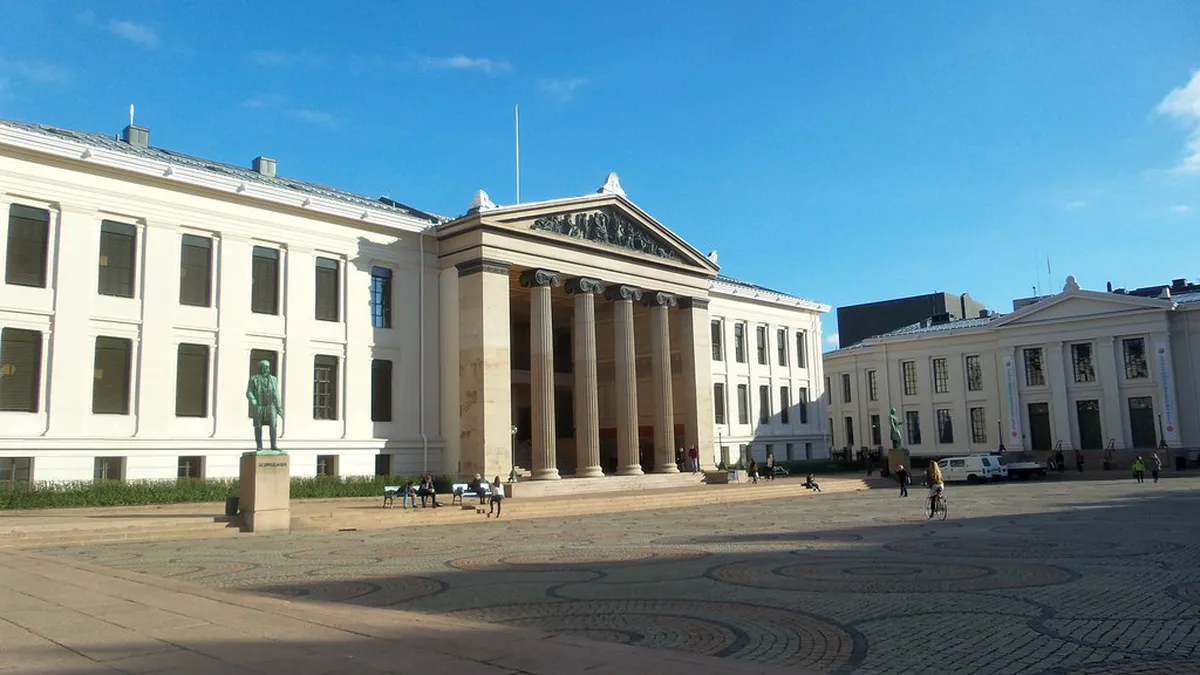
<p><strong>TL;DR:</strong> Oslo is one of Europe's most exciting cities for architecture students. AHO (The Oslo School of Architecture and Design) leads the field with internationally acclaimed programs, while OsloMet and private academies round out the options. Tuition is free for EU/EEA students, though non-EU applicants should budget for fees introduced in recent years. The city itself doubles as a living classroom — from the Barcode Project waterfront to Bjørvika's sustainable urban design. Below you will find everything you need to choose a program, prepare your application, and thrive as an architecture student in Oslo in 2026.</p>
<h2>Why Oslo Is a World-Class Destination for Architecture Studies</h2>
<p>Few cities blend cutting-edge design with natural beauty as seamlessly as Oslo. The Norwegian capital has invested heavily in sustainable urban development over the past decade, turning entire waterfront districts into showcases of contemporary architecture. For students, this means the classroom extends well beyond lecture halls — you can walk from a studio critique to the award-winning <a href="https://itimaker.com/blog/oslo-sustainable-architecture">sustainable architecture landmarks</a> along the fjord in under fifteen minutes.</p>
<aside class="affiliate-slot" data-nosnippet
data-affiliate-unit="experience_finder"
data-affiliate-provider="getyourguide"
data-affiliate-widget="getyourguide_city"
data-affiliate-format="widget"
data-affiliate-placement="primary"
data-affiliate-campaign="itimaker-com-unit-gcity-oslo-architecture-universities"
data-affiliate-city="Oslo"
data-affiliate-location-id="38"
style="min-height:400px">
<span class="affiliate-badge">Sponsored</span>
<div class="affiliate-skeleton" aria-hidden="true"></div>
<p class="affiliate-unit__loading" role="status">Loading live activities…</p>
<div class="affiliate-inner"><div
data-gyg-href="https://widget.getyourguide.com/default/city.frame"
data-gyg-location-id="38"
data-gyg-locale-code="en-US"
data-gyg-widget="city"
data-gyg-partner-id="26CH4CT"
data-gyg-campaign="itimaker-com-unit-gcity-oslo-architecture-universities"
data-gyg-cmp="itimaker-com-unit-gcity-oslo-architecture-universities"
loading="lazy"></div></div>
</aside>
<p>Norway's commitment to green building is embedded in the national curriculum. Architecture programs here treat sustainability not as an elective add-on but as a core design principle. Students graduate with hands-on experience in passive-house standards, timber construction, and climate-responsive design — skills that are increasingly demanded by firms worldwide in 2026.</p>
<p>Oslo also ranks among the safest and most liveable capitals in Europe. A compact city centre, efficient public transport, and proximity to forests and fjords create a balanced student lifestyle. The professional network is tight-knit, so connections made during your studies often translate directly into career opportunities in Scandinavian and international practices.</p>
<h2>AHO: The Oslo School of Architecture and Design</h2>
<p>AHO is the undisputed flagship for architecture education in Norway. Founded in 1945, it is one of only a handful of Nordic institutions dedicated exclusively to architecture, design, and landscape architecture. AHO consistently appears in global rankings and attracts faculty with active research profiles in parametric design, Arctic architecture, and urban ecology.</p>
<aside class="affiliate-slot" data-nosnippet
data-affiliate-unit="experience_finder"
data-affiliate-provider="viator"
data-affiliate-widget="viator_widget"
data-affiliate-format="widget"
data-affiliate-placement="secondary"
data-affiliate-campaign="itimaker-com-unit-vauto-oslo-architecture-universities"
data-affiliate-city="Oslo"
data-affiliate-location-id=""
style="min-height:600px">
<span class="affiliate-badge">Sponsored</span>
<div class="affiliate-skeleton" aria-hidden="true"></div>
<p class="affiliate-unit__loading" role="status">Loading live activities…</p>
<div class="affiliate-inner"><div
data-vi-partner-id="P00271059"
data-vi-widget-ref="W-d5dc59c4-3a04-417e-8a46-7be440461eba"
data-vi-search-term="Oslo"
data-vi-campaign="itimaker-com-unit-vauto-oslo-architecture-universities"
data-campaign="itimaker-com-unit-vauto-oslo-architecture-universities"></div></div>
</aside>
<p>The school offers a five-year integrated Master of Architecture program, which is the standard pathway to professional licensure in Norway. While the first three years are taught primarily in Norwegian, upper-level studios increasingly use English as the working language. AHO also runs fully English-taught Master's degrees in Landscape Architecture, Urbanism, and Design, each lasting two years.</p>
<p>What sets AHO apart is its studio culture. Class sizes are small — typically 15 to 25 students per studio — and the emphasis is on experimental, research-driven design. Students build full-scale prototypes, collaborate with engineering firms, and present work at international exhibitions. The school's central Oslo campus sits in the Maridalen area, with easy access to both the city centre and surrounding nature that often inspires project briefs.</p>
<p>Admissions are competitive. A strong portfolio demonstrating spatial thinking, creativity, and technical skill is essential. AHO evaluates portfolios holistically, looking for evidence of critical thinking rather than polished renderings alone. For the English-taught Master's programs, you will also need a completed Bachelor's degree in a relevant field and proof of English proficiency (typically IELTS 6.5 or equivalent). Learn more about specific tracks in our guide to <a href="https://itimaker.com/blog/aho-oslo-architecture-programs">AHO Oslo architecture programs</a>.</p>
<h2>OsloMet and Other Institutions Worth Considering</h2>
<p>While AHO dominates the architecture landscape, OsloMet — Oslo Metropolitan University — offers complementary programs that appeal to students interested in the technical and engineering side of the built environment. OsloMet's Faculty of Technology, Art and Design (TKD) runs Bachelor's and Master's programs in product design, civil engineering, and energy and environment in buildings. These programs provide a broader understanding of how structures are conceived, engineered, and constructed.</p>
<aside class="affiliate-slot" data-nosnippet
data-affiliate-unit="experience_finder"
data-affiliate-provider="getyourguide"
data-affiliate-widget="getyourguide_activities"
data-affiliate-format="widget"
data-affiliate-placement="tertiary"
data-affiliate-campaign="itimaker-com-unit-gact-oslo-architecture-universities"
data-affiliate-city="Oslo"
data-affiliate-location-id="38"
style="min-height:420px">
<span class="affiliate-badge">Sponsored</span>
<div class="affiliate-skeleton" aria-hidden="true"></div>
<p class="affiliate-unit__loading" role="status">Loading live activities…</p>
<div class="affiliate-inner"><div
data-gyg-href="https://widget.getyourguide.com/default/activities.frame"
data-gyg-location-id="38"
data-gyg-locale-code="en-US"
data-gyg-widget="activities"
data-gyg-partner-id="26CH4CT"
data-gyg-campaign="itimaker-com-unit-gact-oslo-architecture-universities"
data-gyg-cmp="itimaker-com-unit-gact-oslo-architecture-universities" data-gyg-number-of-items="4"
loading="lazy"></div></div>
</aside>
<p>For students who want to combine architecture with fine arts, the Oslo National Academy of the Arts (KHiO) is another option. KHiO's Department of Art and Craft offers coursework in spatial design, installation, and material experimentation. While not a traditional architecture degree, the cross-disciplinary approach can sharpen the artistic sensibility that distinguishes great architects from merely competent ones.</p>
<p>Several private academies and continuing-education centres in Oslo offer shorter courses in BIM software (Revit, ArchiCAD), 3D visualisation, and parametric design with Grasshopper. These intensive workshops — often lasting one to four weeks — can supplement a formal degree and make your CV more competitive. Always verify that any private course is accredited or recognized by employers before enrolling.</p>
<p>For a broader perspective on architectural education options, see our overview of how to <a href="https://itimaker.com/blog/study-architecture-in-oslo">study architecture in Oslo</a>.</p>
<h2>Tuition Fees, Living Costs, and Funding in 2026</h2>
<p>Norway introduced tuition fees for non-EU/EEA students at public universities starting in 2023, ending decades of free higher education for all. As of 2026, annual fees at AHO and OsloMet for non-EU/EEA students typically range from NOK 100,000 to NOK 150,000 (roughly USD 9,000 to 14,000), depending on the program. EU/EEA citizens — and students from Switzerland — still pay no tuition at public institutions, though a small semester fee (around NOK 600) covers student welfare services.</p>
<p>Living costs in Oslo are high by global standards. A realistic monthly budget for a student in 2026 breaks down approximately as follows:</p>
<ul>
<li><strong>Accommodation:</strong> NOK 6,000–9,000 for a room in a shared flat or student housing (SiO housing is the most affordable option).</li>
<li><strong>Food:</strong> NOK 3,500–5,000 if you cook at home regularly and limit dining out.</li>
<li><strong>Transport:</strong> NOK 500–700 with a student travel pass (Ruter).</li>
<li><strong>Books and materials:</strong> NOK 500–1,500, depending on studio requirements.</li>
<li><strong>Personal expenses:</strong> NOK 2,000–3,000 for clothing, social activities, and miscellaneous.</li>
</ul>
<p>Total monthly costs typically fall between NOK 12,500 and NOK 19,200 (approximately USD 1,150 to 1,750). Scholarships from the Norwegian government (Quota Scheme replacements), Erasmus+ for EU students, and university-specific grants can help offset costs. Part-time work is permitted for students holding a valid student residence permit, though balancing a demanding studio schedule with employment requires careful planning.</p>
<h2>Preparing a Winning Application and Portfolio</h2>
<p>Your portfolio is the single most important element of your application to any Oslo architecture university. AHO's admissions committee reviews hundreds of portfolios each cycle, and they consistently favour applicants who demonstrate independent thinking over technical perfection. Here is what a strong 2026 portfolio typically includes:</p>
<ul>
<li><strong>10–20 pages</strong> of curated work, presented in a clear narrative sequence.</li>
<li><strong>A mix of media:</strong> hand sketches, physical models (photographed well), digital renders, and diagrams that show your design process — not just final results.</li>
<li><strong>At least one project</strong> that addresses a real-world problem — sustainability, community engagement, adaptive reuse — showing you can think beyond aesthetics.</li>
<li><strong>Brief annotations</strong> explaining your intent, constraints, and what you learned from each project.</li>
</ul>
<p>Beyond the portfolio, prepare a concise motivation letter that explains why you want to study in Oslo specifically. Reference the city's architectural context — its <a href="https://itimaker.com/blog/bjrvika-urban-design-oslo">Bjørvika urban design</a> transformation, its sustainability ethos, or a particular faculty member's research. Admissions panels notice when applicants have done their homework.</p>
<p>Language requirements vary. AHO's English-taught Master's programs accept IELTS (minimum 6.5), TOEFL iBT (minimum 90), or Cambridge C1 Advanced. If you plan to apply to the Norwegian-taught five-year program, you will need to pass the Bergenstest or hold equivalent Norwegian language certification. Start language preparation at least a year before your intended start date.</p>
<h2>Student Life and Architectural Exploration in Oslo</h2>
<p>Oslo rewards curious architecture students with an extraordinary density of significant buildings within a compact, walkable city centre. During your studies, you can visit the iconic Opera House on the waterfront, explore the timber-clad Munch Museum, and study the Barcode Project's mixed-use towers — all in a single afternoon. For a curated route through the highlights, follow one of the <a href="https://itimaker.com/blog/oslo-architectural-walking-tours">Oslo architectural walking tours</a> available on our site.</p>
<p>The student community in Oslo is welcoming and international. AHO's student association organises studio exhibitions, lecture series with visiting architects, and study trips to cities like Copenhagen, Helsinki, and Berlin. OsloMet has a large international student network with social events throughout the semester. Joining these communities early helps you build friendships and professional contacts that last well beyond graduation.</p>
<p>Beyond campus, Oslo offers a rich cultural calendar. The Oslo Architecture Triennale, held every three years, brings global attention to Norwegian design discourse. Annual events like Oslo Design Fair and the Norwegian Architectural Review's lecture series provide regular opportunities to engage with practitioners. Museums such as the National Museum and the <a href="https://itimaker.com/blog/deichman-library-bjrvika">Deichman Library in Bjørvika</a> are themselves architectural landmarks worth repeated visits.</p>
<p>For balance, take advantage of Oslo's proximity to nature. Nordmarka forest begins at the end of the metro line, offering hiking and skiing. The Oslofjord islands are reachable by ferry in twenty minutes. Many architecture students find that time spent in nature directly feeds their design work — a principle deeply embedded in Scandinavian design philosophy.</p>
<h2>Frequently Asked Questions</h2>
<div itemscope="" itemtype="https://schema.org/FAQPage">
<div class="faq-item" itemprop="mainEntity" itemscope="" itemtype="https://schema.org/Question">
<h3 itemprop="name">What is the best architecture school in Oslo?</h3>
<div itemprop="acceptedAnswer" itemscope="" itemtype="https://schema.org/Answer">
<div itemprop="text"><p>AHO — The Oslo School of Architecture and Design — is widely regarded as the best and most prestigious architecture school in Oslo and across Norway. It is the only institution in the city dedicated exclusively to architecture, design, and landscape architecture, and it consistently ranks among the top architecture schools in Scandinavia.</p></div>
</div>
</div>
<div class="faq-item" itemprop="mainEntity" itemscope="" itemtype="https://schema.org/Question">
<h3 itemprop="name">Can I study architecture in Oslo in English?</h3>
<div itemprop="acceptedAnswer" itemscope="" itemtype="https://schema.org/Answer">
<div itemprop="text"><p>Yes. AHO offers several two-year Master's programs taught entirely in English, including Landscape Architecture, Urbanism, and Design. The five-year integrated Master of Architecture program begins in Norwegian, though upper-level studios increasingly use English. OsloMet also offers some English-taught courses in related fields like civil engineering and product design.</p></div>
</div>
</div>
<div class="faq-item" itemprop="mainEntity" itemscope="" itemtype="https://schema.org/Question">
<h3 itemprop="name">How much does it cost to study architecture in Oslo in 2026?</h3>
<div itemprop="acceptedAnswer" itemscope="" itemtype="https://schema.org/Answer">
<div itemprop="text"><p>EU/EEA students pay no tuition at public universities like AHO and OsloMet — only a small semester fee of about NOK 600. Non-EU/EEA students should expect annual tuition between NOK 100,000 and NOK 150,000. Monthly living costs in Oslo range from NOK 12,500 to NOK 19,200, covering accommodation, food, transport, and personal expenses.</p></div>
</div>
</div>
<div class="faq-item" itemprop="mainEntity" itemscope="" itemtype="https://schema.org/Question">
<h3 itemprop="name">What should I include in my architecture portfolio for AHO?</h3>
<div itemprop="acceptedAnswer" itemscope="" itemtype="https://schema.org/Answer">
<div itemprop="text"><p>AHO looks for 10 to 20 pages showcasing a mix of hand sketches, physical models, digital work, and process diagrams. Include at least one project that tackles a real-world issue like sustainability or community design. Annotate your work to explain your thinking process — AHO values critical and independent thought over polished renderings.</p></div>
</div>
</div>
<div class="faq-item" itemprop="mainEntity" itemscope="" itemtype="https://schema.org/Question">
<h3 itemprop="name">Is Oslo a good city for architecture students?</h3>
<div itemprop="acceptedAnswer" itemscope="" itemtype="https://schema.org/Answer">
<div itemprop="text"><p>Oslo is an excellent city for architecture students. Its compact centre contains a remarkable concentration of contemporary and sustainable buildings, from the Opera House to the Barcode Project. The city prioritises green urban design, giving students real-world case studies in walkable neighbourhoods. Add a high quality of life, a supportive student community, and proximity to nature, and Oslo offers one of Europe's best environments for studying architecture in 2026.</p></div>
</div>
</div>
<div class="faq-item" itemprop="mainEntity" itemscope="" itemtype="https://schema.org/Question">
<h3 itemprop="name">Are there scholarships for international architecture students in Oslo?</h3>
<div itemprop="acceptedAnswer" itemscope="" itemtype="https://schema.org/Answer">
<div itemprop="text"><p>Yes. EU students can apply for Erasmus+ mobility grants. Non-EU/EEA students should check AHO's own scholarship listings and the Norwegian government's funding programs, which have replaced the former Quota Scheme. Some Nordic and bilateral agreements also provide tuition waivers. Part-time work is permitted on a student visa, though studio-heavy programs leave limited free time.</p></div>
</div>
</div>
</div>
<h2>Key Takeaways</h2>
<ul>
<li>AHO is Oslo's premier architecture school, offering both Norwegian-taught and English-taught Master's programs with small, research-driven studios.</li>
<li>OsloMet and KHiO complement AHO with programs in engineering, product design, and spatial art for students seeking a broader skill set.</li>
<li>EU/EEA students study tuition-free; non-EU/EEA students should budget NOK 100,000–150,000 per year in tuition plus NOK 12,500–19,200 per month in living costs.</li>
<li>A strong portfolio emphasising process, critical thinking, and real-world engagement is the key to a successful AHO application.</li>
<li>Oslo's sustainable urban landscape — from Bjørvika to the Barcode Project — makes the entire city an open-air design laboratory for architecture students in 2026.</li>
</ul>
Make this guide part of your trip.
Turn the ideas you like into a personal day-by-day route, then edit every detail.
Build my itinerary