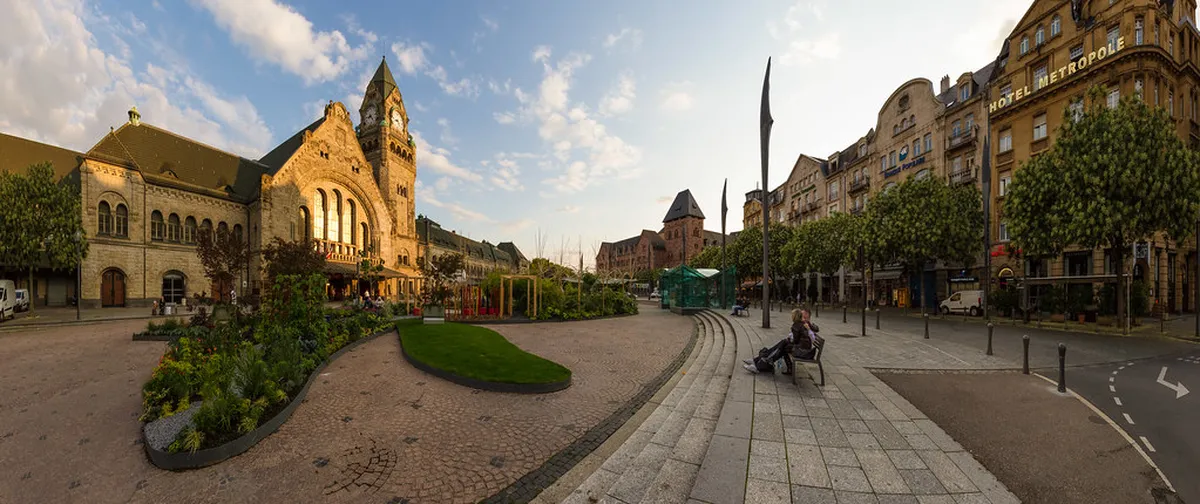
Metz offers a stunning blend of German and French history that reveals itself through every cobblestone street. This walking itinerary connects the grand train station to the medieval fortress known as the Porte des Allemands.
You will discover how the city transitions from heavy grey granite to the glowing yellow limestone of the historic center. Exploring these landmarks on foot allows you to experience the unique architectural heritage of the Lorraine region.
How to Plan a Smooth Metz-Ville Walking Itinerary
Turn this guide into a personal route with our free Metz itinerary planner.
Planning your arrival is the first step toward a successful exploration of this historic French city. Most travelers arrive via high-speed train, so you should check SNCF Connect for TGV Booking before your trip. The journey from Paris takes only eighty minutes, making it an ideal destination for a quick day trip. You should also check the current weather in Metz to pack appropriate walking shoes and rain gear.
Knowing how to plan a day trip to Metz from Paris by TGV ensures you maximize your time. The station offers luggage lockers in the main hall which are essential for those on a short stopover. These lockers accept small coins and provide a secure place for heavy bags while you walk the city. Starting your walk before ten in the morning allows you to beat the crowds at the major monuments.
The layout of the city is very walkable, but you must account for the slight uphill climb toward the cathedral. Most major sites are located within a twenty-minute radius of the central Place d'Armes square. You can easily navigate the streets by following the bronze markers embedded in the sidewalks near the station. These markers guide visitors toward the most significant historical points of interest throughout the urban center.
Must-See Metz-Ville Attractions: From Station to Gate
A complete Metz-Ville train station to Porte des Allemands walking itinerary covers approximately two kilometers of historic streets. This route takes you through three distinct historical eras, from the modern station to the medieval city walls. You will pass through the Imperial Quarter before reaching the vibrant shops of the historic French district. The path is mostly flat and accessible for all fitness levels, making it a great choice for families.
The journey begins at the train station, which is often cited as one of the most beautiful in France. From there, you will walk toward the Place Saint-Louis to see the famous medieval arcades and local cafes. The walk continues toward the Seille river, where the massive towers of the Porte des Allemands dominate the skyline. This fortress serves as the perfect turnaround point for your exploration of the city's eastern defensive line.
Along the way, you should look for the unique architectural details that define the local identity. The transition from the grey stone of the station to the yellow Jaumont limestone is a visual highlight. You can stop for a coffee at the Place Saint-Thiébault to enjoy the view of the surrounding gardens. Each section of the walk offers a new perspective on how the city has evolved over the centuries.
The Imperial Quarter: Architectural Grandeur at the Start
The Imperial Quarter was built during the German annexation to showcase the power of the German Empire. You will notice the heavy use of grey granite and sandstone in the buildings surrounding the station square. This style contrasts sharply with the lighter yellow stone found in the older French parts of the city. A detailed Metz walking tour itinerary from Jaumont stone to Imperial Quarter explains these differences.
Kaiser Wilhelm II personally influenced the design of the train station to reflect neo-Romanesque architectural themes. The station features a massive clock tower and a private suite once reserved for the German Emperor. Walking down the Avenue Foch reveals grand villas that display a mix of Art Nouveau and Renaissance styles. These buildings were designed to impress visitors and demonstrate the wealth of the local residents in 1900.
The Post Office building across from the station is another example of the imposing German architectural style. Its dark red sandstone facade stands out against the green spaces that line the nearby boulevards. You should take a moment to admire the intricate carvings of animals and historical figures on the exterior walls. This area provides some of the best photography opportunities for fans of turn-of-the-century European design.
Place Saint-Louis: Exploring the Medieval Arcades
The Place Saint-Louis transports you back to the fourteenth century with its iconic stone arcades. These vaulted walkways once housed the city's money changers and wealthy merchants during the Middle Ages. Today, the square is a lively hub filled with outdoor terraces and small independent boutiques. It offers a more local and atmospheric experience compared to the busier tourist areas near the cathedral.
Choosing to eat at Place Saint-Louis is often better than dining at the more expensive Place d'Armes. The local restaurants here serve traditional Lorraine dishes like quiche and savory tarts at reasonable prices. You can enjoy the view of the leaning medieval houses while sipping a glass of local Moselle wine. The atmosphere becomes especially magical in the late afternoon when the sun hits the yellow stone walls.
The square also hosts various markets and seasonal events throughout the year for residents and visitors. During the winter, this area becomes a central part of the famous local holiday celebrations. You can find unique handmade crafts and regional food products under the shelter of the ancient arcades. This spot is a must-visit for anyone looking to experience the authentic heart of the historic center.
Porte des Allemands: The Iconic Fortress on the Seille
The Porte des Allemands is the last remaining bridge castle of its kind in the country. Its name refers to the Teutonic Knights who once operated a hospital nearby during the thirteenth century. The fortress features massive round towers and a fortified bridge that spans the Seille river. You can walk across the bridge and explore the inner courtyard for free during the daytime hours.
Following a 1 day itinerary in Metz will always include this impressive military monument. The view from the riverbank provides a clear look at the defensive walls that once protected the city. You can see the marks of ancient battles on the thick stone walls that have stood for centuries. The gate serves as a powerful reminder of the strategic importance of the city throughout European history.
A scenic green path runs along the Seille river from the gate back toward the city center. This route follows the line of the medieval ramparts and offers a quiet escape from the urban streets. You will find benches and small gardens where you can rest while watching the water flow past. This path is a favorite among locals for afternoon strolls and provides great views of the fortress.
Museums, Art, and Culture in Metz-Ville
The city is home to world-class cultural institutions that cater to every type of art lover. The Centre Pompidou-Metz Official Site provides details on modern art exhibitions and events. This museum is famous for its unique roof design which resembles a giant Chinese hat made of wood. It is located right behind the train station, making it an easy first or last stop on your walk.
For those interested in history, the Musée de La Cour d’Or offers a journey through Roman and medieval times. The museum is built over ancient Roman baths and houses an impressive collection of archaeological finds. You can see beautifully preserved mosaics and religious sculptures from the early centuries of the city. The maze-like layout of the museum takes you through several historic buildings connected by modern galleries.
Artistic expression is also found in the city's many smaller galleries and performance spaces. The Arsenal is a renowned concert hall that was converted from a nineteenth-century military building. It features exceptional acoustics and hosts international musicians throughout the year for the local community. You can check the local event calendar to see if a performance aligns with your visit to the city.
Saint-Étienne Cathedral: The Lantern of God
The Saint-Étienne Cathedral is nicknamed the Lantern of God because of its massive expanse of stained glass. It features over six thousand square meters of glass, which is the largest collection in the world. The interior glows with a kaleidoscope of colors that change depending on the time of day. Consulting a visiting Saint-Étienne Cathedral Metz: stained glass and Chagall guide is highly recommended.
Marc Chagall designed several of the modern windows, adding a unique twentieth-century touch to the gothic structure. The nave is one of the highest in France, creating a sense of awe for everyone who enters. You should look for the detailed stone carvings on the exterior portals that depict biblical scenes. The cathedral sits on a hill, offering a dominant view over the surrounding squares and the Moselle river.
Entrance to the main cathedral is free, though some special treasury areas may require a small fee. You should visit in the morning to see the sun illuminate the windows on the eastern side. The nearby Place d'Armes is the perfect place to sit and admire the cathedral's golden Jaumont stone. This building remains the most recognizable symbol of the city and its long religious history.
Parks, Gardens, and Outdoor Spots in Metz-Ville
Metz is often called a garden city because of its extensive network of parks and green spaces. The Esplanade is a grand park located near the courthouse that offers beautiful flower beds and fountains. It provides a peaceful transition between the historic center and the banks of the Moselle river. You can see locals relaxing on the grass or playing pétanque during the warm summer months.
The Plan d'Eau is a large lake area that is perfect for a scenic walk or a boat ride. You can follow the paths along the water to see the city from a different perspective. The views of the cathedral rising above the trees are particularly stunning from the waterfront. This area is a popular spot for picnics and outdoor exercise for people of all ages.
Botanical gardens and smaller hidden squares are scattered throughout the various neighborhoods of the city. The Jardin Botanique features tropical greenhouses and a wide variety of rare plant species. Walking through these green zones helps you understand why the city is famous for its high quality of life. These spaces offer a quiet contrast to the busy shopping streets and historic monuments.
Family-Friendly and Budget-Friendly Options in Metz-Ville
Exploring the city does not have to be expensive if you focus on the many free attractions. A free things to do in Metz: a budget traveler's guide highlights the best no-cost spots. Walking the ramparts and visiting the cathedral are two of the best free activities available. You can also enjoy the public art installations that are found in many of the city's squares.
Families with children will find several playgrounds and interactive spots throughout the downtown area. The Place de la République often hosts seasonal fairs and carousels that kids will love. Many of the museums offer discounted family tickets or free entry for children under a certain age. The wide pedestrian streets make it easy to navigate with a stroller without worrying about traffic.
Picnicking in one of the many parks is a great way to save money on lunch while enjoying the scenery. You can buy fresh bread and local cheese at the Covered Market near the cathedral. This market is a feast for the senses and offers a wide range of regional products. Eating outdoors allows you to soak in the atmosphere of the city while staying within your budget.
FAQ: Everything You Need to Know for Your Metz Stopover
Many travelers wonder if the city is worth a visit for just a single day. The compact size of the historic center makes it very easy to see the main highlights quickly. You can walk from the station to the gate and back within three to four hours. This leaves plenty of time for a leisurely lunch and a visit to one of the major museums.
Questions about luggage storage are common for those arriving by train from other European cities. The station provides lockers that can accommodate medium to large suitcases for a daily fee. You should bring small euro coins as the machines do not always accept credit cards. Having a secure place for your bags makes the walking tour much more comfortable.
Choosing the best route to see the medieval walls is another frequent topic for visitors. The path from the Porte des Allemands along the Seille river is the most scenic option. You can see the evolution of the city's defenses from the Middle Ages to the nineteenth century. This walk provides a deep dive into the military history that shaped the entire Lorraine region.
- Essential tips for a Metz stopover
- Locker location: Main station hall
- Walking time: 20 minutes center
- Best view: Cathedral hill
- Local snack: Mirabelle plum tart
Frequently Asked Questions
Are there luggage lockers at Metz-Ville train station?
Yes, you can find self-service luggage lockers inside the main hall of the Metz-Ville station. They are available in various sizes to fit backpacks or large suitcases. You will need small euro coins to pay for the storage fee, which typically covers a 24-hour period. This is perfect for travelers on a short stopover.
How long is the walk from Metz station to Porte des Allemands?
The direct walk from the train station to the Porte des Allemands takes about 20 to 25 minutes. However, most visitors take a more scenic route through the historic center. If you stop at the cathedral and Place Saint-Louis, plan for a total walking time of 60 to 90 minutes. The path is largely flat and very easy to follow.
Is Metz worth visiting for a day trip?
Metz is an excellent choice for a day trip due to its high-speed train connections and compact historic center. You can easily see the cathedral, the Imperial Quarter, and the medieval gates in one day. The city offers a unique mix of French and German influences that you won't find elsewhere. It is a highlight of the Lorraine region.
A walk from the Metz-Ville station to the Porte des Allemands is a journey through time and culture. You will experience the grand imperial designs and the intimate medieval streets that define this unique city.
Whether you are interested in modern art or ancient fortresses, Metz has something to offer every traveler. Plan your visit today to see why this golden city remains a hidden gem in eastern France.