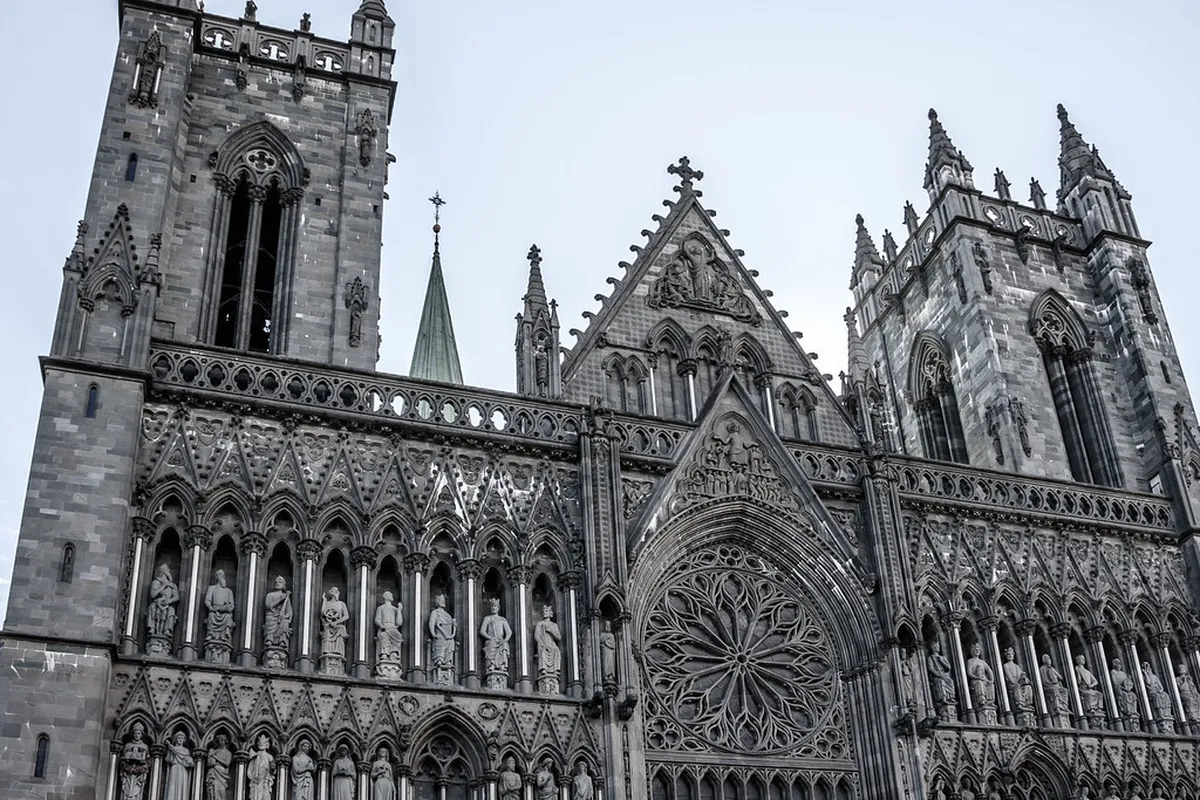
Nidaros Cathedral stands proudly in Trondheim, Norway. It is a stunning example of historical European architecture. The Nidaros Cathedral architecture tells a story of centuries. This guide explores the fascinating history of Nidaros Cathedral design. You will uncover its evolution from medieval times to modern restoration. Prepare to be amazed by this architectural masterpiece.
Understanding its complex past enhances your visit. Each stone reflects a piece of Norway's rich heritage. Discover more about Trondheim's architectural treasures. This cathedral is a national sanctuary, holding deep cultural significance.
From Royal Shrine to Romanesque Basilica
Turn this guide into a personal route with our free Trondheim itinerary planner.
The history of Nidaros Cathedral design began over nine centuries ago. It started as a humble wooden chapel in the 11th century. This site marked the burial place of Saint Olav. King Olav Haraldsson fell in battle in 1030. His shrine quickly became a pilgrimage destination.
Construction of a stone church began around 1070. This early structure showed clear Romanesque influences. It featured sturdy walls and rounded arches. These elements were common in European churches of that era. The initial design was solid and functional.
By the mid-12th century, a larger Romanesque basilica took shape. It featured a central tower and two western towers. This design laid the groundwork for future expansions. These early phases are foundational to the cathedral's diverse styles. Visitors today can still find remnants of this original stonework.
The Rise of Gothic: West Front Masterpiece
A shift towards Gothic architecture began in the late 12th century. The original Romanesque choir was replaced. New sections incorporated pointed arches and ribbed vaults. This period saw the cathedral embrace grander designs. The result was a soaring, light-filled interior.
The most iconic part of Nidaros Cathedral design is its Western Facade. This intricate wall, added from the 13th century onwards, is a Gothic marvel. It features rows of sculpted figures depicting kings, saints, and bishops. Each detail tells a biblical or historical story.
Many sculptures on the facade needed replacement during restoration. Master carvers recreated lost pieces with great skill. This façade is a masterpiece of Norwegian Gothic art. It makes a stunning impression from any angle. Discover the best photo spots at Nidaros Cathedral for this facade.
Fires, Ruin, and the Quest for Authenticity
Nidaros Cathedral faced numerous devastating fires. These occurred in 1328, 1432, 1531, and 1708. Each fire caused significant damage to the structure. The last fire left much of the cathedral in ruins. This led to centuries of partial repairs and neglect.
The Protestant Reformation in 1537 also impacted the cathedral. Its role changed, and funds for maintenance dwindled. The once grand building fell into disrepair. Parts of the nave remained roofless for centuries. This long period influenced the eventual restoration approach.
By the 19th century, the cathedral was a shadow of its former glory. A strong desire emerged to restore it. Architects aimed to recreate its medieval grandeur. This quest for authenticity guided all future efforts. It deeply shaped the final conservation architecture.
Rebirth: The Grand 19th and 20th-Century Restoration
The monumental restoration project began in 1869. It continued for over 100 years. Several prominent architects led these efforts. Among them were Christian Christie and Gerhard Fischer. Their work was meticulous and extensive. The goal was to reconstruct the cathedral to its original medieval appearance.
This restoration relied heavily on archaeological findings. Old drawings and historical records also guided the work. Stone carvers and craftspeople were crucial. They painstakingly recreated thousands of details. The process was a monumental undertaking.
The current Nidaros Cathedral design is largely a product of this restoration. It represents a synthesis of historical knowledge and skilled craftsmanship. The cathedral stands today as a testament to Norwegian resilience. Visiting in 2026 offers a chance to appreciate this legacy. This blended design makes it one of Trondheim's most significant churches.
Frequently Asked Questions
What architectural styles are prominently featured in Nidaros Cathedral's design?
Nidaros Cathedral showcases a blend of Romanesque and Gothic styles. The earlier parts, like the transepts, display Romanesque characteristics. These include thick walls and rounded arches. Later additions, especially the nave and Western Facade, are distinctly Gothic. They feature pointed arches, ribbed vaults, and intricate sculptures. You can learn more about these architectural styles here.
Who were the key figures in the Nidaros Cathedral's design restoration?
The major restoration project spanned many decades. Key architects included Christian Christie and Gerhard Fischer. Christie started the extensive work in the late 19th century. Fischer contributed significantly in the 20th century. Their leadership ensured a consistent and historically informed approach. This painstaking effort revitalized the cathedral's original splendor.
Can visitors identify the different design periods within the cathedral today?
Yes, visitors can definitely observe the different design periods. The east end and transepts show early Romanesque elements. Moving westward, the increasing intricacy reflects the Gothic progression. Detailed explanations are often available inside. Consider a guided architectural tour for deeper insights. These tours highlight the historical evolution of its design.
The history of Nidaros Cathedral design is a truly compelling narrative. It spans almost a millennium of construction, destruction, and rebirth. From its Romanesque foundations to its Gothic peaks, the cathedral is a living history book. Its grand restoration created the masterpiece we admire today.
Visiting Nidaros Cathedral offers a profound architectural journey. It is a must-see for anyone exploring Trondheim. Plan your visit to witness this incredible design evolution firsthand. Discover more Nidaros Cathedral architecture details to enhance your trip.
Key Takeaways
- Nidaros Cathedral's design blends Romanesque and Gothic styles, evolving over centuries.
- Multiple fires and neglect led to extensive 19th-20th century restorations, shaping its current look.
- The Western Facade is a Gothic masterpiece, showcasing intricate sculptures and historical narratives.