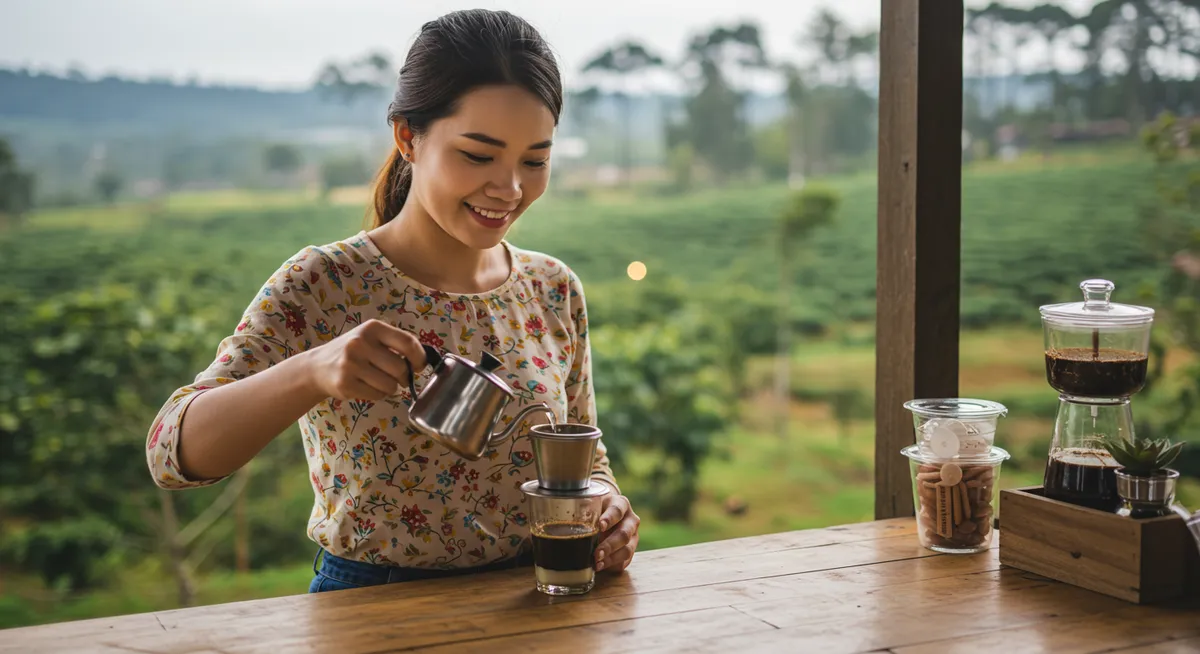
TL;DR: Dalat is Vietnam's coffee capital, sitting at 1,500 m in the Central Highlands with ideal conditions for Arabica. This 2026 guide covers the best cafes (La Viet Coffee, An Cafe, The Married Beans), must-try brews (ca phe sua da, egg coffee, weasel coffee), coffee plantation tours, and local phin filter rituals — everything you need to plan a caffeine-fueled Dalat trip.
Dalat is not just another stop on a Vietnam itinerary — it is the heartland of Vietnamese coffee. Perched at over 1,500 meters in the Central Highlands, this misty city produces some of the finest Arabica beans in Southeast Asia. Whether you are a specialty coffee devotee or a casual traveler who simply enjoys a good cup, this Dalat coffee culture guide walks you through everything worth knowing in 2026: the farms behind the beans, the cafes shaping the scene, the brews you must try, and the unhurried rituals that make Dalat coffee culture genuinely special. Coordinate your visit with our Dalat itinerary to make the most of your time.
Why Dalat Is Vietnam's Coffee Capital
Turn this guide into a personal route with our free Da Lat itinerary planner.
Dalat's coffee story began in 1898 during the French colonial period, when the first plants were introduced to supply luxury hotels like Hotel Du Parc and Palace. By the 1950s, coffee had woven itself into daily life across the city. Today, the combination of high altitude, cool year-round temperatures (15–24 °C), and nutrient-rich volcanic soil creates a terroir that rivals famous coffee origins worldwide.
The Cau Dat plateau, roughly 25 km southeast of Dalat's center, is the primary growing region. Its red basaltic soil and consistent cloud cover slow the cherry maturation process, allowing beans to develop complex sugars and floral aromatics that lowland Robusta simply cannot match. This geographic advantage is why Dalat Arabica commands premium prices in Vietnam's domestic market and increasingly on the global specialty stage. Understanding the harvest seasons helps you time your visit — read our guide on the best time to visit Dalat, Vietnam for month-by-month conditions.
Coffee Varieties and Brews You Must Try in 2026
Dalat's coffee menu extends well beyond a standard drip. Here are the essential styles to sample during your visit:
- Arabica phin filter (ca phe phin): The purest way to taste Dalat's terroir. Hot water drips slowly through a single-cup metal filter, producing a concentrated brew with chocolate and floral notes. Every serious cafe serves this.
- Ca phe sua da (iced milk coffee): Vietnam's signature drink — strong dark-roast coffee over ice with sweetened condensed milk. In Dalat, the Arabica base gives it a smoother, less bitter edge than the Robusta versions common in Saigon.
- Ca phe trung (egg coffee): Originating in Hanoi but now widely available in Dalat, this creamy concoction whips egg yolk with condensed milk into a custard-like foam layered over espresso. It tastes closer to tiramisu than coffee.
- Moka Arabica: Often called the "queen" of Dalat coffee, Moka is a specific Arabica cultivar prized for its delicate acidity and jasmine-like aroma. It is rarer and more expensive than standard Arabica — ask specifically for it at specialty shops.
- Weasel coffee (ca phe chon): Beans consumed and excreted by civets undergo a natural fermentation that removes bitterness and adds a smooth, earthy complexity. Authentic civet coffee costs 500,000–1,000,000 VND per cup. Be cautious of imitations — reputable farms like those in Cau Dat offer verified sourcing.
- Cold brew and specialty drinks: Dalat's newer wave cafes now offer single-origin pour-overs, cold brew flights, and signature matcha-coffee fusions, reflecting a growing third-wave movement in the city.
Best Cafes in Dalat for Coffee Lovers (2026 Picks)
Dalat's cafe scene ranges from forest-perched hideaways to minimalist specialty roasters. These are the standout spots in 2026:
La Viet Coffee
Founded in 2015 by Tran Nhat Quang, La Viet is Dalat's flagship specialty roaster. They source directly from farms within a 30 km radius, roast in-house, and serve single-origin pour-overs alongside classic Vietnamese styles. The industrial-chic space near Dalat Market doubles as an education center — staff can walk you through cupping sessions and brewing techniques. This is the one cafe every coffee traveler should prioritize.
An Cafe
A leafy, indoor-outdoor space known for exceptionally smooth lattes and a calm atmosphere. An Cafe sources its beans locally and keeps things simple — no gimmicks, just well-executed coffee in a plant-filled setting that feels like a garden retreat.
The Married Beans — Coffee Concept
A specialty roaster with a showroom feel. They offer curated tasting flights of Dalat's distinct micro-lots, making it easy to compare flavor profiles across farms. Ideal for anyone wanting to buy beans to take home.
Brew and Breakfast
A specialty coffee bar with a plant-based menu. They hand-roast and hand-brew all coffee on site, with a focus on transparency about origin and processing method. Great for a morning coffee-and-brunch session.
House of the Youth
A socially conscious cafe that employs deaf staff, where guests are encouraged to sit in silence and savor the moment. Teas are made from in-house grown ingredients, and coffee comes from nearby farms. A genuinely unique Dalat experience.
For more ideas on where to base yourself near these cafes, see our guide on where to stay in Dalat for tourists.
Dalat Coffee Farm Tours and Plantation Visits
Visiting a working coffee farm is the best way to understand what makes Dalat's beans exceptional. In 2026, several farms and tour operators offer immersive experiences:
- Tam Trinh Coffee Experiences: Offers tours ranging from a 15-minute introduction to coffee processing, a 1-hour guided session covering bean-to-cup brewing with phin filters, and a comprehensive 3-hour private tour including farm walks, cherry picking (in season), roasting, and tasting. Tours run daily from 9:00 AM to 3:30 PM.
- Cau Dat Farm: One of Dalat's oldest and most established plantations, where you can walk through rows of Arabica plants, learn about wet and dry processing methods, and purchase single-estate beans directly.
- Son Pacamara: A smaller artisan farm that focuses on experimental processing techniques like honey and natural methods, appealing to specialty coffee enthusiasts who want to go deeper.
Most farm tours cost between 150,000–500,000 VND per person depending on duration and inclusions. The harvest season runs roughly from October through January, when you can participate in cherry picking. Even outside harvest season, the processing and roasting demonstrations are worthwhile. Combine a farm visit with other outdoor adventures using our Dalat day trips from city center guide.
The Phin Filter Ritual: Dalat's Coffee Philosophy
Understanding Dalat coffee culture requires understanding the phin. This small metal drip filter sits atop your cup, and gravity does the work — no electricity, no pressure, no rush. A single cup takes 4–6 minutes to brew, and locals consider this wait part of the experience rather than an inconvenience.
In Dalat, coffee shops serve as social anchors. Friends meet in the morning before work, students study through the afternoon, and families gather in the evening — all over slowly dripping phin brews. The cafe is not a grab-and-go pit stop; it is a destination. This pace reflects Dalat's broader identity as Vietnam's city of slow living, a contrast to the motorbike-choked energy of Ho Chi Minh City or Hanoi.
For travelers, embracing this rhythm is key. Order a phin brew, sit down, and give it time. Watch the condensed milk swirl into the dark coffee. Chat with the person at the next table. This is the authentic Dalat coffee experience — and it costs less than 30,000 VND at most local spots. Build these slow moments into your 3-day Dalat itinerary for a richer trip.
Where to Buy Dalat Coffee Beans to Take Home
Bringing Dalat coffee home is one of the best souvenirs from Vietnam. Here is what to know:
- Buy from roasters, not markets: Dalat Market sells coffee, but quality and freshness vary. Specialty roasters like La Viet, The Married Beans, and Brew and Breakfast sell freshly roasted beans with clear origin labeling.
- Ask for the roast date: Freshly roasted beans (within 2–4 weeks) make a significant difference. Avoid pre-packaged bags without dates.
- Choose Arabica over Robusta: Dalat's strength is Arabica. Robusta is cheaper but lacks the nuanced flavors that make Dalat coffee special.
- Price guide: Expect to pay 120,000–250,000 VND per 250 g for quality Arabica. Moka varieties run higher at 300,000–500,000 VND. If something seems too cheap, it is likely blended or mislabeled.
- Packing for travel: Whole beans travel better than ground. Most roasters offer vacuum-sealed bags suitable for checked luggage.
For more on Dalat's food and drink scene beyond coffee, check out our Dalat food guide with the best local dishes.
Practical Tips for Coffee Travelers in 2026
- Best months to visit: November through March offers the coolest, driest weather — ideal for cafe-hopping and farm tours. October–January overlaps with the coffee harvest if you want to see picking in action.
- Getting around: Most cafes are within Dalat's compact city center, reachable on foot or by motorbike. Farm tours in Cau Dat require a 30–45 minute ride — arrange transport in advance. See our guide to getting around Dalat for options.
- Budget: A day of cafe-hopping costs 100,000–200,000 VND (roughly $4–8 USD). Farm tours add 150,000–500,000 VND. Dalat is one of Vietnam's most affordable coffee destinations. Plan your full budget with our Dalat travel cost and budget breakdown.
- Language: Specialty cafes often have English-speaking staff and English menus. Local neighborhood cafes may not — learning basic Vietnamese coffee terms (den = black, sua = milk, da = iced, nong = hot) goes a long way.
- Combine with activities: Dalat offers far more than coffee. Pair your cafe visits with waterfall hikes, canyoning, or countryside cycling. See our Dalat things to do and Dalat waterfalls and natural attractions guides.
Frequently Asked Questions
What makes Dalat coffee different from other Vietnamese coffee?
How much does a coffee cost in Dalat in 2026?
Where can I buy authentic Dalat coffee beans to take home?
Can I visit a coffee farm in Dalat?
What is the best time of year to visit Dalat for coffee?
Is Dalat weasel coffee real or a scam?
Dalat's coffee culture is one of Vietnam's most rewarding travel experiences in 2026. From the misty Arabica plantations of Cau Dat to the slowly dripping phin filters in century-old neighborhood cafes, every element invites you to slow down and pay attention. Whether you spend a single morning cafe-hopping or dedicate days to farm tours and cupping sessions, this highland city delivers a depth of coffee experience that few places in the world can match. Start planning your visit with our complete 5-day Dalat itinerary, and make sure to explore whether Dalat is worth visiting — spoiler: for coffee lovers, the answer is an emphatic yes.