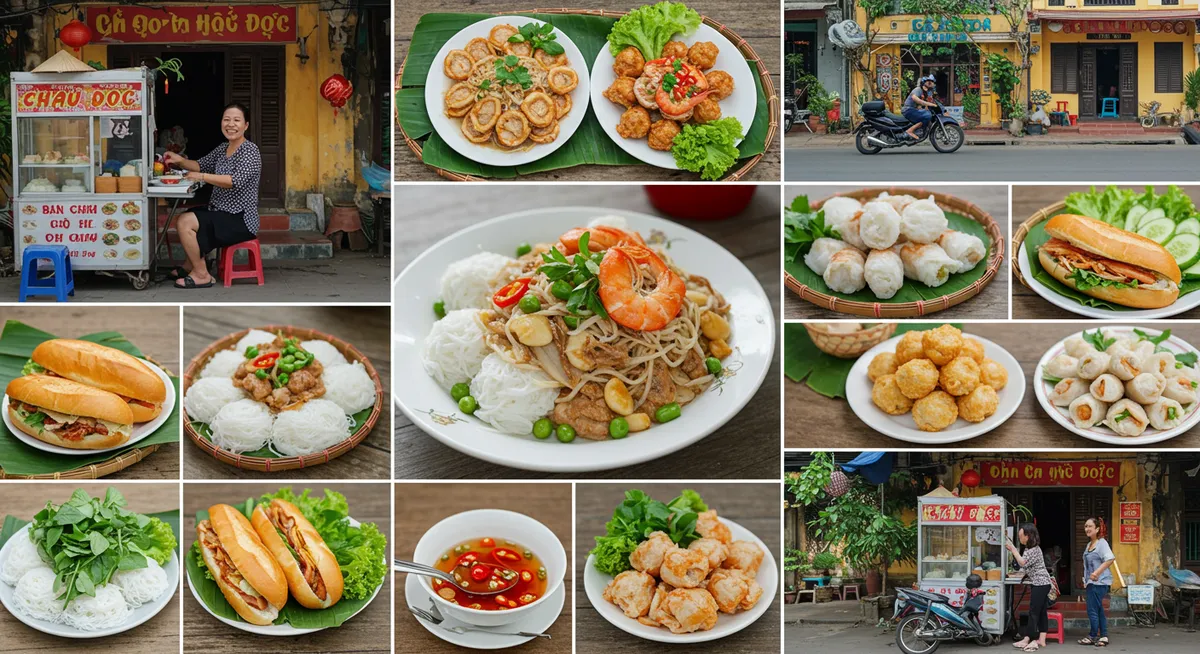
Chau Doc sits at the intersection of Vietnamese, Khmer, and Cham culinary traditions, making it one of the most fascinating street food destinations in the Mekong Delta. Unlike the more tourist-oriented scenes in Ho Chi Minh City or Da Nang, Chau Doc's food culture remains deeply local — vendors here cook the same recipes their families have prepared for generations. This 2026 Chau Doc street food guide covers every dish worth trying, where to find the best stalls, and practical tips to make your culinary adventure seamless.
Top Chau Doc Street Food Dishes You Cannot Miss
Turn this guide into a personal route with our free Chau Doc itinerary planner.
The heart of any Chau Doc street food experience starts with Bun Ca Chau Doc (fish noodle soup). This signature dish uses snakehead fish simmered in a turmeric-rich broth with dill, fermented fish paste (mam), and a generous handful of fresh herbs. What sets the Chau Doc version apart from similar soups elsewhere in Vietnam is the depth of the broth — vendors here slow-cook the fish bones for hours, producing a complex, aromatic base that you simply will not find in Saigon or Hanoi. Expect to pay around 25,000–35,000 VND per bowl in 2026.
Banh Xeo (crispy savory pancakes) in Chau Doc take on a distinctly Mekong Delta character. The batter is thinner and crispier than central Vietnamese versions, stuffed with river shrimp, sliced pork belly, mung beans, and bean sprouts. You wrap each piece in rice paper with mustard greens and herbs, then dip it in a sweet-and-sour fish sauce. The best Banh Xeo stalls operate from late afternoon into the evening near the market area.
Goi Sau Dau (neem flower salad) is a dish unique to An Giang province. The bitter neem blossoms are tossed with dried snakehead fish, sliced pork, roasted peanuts, and a tangy dressing of lime, sugar, and fish sauce. It is an acquired taste, but once it clicks, you will crave it. This dish pairs perfectly with cold beer and is best enjoyed at local quan nhau (drinking eateries) in the evening.
Other dishes worth seeking out include Bun Mam (fermented fish vermicelli soup), Com Tam (broken rice with grilled pork), Banh Bo Thot Not (palm sugar steamed cake), and Hu Tieu (pork and seafood noodle soup with a clear broth). Each reflects the region's abundant freshwater ingredients and cross-cultural influences. Exploring these dishes is among the essential things to do in Chau Doc for any food-loving traveler.
Best Markets and Food Streets in Chau Doc
Chau Doc Central Market remains the epicenter of the city's street food culture in 2026. The ground floor is packed with wet market vendors selling fresh produce, river fish, and dried goods, while the surrounding streets host dozens of food stalls from early morning until late evening. Arrive before 7 AM to catch the breakfast rush — this is when you will find the freshest Bun Ca and steaming bowls of Hu Tieu.
The riverside promenade along Bach Dang Street transforms into an informal night market after 5 PM. Mobile carts sell grilled meats on skewers, banh trang nuong (Vietnamese pizza), sugarcane juice, and various che desserts. The atmosphere here is relaxed, with locals gathering on plastic stools overlooking the Hau River. It is the ideal spot for a casual dinner while watching boats drift past.
For a more off-the-beaten-path experience, venture into the Chau Giang Cham village across the river. The Cham community here prepares distinctive dishes including tung lo mo (Cham-style cured beef sausage) and ca ri (a fragrant curry influenced by Malay cooking traditions). A short ferry ride gets you there, and the food alone makes the trip worthwhile. If you are planning overnight stays, check our Chau Doc hotels and guesthouses guide for accommodations near these food hotspots.
Seasonal Dishes and When to Visit for the Best Food
Chau Doc's food scene shifts with the seasons, and timing your visit right can unlock dishes you will not find year-round. The best time to visit Chau Doc for street food is during the dry season from November through April, when outdoor dining is comfortable and market vendors operate at full capacity.
During the flooding season (August–November), the Mekong Delta's annual floods bring a bounty of freshwater fish, snails, and aquatic vegetables. This is when you will find seasonal specialties like lau mam (fermented fish hotpot) at its absolute best, along with bong dien dien (sesbania flowers) stir-fried or added to sour soups. The floods also bring chuot dong (field rat), a protein source that is genuinely delicious when grilled or braised — though it is understandably not for every palate.
Tet (Lunar New Year), typically falling in January or February, introduces festive foods like banh tet (cylindrical sticky rice cake), mut (candied fruits), and elaborate home-cooked feasts that occasionally spill into market stalls. The Sam Mountain pilgrimage season (around the first and fifteenth of each lunar month) also brings extra food vendors to the area around Sam Mountain, where you can sample vegetarian Buddhist dishes alongside the usual street food offerings.
Practical Tips for Eating Street Food in Chau Doc
Navigating Chau Doc's street food scene is straightforward once you know a few ground rules. These tips will help you eat well, stay healthy, and get the most authentic experience in 2026.
Follow the crowds. The single most reliable indicator of good street food is a busy stall. High turnover means fresh ingredients and a vendor who has earned local trust. If a stall is empty while its neighbors are packed, skip it.
Eat what is cooked fresh. Dishes prepared in front of you — grilled meats, fried pancakes, boiling soups — carry lower hygiene risk than pre-made items sitting at room temperature. Watch for vendors who use clean utensils and maintain a tidy workspace.
Carry small bills. Most street food in Chau Doc costs between 15,000 and 50,000 VND per dish. Vendors rarely have change for 500,000 VND notes. ATMs near the central market dispense smaller denominations, and many vendors now accept mobile payment apps like MoMo and ZaloPay as of 2026.
Learn a few Vietnamese phrases. "Cho toi mot phan" (give me one portion) and "Khong cay" (not spicy) go a long way. Most vendors do not speak English, but they appreciate any effort, and pointing at what other customers are eating works perfectly well.
Pace yourself. With so many dishes to try, it is tempting to overeat at the first stall. Share portions with a travel companion and plan to eat across multiple meals and locations. Combine your food exploration with Chau Doc day trips in the Mekong Delta to spread the experience over several days. Travel affordably with our Chau Doc budget travel guide.
Drinks and Desserts to Round Out Your Food Tour
No Chau Doc street food adventure is complete without sampling the local drinks and sweet treats. Ca phe sua da (Vietnamese iced coffee) is the default afternoon fuel — strong, dark-roasted robusta coffee dripped through a metal phin filter over sweetened condensed milk and ice. Chau Doc's coffee stalls tend to brew it stronger than in larger cities, and a glass costs just 12,000–18,000 VND.
Nuoc mia (fresh sugarcane juice), pressed on the spot from stalks fed through hand-cranked or motorized crushers, is the ideal thirst quencher on hot Delta afternoons. Some vendors add a squeeze of kumquat for tartness. Nuoc rau ma (pennywort juice) is another refreshing option — slightly grassy, mildly sweet, and believed locally to have cooling properties.
For desserts, Che dominates the scene. Chau Doc's che stalls offer dozens of varieties: black bean, mung bean, taro, lotus seed, and mixed fruit versions served over crushed ice. Banh Bo Thot Not, a honeycomb-textured steamed cake made with palm sugar harvested from the An Giang countryside, is a regional specialty worth tracking down. You will find the best selection at market stalls and mobile vendors who set up near the riverfront each evening.
Frequently Asked Questions
Is Chau Doc street food safe for tourists in 2026?
What is the best time of day to explore Chau Doc street food?
How much should I budget for street food in Chau Doc?
What is the most famous dish in Chau Doc?
Are there vegetarian street food options in Chau Doc?
Can I use credit cards at Chau Doc street food stalls?
Chau Doc's street food scene captures the soul of the Mekong Delta — bold, unpretentious, and rooted in the land's extraordinary natural abundance. Whether you are slurping a bowl of Bun Ca at dawn or picking through a plate of neem flower salad over cold beers at dusk, every meal here tells a story of the cultures and waterways that shaped this border town. Use this 2026 guide as your starting point, but leave room for the unexpected — the best street food discoveries in Chau Doc often come from following your nose down an unfamiliar alley.