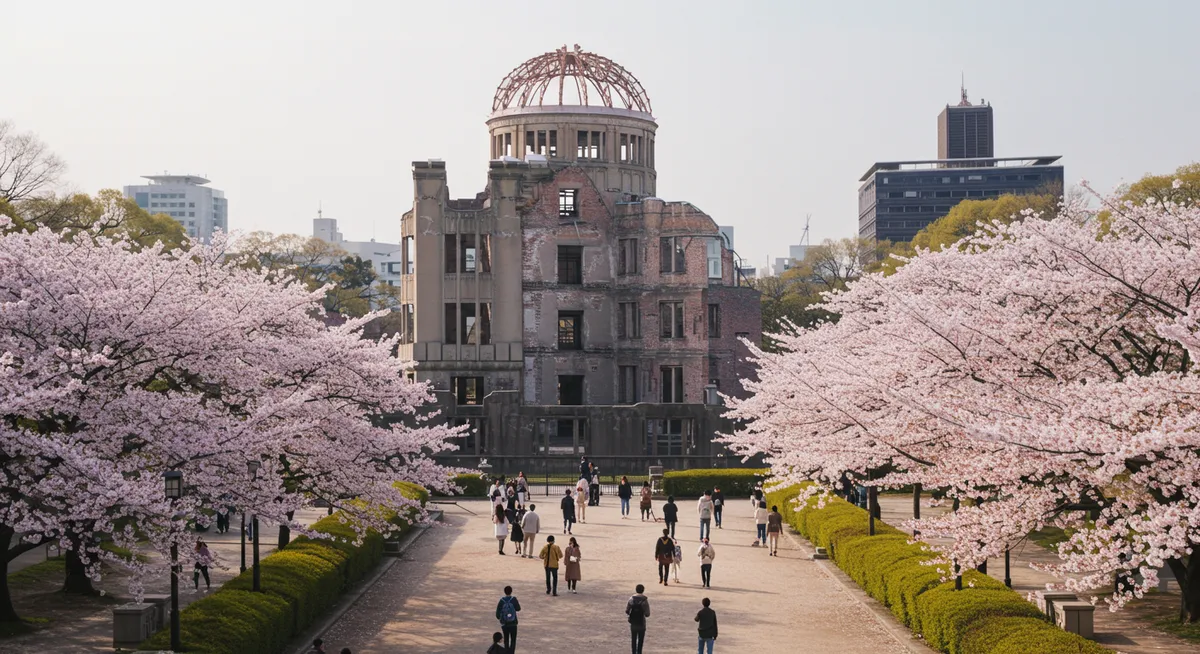
TL;DR: The best time to visit Hiroshima Japan is during spring (late March to May) for cherry blossoms and mild weather, or autumn (October to November) for stunning foliage and comfortable temperatures. Summer brings festivals but intense heat, while winter offers budget-friendly serenity. Read on for a month-by-month breakdown with 2026 event dates and practical planning tips.
Spring in Hiroshima (March to May): Cherry Blossoms and Perfect Weather
Turn this guide into a personal route with our free Hiroshima itinerary planner.
Spring is widely considered the best time to visit Hiroshima Japan, and for good reason. The city transforms into a canvas of soft pink and white as cherry blossoms (sakura) unfurl across parks, riverbanks, and temple grounds. In 2026, Hiroshima's cherry blossoms are forecast to begin blooming around March 25-26, with full bloom expected by April 1. This makes late March through mid-April the prime window for sakura viewing.
Temperatures in spring range from 10-24°C (50-75°F), rising gradually from the cool beginnings of March to the pleasant warmth of May. Humidity remains low, making it ideal for long days of sightseeing on foot. Hiroshima Peace Memorial Park is one of the most atmospheric spots for cherry blossom viewing, with rows of trees lining the riverbanks near the A-Bomb Dome. The moat surrounding Hiroshima Castle is another top sakura spot, especially during evening light-up events.
May brings the Hiroshima Flower Festival (May 3-5), one of the city's largest celebrations during Golden Week. Held along Peace Boulevard, it features parades, live performances, and elaborate floral displays attracting over a million visitors. The Miyajima Island five-story pagoda, which has been under construction, is scheduled for completion by spring 2026 — making this year a particularly exciting time to visit. Keep in mind that spring is peak season, so book accommodations and transport well in advance. For a comprehensive look at attractions, explore our guide to things to do in Hiroshima.
Summer in Hiroshima (June to August): Festivals, History, and Heat
Summer is the most culturally significant season in Hiroshima, though the heat and humidity demand careful planning. Temperatures regularly exceed 31°C (88°F) from July through August, and the humidity can feel oppressive. June and July mark the tsuyu (rainy season), bringing frequent afternoon showers and overcast skies. Typhoon season also runs from June through October, with August and September being the most active months.
Despite the challenging weather, summer holds Hiroshima's most important date: August 6th, the anniversary of the atomic bombing. The Peace Memorial Ceremony at Hiroshima Peace Memorial Park draws visitors from around the world for a solemn event that includes a moment of silence at 8:15 AM, lantern floating on the Motoyasu River, and speeches advocating for nuclear disarmament. Attending this ceremony offers a profound connection to the city's history and its enduring message of peace. Our Hiroshima Peace Memorial Park guide covers everything you need to know about visiting this UNESCO World Heritage Site.
If you visit in summer, plan outdoor activities for early morning or evening, stay hydrated, and take advantage of air-conditioned museums and shopping areas during midday. The Hiroshima Museum of Art, Hiroshima Prefectural Art Museum, and the renovated Peace Memorial Museum all offer excellent indoor experiences. Summer is also a great time to enjoy Hiroshima's famous okonomiyaki — the savory layered pancake is available year-round, but the lighter summer appetite makes it an ideal meal. Check our Hiroshima food guide for the best spots.
Autumn in Hiroshima (September to November): Foliage and Comfortable Temperatures
Autumn rivals spring as the best time to visit Hiroshima Japan, offering comfortable temperatures, clear skies, and spectacular fall foliage (koyo). September can still carry residual summer humidity, but by October the air turns crisp and dry. Temperatures settle between 15-25°C (59-77°F), perfect for outdoor exploration without the sweat-soaked discomfort of summer.
The star attraction of autumn is the fiery maple foliage, and nowhere showcases it better than Miyajima Island. Momijidani Park (literally "Maple Valley Park") on Miyajima erupts in brilliant reds, oranges, and golds from mid-October through mid-November. Walking through the park with the iconic floating torii gate visible in the distance is one of Japan's most photographed autumn scenes. Back on the mainland, Mitaki-dera Temple and Shukkei-en Garden offer quieter foliage-viewing experiences away from the crowds.
Hiroshima Castle hosts a large chrysanthemum exhibition every autumn, featuring thousands of blooms arranged into elaborate scenes from Japanese history and mythology. November is statistically one of the driest and sunniest months, making it arguably the single best month to visit Hiroshima for photography and extended outdoor sightseeing. For planning your days, our 5-day Hiroshima itinerary covers the must-see spots across the city and surrounding area.
Winter in Hiroshima (December to February): Budget Travel and Quiet Exploration
Winter is the least-visited season in Hiroshima, which makes it the best time to visit Hiroshima Japan for budget-conscious travelers and those who prefer exploring without crowds. Temperatures range from 2-10°C (36-50°F), with occasional light snowfall that dusts the city in a quiet beauty. While colder than the other seasons, Hiroshima's winters are milder than northern Japan — you will rarely encounter heavy snow or freezing conditions in the city center.
The major advantage of winter travel is cost. Flight prices, hotel rates, and tour costs drop significantly from December through February, often 30-40% lower than spring peak season. You can visit the Peace Memorial Museum, Hiroshima Castle, and Shukkei-en Garden without the queues that characterize spring and autumn. The Miyajima Oyster Festival in February is a culinary highlight — local fishermen serve fresh oysters grilled, fried, and in rich stews at remarkably affordable prices, drawing food lovers from across the region.
From late November through early January, winter illuminations light up Peace Boulevard, transforming the city center into a glittering evening walk. For practical advice on getting around the city in any season, consult our Hiroshima transportation guide. If you are deciding where to base yourself, our where to stay in Hiroshima guide breaks down the best neighborhoods by budget and convenience.
Month-by-Month Quick Reference for Hiroshima in 2026
Use this quick reference to match your travel dates with what to expect in Hiroshima:
- January: 2-7°C, quiet museums, winter sales, low prices
- February: 3-8°C, Miyajima Oyster Festival, plum blossoms begin
- March: 6-14°C, cherry blossoms start blooming late March (forecast: March 25-26 in 2026)
- April: 10-20°C, full cherry bloom early April, peak tourist season
- May: 15-24°C, Hiroshima Flower Festival (May 3-5), pleasant weather
- June: 20-27°C, rainy season begins, fewer tourists
- July: 24-31°C, rainy season ends mid-month, summer heat builds
- August: 25-32°C, Peace Memorial Ceremony (August 6), peak humidity
- September: 21-28°C, lingering heat, typhoon risk
- October: 14-22°C, autumn foliage begins, crisp weather returns
- November: 8-17°C, peak foliage at Miyajima, driest month
- December: 4-11°C, winter illuminations, holiday atmosphere
Practical Tips for Planning Your Hiroshima Trip
Regardless of when you choose to visit, these tips will help you make the most of your time in Hiroshima:
- Getting there: The JR Sanyo Shinkansen connects Hiroshima to Osaka in about 1.5 hours and to Tokyo in about 4 hours. The Japan Rail Pass covers this route. Check our Hiroshima airport transportation guide if arriving by air.
- Day trips: Miyajima Island is a 25-minute ferry ride from Miyajimaguchi Station and is an essential side trip in any season. Our Miyajima Island day trip guide covers timing, transport, and highlights.
- Duration: Most travelers spend 2-3 days in Hiroshima. Our 3-day Hiroshima itinerary and one-day Hiroshima itinerary can help you structure your visit.
- Combining with other cities: Hiroshima fits naturally into a broader Japan itinerary. Consider pairing it with Kyoto, Osaka, or Tokyo for a multi-city trip.
- Local transport: The Hiroshima streetcar (tram) network is the easiest way to get around the city. A one-day pass is affordable and covers most tourist areas. See our Hiroshima travel tips for more details.
Frequently Asked Questions
What is the best month to visit Hiroshima in 2026?
Is Hiroshima too crowded during cherry blossom season?
What is the weather like in Hiroshima in August?
Is it worth visiting Hiroshima in winter?
How many days do you need in Hiroshima?
When is the cheapest time to visit Hiroshima?
Choosing the best time to visit Hiroshima Japan ultimately depends on what matters most to you. Spring and autumn deliver the most visually stunning experiences with comfortable weather. Summer offers deep cultural significance through the Peace Memorial Ceremony. Winter rewards patient travelers with low costs, thin crowds, and a contemplative atmosphere. Whatever season you choose, Hiroshima's resilient spirit, rich history, and warm hospitality make it one of Japan's most meaningful destinations to experience in 2026.