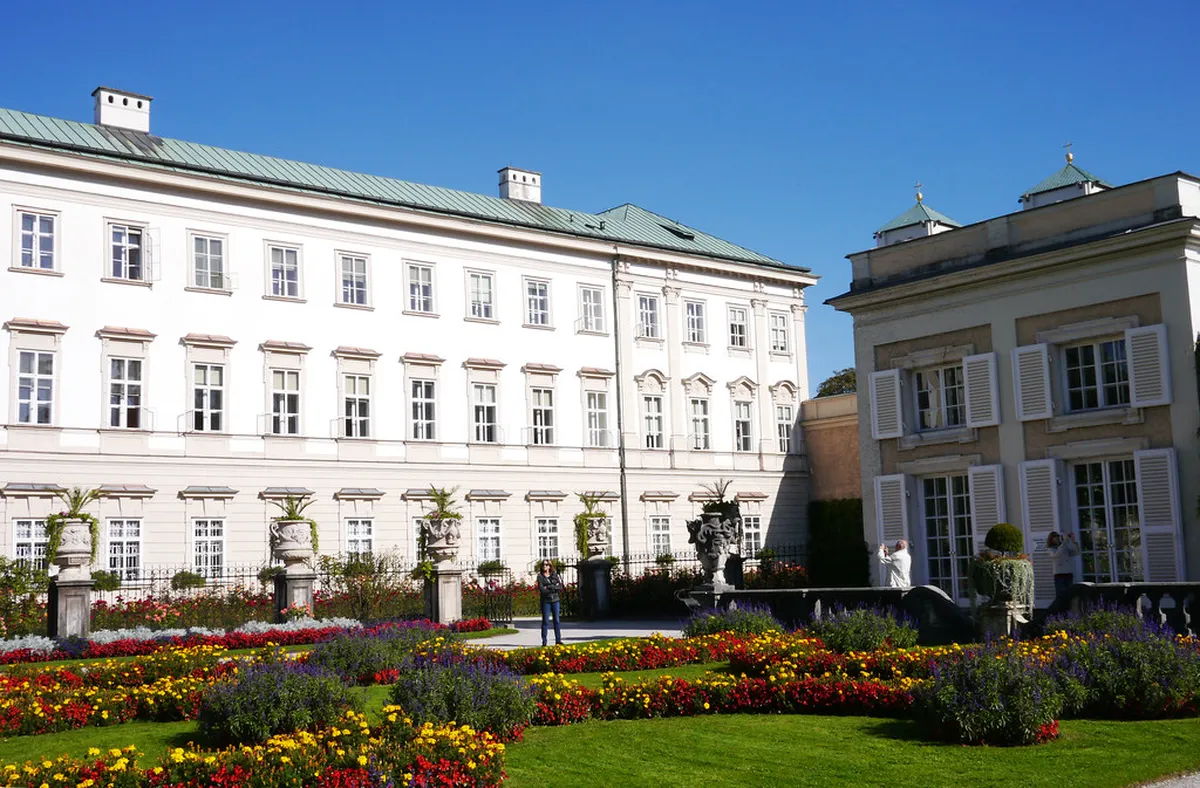
Mirabell Palace stands as one of Salzburg's most visited landmarks, combining 400 years of turbulent history with freely accessible Baroque gardens that rank among Austria's finest. The grounds sit on the right bank of the Salzach River, a short walk from the Old Town, making them an easy first stop on any day in the city. Admission to both the gardens and the Marble Hall is free, and the entire complex stays open year-round (check the official Salzburg tourism site for event closures).
Most visitors come for the Sound of Music connection — the fountain steps and the gnome statues featured in the Do-Re-Mi sequence are genuinely here and easy to find. But the palace rewards slower exploration: the Grand Fountain, the 28-figure Dwarf Garden, the rose garden, and the Marble Hall concert room each deserve time. This guide covers all of them, plus exact hours, the best photo spots, and how to get here from the city center. For a broader day plan, see our our complete Salzburg guide.
History of Mirabell Palace
Turn this guide into a personal route with our free salzburg itinerary planner.
Prince-Archbishop Wolf Dietrich von Raitenau commissioned the palace in 1606 for his mistress, Salome Alt. Originally named Schloss Altenau, it was a private residence where the couple lived with their fifteen children, well outside the official Archbishop's residence at the Residenz across the river. The relationship was scandalous for a senior clergyman, and Wolf Dietrich was eventually deposed and imprisoned by his successor in 1612. Markus Sittikus, the new Archbishop, renamed the estate Mirabell — roughly "beautiful view" — to signal the break with his predecessor's history.
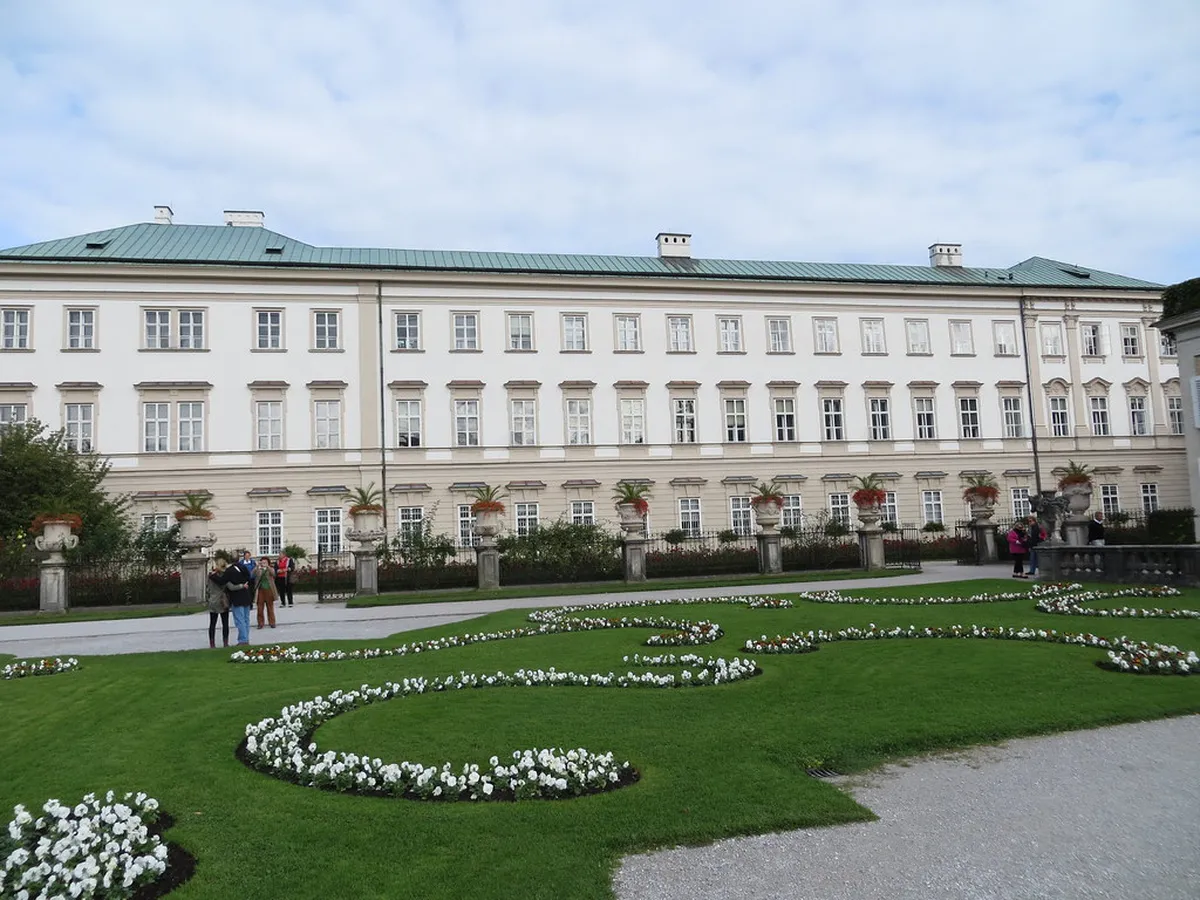
The Baroque structure visible today is primarily the work of architect Johann Lukas von Hildebrandt, who redesigned it in the early 18th century. A fire in 1818 gutted much of the building; Peter de Nobile later rebuilt the wings in a more restrained Neoclassical style. The Marble Hall and the Angel Staircase were among the few original interiors to survive the fire intact. Since the reconstruction, the palace has served as Salzburg's city hall, and that administrative function continues today — the building houses the office of the Mayor and city government departments.
The gardens were redesigned around 1690 by Johann Bernhard Fischer von Erlach under Archbishop Johann Ernst von Thun. Their geometric axis aligns deliberately with the Cathedral dome and the Hohensalzburg Fortress, creating a visual corridor that is best appreciated from the upper terrace.
Mirabell Gardens: What to See
The gardens are divided into several distinct areas, each worth a separate look. Entry is free and the grounds open at 06:00 daily. The main formal garden is laid out on a north-south axis with clipped hedges, flower parterres, and four groups of mythological statuary by Ottavio Mosto representing the elements: earth, air, fire, and water. The flowerbeds are replanted twice a year — spring tulips give way to summer roses — so the colour palette shifts noticeably between seasons.
| Highlight | What it is | Cost | Sound of Music link |
|---|---|---|---|
| Mirabell Gardens | Formal Baroque garden on a north-south axis aligned with the Cathedral & Fortress | Free | The "Do-Re-Mi" finale was filmed across the grounds |
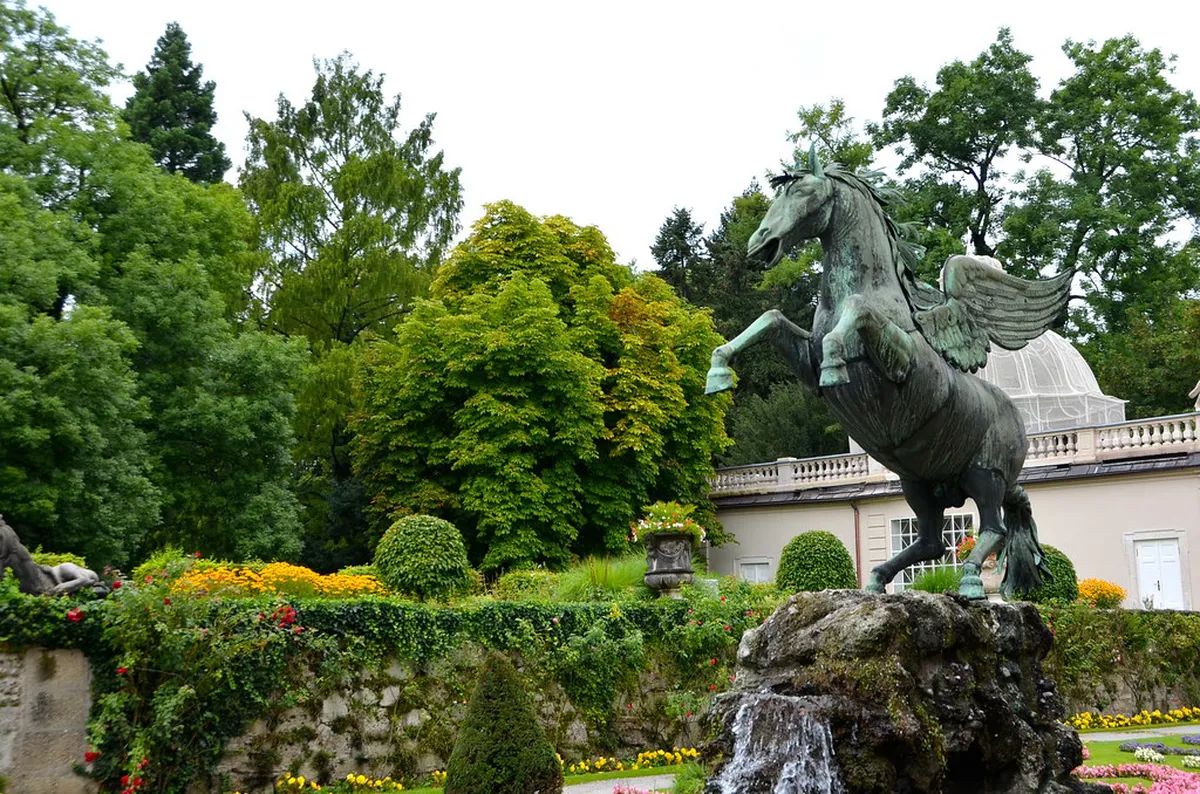
| Pegasus Fountain | Copper winged-horse fountain by Kaspar Gras, south of the central terrace | Free | Where the children dance in a circle at the start of "Do-Re-Mi" |
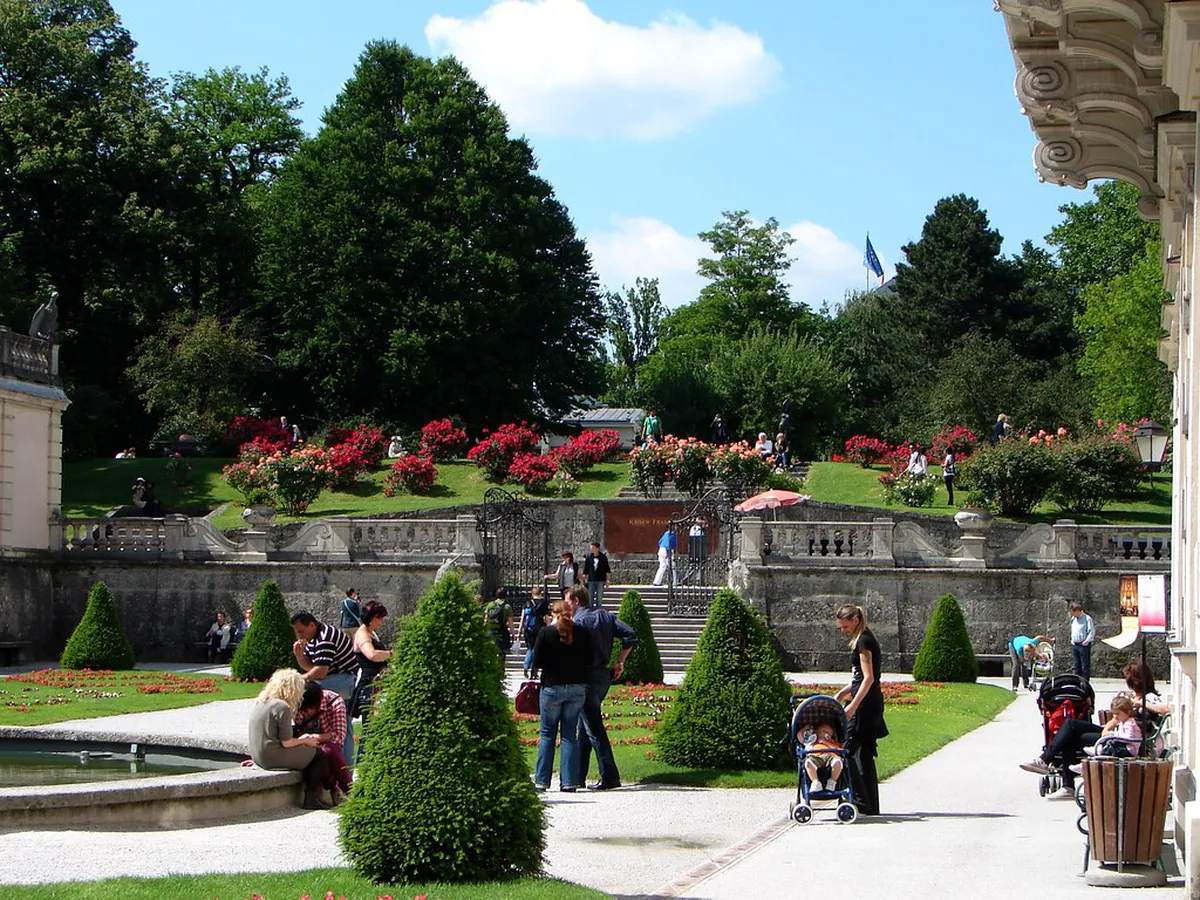
| Garden staircase | Stone steps from the parterre up to the south terrace | Free | The famous shot of the children running up the steps in a line |
| Dwarf Garden (Zwerglgarten) | 28 marble figures of real 18th-century court dwarfs, in the NW bastions | Free | The gnome statues appear briefly in the background of the sequence |
| Rose Garden | Heritage roses at the south end; peak bloom late May–mid June | Free | No direct scene — a quiet spot away from the film crowds |
| Marble Hall | Surviving Baroque interior; concert venue where young Mozart performed | Free (closed for events) | Not a filming location, but central to the palace's musical heritage |
The Grand Fountain anchors the central terrace. Its basin is large enough that the reflection of the Fortress is visible on calm mornings, and it is one of the most photographed spots in Salzburg for that reason. The Pegasus Fountain, slightly to the south, features a copper winged horse by Kaspar Gras and is the one most visitors recognize from Sound of Music footage. Both fountains run from spring through autumn; they are turned off in winter to prevent frost damage.
The Rose Garden occupies the south end of the complex, separated from the main parterre by a low hedge. It is quieter than the central axis and tends to draw fewer tour groups. Peak bloom runs from late May through June, when several dozen heritage rose varieties are in flower. The Hedge Theatre, one of the oldest surviving garden theatres north of the Alps, is tucked into the northwest corner and occasionally hosts live performances in summer.
The Dwarf Garden (Zwerglgarten)
The Dwarf Garden is the most unusual section of the grounds and the one most visitors walk past without understanding what they are looking at. It contains 28 stone figures carved from white Untersberg marble, arranged in a semicircle in the northwest bastions of the garden. The figures depict grotesque, exaggerated human forms — but they were not invented as decorative whimsy. They were modeled on actual court dwarfs, servants, and entertainers employed by the Salzburg court in the early 18th century, making each one a portrait of a real historical person.
Several of the original 28 figures have suffered significant weather damage over the centuries. Some of the most fragile originals have been moved indoors to the Salzburg Barockmuseum for conservation, and faithful stone replicas stand in their place outdoors. This means what you see in the garden today is a mix of authenticated originals and replicas — the museum versions are worth seeking out if you want to see the finest carving detail up close. The figures range from a few dozen centimetres to just over a metre tall, and their expressions shift from comic to unsettling depending on the angle.
Allow 10–15 minutes just for this section. It is free and easy to miss if you follow the main central path without diverting to the bastions. Walk toward the northwest corner of the garden and look for the low semicircular enclosure set back from the main hedge line.
Sound of Music Filming Locations at Mirabell
The Do-Re-Mi sequence in the 1965 film was shot across several Salzburg locations, and Mirabell Gardens features in two of the most recognizable shots. The Pegasus Fountain is where Julie Andrews and the children dance in a circle at the start of the sequence. The stone staircase on the south side of the palace — leading up from the garden parterre to the terrace — is where the children run up the steps in a line, which has become one of the most reproduced images associated with Salzburg tourism.
The gnome statues in the Dwarf Garden also appear briefly in the background of the sequence, though this is less widely noted. Visitors who want to recreate the staircase shot should position themselves at the base of the steps facing the palace and shoot upward; the Fortress appears in the skyline behind. Early morning (before 08:00) gives you the best chance of an unobstructed frame before tour groups arrive. For the fountain shot, aim for the same early window or late afternoon when the main group tours have moved on.
If you want a guided context for these locations and the wider Sound of Music trail around the city, our the Sound of Music tour guide maps every key filming spot in sequence.
The Marble Hall and Angel Staircase
The Marble Hall (Marmorsaal) survived the 1818 fire and remains the only grand Baroque interior accessible to the public inside the palace. Entry is free, but the hall is only open when no events are scheduled — weddings and the Schloss Konzerte classical concert series take priority and close it to casual visitors. Weekday mornings are the most reliable window. The hall is open Monday to Friday 08:00–16:00, and Saturday 08:00–12:00; it is generally closed on Sundays and Austrian public holidays.
The room itself is long and high-ceilinged, with pale marble columns, gilded stucco work, and tall windows overlooking the garden. The acoustics were praised by Leopold Mozart, who brought the young Wolfgang Amadeus here to perform on multiple occasions. The Schloss Konzerte concerts continue that tradition and run almost year-round on most Thursday and Friday evenings. Tickets can be booked directly at the box office or through the official salzburg-concerts.com booking page.
The Angel Staircase leading up to the hall was sculpted by Georg Raphael Donner and features clusters of marble cherubs draped over the balustrade. It is one of the finest examples of Baroque sculptural decoration in Austria and also survived the fire. Photography inside the staircase and hall is permitted for personal use. Maintain a low noise level — the building is a working government office on weekdays and weddings are held regularly.
Opening Hours, Admission, and Practicalities
The Mirabell Gardens are open daily from 06:00 to dusk (approximately 20:00 in summer, 18:00 in autumn and winter). Entry is free at all times. The Marble Hall and Angel Staircase are accessible Monday to Friday 08:00–16:00 and Saturday 08:00–12:00, also free, subject to closure for events. When a concert or wedding is scheduled, the interior is closed with no exceptions — check salzburg.info for the current events calendar before you go if the interior is a priority.
There are no guided tours offered by the palace itself, but the tourist board runs several walking tours that include a stop here. The gardens are fully wheelchair accessible: the main paths are wide, level gravel and there are no steps between the main gate and the central terrace. An elevator inside the palace provides wheelchair access to the Marble Hall. Public toilets are located near the main garden entrance on Mirabellplatz and require a small coin (typically €0.50).
Lockers and bag storage are not available at the site. The nearest public luggage storage is at Salzburg Hauptbahnhof, approximately 10 minutes' walk north. Photography is unrestricted outdoors. Dogs are permitted in the gardens on a lead. The palace complex is part of the Salzburg UNESCO World Heritage Site designation that covers the Historic Centre.
How to Get to Mirabell Palace
Mirabell Palace sits at Mirabellplatz 4, on the right bank of the Salzach River in Salzburg's New Town. From the Old Town and Getreidegasse, it is a 10-minute walk north across the Staatsbrücke bridge. From Salzburg Hauptbahnhof (central station), it is a 15-minute walk south along Rainerstrasse, or a 5-minute ride on bus line 1, 2, or 3 to the Mirabellplatz stop directly outside the main gate.
There is no car park on-site. The nearest parking garage is the Mirabellplatz Garage on Wolf-Dietrich-Strasse, but driving into central Salzburg is strongly discouraged during summer months. The park-and-ride facilities at Salzburg Süd (connected by bus line 3) are the practical option for day-trippers arriving by car. For full public transport routing and bus pass options, see our when to plan your visit guide, which includes a section on getting around the city efficiently across different seasons.
Mozart's Residence (Mozarts Wohnhaus) is two minutes east on Makartplatz. The Makartsteg footbridge is one minute south and leads directly into the Old Town, making Mirabell a logical first or last stop when crossing between the two banks.
Best Time to Visit and Top Photo Spots
The best time to visit for photography is early morning on weekdays, ideally before 08:30. Tour groups begin arriving from around 09:30 and the central parterre becomes crowded by 10:30 through the midday period. Late afternoon (after 16:00) is a secondary window as most group tours have departed. Spring (April–May) and early summer (June) offer the fullest floral display; the rose garden peaks between late May and mid-June.
The four best photo positions in the gardens: the Grand Fountain from the upper terrace with the Fortress in the background; the Pegasus Fountain from the south, facing the formal parterre; the base of the palace staircase looking up toward the terrace with the Fortress skyline; and the Rose Garden in the late afternoon when the lower sun catches the blooms from the west. For interior photography, the Angel Staircase works best in the morning when direct light from the east-facing windows reaches the marble cherubs.
Winter visits (December–February) are uncrowded and the gardens take on a completely different character when the statues are frosted. The fountains are off, but the geometric layout of the hedges reads more clearly without the distraction of flowers. The Marble Hall concerts run year-round and are worth considering as a standalone evening activity regardless of season.
Frequently Asked Questions
What are the must-see attractions at Mirabell Palace and Gardens?
You should prioritize the Marble Hall and the Angel Staircase inside the palace. In the gardens, do not miss the Pegasus Fountain, the Dwarf Garden, and the Hedge Theatre. These spots offer the best mix of history and photography opportunities. Read our how many days you need to see how much time to budget.
How long does it take to visit Mirabell Palace and Gardens?
Most visitors spend between 45 minutes and 90 minutes exploring the grounds. If you plan to attend a concert or take extensive photos, allow for two hours. The central location makes it easy to pop in for a quick walk between other museum visits.
Can you get married in Mirabell Palace's Marble Hall?
Yes, the Marble Hall is one of the most popular wedding venues in Austria. Ceremonies are held on specific days and must be booked well in advance through the Salzburg registry office. It is a dream location for couples seeking a classic Baroque setting.
Are Mirabell Palace and Gardens accessible for wheelchairs?
The gardens are almost entirely flat and feature wide gravel paths suitable for wheelchairs and strollers. There is an elevator inside the palace to provide access to the Marble Hall on the upper floor. Staff members are generally helpful with navigation if you require assistance.
Mirabell Palace remains one of the most rewarding free sights in Salzburg. The gardens, the Marble Hall, the Sound of Music staircase, and the underrated Dwarf Garden give most visitors more than they expect from what looks like a simple park visit. Arrive early on a weekday morning, allow 90 minutes, and you will leave with a clear picture of why this site has anchored the city's identity for four centuries.
See the our complete Salzburg guide to slot Mirabell into a full day plan, and the the Sound of Music tour guide if you want to follow the complete filming trail across the city.