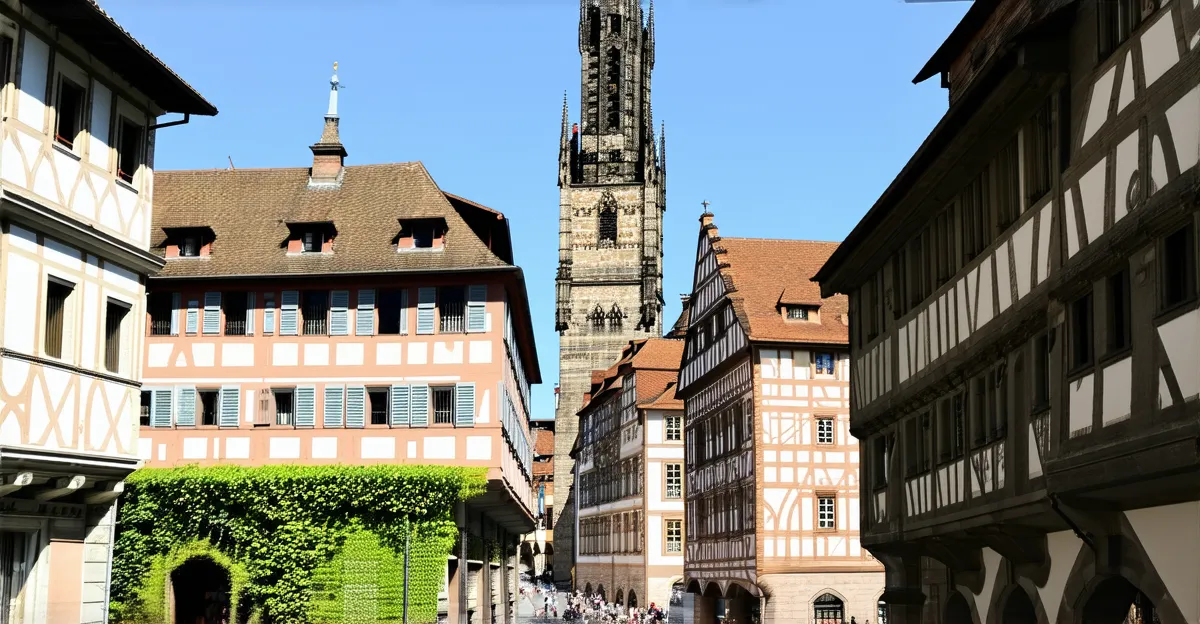
Strasbourg rewards route discipline. Grande-Île, Petite France, Neustadt, the European Quarter and the Rhine can fit into one city break, but not into one uninterrupted old-town walk.
Use this hub to choose a duration, protect timed anchors and understand current transport and access rules. Each schedule is a decision framework with substitutions, not a checklist every traveler must complete.
Choose the Right Strasbourg Trip Length
Turn this guide into a personal route with our free Strasbourg itinerary planner.
| Usable time | Strong plan | Main sacrifice |
|---|---|---|
| 1 day | Grande-Île, Cathedral and Petite France | No deep museum or European Quarter block |
| 2 days | Historic core plus Neustadt and one major interior | No complete wine-village day |
| 3 days | City depth plus Parliament, Kehl or one nearby excursion | Only one regional choice |
| 5 days | Strasbourg plus two distinct Alsace or Germany days | Still requires reservation and timetable choices |
Count usable days, not hotel nights. Strasbourg's center is compact, but the platform queue, boat departure, museum hours, Parliament security and regional transport turn several attractions into fixed anchors.
One Day: Keep a Single Walking Spine
The one-day Strasbourg itinerary starts at the station or Cathedral, joins Grande-Île to Petite France and uses either the Cathedral platform, astronomical-clock presentation or a Batorama cruise as its principal timed element. It absorbs the older walking-itinerary duplicate.
Do not promise a platform climb, clock presentation, full museum, long boat circuit and European Parliament visit on the same day. Each carries opening, queue or security time that a map does not show.
Two Days: Historic Core and European Strasbourg
The new two-day Strasbourg itinerary gives day one to the Cathedral, Grande-Île, Petite France and Barrage Vauban. Day two uses Neustadt, the European Quarter and either a museum or boat circuit.
This split makes the UNESCO property's two components visible. It also keeps the European Parliament's physical-ID and security requirements away from a tightly timed Cathedral block.
Three Days: Add One Deliberate Extension
The three-day Strasbourg plan retains two city days and adds Kehl, Colmar, a wine-route product or a deeper museum/food day. France.fr's published route demonstrates the value of day themes but places Petite France late; a first-time plan should not make the defining district contingent on day three.
Choose only one regional extension. Colmar's current direct rail time can be as short as about 26 minutes, but wine villages often require buses, a driver or an organized product beyond the headline train.
Five Days: Use Strasbourg as a Base
The five-day itinerary combines two complete Strasbourg days, one flexible local day and two regional choices. Colmar, the Wine Route, Haut-Koenigsbourg, Baden-Baden and Freiburg solve different interests and are not one interchangeable “Alsace day.”
Keep at least one city day movable during Christmas, heat, rain or event disruption. A longer stay is valuable because it creates substitution capacity, not because every hour needs another destination.
Plan by Geographic Zones
Grande-Île: Cathedral, Palais Rohan, Place Kléber and historic streets. Petite France: canals, tanners' quarter, Ponts Couverts and Barrage Vauban. Neustadt: Place de la République, university and imperial architecture. European Quarter: Parliament, Council of Europe area and Parc de l'Orangerie. Rhine/Kehl: Jardin des Deux Rives and cross-border Line D.
Finish one zone before switching. The center is walkable, but repeated trips to the station, Parliament and Cathedral add avoidable transit.
Use Current CTS Fares
CTS currently lists a single journey from €1.90, valid for one hour with transfers, a 24H SOLO at €4.60 and a 72H SOLO at €10.20. The first contactless ticket purchase adds €0.20. Validate the ticket and check the live product rules.
The 24H SOLO covers the Eurométropole bus, tram and coach network and Line D to Kehl. It is not the same as every regional train or broader German ticket. The transport guide separates walkable-center decisions from cross-border and airport products.
Treat the Boat as a Fixed Departure
Batorama currently advertises 70-minute long circuits and a 45-minute short circuit, with routes and boat types changing by date. Published open-ticket prices are €16.20/€8.90 for long tours and €12.50/€7.20 for short tours, but an open ticket is an exchange value rather than a boarding place.
Reserve or exchange for an actual departure. The canonical boat guide combines the previous route and price pages and explains boarding points, weather cover and discount conditions.
Separate Cathedral Entry, Clock and Platform
Notre-Dame Cathedral remains an active place of worship. Ordinary nave access, the astronomical-clock presentation and the Cathedral platform are three different experiences with separate entrances and rules.
The clock presentation currently costs €4 adult and €2 child, with entry between 11:35 and noon and no presentation on Sundays, feast days or during the Christmas market. The platform currently costs €10 adult and €6 reduced/child, requires about 330 steps, takes no reservations and can suspend access for crowding or weather. Use the Cathedral guide and platform guide separately.
Understand the Platform Schedule
The tourist office currently lists the platform from 09:30–13:00 and 13:30–20:00 April–September, then 10:00–13:00 and 13:30–18:00 October–March. The last climb is 45 minutes before evening close, with closures on 1 January, 1 May and 25 December.
This is not an elevator viewpoint. The climb reaches about 66 metres and can close temporarily for wind, weather or excessive attendance. Barrage Vauban offers a lower free panorama when the climb is unsuitable.
Use Museums as Real Alternatives
Strasbourg Museums currently lists free admission for everyone under 18 and on the first Sunday of each month, subject to the active conditions. The museum pass is €16/€8 for one day or €20/€12 for three days. Individual museums retain their own closures and accessibility.
Palais Rohan contains three distinct museums; do not budget “Palais Rohan” as one quick room. Match archaeology, decorative arts, fine arts, history or modern art to the route and the traveler.
Plan the European Parliament with Security Time
The European Parliament's official Strasbourg visit is free and available six days a week through the year, subject to its calendar. Visitors need a valid physical national ID card or passport, pass airport-style security and cannot bring large luggage.
Use tram E to Parlement Européen and reserve enough time for entry. A driver's licence, phone image or photocopy is not the required document. Check plenary and non-plenary instructions before setting the day.
Walk Petite France in One Direction
The canonical Petite France route absorbs the older map and access-only pages. It links Barrage Vauban, Ponts Couverts, Rue du Bain-aux-Plantes, Place Benjamin Zix, Pont du Faisan and the Cathedral side without repeating the canals.
Begin at Barrage Vauban when arriving from the station; reverse the route after the Cathedral. The district is lived-in and partially cobbled, so entrances, restaurant terraces and bridge mechanisms must remain clear.
Use Barrage Vauban as a Free Viewpoint
The official seasonal terrace schedule is 08:00–19:00 in March–April, 07:15–21:00 May–August, 08:00–19:00 September–October and 08:30–16:00 November–February. Access is free, but the upper terrace involves stairs and live conditions can override the timetable.
The Barrage Vauban guide explains both the roof and the lower gallery. It is the practical alternative when the Cathedral platform is closed or too demanding.
Treat Christmas as a Different Operating System
The official 2026 Christmas page currently lists markets from 26 November at 14:00 through 24 December at 18:00 while noting that the full programme is still being finalized. Daily market hours are generally 11:30–21:00, with opening-day and Christmas Eve exceptions.
Security perimeters, tram changes, hotel prices, luggage rules and dining reservations matter more than in ordinary weeks. The Christmas-market route keeps dated official checks visible instead of hard-coding an old programme.
Choose Accommodation for the Actual Route
Grande-Île minimizes sightseeing transfers but can be busy and noisy. Petite France gives atmosphere but adds cobbles and limited vehicle access. The station area simplifies arrival and day trips; Neustadt offers quieter access to the imperial and European zones.
The where-to-stay guide compares exact entrance, lift, air conditioning, luggage and nighttime return rather than ranking volatile hotel names.
Arrive by Train Without Hiding the Last Mile
SNCF currently shows fastest Paris–Strasbourg services around 1 hour 45 minutes, but the exact train, station arrival and fare vary. The main station is roughly a 15-minute walk from Petite France and also connects to tram lines.
The airport rail shuttle runs up to five times per hour and advertises an eight-minute airport-station ride. The train-arrival guide separates national rail, regional rail, airport rail and the final city leg.
Use Food Pages by Decision Type
The Alsatian food guide explains tarte flambée, choucroute, baeckeoffe, spaetzle, kougelhopf and winstub etiquette. The affordable lunch guide uses menu-reading and service format rather than a brittle ranking. The food-tour guide covers guided products.
Restaurant names, prices and days change. Verify a priority meal directly, disclose allergens and remember that alcohol can appear in sauces, marinades and desserts.
Choose Day Trips by the Last Mile
The day-trip guide compares Colmar, Obernai, the Wine Route, Haut-Koenigsbourg, Baden-Baden, Freiburg and nearby Kehl. A direct train does not guarantee access to a hilltop castle or several villages.
Colmar is the easiest independent rail day, with current trips as short as about 26 minutes. A multi-village wine day usually needs a driver, tour or carefully checked bus sequence. Kehl is a short Line D extension rather than a full substitute for an Alsatian regional day.
Budget Fixed and Conditional Costs
Start with accommodation and arrival, then local transport, one timed attraction, food and a regional reserve. Current reference points include €1.90 single transport, €4.60 for 24H SOLO, €10.20 for 72H SOLO, €10 for the Cathedral platform and €16.20 for the long Batorama open-ticket value.
The budget guide separates free streets, Cathedral worship space, Parliament and viewpoints from paid clock, platform, boat, museum and guided products.
Photograph Without Blocking the City
The photo guide sequences Barrage Vauban, Ponts Couverts, Petite France, Cathedral, Place de la République and European architecture by light and route. It does not promise empty streets or unrestricted tripod use.
Keep bridge pivots, cycleways, church access, homes and business entrances clear. Christmas security rules and event controls can change the usable position even when the landmark remains visible.
Use the Essentials Page as an Operating Checklist
The clean Strasbourg travel essentials guide replaces the stale 2025 URL. It covers arrival, money, language, weather, closures, accessibility, safety and what to reserve without competing with the itinerary hub.
Check live operator pages near travel. A guide can explain the decision but cannot guarantee a future timetable, security perimeter, worship service or weather closure.
Keep Same-Area Alternatives
If the platform closes, use Barrage Vauban or the European Parliament terrace when officially available. If a Batorama departure changes, retain the Cathedral, Palais Rohan and riverside walk. If the Parliament is unavailable, keep Neustadt and Parc de l'Orangerie.
During rain, replace an exterior inside the same district with a museum. During Christmas crowding, remove a cross-city stop instead of running through pedestrian controls.
Respect Accessibility as a Route Property
A venue's accessible entrance does not prove the street, bridge, tram stop or final approach is step-free. Petite France has cobbles; the Cathedral platform requires roughly 330 steps; Parliament security and museum lifts use their own procedures.
Contact priority venues, reserve assistance where required and save the exact entrance. The flat lower Barrage gallery, trams and boat types may help, but they need current confirmation for the individual traveler.
Treat Arrival and Departure as Partial Days
A hotel night is not a sightseeing day. A late train, airport shuttle, luggage queue or restricted vehicle approach can remove an entire half-day. Keep arrival to the station–Petite France–Grande-Île spine and avoid a non-refundable Parliament or regional booking immediately after transport.
On departure day, protect the station or airport return first. Strasbourg Airport's rail journey is short, but waiting, terminal walking and security are not included in the advertised eight minutes. Store luggage only with a service whose hours and collection rules fit the ticket.
Choose Clock or Platform Before the Cathedral Queue
The astronomical-clock presentation and platform are not two parts of one admission. The clock uses a late-morning entry and has Sunday, feast-day and Christmas-market exclusions. The platform has seasonal hours, a midday break, a last-climb cutoff and weather/capacity suspension.
Choose by interest and physical ability before reaching Place du Château. Mechanical history favors the clock; views and exercise favor the platform; ordinary architecture and worship context favor the nave. Keeping only one paid Cathedral component leaves time for the connected city.
Build Family Days Around One Hard Commitment
Families usually need toilets, food, seating and weather cover more than an additional landmark. Select one platform, museum, boat or Parliament visit, then surround it with free streets and parks. Check age pricing and whether a child's audio commentary or reduced fare applies to the exact product.
A compact old town does not remove cobbles, bridge controls or a 330-step climb. Carry only luggage accepted by the next venue, identify a warm or shaded pause and choose a meeting point before entering Christmas crowds.
Use Food as Part of the Route
A Cathedral-area lunch supports a midday clock or Palais Rohan visit; a Petite France meal supports the west-side walk; Krutenau fits an evening after the historic center. Crossing town for a listicle restaurant wastes the geographic advantage of a compact city.
Reserve only the defining meal or food tour. For every other stop, use a current menu and opening check. Traditional recipes often include pork, dairy, egg, gluten or alcohol, so attraction timing never outranks a clear allergen conversation.
Travel Regionally Without Compressing the City
Colmar, wine villages and German cities are valuable because they contrast with Strasbourg. They should not erase Grande-Île, Neustadt and the European Quarter from a short stay. With two days, stay local unless the excursion defines the trip; with three days, choose one extension.
Save the last return and the final bus, shuttle or walk. A 26-minute train to Colmar is not a 26-minute day trip, and a station near a castle town does not prove access to a hilltop monument. Remove a destination when the last mile is unclear.
Strasbourg Planning Library
Use the specialist page that answers the next decision rather than opening overlapping versions of the same route:
- One Day in Strasbourg: A Realistic Walking Route
- 2 Days in Strasbourg: A Realistic Weekend Itinerary
- 3 Days in Strasbourg: City Depth and One Alsace Choice
- 5 Days in Strasbourg: City and Alsace Base Itinerary
- Best Things to See in Strasbourg: Priorities by Area
- Strasbourg Travel Essentials: Current Planning Guide
- Best Time to Visit Strasbourg: Seasons and Christmas
- Getting Around Strasbourg: Current Tram and Ticket Guide
- How to Get to Strasbourg by Train: Current Guide
- Strasbourg Boat Tour: Current Routes, Tickets and Prices
- How to Visit Strasbourg Cathedral: Entry, Clock and Rules
- Strasbourg Cathedral Platform: Steps, Price and Hours
- Strasbourg Christmas Market: One-Day Route for 2026
- Strasbourg Budget Guide: Current Costs and Free Sights
- Where to Stay in Strasbourg: Areas for First-Time Trips
- Best Day Trips from Strasbourg: Rail and Last-Mile Guide
- Petite France Walking Route: Barrage to Cathedral
- Barrage Vauban Terrace: Current Hours and Access
- Best Strasbourg Photo Spots: Light, Route and Etiquette
- What to Eat in Strasbourg: Alsatian Food Guide
- Affordable Alsatian Lunch in Strasbourg: How to Choose
- Strasbourg Food Tours: How to Compare and Book
Final Strasbourg Checklist
- Count full usable days.
- Choose one timed anchor per half-day.
- Separate Cathedral nave, clock and platform.
- Exchange an open boat ticket for a real departure.
- Carry physical ID for Parliament.
- Use current CTS fares and validate.
- Check the museum and worship calendars.
- Confirm Christmas dates and security controls.
- Plan the regional last mile, not only the train.
- Keep one same-area substitute.
How to Use This Guide on the Day
Recheck the controlling official page the evening before the visit and again before leaving. Strasbourg transport, museum hours, Cathedral worship, platform access, boat departures, Parliament security, Christmas controls and regional timetables can change after publication. Save the exact entrance, ticket conditions and one same-area substitute offline.
Allow more time than the fastest map estimate. Cobbles, pedestrian zones, bridge openings, queues, security screening and station exits change real effort. Travelers needing step-free access should verify every platform, lift, threshold, toilet and final approach separately; an accessible venue does not prove an accessible route.
Keep one element flexible around every fixed booking. If a cruise, platform climb, museum or institutional visit becomes unavailable, replace it inside the same zone before crossing Strasbourg. Remove the lowest-priority stop when the day slips instead of turning the rest of the schedule into a race.
Match the route to the traveler. A family, architecture specialist, food-focused visitor and traveler using a wheelchair need different versions of the same day. Verify child rules, seating, toilets, luggage and step-free access directly rather than assuming a compact center is universally easy.
Separate ordinary transport from attraction products. CTS city fares, airport rail, regional trains, Batorama cruises, guided food tours and cross-border products use different tickets. Save the product name, validation rule and boarding point instead of relying on a generic word such as “pass,” “boat” or “train.”
Treat named restaurants, shops and seasonal stalls as volatile. Confirm the current address, service period, reservation, menu and accessibility directly. For allergies or dietary restrictions, discuss ingredients and cross-contact with the venue; Alsatian sauces and desserts can contain alcohol, dairy, egg, nuts or meat stock.
Plan with Live Information
This guide was checked against first-party information on August 6, 2026. Reopen the official source that controls your date before paying, departing or relying on a route. A reservation manages one part of the visit; it does not remove weather, worship, security, capacity, maintenance or connection risk.
Frequently Asked Questions
How many days do you need in Strasbourg?
Two full days cover the historic center, Petite France, Neustadt and one major museum, boat or institutional visit. Three days allows one regional or cross-border choice.
Is one day enough for Strasbourg?
One day covers the Cathedral, Grande-Île and Petite France when only one timed attraction is added.
What should you book first?
Protect a must-do boat departure, Parliament visit, food tour or regional product first, then group flexible streets around it.
Do you need public transport in the center?
Most central sights are walkable. Use CTS for the European Quarter, Kehl, distant lodging, limited mobility or repeated journeys.
Sources to Check Before You Go
- Strasbourg Tourist Office: official one-to-three-day framework
- UNESCO: Strasbourg Grande-Île and Neustadt
- CTS: official occasional tickets and current fares
- Batorama: official routes, durations and live departures
- Strasbourg Tourist Office: official Cathedral platform rules
- European Parliament: official Strasbourg visitor information